A guide to the Chase Ink Business credit cards


While Chase offers a robust portfolio of personal credit cards, the issuer also has a suite of business cards tailored to different types of companies and expenses.

Known as the Ink Business family, these credit cards earn either cash back or Chase Ultimate Rewards points. They generally offer lucrative welcome bonuses and high earning potential across multiple categories, making them a solid addition for many types of business owners.

Adding an Ink Business card to your wallet is a great way to separate personal and business finances. But you don’t have to be a traditional business owner to qualify. In fact, selling products on Etsy, doing freelance writing or running another micro-business can make you eligible.

With this in mind, let’s dive into these cards and see which works best for your business.

Chase Ink Business Cards overview

There are currently four Ink Business cards available:

Each card comes with its own welcome bonus, earning rates and annual fees, which we’ll cover below.

Businesswoman meeting with financial advisor in office conference room
THOMAS BARWICK/GETTY IMAGES

All of these cards offer the following benefits:

  • Baggage delay insurance
  • Extended warranty
  • Primary car rental insurance (when renting for business purposes)
  • Purchase protection

Reward your inbox with the TPG Daily newsletter

Join over 700,000 readers for breaking news, in-depth guides and exclusive deals from TPG’s experts

The Ink Business Cash, the Ink Business Premier and the Ink Business Unlimited earn cash-back rewards, while the Ink Business Preferred earns Chase Ultimate Rewards points.

Combining your rewards with other Ultimate Rewards cards

Before we get into each card’s details, it’s important to note that if you carry other cards that earn Ultimate Rewards points, you may be able to combine your rewards.

You can only combine your rewards from the Ink Business Cash, the Ink Business Preferred and the Ink Business Unlimited; rewards earned on the Ink Business Premier can’t be combined with other cards or transferred.

The cards you can combine with are:

Combining your rewards with one of these cards can further boost your earning and redemption options.

The Sapphire Reserve for Business is a premium business card from Chase that offers elevated perks. While it carries a $795 annual fee and isn’t part of the Ink Business family, it’s designed to deliver luxury travel and lifestyle benefits that may appeal to certain business owners. For a full breakdown of its features and rewards, read our full review of the Sapphire Reserve for Business.

With the basics out of the way, let’s learn more about each Ink Business card.

Ink Business Cash Credit Card

Welcome bonus: Earn $750 cash back after spending $6,000 on purchases in the first three months from account opening.

Annual fee: $0

a hand holds a credit card - the Ink Business Cash from Chase
THE POINTS GUY

Earning rates:

  • 5% cash back at office supply stores and on cable, internet and phone services (on up to $25,000 spent in combined purchases each account anniversary year)
  • 5% cash back on Lyft rides (through Sept. 30, 2027)
  • 2% cash back at gas stations and restaurants (on the first $25,000 spent in combined purchases each account anniversary year)
  • 1% cash back on all other purchases

Who should apply? Despite being one of Chase’s no-annual-fee business cards, the Ink Business Cash delivers strong value on everyday expenses. Its bonus categories are especially useful if you regularly purchase office supplies, cover phone services or manage a small office.

Even if you already have the Ink Business Preferred, this card can be a smart complement. It fills gaps by earning 2% cash back at gas stations and restaurants — categories that the Preferred doesn’t cover.

And if you hold a premium Chase card, you can combine your Ink Business Cash rewards into fully transferable Ultimate Rewards points for even greater flexibility.

To learn more, read our full review of the Ink Business Cash.


Apply here: Ink Business Cash


Ink Business Preferred Credit Card

Welcome bonus: Earn 100,000 points after spending $8,000 on purchases within the first three months from account opening.

This welcome bonus is worth $2,050, according to TPG’s May 2026 valuations.

Annual fee: $95

A hand holds the Ink Business Preferred
THE POINTS GUY

Earning rates:

  • 5 points per dollar spent on Lyft rides (through Sept. 30, 2027)
  • 3 points per dollar on travel, advertising purchases made with social media sites and search engines, shipping purchases and cable, internet and phone services (on the first $150,000 spent in combined purchases each account anniversary year)
  • 1 point per dollar on all other purchases

Who should apply? This is the only Ink card that earns full-fledged Ultimate Rewards points — those you can transfer to airlines and hotels — on its own rather than cash back. It is also the only Ink card that earns bonus points on travel purchases, specifically.

The annual fee is low enough that freelancers and side hustlers can easily offset the cost, and the higher spending cap on business bonus categories makes it a nice card for established business owners with offices and employees.

To learn more, read our full review of the Ink Business Preferred.


Apply here: Ink Business Preferred


Related: Who is eligible for the Chase Ink Business Preferred?

Ink Business Premier Credit Card

Welcome bonus: Earn $1,000 cash back after spending $10,000 on eligible purchases within the first three months of account opening.

Annual fee: $195

a hand holds a credit card
THE POINTS GUY

Earning rates:

  • 5% cash back on travel purchased through Chase Travel℠
  • 5% cash back on Lyft rides (through Sept. 30, 2027)
  • 2.5% cash back on purchases of $5,000 or more
  • 2% cash back on all other eligible purchases

Who should apply? The Ink Business Premier is the most premium cash-back offering in the Chase business card family, carrying a $195 annual fee.

Unfortunately, the Ink Business Premier does not earn fully transferable Ultimate Rewards points like its counterpart, the Ink Business Preferred. You also can’t transfer the rewards earned on the Ink Business Premier to other Ultimate Rewards cards.

Instead, Ink Business Premier cardholders can redeem their points for cash back, gift cards, statement credits and travel through Chase Travel. As such, this card is geared toward business owners with high operating expenses who want to recoup the $195 annual fee and earn cash back to invest back into their business (rather than earning travel rewards).

The Ink Business Premier is a niche option that likely won’t appeal to travel rewards enthusiasts but can be attractive to those who want a simple yet lucrative card with no preset spending limit.

To learn more, read our full review of the Ink Business Premier.


Apply here: Ink Business Premier


Related: Who should (and who shouldn’t) get the Ink Business Premier?

Ink Business Unlimited Credit Card

Welcome bonus: Earn $750 bonus cash back after spending $6,000 on purchases in the first three months from account opening.

Annual fee: $0
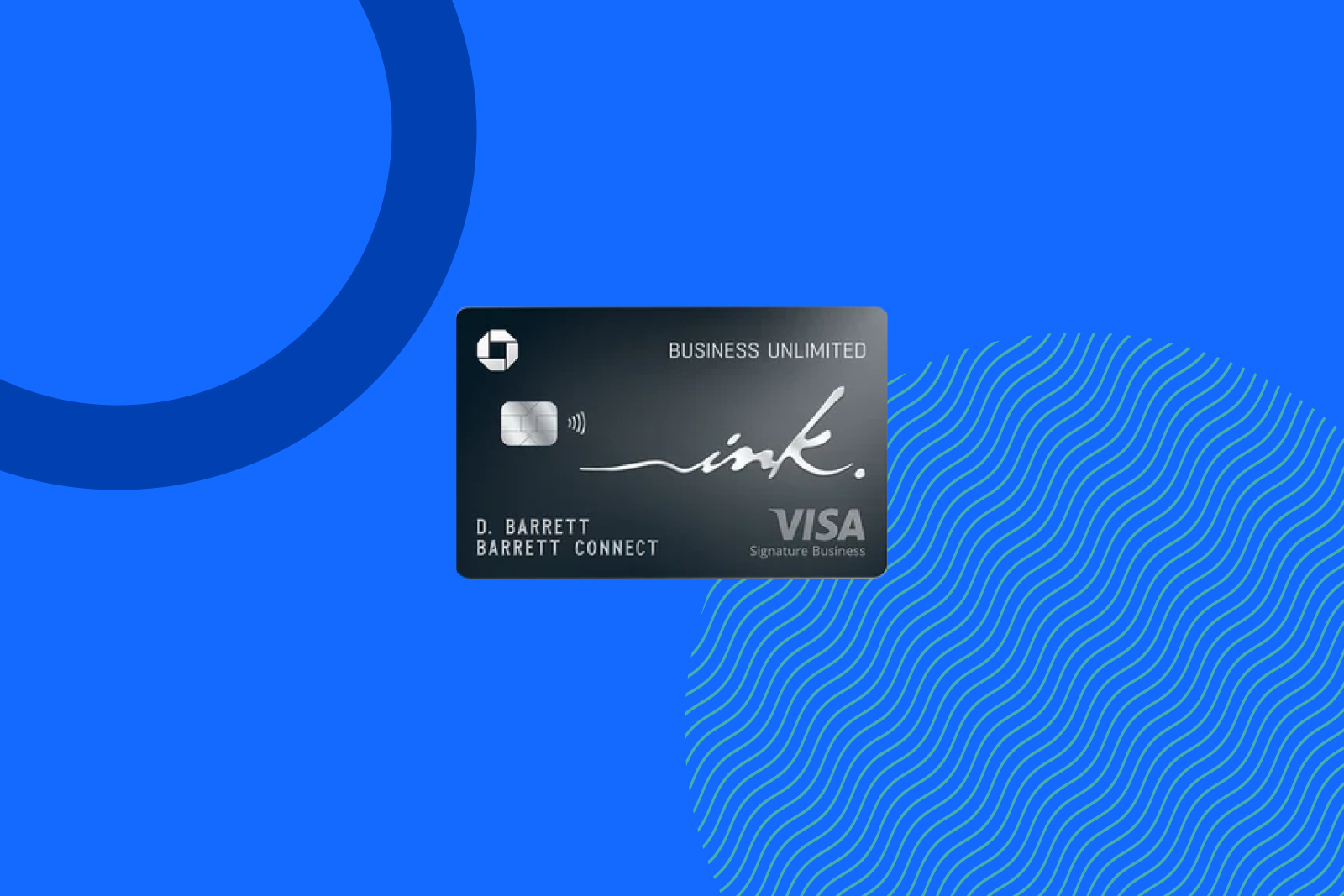
Ink Business Unlimited Credt Card_Update
THE POINTS GUY

Earning rates:

  • 5% cash back on Lyft rides (through Sept. 30, 2027)
  • 1.5% cash back on all purchases

Who should apply? This is an excellent card for freelancers who want a card that earns well on every dollar without having to keep track of bonus categories. It’s also a great choice for business owners who need a card for their expenses that don’t fall under a bonus category with their other cards, since you get unlimited 1.5% back on every purchase.

For freelancers or those with side hustles, this means maximizing every purchase without juggling multiple cards with annual fees. For established businesses, this is a great card to pair with other Chase cards, covering purchases that don’t have extra earnings on other cards.

As with the Ink Business Cash, you have the ability to maximize your cash back by converting it to points with a premium Chase card.

To learn more, read our full review of the Ink Business Unlimited.


Apply here: Ink Business Unlimited


Which Ink Business card is right for you?

There are multiple factors to consider when you’re selecting an Ink Business card. Here are some top considerations:

  • For office supply store and telecommunications service purchases: The no-annual-fee Cash earns 5% cash back at office supply stores and on telecommunications services (up to $25,000 of these purchases each account anniversary year).
  • For benefits to complement cash-back Ink Business cards: The Preferred offers more rewards that can complement the Cash and/or Unlimited while only charging a minimal annual fee.
  • For high-spending businesses: The Premier is a good option for businesses that spend thousands annually and want to earn a lucrative 2%-2.5% cash-back rate on all eligible purchases.
  • For everyday spending outside of bonus categories: The Unlimited racks up 1.5% cash back on all purchases without category restrictions, spending limits or an annual fee.

While you’re weighing benefits, consider that the Preferred and Premier set themselves apart with cellphone protection. This can be valuable considering the high cost of smartphones.

Woman sitting on the floor with a laptop
ROCKAA/GETTY IMAGES

The Preferred and Premier cards charge no foreign transaction fees, while the Cash and Unlimited cards charge a 3% fee on foreign transactions.

If you already carry the Cash or Unlimited, you might want to consider adding the Preferred to your lineup for four main reasons:

  • Rewards earned on Chase cash-back cards, such as the Cash or Unlimited, can be transferred to the card and then used as full-fledged Chase Ultimate Rewards points with travel partners.
  • The ability to earn 3 points per dollar spent on travel and advertising purchases made with social media sites and search engines (up to $150,000 of these purchases per account anniversary year).
  • The cellphone protection benefit can easily justify the $95 annual fee.
  • The high value of the welcome bonus.

But suppose your business doesn’t spend much on the bonus categories of the Cash or Preferred. In that case, you may be better off simply earning 1.5% cash back on everything with the Unlimited.

Related: How to complete a Chase business credit card application

Can I have more than one Ink Business credit card from Chase?

Yes, you can. This option can be appealing for businesses that are fully invested in the Ultimate Rewards ecosystem and want to maximize purchases across multiple bonus categories.

Here’s an example of how to approach this:

  • Ink Business Cash: Use this card at office supply stores and on telecommunication purchases to earn 5% back (or 5 points per dollar spent), and use it at restaurants to earn 2% back (or 2 points per dollar spent).
  • Ink Business Preferred: Use this card for travel, shipping and advertising purchases with social media platforms and search engines to earn 3 points per dollar spent. Plus, use it for all purchases outside the U.S. to avoid foreign transaction fees.
  • Ink Business Unlimited: Use this card for all other purchases to earn 1.5% back (or 1.5 points per dollar spent).

If you then combine all of your earnings from these cards under your Ink Business Preferred, you’ll have a large balance of fully transferable Ultimate Rewards points.

business owner
KATE_SEPT2004/GETTY IMAGES

Also consider the Ink Business Premier (as an alternative to the Unlimited) for all other purchases if you’re happy earning cash back or if you need a card with no preset spending limit when making large purchases.

Related: Why you may want the Ink Business Preferred over the Sapphire Reserve

Ink Business application restrictions

You can open each Ink Business card, earn the welcome bonus on each and even qualify for bonuses across multiple businesses. However, Chase’s standard application rules still apply.

Generally, it’s best to limit yourself to one personal and one business card application with Chase within any 90-day period. You’ll also want to keep the Chase 5/24 rule in mind: if you’ve opened five or more personal credit cards in the past 24 months, you’ll likely be denied for most new Chase cards. (The good news is that Chase business cards don’t add to your 5/24 count once opened.)

If you aren’t instantly approved, you may be asked to provide additional details about your business or submit supporting documents during a reconsideration call. A little extra effort can go a long way, unlocking the valuable rewards these cards offer.

Bottom line

Chase’s Ink Business lineup offers some of the most rewarding small-business cards on the market, with options for both cash back and transferable Ultimate Rewards points. By strategically pairing two or more Ink cards, you can cover a wide range of spending categories, unlock valuable travel protections and maximize every business purchase.

Whether you’re a freelancer, side hustler or established business owner, there’s likely an Ink card — or a combination of them — that can boost your rewards strategy while helping you keep business and personal expenses separate.


Apply here: Ink Business Cash Credit Card

Apply here: Ink Business Preferred

Apply here: Ink Business Premier

Apply here: Ink Business Unlimited Credit Card


Source link

Leave a Reply

Subscribe to Our Newsletter

Get our latest articles delivered straight to your inbox. No spam, we promise.

Recent Reviews


When a taxpayer has a capital outlay, they generally want to deduct the expense when the money leaves their bank account or when the liability is incurred. However, the accounting matching principle dictates that expenses should be deducted when the related income is received. The matching principle aligns the income and expense recognition. Our income tax rules generally adopt this accounting principle.

The timing issue is disfavored by taxpayers who make substantial capital investments. The taxpayer must pay out funds but cannot take an immediate tax deduction, while still being required to pay income taxes despite having a future tax deduction on the books. This results in a pay-the-IRS-now and recognize-your-tax-benefit later scenario. This issue is particularly problematic for investments in long-term assets such as real estate investments and heavy equipment.

Just about everyone favors immediate expensing. The U.S. Treasury Department has long advocated for a consumption tax system that would essentially allow for immediate expensing of capital investments. Treasury has made incremental progress toward this goal, such as the 2014 tangible property regulations that expanded opportunities for component depreciation of real estate. Similarly, Congress has shown increasing receptivity to immediate expensing, though stopping short of a full consumption tax system. The Tax Cuts and Jobs Act of 2017 represents a compromise position, providing for bonus depreciation on certain real estate assets while maintaining the basic framework of capitalization.

This framework leaves taxpayers with several options for …

This framework leaves taxpayers with several options for immediate expensing for certain types of expenses, but not for others. The recent Weston v. Commissioner, T.C. Memo 2025-16, case provides an opportunity to consider the question of when taxpayers must capitalize rather than deduct certain real estate-related expenses.

Facts & Procedural History

The case involves a commercial real estate agent in California. He began investing in single-family home renovations in Indiana in 2015.

Under an arrangement with his partner, the taxpayer provided funding to acquire and renovate properties. The partner managed the work locally. They both verbally agreed to split profits after the taxpayer recouped his investment plus an 8% return.

In 2016, the taxpayer also began funding a demolition and excavation business run by the partners. This business contracted with Indiana cities for demolition and lot remediation services. The partners had a similar verbal profit-splitting deal for this business.

Through 2017, the taxpayer continued sending money to fund both businesses based on the partner’s periodic funding requests and invoices. These “Indiana Payments” were more than $2.1 million by the end of 2017.

The taxpayer’s confidence in the partner eventually eroded as little progress or financial return materialized. However, he continued funding the demolition business into 2018 and even bought several Indiana properties from the partner in early 2018 for over $700k. After the partner disappeared, the taxpayer attempted to salvage the renovation business. He ended up selling most of the properties in 2018-2019 for a net loss.

On his 2017 tax return, the taxpayer claimed the $2.1 million Indiana Payments as a business loss deduction. The IRS audited the return and disallowed the deduction. The dispute ended up in tax court.

Immediate Expensing Options

The tax code provides several ways to immediately expense real estate-related costs. These provisions usually require some tax planning to benefit from, but the appropriate provision depends on both the nature of the expense and the character of the taxpayer’s real estate activities.

Section 162 serves as the primary authority for deducting ordinary and necessary business expenses, while Section 212 provides parallel treatment for investment activities. Section 179 offers an elective immediate write-off for certain qualifying property, and Section 179D allows deductions for energy-efficient commercial building improvements. There are other provisions that can also apply, but these are the primary tax rules that allow for immediate expensing for real estate expenses.

Section 162 permits immediate deduction of ordinary and necessary business expenses, encompassing routine operating costs such as repairs, maintenance, and utilities, provided these expenses do not materially add to the property’s value or useful life. For taxpayers whose activities do not rise to the level of a trade or business, Section 212 provides similar treatment for expenses incurred in the production of income, primarily benefiting investors who own rental properties but do not qualify as real estate professionals.

Section 179 allows immediate expensing of qualifying prop…

Section 179 allows immediate expensing of qualifying property placed in service during the tax year, though significant limitations apply in the real estate context. The deduction is limited to tangible personal property used in an active trade or business, with most building components excluded, and caps apply. Section 179D provides a specialized deduction for commercial building property meeting specified energy efficiency standards, available to both building owners and tenants who make qualifying improvements.

The nuances of each of these rules is beyond the scope of…

The nuances of each of these rules is beyond the scope of this article–as we are just noting that the first decision a taxpayer has to make is whether one or more of these provisions apply. Our focus in this article is to consider how these immediate expensing options are essentially taken away by the capital improvement rules. What Congress gives in one hand, it often takes away with its other hand.

Caplitziation and Depreciation or Amortization Limitations

The general capitalization rules under Section 263(a) require taxpayers to capitalize amounts paid to improve a unit of property. The regulations establish a three-part test for determining whether an expenditure constitutes an “improvement” requiring capitalization rather than an immediately deductible expense. An improvement exists if the expenditure results in a betterment, adaptation, or restoration of the property.

A betterment occurs when an expenditure fixes a pre-existing material defect, creates a material addition or expansion, or produces a material increase in the property’s capacity, productivity, efficiency, strength, or quality. For example, replacing a leaky roof with upgraded materials that extend its useful life would constitute a betterment requiring capitalization.

An adaptation arises when the expenditure modifies the property for a new or different use from its intended purpose when placed in service. Converting a residential property into an office building exemplifies an adaptation that must be capitalized. However, minor modifications that do not fundamentally change the property’s use may qualify as deductible repairs.

A restoration exists when the expenditure returns the property to its ordinarily efficient operating condition after deterioration, rebuilds the property to a like-new condition, or replaces a major component or substantial structural part. The replacement of an entire HVAC system, for instance, would likely constitute a restoration requiring capitalization.

Beyond these general rules

Beyond these general rules, specific tax code provisions impose additional capitalization requirements for certain real estate expenditures. For example, Section 280B mandates capitalization of demolition costs into the land basis, regardless of the property’s intended future use. There are even more nuanced rules that govern the treatment of interest, taxes, insurance, permits, environmental remediation, construction period overhead, and property management costs.

This is the framework that taxpayers have to apply

This is the framework that taxpayers have to apply. The immediate expensing rules only apply to current expenses, not capital improvements. The distinction turns on whether the expense merely keeps the property in ordinary efficient operating condition, in which case it may be deducted immediately, or whether it materially adds to the property’s value or substantially prolongs its useful life, in which case it must be capitalized. Thus, while routine repairs and maintenance may typically be deducted in the current year, major renovations require capitalization. And then there are more nuanced expenses that one cannot readily discern how the rules apply to, such as standby line of credit fees.

Before moving on, we also note that there are other provisions that can apply even after this expense-vs-capitalization framework that limit otherwise allowable deductions, such as the passive activity loss rules, excess business loss rules, net operating loss rules, hobby loss rules, and others. You can read about these other rules in various posts on our site as we have covered them at length in other articles.

Example of Expensing-Capitalization

This brings us back to this case. In this case, the court had to examine whether the $2.1 million in Indiana Payments could qualify for immediate expensing under any of the discussed provisions, or whether they required capitalization.

The court first considered whether the payments could be deducted as ordinary and necessary business expenses under Section 162. While the taxpayer argued he was engaged in a trade or business, the court found his involvement was more akin to that of an investor. He operated as a passive funding source, rarely visited the properties, and left the day-to-day operations to his partner. The court emphasized that merely managing one’s investments, no matter how extensive, does not rise to the level of a trade or business. This finding effectively precluded any immediate deduction under Section 162.

Similarly, the court found that Section 212 could not salvage the deductions. Even though this provision has a lower threshold than Section 162, applying to investment activities rather than requiring a trade or business, the nature of the expenses themselves still required capitalization. The improvements to the properties were not mere maintenance costs but rather substantial renovations that materially added to the properties’ value.

The Section 179 election was not available because the ex…

The Section 179 election was not available because the expenditures primarily involved improvements to residential real property, which is explicitly excluded from Section 179 treatment. The fact that some personal property may have been included in the renovations could not help the taxpayer, as he failed to maintain records adequately distinguishing between real and personal property improvements.

For the home renovation business

For the home renovation business, the court found the expenses fell squarely within Section 263A’s scope. The Indiana Payments covered direct costs like building materials and labor, as well as indirect costs such as utilities and equipment rentals. Because the properties were held for resale, these improvement costs had to be capitalized into inventory under Section 263A and could only be deducted when the renovated homes were sold. Since no sales occurred in 2017, no deduction was permitted for that year.

The tax court also considered the expenses for the demolition business. As this business did not own the properties it worked on, Section 263A did not apply. However, the court still denied the loss deduction for two reasons. First, some of the expenses may have required capitalization under Section 280B, which mandates adding demolition costs to the land basis. Second, and more fundamentally, the taxpayer failed to maintain adequate records distinguishing between deductible business expenses and capital expenditures for equipment and other assets.

The Takeaway

The case shows both the complexity and importance of properly analyzing real estate-related expenses under the various expensing and capitalization rules. Detailed records that distinguish between potentially deductible expenses and capital improvements are key. Without this type of documentation, taxpayers risk losing deductions even for expenses that might otherwise qualify for immediate expensing, as demonstrated by the court’s denial of deductions for both the renovation and demolition businesses in this case.

Watch Our Free On-Demand Webinar

In 40 minutes, we’ll teach you how to survive an IRS audit.

We’ll explain how the IRS conducts audits and how to manage and close the audit.  


Source link