Medically reviewed by Angela Ryan Lee, MD
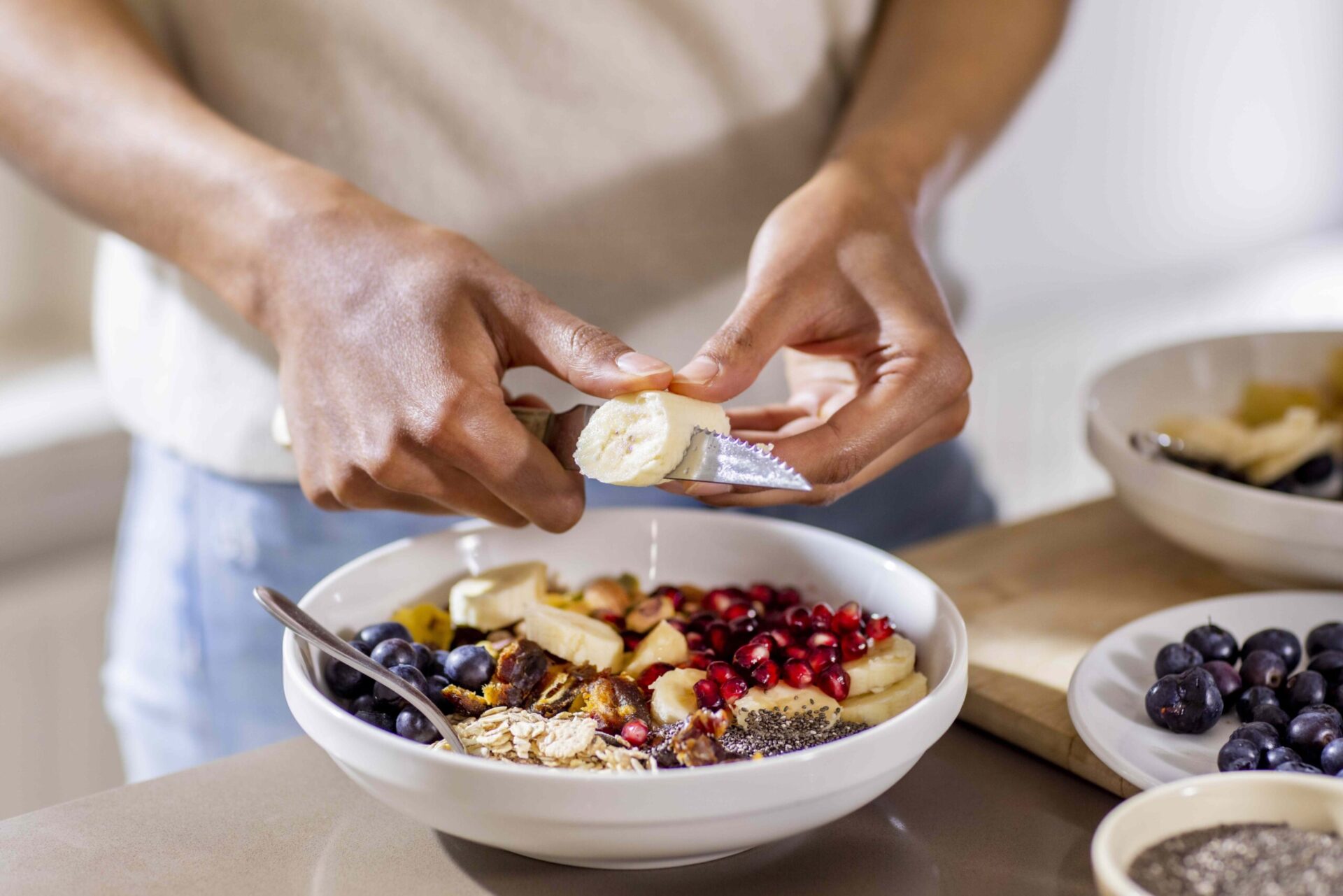
:max_bytes(150000):strip_icc():format(jpeg)/Health-GettyImages-1399211781-9b58f7b203924b4fa73145229ade125d.jpg "Person slicing banana over a bowl of granola topped with various fruits")
Credit: EMS-FORSTER-PRODUCTIONS / Getty Images
- Gentle morning movement and mind-body practices can help lower systolic blood pressure over time.
- Choosing water or low-caffeine drinks in the morning may prevent short-term blood pressure spikes.
- Starting the day with fiber-rich foods supports healthier blood pressure and heart health.
If you’re looking for simple, realistic ways to lower your blood pressure, your morning routine is a powerful place to start. Small habits like what you drink, how you move, and how you manage stress first thing in the day can make a meaningful difference over time.
1. Try Mind-Body Practices
Starting your morning with a calming mind-body practice may be a gentle way to support healthier blood pressure. Simple habits like meditation or slow breathing might help ease stress and signal your body to shift out of fight-or-flight mode.
Some research backs this up. A 2024 review of 15 clinical trials found that mind-body practices were linked to reductions in systolic blood pressure (the top number of a blood pressure reading). The biggest benefits came from meditation and breathing exercises. Improvements were seen in as little as four to eight weeks. However, evidence is conflicting, so more research is needed to confirm that mind-body practices can actually benefit blood pressure.
2. Eat a Low-Sodium, High-Potassium Breakfast
Sodium raises blood pressure by pulling extra water into the bloodstream, which increases strain on blood vessels. Potassium, on the other hand, helps the kidneys rid the body of sodium and lower blood pressure. Starting the day with potassium helps the kidneys flush out excess sodium and relax blood vessel walls. This can help lower blood pressure throughout the day.
Potassium is found in many everyday foods, including:
- Fruits, such as bananas and oranges
- Vegetables, including potatoes and spinach
- Beans, like soybeans
- Dairy, such as milk and yogurt
- Meats
- Whole grains
Adding potassium-rich foods to meals, especially breakfast, can help counter sodium’s effects and support healthy blood pressure. Just keep in mind that some people, includign those with chronic kidney disease, may need to limit potassium intake.
3. Practice Yoga
Yoga may help lower blood pressure by calming the nervous system and reducing stress, and it can fit easily into a morning routine. Gentle movement and guided relaxation first thing in the day may help blunt the natural morning blood pressure rise, especially when done consistently.
A review of eight studies looked at adults with elevated or high blood pressure who practiced Yoga Nidra, a guided relaxation done lying down. Researchers saw greater reductions in both systolic and diastolic blood pressure (the top number of a blood pressure reading) in these adults compared to control groups. Sessions typically lasted 20–40 minutes and were practiced most days for several weeks. More research is needed to confirm that yoga can have such a benefit to blood pressure, though.
4. Do Isometric Exercises
A few minutes of muscle-tightening exercises in the morning may help lower blood pressure. These static movements are called isometric exercises and involve holding a position without moving, like doing a wall squat.
Research shows this type of exercise can lead to meaningful drops in both systolic and diastolic blood pressure. Because it doesn’t require equipment or much time, it’s easy to add to a morning routine before work or breakfast.
5. Walk or Jog
More traditional workouts can help reduce blood pressure when done regularly. Morning habits like brisk walking, jogging, strength training, or short high-intensity workouts have all been linked to lower blood pressure. Even a combination of cardio and resistance training can help. The key is consistency: choosing a form of movement you can stick with before starting your day.
6. Go Outside
Spending time outdoors, especially walking in green spaces, may help lower blood pressure. Research shows people who live near or regularly visit parks, forests, or other natural areas have lower rates of heart disease and stroke. Even short visits matter. One large study found that spending at least 30 minutes a week in nature was linked to a lower risk of high blood pressure.
7. Add Fiber to Your Breakfast or Morning Snack
Adding fiber to your morning routine may help lower blood pressure over time. Research shows that diets higher in fiber are linked to lower blood pressure and fewer heart-related deaths. Fiber helps lower blood pressure in part by feeding healthy gut bacteria. This helps reduce inflammation and relax your blood vessels.
Morning meals are an easy place to start. Fiber-rich foods include:
- Avocados
- Barley
- Beans
- Lentils
- Berries
- Pears
- Apples
- Whole-grain bread
- Chia seeds
- Flaxseed
Even small increases matter. Research suggests that adding just 5 grams of fiber per day can lead to meaningful drops in both systolic and diastolic blood pressure.
8. Limit Your Caffeine Intake
Caffeine can raise blood pressure in the short term among people who aren't regular caffeine drinkers because it can stimulate the nervous system. This can then temporarily tighten blood vessels and raise blood pressure.
In a review of 11 randomized controlled trials, people who did not have caffeine tolerance—especially adolescents—and who drank caffeinated beverages had an increase of both systolic and diastolic blood pressure within four weeks. And blood pressure rose more when caffeine was used for less than one week than for longer than a week.
If you’re trying to support better morning blood pressure, limit your caffeine intake to less than 300 milligrams a day. If you have severe hypertension, you should have no more than a cup a day. You can also consider swapping in decaf coffee, herbal tea, warm lemon water, or sparkling water (unsweetened). If you like something warm and soothing, a caffeine-free tea can still feel like a morning ritual without the bump in blood pressure.
How To Build a Blood Pressure-Friendly Morning Routine
Lowering blood pressure doesn’t require an all-or-nothing lifestyle overhaul. Choosing a few morning habits can support healthier blood pressure when done consistently and over time. This may include activities like gentle movement, stress-reducing practices, fiber-rich foods, and lower-caffeine drinks.
Talk with your healthcare provider about gentle ways your morning routine can help keep your blood pressure in check.





:max_bytes(150000):strip_icc():format(jpeg)/Health-GettyImages-TypesOfSaunas-f03979ce340d4bfba326fadf6086fd24.jpg "Serene woman relaxing in infrared sauna.")