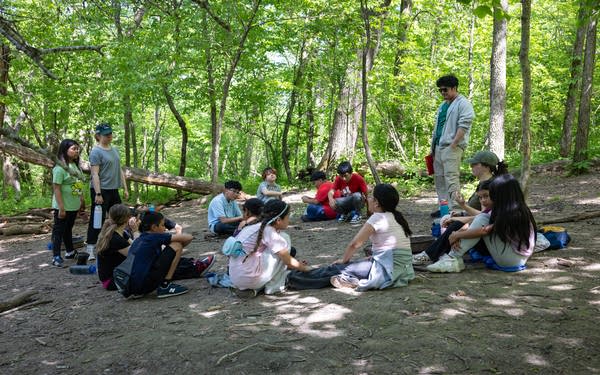
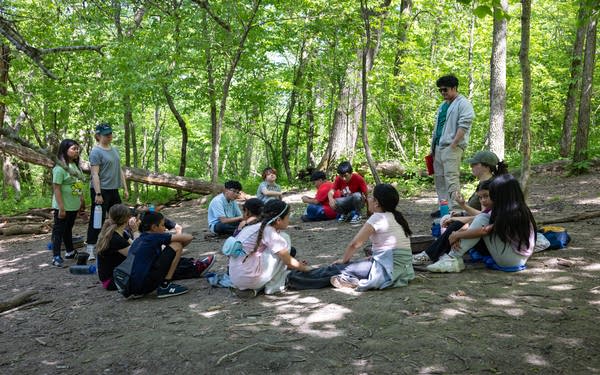
In the woods of southeast Minnesota, outdoor educator Kat Anderson taught a group of 5th graders how to start a fire.
“We want to gather as many of these teeny, teeny, tiny sticks as possible,” Anderson instructed them. “We want to think of our fires as a hungry baby. The baby needs to be constantly fed, or else it's going to cry.”
These students attend Academia In Lak’ech (which until recently was named Academia Cesar Chavez), a dual Spanish immersion charter school in St. Paul. But they took a break from classroom learning recently to travel to Eagle Bluff Environmental Learning Center near Lanesboro. Over the course of two days, the children learned how to build teamwork, their own self confidence, plus hands-on science and nature lessons.
The trip had barely begun, and student Gabby Roman was already enjoying the change of scenery.
“I've been having a really good time. Nature kind of helps you calm yourself down. I feel really comfortable,” Roman said.
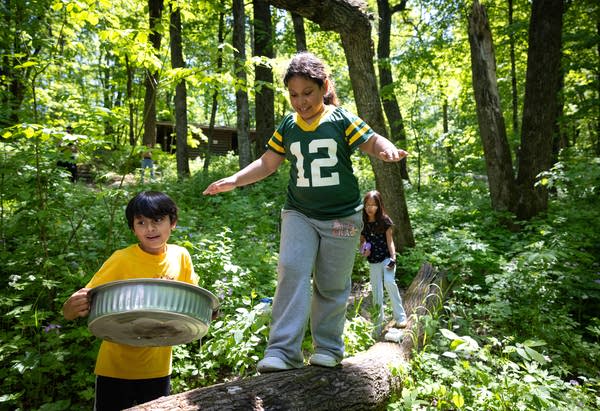
Calm is exactly what these kids needed after a frightening and tumultuous winter and spring.
Many students at Academia In Lak’ech are immigrants or the children of immigrants and most speak Spanish at home.
During the Trump administration’s immigration crackdown called Operation Metro Surge, many Lak'ech families went into hiding out of fear of being detained and deported, said Norma Garcés, who is the school’s executive director and superintendent. Parents stayed home from work and students retreated to online learning.
Getting out of the Twin Cities and into nature was a welcome departure from the state of anxiety and uncertainty Lak’ech students lived in for months.
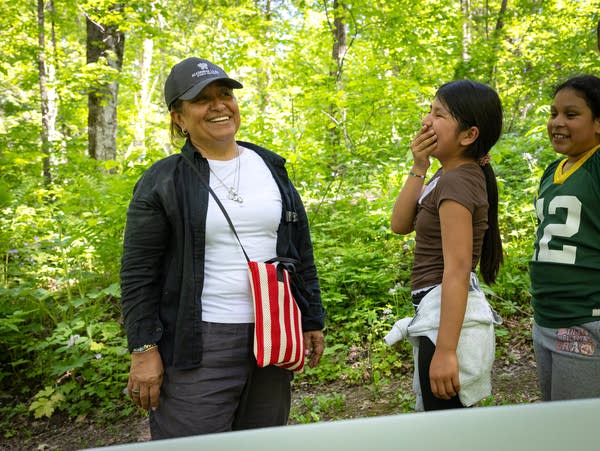
"We know culturally that being outdoors and being here is healing, so our kids need a lot of healing right now,” Garcés said. “Our families need a lot of healing, our teachers need a lot of healing. So part of being here is part of the healing process."
Making outdoor experiences more accessible
Garcés says this trip would have been unaffordable to the school and the students’ families without the help of a new program called Outdoor School for All. The Legislature created it last year, providing nearly $900,000 in grants to schools across the state for experiences like this. That grant money is covering about 40 percent of the Lak'ech school's cost.
Schools must show financial need for grant funding through a rigorous application process and the money can be used to cover expenses such as transportation and teachers’ extra time, as they often plan field trips like this while off the clock, said Colleen Foehrenbacher, who is executive director of Eagle Bluff, one of five accredited outdoor education programs in Minnesota.

She was among the outdoor educators who lobbied the Legislature last year for the grant funding. She said the goal is to make the experience more accessible to more kids – especially those from disadvantaged families and urban areas – and to show them what’s possible in their futures.
“It could lead to somebody deciding they want to go into the legislature to protect the environment, it could lead to somebody going into a natural resources career,” she said. “It could lead to a family starting to have a garden in their backyard."
So far, the program allowed about 2,000 more students to attend outdoor education programs around the state this year.
Friendship is necessary for survival
While Lak’ech’s students had a challenging few months earlier this year, the immigration crackdown they endured taught them a lot about their community and the importance of supporting each other in difficult times, said Garcés.
She said she saw that empathy on full display at Eagle Bluff, while the kids learned survival skills.
"It's interesting in survival, right now they're teaching them, ‘What would you take to survive?’ And one of the items [the kids say] is friendship,” Garcés said. “The kids are like, ‘you're not going to survive by yourself. We need to stay friends in order to survive’."
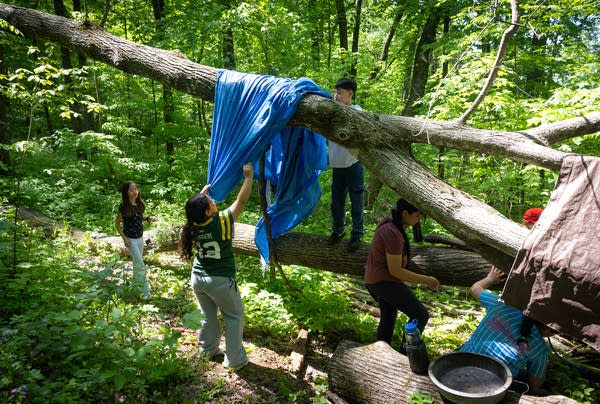
Back outside, 10-year-old Jason Isaac is building a shelter. He said food and water are obvious things he needs to survive. But so, too, is friendship.
“It might be hard to survive [on your own], because you have to collect everything by yourself,” Isaac said.
Right now, the Outdoor School for All program is a pilot that only covers excursions for students from 4th to 12th grade. In coming years, supporters hope to secure more funding from the legislature so kids as young as kindergarten can attend, too.