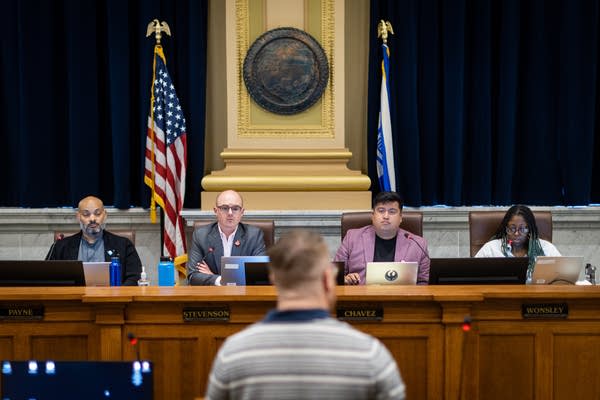
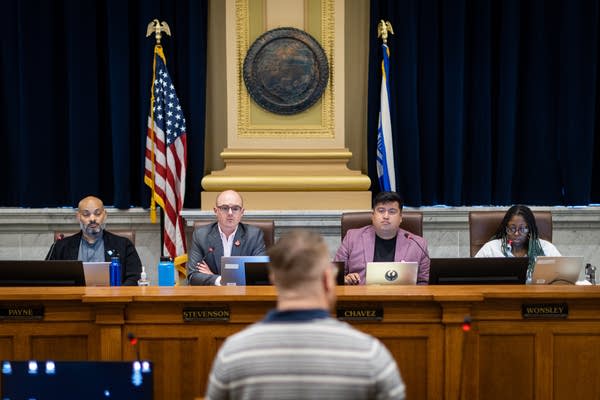
The Minneapolis City Council hosted its second public hearing on Wednesday that brought comments on the discussion to overturn the longstanding adult bathhouse ban in the city.
The council chamber was full with supporters wearing buttons reading “end the ban” as over 30 residents spoke. The overflow room was also at capacity with 50 people, and a dozen waited in the hallway. Each resident spoke in favor of repealing the ban and touched on different issues such as public health, tourism and city history.
In March, ordinances that together would repeal the ban were introduced to the council. Currently, the ban prohibits any private businesses from allowing “high-risk sexual conduct” on the premises. Tuesday’s hearing dealt with license and business regulations for bathhouses and sex venues, and Wednesday’s was about health and sanitation, specifically updating what advocates call stigmatizing language.
Council members emphasized that by voting on the current ordinances, it doesn’t mean that bathhouses will become legal and ready to open immediately. Instead, it is the beginning of a long and technical process that sets the city up for a pathway to consider permitting bathhouses and other sex venues in the future.
Reflecting on history of bathhouse ban, impact on LGBTQ+ community
Adult bathhouses are community spaces that were historically frequented by gay men in the 1970s and ‘80s where people could engage in sexual activity or relax after going out to bars. They were banned in Minneapolis in 1988 during the AIDS epidemic.
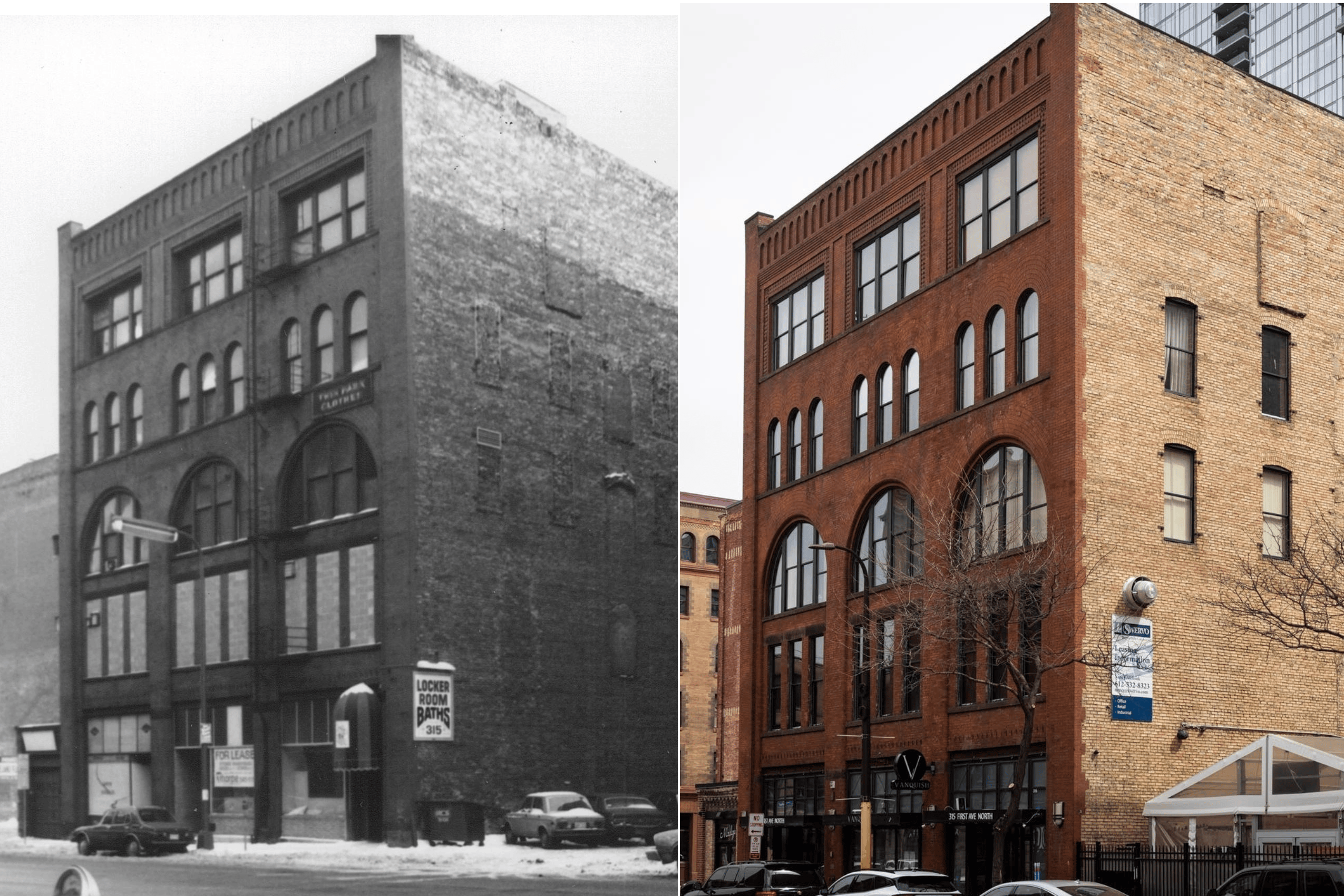
Minneapolis had three adult bathhouses at its peak, and in 1979 police raided Locker Room Baths which later became known as the largest adult bathhouse raid in U.S. history. Locker Room was renamed 315 Health Club and closed just one day before the ban passed in 1988.
Brian Coyle, the first openly LGBTQ+ council member, voted in 1988 in favor of the ban. Coyle died in 1991 from AIDS-related complications. On Tuesday, Council Member Pearll Warren said overturning the ban would be disrespecting Coyle’s legacy. But local LGBTQ+ public historian Noah Barth, who examined Coyle’s papers at the Minnesota Historical Society, says Coyle’s vote doesn’t tell the whole story.
“It is a fact that this ordinance is discriminatory and did not prevent HIV infections and using a decades old opinion of one gay person to dispute a broad coalition of queer people here today is tokenization," he said in reply to Warren on Wednesday. “Brian Coyle loved his community and he wanted us to have sexual freedom. But he knew that taking away these spaces would make us less safe, and they did. Had he been able at the time, he would have preserved them.”
Council member Jason Chavez, the only out LGBTQ+ member of the council, said it is important for the council to understand how the ban came about, and the harm he says it did.
“I have deep respect for Brian Coyle, and I know when he did this vote it was because of an epidemic that was impacting my community. But, at the same time, there were folks who supported the efforts to ban this because of homophobia. Because they did not believe in the existence of LGBTQ+ people, and that can not be removed from history,” Chavez said.
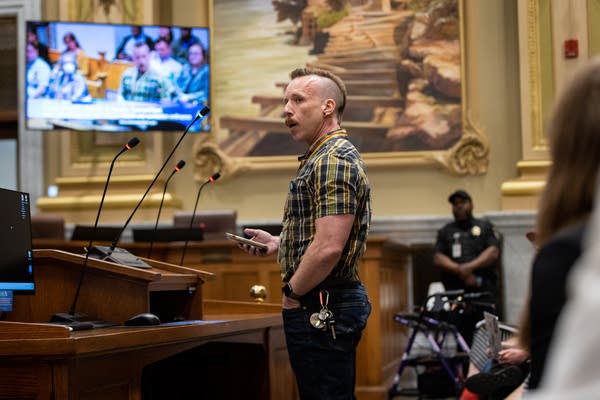
Three employees of the Aliveness Project, a nonprofit founded in 1985 serving people with HIV, also spoke. Jay Orne, a researcher and harm reduction manager at Aliveness, shared how bathhouses and adult sex venues in other cities work with the community to provide sexual health education like rapid HIV testing, condom usage and other safe sex practices.
“Our task is not to eliminate places where people have sex but bring people out of the shadows where we can give them the tools that we have in place. Research has shown that pushing sexual activity into less visible spaces does not eliminate the risk. It makes outreach and education more difficult,” he said.
Frey supports overturning ban; council votes to move ordinance forward
Minneapolis Mayor Jacob Frey told MPR News after the hearing that he supports overturning the ban, but doesn’t believe it is a top priority for the city.
“We need to have a laser focus right now on public safety, on economic development, and housing. And so, am I supportive of the general direction that the council is going on this, I am. It's just not the first thing that I want to be working on,” he said. “I think we should be focused on the core city services that people are expecting us to improve upon.”
Council member LaTrisha Vetaw said she is concerned that some Minneapolis residents, specifically those who want to keep the ban, have reached out worrying that the ordinances will allow bathhouses to pop up immediately.
“There’s not going to be a bathhouse on every block. I think that is the narrative that has been created here like, ‘You get a bathhouse! You get a bathhouse! You get a bathhouse!’ Right? Like everywhere. Because that is the fear that is happening in my community too,” she said. “We have to do a better job at making sure that fear doesn’t keep on growing.”
San Francisco overturned its adult bathhouse ban and went on to legalize sex venues under extensive regulations.
The ordinance considered on Tuesday moved forward with a 4-3 vote, and on Wednesday it moved forward 6-1. Notable among the ‘no’ votes was council member Michael Rainville, whose aunt, Alice Rainville, was the president of the council in 1988 when the ban was passed.
Public speaks in favor of overturning ban
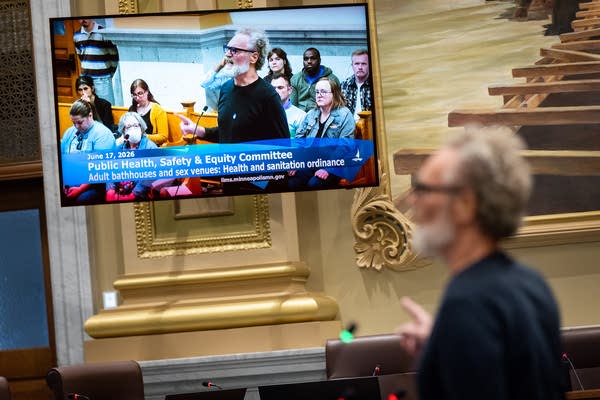
Artist and activist Patrick Scully spoke as one of the only present who remembered Minneapolis bathhouses before the ban. He said that after the bathhouses closed he began hosting safe sex parties to educate and provide spaces for the LGBTQ+ community to go.
“I have lived most of my life criminalized and excluded by the system. Discrimination against me was legal until I was almost 40 years old in Minnesota. Sex was a crime in Minnesota until I was in my 50s. Marriage was not an option until I was in my 60s,” Scully said. “So don’t expect me to live my life like you live your life if you’re a heterosexual. You forced me to find other ways to live my life.”
Dustin Barnes talked about his work in the tourism industry for fifteen years. Barnes, a Minneapolis resident, emphasized how bathhouses could improve local economic development, instead of people going to Duluth or Chicago, the closest cities with bathhouses.
After the hearing, Barnes told MPR News that based on the comments some council members have shared about emails or calls with push back from constituents, he expected some speakers to be against repealing the ban.
“Where are they? I took off from work and made it here. If it’s that important to them, they will show up. Obviously, it’s not that important to them. We don’t have time for keyboard warriors. I’m done with that. We’re here for facts, science and just overall acceptance,” Barnes said.
Several supporters from local sex work organizations also spoke in favor both days, and have worked with the Safer Sex Spaces coalition, dedicated to overturning the ban.
The full council will meet next week to vote on the ordinances.