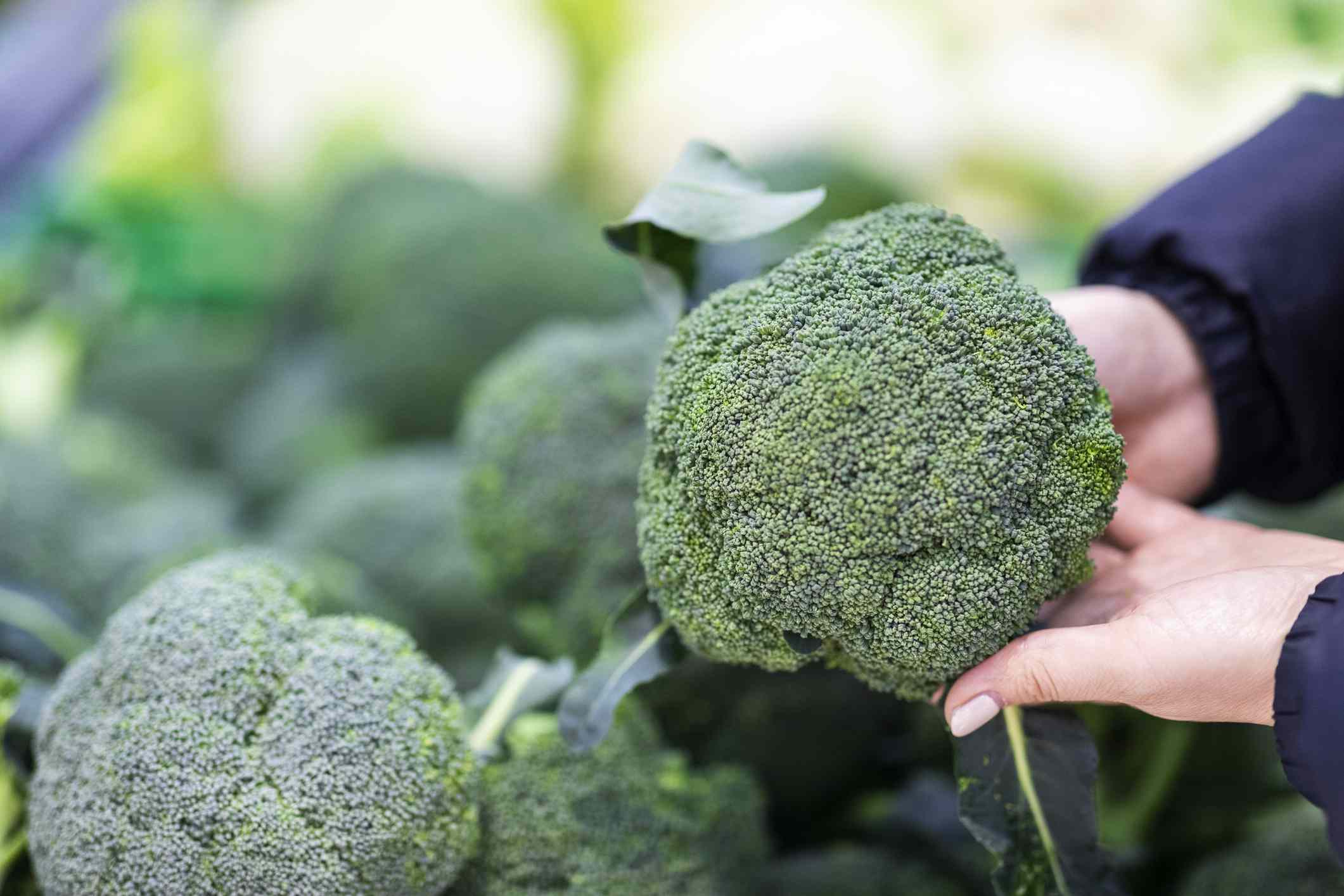
What Happens to Your Body When You Eat Broccoli Every Day?


Credit: owngarden / Getty Images

Broccoli, or Brassica oleracea, has countless benefits that make it a powerhouse superfood. This cruciferous vegetable can keep you hydrated, support brain health, and fight inflammation.

1. Supplies Plenty of Nutrients

Broccoli is rich in nutrients that contribute to its many health benefits. One medium stalk of raw broccoli contains:

  • Calories: 45 calories
  • Fat: <1 gram (g)
  • Sodium: 80 milligrams (mg)
  • Carbohydrates: 8 g
  • Fiber: 3 g
  • Protein: 4 g

One stalk provides 220% of the Daily Value (DV) for vitamin C, which supports immunity and bone health. It also contains 460 milligrams of potassium (which supports many key body functions), or 13% of the DV.

Broccoli also provides:

2. Provides Fiber

One of broccoli's top benefits is that it's a great source of fiber. Fiber supports digestion, heart health, and helps regulate blood sugar and insulin.

3. Keeps You Hydrated

There are about 68 grams of water in a cup of raw broccoli. You need water to keep the cells and organs in your body healthy. Hydration regulates temperature, lubricates joints, and prevents constipation.

High-water, high-fiber foods boost fullness, which helps with weight management.

4. May Help Prevent Cancer

Broccoli is a member of the cruciferous vegetable family, which also includes vegetables, such as:

  • Cauliflower
  • Kale
  • Brussels sprouts
  • Cabbage
  • Collard greens

These plants have compounds that may neutralize carcinogens (cancer-causing substances) and support apoptosis (cell death), which may prevent cancer.

5. Protects Your Heart

Heart disease remains the leading cause of death in the United States. Cruciferous vegetables like broccoli protect the heart. They decrease damage to arteries that leads to hardening, which is often a precursor to a heart attack or stroke.

6. Supports Your Brain Health

Lutein and zeaxanthin in broccoli support brain health and may protect against cognitive decline.

7. Improves Your Bone Strength

Broccoli has several nutrients essential for bone formation and preventing bone density loss, such as:

8. Fights Inflammation

Broccoli's anti-inflammatory effects may decrease your disease risk by lowering pro-inflammatory markers.

9. Provides Protective Antioxidants

Naturally occurring compounds in broccoli act like detoxifiers. This means they help deactivate potentially damaging chemicals or move them out of the body more quickly.

Protective antioxidant compounds have been shown to counter skin damage caused by UV radiation. Lutein and zeaxanthin lower the risk of macular degeneration and cataracts, two common eye diseases.

Types of Broccoli

All broccoli varieties have similarities. However, each is distinct in appearance, flavor profile, and nutritional benefits:

  • Calabrese broccoli: If you have ever purchased broccoli from the grocery store, it was probably Calabrese broccoli. This type of broccoli has a sturdy stalk and big green, tightly-beaded florets. It has a slightly bitter, earthy flavor with a crunchy texture.
  • Chinese broccoli: Chinese broccoli, also called Gai Lan, has long green stalks and tiny florets barely visible underneath its big green leaves. The stalks are slightly sweet, while the leaves are earthy and bitter. Chinese broccoli has twice as much calcium as Calabrese broccoli and almost twice as much folate.
  • Broccolini: Broccolini is crossbred from regular and Chinese broccoli. Known for its subtle, sweet, earthy flavor, it has long thin stems with little floret tufts at the ends. It's a great source of phenolic compounds and other phytochemicals that combat oxidative stress linked to chronic inflammation, cancer, and other diseases. Studies found that 70% of broccolini’s phenolic compounds were lost after boiling and 50% were lost after steaming and griddling.
  • Broccoli rabe: Broccoli rabe (or raab as it’s sometimes spelled) is technically part of the turnip family. It resembles broccolini but has smaller florets, bigger leaves, and a bitter taste. Broccoli rabe is a good source of nutrients like vitamin A, vitamin C, folate, and potassium.
  • Di Cicco broccoli: Di Cicco is popular in Italy. This type looks similar to regular broccoli, but with smaller, blueish heads. The taste is similar as well—earthy, and slightly sweet. The whole plant—leaves, florets, and stems—is edible.
  • Purple sprouting broccoli: This tall plant has big leaves and medium purple florets that grow apart from one another. The vibrant purple florets taste like regular broccoli and turn green when cooked. Studies found that anthocyanins, a kind of antioxidant in red and purple fruits and vegetables, protect against cardiovascular and neurodegenerative diseases.
  • Waltham broccoli: This type of broccoli resembles Calabrese broccoli, but with longer stalks and heads with hints of blue. The name Waltham comes from a town in Massachusetts where this broccoli variety was developed in the 1950s.

Risks of Broccoli

It’s possible to have an allergic reaction when consuming broccoli, but it's rare.

Broccoli contains sugars that the stomach and small intestine have difficulty digesting. As your gut bacteria try to break down the sugars, it creates gas that causes bloating and discomfort.

Broccoli is very rich in vitamin C. Consuming too much of this vitamin might lead to diarrhea or stomach cramps.

Tips for Eating More Broccoli

Most fruits and vegetables must be stored in the refrigerator. If you want to stretch out the shelf life of broccoli, you will want to keep it cool.

Do not wash fresh broccoli until you are ready to eat it. Place it in a loosely tied plastic bag, and store it in the refrigerator. Use your fresh broccoli within 3-5 days of storing it.

Broccoli can be used in just about any kind of meal or snack. Some varieties—like broccoli rabe and Chinese broccoli—are best enjoyed cooked to soften them, while others can be enjoyed raw.

Here are some general tips for including broccoli in your diet:

  • Snack on broccoli raw for maximum nutritional benefits.
  • Steam it (to preserve the most nutrients, including vitamin C) then drizzle with extra virgin olive oil-based pesto, olive tapenade, or a savory nut butter sauce.
  • Cook broccoli in the air fryer for a crispy texture.
  • Dip it in hummus, seasoned tahini, or guacamole.
  • Add it to any number of dishes (e.g., stir fry, soups, stews, frittata, fajitas, and more).
  • Blend raw or frozen broccoli into smoothies.
  • Add finely chopped or pureed broccoli into baked goods, salads, homemade pesto, and other sauces.
  • Try mixing powdered broccoli with ground coffee to make broccoli coffee.

Next Steps

  • Experiment with different types of cruciferous vegetables for variety.
  • Incorporate broccoli into your diet to help keep you hydrated and fight inflammation.
  • Try adding raw or steamed broccoli to your meals for a nutritional boost.


Source link

Leave a Reply

Subscribe to Our Newsletter

Get our latest articles delivered straight to your inbox. No spam, we promise.

Recent Reviews


Introduction To The SAP IBP

The SAP IBP (integrated business planning) is a cloud-based business planning software used in supply chain management. The SAP IBP uses real-time integrated information that enables companies to respond quickly. This tool offers integrated, demand and inventory planning, unified planning for sales and operations, and an analytical dashboard for monitoring. 

The SAP IBP is known for its new user experience solution because it offers the following business integrated solutions:

  • Integrated business planning for the sales and operations.
  • Integrated business planning for the demand.
  • Integrated business planning for inventory management.
  • Integrated business planning for supply.
  • Integrated business planning for response planning.

Interested in learning the SAP IBP ? Enroll in our SAP IBP Online Training program now !

SAP IBP Integration Architecture  :

Here we will be explaining how does SAP IBP works, and what are the basic components that it incorporates to perform data integration.

The below SAP IBP architectural image adheres you to know the overall workflow;

IMAGE

There are two possible ways the SAP IBP can integrate the data.

  • File based integration (Open API)
  • Table integration (ABAP)

The SAP smart data integration (SDI) approach integrates the data between the SAP OBP and SAP H/4 HANA.  The SDI approach process the data through back jobs .while the non-supported real-time integration causes the planning and execution issues in the SAP H/4 HANA environment.

After the 2111 version of the SAP H/4 HANA, real-time data integration happens on both SAP on-premise and cloud environments. This version type also supports the master and transactional data integration from source to target systems and also loads the delta data into the source system.

Advantages Of SAP IBP :

We have decided to explain the SAP IBP advantages based on the solution which it offers to integrate the real-time information.

Solution designed for the S &OP Process that supports ;
  • Process modeling.
  • Scenario planning.
  • Easy-to-use user interface both excel and web-based.
  • Social collaborations.
  • Consolidated information from different organizations, especially financial data ex. Price data.
  • Real-time analysis.
Demand planning solutions :
  • S&OP with basic forecasting methods.
  • IBP for demand with advanced statistical forecasting methods including ARIMA models, and gradient boosting or machine learning.
  • IBP for demand for short-term forecasting using demand sensing logics.
Supply planning :
  • S&OP supports technical planning through the heuristic with infinite capacity planning.
  • Supports operational supply planning with response algorithms based on order models.
Monitoring and decision support and reporting :
  • Control tower as a purpose-built solution.
  • Dashboards and customer alerts.
  • case management and social collaborations.
  • Real-time analytics.
  • Performance and management analytics.
Inventory optimization :
  • Multi-stage inventory optimization.
  • Same algorithm as the on-premise solution EIS (enterprise inventory and service level optimization).
  • Fully integrated into IBP.
Available to promise :
  • IBP responses algorithms can generate allocations that are used in ATP.
  • IBP response algorithm can re-schedule and confirm sales orders (response planning).
  • IBP for response can be used additionally to ATP tools (basic ATP ECC and S/4 ), APO -gATP, and S/4 ATO.

SAP IBP Training

  • Master Your Craft
  • Lifetime LMS & Faculty Access
  • 24/7 online expert support
  • Real-world & Project Based Learning

Key Features Of The SAP IBP :

The following are the key features of the SAP IBP;

Let me discuss them one by one:

  • Easy to use interface for planners to review and quickly modify plans.
  • S & OP powered by HANA provides real-time web-based analytics on the entire supply chain model.
  • Data integration: easy integration between any SAP or Non-SAP system and IBP HCI is included as part of the cloud license.
  • Offers real-time S&OP calculations: modeling of the supply chain in real-time during the S&OP cycle.
  • Social collaborations: SAP JAM brings together all functions of the business to solve business-critical problems and drive rapid results. 
  • Rapid simulations: the ability to run what-if scenarios in near real-time to analyze demand, supply, and changes.
  • IBP offers advanced demand sensing, analysis, and predictive forecasting.
  • IBP also provides an embedded social collaboration and MS-Excel-based planning.

Application areas of SAP IBP :

We already know that the benefits of using SAP IBP, now it’s time for us to know which are all the industrial applications adapt SAP IBP:

  • Product profitability 
  • Customer profitability 
  • Capital expenditures 
  • Manufacturing operations.
  • Supply chain operations
  • Business process (information and human-based)
  • Business policy 
  • Market demand curves
  • Competitive strategy

The below image illustrates the overall business planning of Integrated business planning ;

IMAGE

Enroll in our Java Web Dynpro Training program today and elevate your skills!

HKR Trainings Logo

Subscribe to our YouTube channel to get new updates..!

Why technology is important in the SAP IBP?

SAP IBP offers various industry-driven business solutions across the world. Let’s see how SAP IBP changes the business to deliver high-quality outcomes.

Below are the few listed reasons which will explain why high tech companies looking for the SAP IBP solution:

The rapid pace of change : 

The factors include are;

  • A process led by senior management that evaluates and revises for demand, supply, product, and portfolio changes, strategic projects, and the resulting financial plans 
  • Realign the technical plan for all business functions in all graphics to support the company’s business goals and targets.
  • Drive a single consequences operating plan, deploying resources effectively to satisfy customers in a profitable way.
Increasingly complex networks : 
  • Monitor, analyze, and troubleshoot gaps between the business plan, current performance, and projected future performance.
  • Continuously monitor the performance of finance, product portfolio, sales, and operations against projections in real-time.
  • Identify and analyze gaps, and predict future performance.
  • Sense and predict market direction and customer needs quickly.
Global competitions :
  • React and execute a dynamic strategy.
  • Ability to make make and execute decisions in hours and days, not weeks and months.
  • Manage business risks and take advantage of market opportunities by quickly aligning operations plans.
  • Ability to develop deep customer insights, segment customers, and align service levels to maximize profitability.
  • Manage the complex supplier and partner network with real-time visibility, enabling agile operations with system-assisted decision support and management by exceptions.

Differences between the SAP IBP and traditional S&OP :

The major differences between the SAP IBP and traditional S &OP are as follows;

We are going to explain the differences according to their features:

Business objective :

  • Traditional S &OP offers supply and demand balancing.
  • Whereas IBP is not about matching demands and customer needs. They also consider several plan alternatives and choose one that best represents the business drivers, the objective is revenue and profit

Process :

  • Traditional S&OP offers processes in a Rigid and perspective way.
  • Whereas the IBP process is more rules and exception-based.

Technology :

  • Traditional S&OP provides a weak and non-integrated technology.
  • Whereas in SAP IBP, the technologies enable the process through the workflow.

Frequency :

  • The frequency of the traditional S&OP available on a monthly or quarterly basis.
  • SAP IBP is still available on a monthly basis in a lot of cases but with the ability to rapidly handle exceptional situations.

Focus :

  • Traditional S&OP provides an inward focus.
  • The SAP IBP offers a collaborative and outward focus.

Join our SAP Ariba Training In Pune today and enhance your skills to new heights!

SAP IBP Training

Weekday / Weekend Batches

Final Words :

In this SAP IBP blog, we have tried to explain the concepts in such a way that even non-SAP programmers can also read our blogs. We adhere to all our SAP community people to stay tuned to our website to know more about SAP updated posts.

Related Articles:

SAP Supply Chain Management


Source link