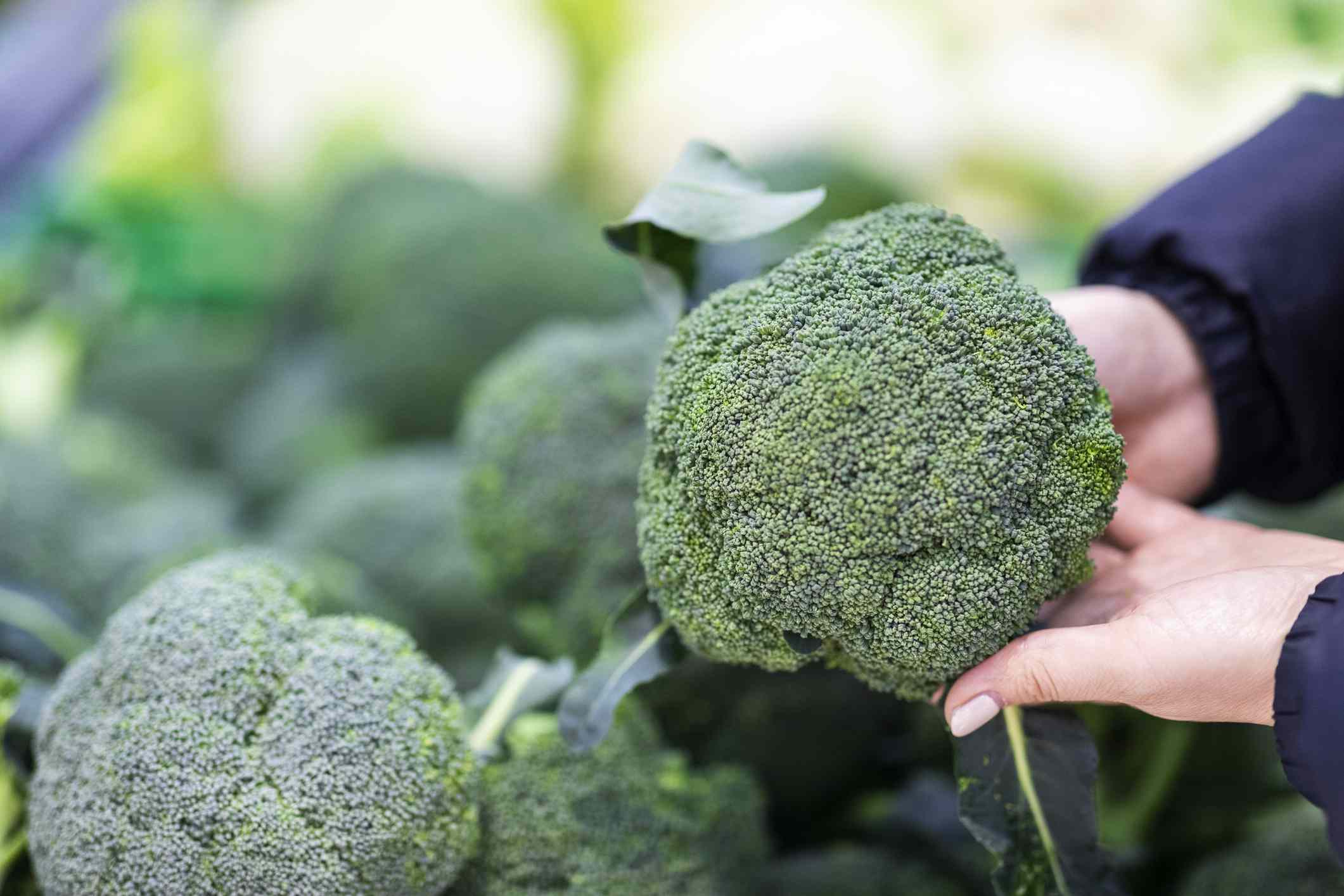
:max_bytes(150000):strip_icc():format(jpeg)/TypesOfBroccoli-6dd837ebc29047889872aeeb175a3646.jpg "A woman shopping for different types of broccoli in the grocery store")
Broccoli, or Brassica oleracea, has countless benefits that make it a powerhouse superfood. This cruciferous vegetable can keep you hydrated, support brain health, and fight inflammation.
1. Supplies Plenty of Nutrients
Broccoli is rich in nutrients that contribute to its many health benefits. One medium stalk of raw broccoli contains:
- Calories: 45 calories
- Fat: <1 gram (g)
- Sodium: 80 milligrams (mg)
- Carbohydrates: 8 g
- Fiber: 3 g
- Protein: 4 g
One stalk provides 220% of the Daily Value (DV) for vitamin C, which supports immunity and bone health. It also contains 460 milligrams of potassium (which supports many key body functions), or 13% of the DV.
Broccoli also provides:
2. Provides Fiber
One of broccoli's top benefits is that it's a great source of fiber. Fiber supports digestion, heart health, and helps regulate blood sugar and insulin.
3. Keeps You Hydrated
There are about 68 grams of water in a cup of raw broccoli. You need water to keep the cells and organs in your body healthy. Hydration regulates temperature, lubricates joints, and prevents constipation.
High-water, high-fiber foods boost fullness, which helps with weight management.
4. May Help Prevent Cancer
Broccoli is a member of the cruciferous vegetable family, which also includes vegetables, such as:
- Cauliflower
- Kale
- Brussels sprouts
- Cabbage
- Collard greens
These plants have compounds that may neutralize carcinogens (cancer-causing substances) and support apoptosis (cell death), which may prevent cancer.
5. Protects Your Heart
Heart disease remains the leading cause of death in the United States. Cruciferous vegetables like broccoli protect the heart. They decrease damage to arteries that leads to hardening, which is often a precursor to a heart attack or stroke.
6. Supports Your Brain Health
Lutein and zeaxanthin in broccoli support brain health and may protect against cognitive decline.
7. Improves Your Bone Strength
Broccoli has several nutrients essential for bone formation and preventing bone density loss, such as:
8. Fights Inflammation
Broccoli's anti-inflammatory effects may decrease your disease risk by lowering pro-inflammatory markers.
9. Provides Protective Antioxidants
Naturally occurring compounds in broccoli act like detoxifiers. This means they help deactivate potentially damaging chemicals or move them out of the body more quickly.
Protective antioxidant compounds have been shown to counter skin damage caused by UV radiation. Lutein and zeaxanthin lower the risk of macular degeneration and cataracts, two common eye diseases.
Types of Broccoli
All broccoli varieties have similarities. However, each is distinct in appearance, flavor profile, and nutritional benefits:
- Calabrese broccoli: If you have ever purchased broccoli from the grocery store, it was probably Calabrese broccoli. This type of broccoli has a sturdy stalk and big green, tightly-beaded florets. It has a slightly bitter, earthy flavor with a crunchy texture.
- Chinese broccoli: Chinese broccoli, also called Gai Lan, has long green stalks and tiny florets barely visible underneath its big green leaves. The stalks are slightly sweet, while the leaves are earthy and bitter. Chinese broccoli has twice as much calcium as Calabrese broccoli and almost twice as much folate.
- Broccolini: Broccolini is crossbred from regular and Chinese broccoli. Known for its subtle, sweet, earthy flavor, it has long thin stems with little floret tufts at the ends. It's a great source of phenolic compounds and other phytochemicals that combat oxidative stress linked to chronic inflammation, cancer, and other diseases. Studies found that 70% of broccolini’s phenolic compounds were lost after boiling and 50% were lost after steaming and griddling.
- Broccoli rabe: Broccoli rabe (or raab as it’s sometimes spelled) is technically part of the turnip family. It resembles broccolini but has smaller florets, bigger leaves, and a bitter taste. Broccoli rabe is a good source of nutrients like vitamin A, vitamin C, folate, and potassium.
- Di Cicco broccoli: Di Cicco is popular in Italy. This type looks similar to regular broccoli, but with smaller, blueish heads. The taste is similar as well—earthy, and slightly sweet. The whole plant—leaves, florets, and stems—is edible.
- Purple sprouting broccoli: This tall plant has big leaves and medium purple florets that grow apart from one another. The vibrant purple florets taste like regular broccoli and turn green when cooked. Studies found that anthocyanins, a kind of antioxidant in red and purple fruits and vegetables, protect against cardiovascular and neurodegenerative diseases.
- Waltham broccoli: This type of broccoli resembles Calabrese broccoli, but with longer stalks and heads with hints of blue. The name Waltham comes from a town in Massachusetts where this broccoli variety was developed in the 1950s.
Risks of Broccoli
It’s possible to have an allergic reaction when consuming broccoli, but it's rare.
Broccoli contains sugars that the stomach and small intestine have difficulty digesting. As your gut bacteria try to break down the sugars, it creates gas that causes bloating and discomfort.
Broccoli is very rich in vitamin C. Consuming too much of this vitamin might lead to diarrhea or stomach cramps.
Tips for Eating More Broccoli
Most fruits and vegetables must be stored in the refrigerator. If you want to stretch out the shelf life of broccoli, you will want to keep it cool.
Do not wash fresh broccoli until you are ready to eat it. Place it in a loosely tied plastic bag, and store it in the refrigerator. Use your fresh broccoli within 3-5 days of storing it.
Broccoli can be used in just about any kind of meal or snack. Some varieties—like broccoli rabe and Chinese broccoli—are best enjoyed cooked to soften them, while others can be enjoyed raw.
Here are some general tips for including broccoli in your diet:
- Snack on broccoli raw for maximum nutritional benefits.
- Steam it (to preserve the most nutrients, including vitamin C) then drizzle with extra virgin olive oil-based pesto, olive tapenade, or a savory nut butter sauce.
- Cook broccoli in the air fryer for a crispy texture.
- Dip it in hummus, seasoned tahini, or guacamole.
- Add it to any number of dishes (e.g., stir fry, soups, stews, frittata, fajitas, and more).
- Blend raw or frozen broccoli into smoothies.
- Add finely chopped or pureed broccoli into baked goods, salads, homemade pesto, and other sauces.
- Try mixing powdered broccoli with ground coffee to make broccoli coffee.
Next Steps
- Experiment with different types of cruciferous vegetables for variety.
- Incorporate broccoli into your diet to help keep you hydrated and fight inflammation.
- Try adding raw or steamed broccoli to your meals for a nutritional boost.