Medically reviewed by Barbie Cervoni, RD
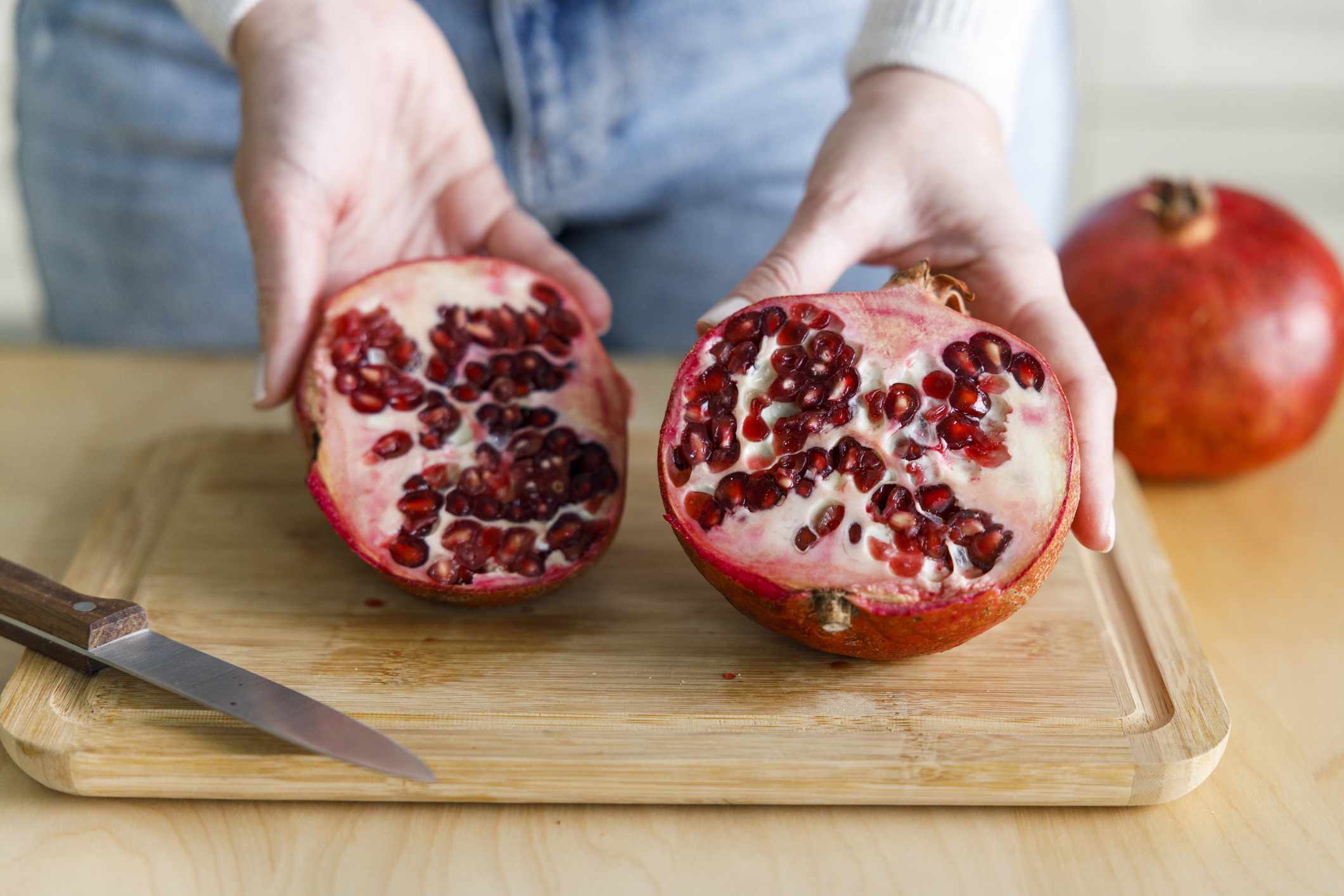
:max_bytes(150000):strip_icc():format(jpeg)/Health-GettyImages-1389440410-97843650684649b5a1f1f9e48e65fabd.jpg "woman's hands holding a halved pomegranate open, the seeds are visible")
Credit: eternalcreative / Getty Images
- To get pomegranate seeds out of the fruit, cut the top and then cut the skin between the ridges from top to bottom.
- Another method is to use a spoon to remove the pomegranate seeds from a halved pomegranate.
- Enjoy pomegranates by sprinkling them into yogurt or blending them into a smoothie.
You probably know that pomegranates are packed with nutrients, but getting those seeds out of the fruit may seem like more trouble than it’s worth. Fortunately, removing them is easier than you might think. Here’s how to do it—and why pomegranate seeds are so good for you in the first place.
How To Get the Seeds Out
Pomegranate seeds are small and juicy, with a taste ranging from tangy to sweet and berry-like. The seeds can be hard to remove, but it’s a lot easier if you use the proper technique. Here’s how to extract the seeds and start enjoying them:
- Cut the top: Use a sharp knife to cut off the top of the pomegranate (the stem area) and remove the top piece. You should see that the white membranes (pith) divide the seeds into sections.
- Score it: Use the knife to score a line around the center of the pomegranate. The pomegranate will open, but the seeds will remain together in sections.
- Remove seeds: Pull the fruit apart into sections in your hands. Hold the pomegranate over a large bowl, and use your fingers to remove the seeds.
- Remove pith: Some of the white pith will come off with the seeds. To remove it, fill the bowl with water. The seeds will sink to the bottom, while the pith will float.
Another method is to use a spoon to remove the pomegranate seeds from a halved pomegranate. Tap the spoon on the back of the pomegranate to help the seeds fall out.
This requires cutting the fruit in half, which may spread some juice. Avoid the mess by making the initial cut on a cutting board in a sink or on top of a towel.
Simple Ways To Eat the Seeds
Incorporating pomegranate seeds into your diet is a great way to boost both nutrition and flavor. Here are a few tasty ideas:
- Blend them with pineapple, banana, raspberries, and almond milk for a tropical fruit smoothie.
- Top them on a mixture of pomegranate juice, lemon juice, and coconut water that’s been into a slush.
- Add them to Greek yogurt along with granola and coconut.
- Sprinkle them over oatmeal with nut butter, chia seeds, and honey.
- Toss them into a mixed green salad with sliced oranges, crumbled goat cheese, and sliced almonds.
How Long Do Pomegranate Seeds Last?
Because pomegranate seeds no longer have their fruit peel protection, they tend to spoil faster. If you store them at 39-43 degrees Fahrenheit (4-6 degrees Celsius), they’ll last for about 21 days.
Want them to last longer? Try freezing them below 0 degrees Fahrenheit (-18 degrees Celsius), which will stop bacterial growth. The quality decreases over time, however, so you may notice changes to the color, taste, and smell when you eventually decide to eat them.
Tips for Choosing the Best Fruit
Pomegranates are in season during the fall and winter. To choose the best fruit, keep these tips in mind:
- Buy local: Local produce can sometimes have a longer shelf life than produce that goes through shipping.
- Check for damage: Fruits can be damaged during transport, which can speed up bacterial growth.
- Feel for firmness: Look for less firm fruits, but don’t pick out one that’s too soft, either. That could mean it’s overripe.
- Look at the color: Pomegranates turn from green to red as they mature. While ripening, antioxidants give the fruit its red color. Overripe pomegranates may have soft, dull-colored skin with brown spots.
You can also find ready-to-eat pomegranate seeds fresh, freeze-dried, or frozen. Tips for buying pomegranate seeds include:
- Buy frozen products last: Pick up frozen pomegranate seeds as your last item to prevent them from melting.
- Check the date: Always check the “best buy” or “use by” date to avoid low-quality or soon-to-expire foods.
- Examine the package: The packaging should not be broken, have tears or holes, or appear discolored. Avoid items that are softening or have ice crystals.
- Read the label: Frozen or pre-packaged fruits may contain other ingredients. To avoid excess sugar, make sure the product is 100% pomegranate seeds.
Benefits of Eating Pomegranate Seeds
Pomegranate seeds may be small, but they are loaded with nutrients. Chief among them are fiber, vitamin C, and potassium. The seeds also contain phenolic compounds, which may lower inflammation, blood pressure, blood sugar, and cholesterol levels.
Experts recommend at least two servings of fruit a day on a 2,000-calorie diet. Here’s the nutrition profile of a standard half-cup serving of pomegranate seeds:
- Calories: 60
- Fat: 0.25 grams (g), or 0.32% of the Daily Value (DV)
- Sodium: 2.8 milligrams (mg), or 0.12% of the DV
- Carbohydrates: 13.5 g, or 4.91% of the DV
- Fiber: 5.5 g, or 19.64% of the DV
- Added sugar: 0 g
- Protein: 1 g, or 2% of the DV
Are There Any Risks?
Pomegranate seeds are generally safe to eat. However, keep in mind that they may cause some digestive discomfort. Although uncommon, some people are allergic to pomegranates.