A guide to converting your lawn into a wildlife friendly garden 


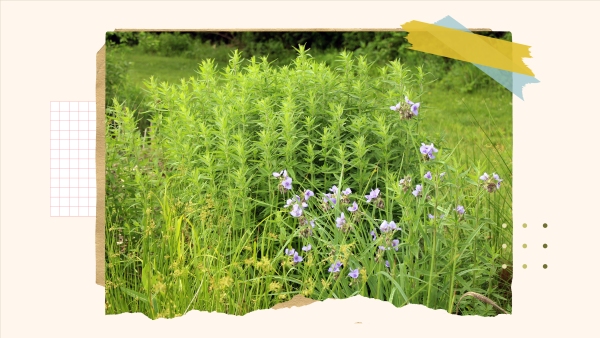
A medium-shot collage-style image of a native garden featuring clusters of various plants including purple Ohio spiderwort flowers and pale green mountain mint foliage.

A medium-shot collage-style image of a native garden featuring clusters of various plants including purple Ohio spiderwort flowers and pale green mountain mint foliage.
Three years ago, this garden near the Kansas City metro area was a lawn. Now it's full of Midwest native plants — like the Ohio spiderwort and mountain mint pictured here —that attract plenty of pollinators.
Celia Llopis-Jepsen | KCUR

Lawns are great surfaces for throwing a football or laying out a picnic.

But turfgrass in the United States now covers an estimated 40 million acres — an area about the size of the state of Georgia — and these manicured lawns take an environmental toll.

Gas-powered yard equipment, like lawn mowers and trimmers, put out 30 million tons of air pollutants a year, the Environmental Protection Agency says.

To keep our lawns tidy and green, we also use weedkillers and fertilizers. When it rains, those chemicals escape our yards and make their way through storm drains to our lakes and rivers.

Shrinking lawns can reduce all these impacts. It can also create space for gardens that feed wildlife — great news at a time when North America has lost one-quarter of its birds and the U.S. has lost one-fifth of its butterflies.

University of Delaware entomologist Doug Tallamy has calculated that if Americans reduced their lawns by half and added native plant gardens to feed birds, butterflies and other wildlife, this would create more habitat than Yellowstone and a dozen other major national parks combined.

Interested in ditching your lawn? These tips can get you started.

1. Choose a spot where you'll kill some grass

Consider starting small, especially if you're new to gardening.

" It can be overwhelming to take on an expansive garden," says Stacia Stelk, executive director of Deep Roots KC, a group that teaches the public how and why to plant habitat gardens in the Kansas City region. " As you get more comfortable, there's always room to expand."

Replacing the whole lawn at once can lead to weed, mud and erosion problems, so it requires careful planning and more work.

A good place to remove some grass could be along a fence or sidewalk. If you have a tree in your yard, consider putting a flower bed around it. This is called a soft landing because it gives caterpillars a safe place to go after they finish feeding on your tree's leaves. There, they can make their chrysalises and cocoons among flowers and leaf litter, safe from lawnmowers, and emerge as adult butterflies and moths. Bees, fireflies and other insects will find homes there too.

2. Plan what you are going to plant

Using flowers, trees and shrubs that have existed in North America for millennia is a surefire way to turn your space into a wildlife magnet.

That's because many insects feed on specific native plants. A famous example is the monarch caterpillar's need for milkweed — it can't eat anything else.Native plants also boost insect populations, which feed birds, frogs, lizards and other animals.

To pick your specific plants, first note whether your new flower bed will be in shade or sun and what the ground is like. For example, is the soil very sandy? Is the area usually wet?

Next, find a native plant group specific to your region, because native plants for Arizona and New York are completely different. Many of these groups have online cheat sheets for picking plants. Midwesterners, for example, can check out GrowNative.org, which has sample flower bed plans and Top 10 lists of plants for different light and soil conditions.

Also know what style you're looking for. Are you looking for short groundcovers? Do you dream of a cottagecore garden with big drifts of pastel flowers? Do you want a hedge between you and your neighbors?

Finally, know your local rules: Some homeowners associations or city codes restrict tall flowers and grasses in the front yard, for example.

3. Kill your grass

03-LK_Lawn-PickASpot_photo.jpg
One way to kill your grass is to solarize it, according to Deep Roots KC, a group that teaches the public how and why to plant habitat gardens in the Kansas City region. Using transparent plastic to kill existing vegetation during the height of summer is a low-labor approach to remove lawn.
Cydney Ross

There are plenty of ways to kill your grass. You can kill it by covering it with cardboard to deprive it of sunlight. You can lay down sheets of clear plastic to block light and rain while baking the grass in the sun's heat. You can rent a sod cutter or use a shovel to dig the turf out by hand. You can also use herbicide. Iowa State University has a nice guide to carrying out these options.

There's no right way to kill your grass. The best option for you will likely depend on your particular outdoor space, how much hands-on time you want to spend removing the grass and how long you're willing to wait for it to die. Smothering the grass with cardboard can take weeks or months, for example.

If you're using plastic or cardboard, there's no need to remove the grass once it's completely dead, unless you see seedheads or grass pieces that could resprout. The dead turf will decompose on its own and add organic matter to your garden.

04-LK_Lawn-killgrass_photo.jpg
You can also use cardboard to smother your grass, but it may take weeks or months to die.
Igor Paszkiewicz | Getty Images

4. Buy plants for your new garden (or look for free options)

The tricky thing about native plants is that typical garden centers often don't stock many of them. Many opt to focus on popular ornamentals such as peonies and boxwoods that originally came from other continents.

Native plant or wildlife advocacy groups often post indexes online of native plant nurseries or pop-up events where native plants will be sold.

But buying lots of plants can be expensive.

Jeffrey Popp, director of restoration at Anne Arundel Watershed Stewards Academy near Annapolis, Md., has a few tips to save money when buying plants.

First, look for places that sell plugs — small, young plants in six-packs or flats.

"You can buy native plant plugs relatively inexpensive," Popp says.

Despite being small, those plugs can grow fast. Also, some homeowners with native plant gardens will give away seedlings for free or swap plants, he says.

Try searching Facebook for local groups dedicated to native plants. This might mean a native plant society, for example, or a local chapter of Wild Ones, a group that encourages wildlife friendly gardening.

You can also start plants from seed, but this takes patience. Nurseries like Prairie Moon, a major native plant seller based in Minnesota, have detailed instructions for how to get each kind of seed to germinate.

5. Plant the plants and wait

Native plants laid out and ready to be planted.
Deep Roots KC

Get them in the ground and put mulch around them. There's no need to add extra garden soil during planting if you've picked native plants suited to your soil conditions. Advice on how far to space the plants out varies depending on the plant. But basically, you'll want to space them so that once the plants mature, your flower bed is full.

" Plants want to touch each other," says Paula Diaz, a master gardener in Kansas City. "They don't want acres of mulch in between them."

This is better for you, too, because eventually you won't have to replenish mulch or pull weeds as often.

It'll take a few years to get to that point, though. Gardeners like to say that many perennials "sleep, creep, leap," meaning they won't seem to do much in their first year, will only grow a little in their second, and then will thrive in their third. (Although it's true that some species can grow faster.)

6. Watch out for weeds and dry conditions. And be sure to enjoy your new garden

As young plants grow, you'll especially have to keep an eye out for weeds and to make sure that empty spaces between plants are mulched.

You may also need to water them while they develop strong root systems. If you've chosen plants appropriate to your area, you shouldn't have to water them once they mature, except perhaps during serious dry spells.

In the winter, don't cut the plants all the way to the ground. Leave at least part of the stems because native bees nest in them. Also leave fallen leaves, because butterflies and other critters are overwintering in there.

Enjoy! Diaz has gardened with native plants for more than a decade and five of her neighbors have followed suit.

"There's always a bird that's singing or frogs that are croaking," she says. "Being able to go outside and just walk around and see life that happened because you planted what you planted — it helps your heart."

Celia Llopis-Jepsen is host of the environmental podcast Up From Dust and a reporter for Harvest Public Media.


The podcast episode was produced by Sylvie Douglis. This story was edited by Shahla Farzan, Malaka Gharib and Neela Banerjee. The visual editor is CJ Riculan.

We'd love to hear from you. Email us at LifeKit@npr.org. Listen to Life Kit on Apple Podcasts and Spotify, or sign up for our newsletter.

Copyright 2026, NPR


Source link

Leave a Reply

Subscribe to Our Newsletter

Get our latest articles delivered straight to your inbox. No spam, we promise.

Recent Reviews


Alteryx is a highly favored tool in data analytics due to its self-service capabilities and user-friendly interface. Many companies are actively seeking individuals proficient in Alteryx.

To establish a stable career in data analytics, consider acquiring skills in Alteryx. If you anticipate an Alteryx-related interview, a comprehensive Alteryx Interview Questions guide is available. This guide is valuable for both entry-level and experienced professionals preparing for interviews.

Now, let’s explore Alteryx interview questions categorized by experience levels.

Alteryx Interview Questions Most Frequently Asked with Answers

Basic AlterYX interview questions for freshers

1. What do you understand by Alteryx?

Ans: Alteryx is renowned as a trailblazer in data science and analytics, headquartered in Irvine, California, with a development center in Broomfield, Colorado. The company’s offerings, known for their user-friendly design, empower users to perform complex data analytics with ease, democratizing the process of data analysis across various sectors.

Learn new & advanced Architectures in AlterYX with hkr’s AlterYX Training !

2. Why would you recommend using Alteryx?

AnsAlteryx stands out for its intuitive interface, catering to users across varying degrees of expertise in business intelligence. It uniquely integrates data from diverse platforms into a single workflow, streamlining the process of data analysis and providing rapid results without the need for custom coding, making it invaluable for organizations seeking efficiency and agility in data handling.

3. What is an Analytics Gallery?

Ans: The Alteryx Analytics Gallery is a pioneering cloud-based platform for business analytics, designed with the ethos of bringing the convenience and connectivity of personal applications to business environments. It offers cloud-based workflow processing, enabling organizations to handle large datasets (Big Data) in a unified environment.

4. What Browsers Are Supported By The Analytics Gallery?

Ans: The Analytics Gallery is compatible with major browsers including Internet Explorer, Firefox, Safari, and Google Chrome, ensuring accessibility and ease of use across different user preferences.

5. What is the limit of app file size in Alteryx?

Ans: Currently, both applications and associated data in Alteryx are capped at a maximum size limit of 100MB.

6. What do you understand by the term Data Artisan?

Ans: A Data Artisan in the Alteryx context refers to a user who creates analytical applications using Alteryx Designer Desktop. These applications can then be shared within the Analytics Gallery, either publicly or privately. Data Artisans also enjoy the benefits extended to Gallery Members.

7. What is the process to run an app?

Ans: Running an app in Alteryx involves selecting the app, configuring it based on specific requirements like geocoding addresses, adding user files for demographic analysis, or choosing relevant data for your business. This customization allows for tailored analytics solutions.

8. What is the procedure to save an expression?

AnsIn Alteryx, expressions can be saved for repeated use, eliminating the need to recreate them from scratch. Users can craft expressions using variable selection and function insertion, and then save them for future use by choosing the ‘Saved Expression’ option.

We have the perfect professional AlterYX Tutorial for you. Enroll now!

Intermediate Alteryx interview questions

9. What is the process to turn on and off the annotations in Alteryx?

Ans: Alteryx provides flexibility in managing annotations. Users can toggle annotations on or off per tool, per module, or globally, offering a range of control from specific tool comments to overarching module settings.

10. Distinguish between the CrossTab tool and the Transpose tool?

Ans: Both the CrossTab and Transpose tools in Alteryx alter data orientation, but in opposing manners. The Transpose tool shifts horizontal data to a vertical format, whereas the CrossTab tool summarizes data on a group field by rotating vertical data to a horizontal axis.

Alteryx Training

  • Master Your Craft
  • Lifetime LMS & Faculty Access
  • 24/7 online expert support
  • Real-world & Project Based Learning

11. What is the way to share an app in Alteryx?

AnsSharing an app in Alteryx involves various methods. Apps published in a Studio can be accessed by other Data Artisans of that Studio, shared publicly in the Gallery, or included in a Collection for specific group access.

12. How will you describe a Viewer?

Ans: A Viewer in the Alteryx Analytics Gallery context is a user who can access and run applications published in the Public Gallery, offering a broad access range to various analytics solutions.

13. How can you publish apps in the analytics gallery?

Ans: Publishing apps in Alteryx involves transferring them from the Alteryx Designer Desktop directly into a private Studio. This process is accessible to Alteryx Designer Desktop license holders and trial users, with the latter enjoying a 30-Day Free Trial of the Studio.

14. How to discover different users to add them to a given Collection?

Ans: To add users to an Alteryx Collection, one can utilize the ‘Search users’ field within the collection or invite unregistered users via email, expanding the collaboration and sharing capabilities within the Alteryx environment.

15. What kind of users are able to run the created private applications in a Collection?

Ans: Within a Collection in Alteryx, private applications can be accessed and run by Data Artisans and Members, whereas Viewers can see these applications but are not permitted to run them.

Other Related Article: Tableau vs Alteryx

16. What is/are the biggest misconception(s) about big data in your view?

AnsA significant misconception about big data is the overemphasis on its volume. The true value of data lies not just in its size but in the insights and information it yields, highlighting the importance of effective data analysis over mere data accumulation.

17. There’s a difference between data science and data intelligence – how do you see this?

Ans: Data science, data mining, and business intelligence are better seen as a continuum of activities rather than distinct, isolated fields. They collectively contribute to a comprehensive approach to data handling and analysis.

Advanced Alteryx interview questions

18. What are the main highlights and functionalities that Alteryx offer?

AnsAlteryx Designer, as Alteryx’s flagship tool, offers a comprehensive suite for data handling and analysis, including features for data input/output, preparation, joining, predictive analytics, spatial data handling, initial data analysis, and data parsing and transformation. This range of features makes Alteryx a versatile and powerful tool for a variety of data tasks.

19. Explain the concept of Analytic Application.

Ans: Analytic Applications in Alteryx are created by Data Artisans to address specific strategic analysis questions. These pre-packaged data and analytic integrations can be published to the Alteryx Analytics Gallery for broader access and use.

20. Explain the types of reports that can be produced by an app in Alteryx.

AnsDepending on their design, apps in Alteryx can generate reports in formats like Excel, Word, HTML, and PDF, containing diverse elements such as tables, texts, charts, and maps, providing comprehensive data insights.

Take your Analytics Skills to the Next Level with HKR Alteryx training in Bangalore!

HKR Trainings Logo

Subscribe to our YouTube channel to get new updates..!


21. Explain the kinds of Spatial and Tabular Data Output that is generated by an app.

Ans:The output of an Alteryx app can vary based on its construction, potentially generating files in formats like MDB/ACCDB, CSV, DBF, MID/MIF, FlatFile, KML SHP, TAB, and YXDB, catering to a wide range of data representation needs.

22. How will you explain the concept of Member?

Ans: A Member in the Alteryx context is a user who can execute applications shared privately through Collections, with this status granted by a Data Artisan. Members also have the rights of a Viewer, allowing them to run applications in the Public Gallery.

23. Can you get support for chained apps?

Ans: Currently, Alteryx does not support the creation of chained apps, indicating a limitation in its application sequencing capabilities.

24. How can you allow users within your Alteryx tool?

Ans: Within Alteryx, users can be added to a Collection by checking an option that allows other users to share the collection. The Data Artisan who creates the Collection can monitor and manage new user additions, ensuring controlled access.

25. What kind of Apps Can you Add To an Alteryx Collection?

AnsIn Alteryx, only apps published within a Data Artisan’s Studio can be added to a Collection. These apps can also be shared in the Public Gallery, but apps from different Studios or the Public Gallery cannot be added to a personal Collection.

26. Explain the pros and cons of an Alteryx Designer?

AnsPros of Alteryx Designer include its exceptional data blending capabilities, compatibility with a wide range of databases and file types, and the unique ability to produce Tableau data extracts. It’s versatile, not limited to ETL processes, and seamlessly integrates with R for predictive modeling. Additionally, Alteryx excels in creating detailed reports with dynamic filters. However, its cons involve limitations in reading Tableau data extracts, a lack of robust support for special characters, occasional instability with concurrent user access, and a learning curve to fully understand all tools and statistical R packages.

27. What is it that the system is conveying when you get, “No Values found before GetMean()” message?

AnsWhen encountering the “No Values found before GetMean()” message, it suggests a need to review your workflow’s upstream configuration. If an Allocate Append tool is in use, ensure the spatial object selected is a polygon, not a point object. If the error originates from a Reporting Map tool, verify that Smart Tiling isn’t applied to a String field in thematic mapping.

Other Related Article: Alteryx Tools

28. How to change the field type in Alteryx?

AnsThe most effective way to change a field type in Alteryx is through the Formula tool, which provides extensive control for custom data transformations. Alternatively, the Select tool and other tools with embedded select functions can be used to adjust field types, offering flexibility in data manipulation.

29. Why do you think a company should prefer Alteryx over other open or semi-open source apps?

AnsAlteryx stands out for several reasons, making it a preferable choice over open or semi-open source alternatives. Its strong reputation and positive ratings in Gartner’s Magic Quadrants for its analytical complexity, ease of use, customer experience, product quality, and top-notch support make it an industry leader in data analytics tools.

30. How to share an app in Alteryx via social media or an email?

Ans: To share an application through internet based life or email, first, you need to tap on the application to see its subtleties. At that point, click on the Share catch to share the application through various stages like Twitter, email, Google+, and Facebook.

Alteryx Training

Weekday / Weekend Batches


31. How to deploy analytics across your organisation using Alteryx?

Ans: Alteryx Server stands out for its simplicity in both setup and configuration, whether on-premises or cloud-based. This platform can be operational on the same day it’s set up. Post-deployment, users can establish schedules and automate tasks. The Alteryx APIs offer further advantages by allowing integration with other workflows, sharing applications, and more. This tool represents a quick and efficient method for implementing analytics throughout an organization.

32. Big data is causing enterprises to find new ways to leverage information sources to drive growth. What are your suggestions?

AnsIt’s crucial to prioritize analytical decision-making. Maintaining a record of decisions made based on various data types (big, small, and others) is essential. The key is to focus on how this data can be utilized for analytical decisions that have potential benefits.

33. How can you use big data analytics or large and complex datasets to predict future customer behaviors, trends, and outcomes?

AnsUtilizing a mix of internal, external, third-party, and cloud sources can enrich the understanding of customer behavior, social media sentiment, and outcome modeling. There’s a strong emphasis on making these insights accessible to business users, especially data analysts, to address their analytical needs effectively.

34. With the amount of data increasing exponentially how can businesses sustain information and analytics capability?

 AnsBusinesses must adapt to the rapid influx of data by focusing on market agility and productivity. According to Alteryx research, many business and analytical leaders are dissatisfied with the time it takes to extract necessary information from data. Integrating data from diverse sources, including data centers, cloud applications, and even desktop Excel spreadsheets, is a significant challenge. Alteryx addresses this by offering a user-friendly, code-free environment that simplifies data integration and accelerates processing.

About Author

author-image

As a senior Technical Content Writer for HKR Trainings, Gayathri has a good comprehension of the present technical innovations, which incorporates perspectives like Business Intelligence and Analytics. She conveys advanced technical ideas precisely and vividly, as conceivable to the target group, guaranteeing that the content is available to clients. She writes qualitative content in the field of Data Warehousing & ETL, Big Data Analytics, and ERP Tools. Connect me on LinkedIn.

Upcoming Alteryx Training Online classes

Batch starts on
25th May 2026
Mon & Tue (5 Days)
Weekday
Timings – 08:30 AM IST
Batch starts on
29th May 2026
Sat & Sun (6 Weeks)
Fast Track
Timings – 08:30 AM IST
Batch starts on
2nd Jun 2026
Mon & Tue (5 Days)
Weekday
Timings – 08:30 AM IST


Source link