
American-United merger fades, but airline deal talk heats up


It has been just over a week since rumors began to swirl about American Airlines, United Airlines and what would have been an industry-altering merger between two top rivals.

For now, at least, it appears those talks have been put to rest.

That’s after American Airlines effectively said “no thanks,” and President Donald Trump appeared to throw cold water on the idea on Tuesday.

But some lawmakers still have questions. We suspect you do, too.

Allow us to catch you up and explain why the next big airline merger may still be coming, even if it doesn’t involve two of the U.S.’ Big Three carriers joining forces.

Why are we even talking about an American-United merger?

The head-turning talk about combining American and United bubbled up last week, when Bloomberg and others reported that United CEO Scott Kirby had floated the idea of a merger to top lawmakers in Washington, D.C.

Immediately, antitrust experts and consumer advocates bristled at the idea, which would have created a massive airline that would have dwarfed even the world’s second-largest carrier.

TPG founder Brian Kelly said the move would be “catastrophic” for flyers.

united american SJO
United Airlines and American Airlines aircraft in San Jose, Costa Rica. DANIEL SLIM/AFP/GETTY IMAGES

“Outlandish” was the word used by Florian Ederer, professor at Boston University’s Questrom School of Business, when we talked last week.

Reward your inbox with the TPG Daily newsletter

Join over 700,000 readers for breaking news, in-depth guides and exclusive deals from TPG’s experts

He said a merger between two of the country’s largest airlines would likely be blocked — even in the more relaxed regulatory environment currently seen in Washington, D.C.

“Even in the Trump administration,” Ederer said, “this would be looked upon as being absurd.”

American: ‘No thanks’

In any event, it takes two to tango.

And late last week, American made it clear where it stands.

“American Airlines is not engaged with or interested in any discussions regarding a merger with United Airlines,” the Fort Worth-based carrier said in a statement late Friday, which essentially acknowledged such a deal would be a net-negative for consumers.

United declined to comment.

A letter from Washington, D.C.

Lawmakers still weren’t convinced.

Over the weekend, American and United received a sternly worded letter from a bipartisan duo of senators who demanded to know whether the two airlines have, in fact, discussed a merger.

U.S. Capitol Building dome
The U.S. Capitol in Washington. PENNY ROGERS PHOTOGRAPHY/MOMENT/GETTY IMAGES

Such a deal “could lead to increased prices for consumers, at a time when airlines are already squeezing flyers through higher fares and fees,” Sens. Elizabeth Warren, D-Mass., and Mike Lee, R-Utah, wrote Sunday.

White House weighs in

Then came the White House, which looms large in determining whether any big airline merger ultimately gets the green light.

Speaking Tuesday morning in a live interview on CNBC’s Squawk Box, Trump was asked about an American-United deal.

“I don’t like it,” he quickly said.

“American, it’s doing fine and United is doing very well,” Trump added. “I don’t like having them merge.”

A merger may be coming, though

But even if American and United don’t actually pair up (the merger seems unlikely at this point), there does seem to be growing momentum toward some sort of airline industry merger in the U.S.
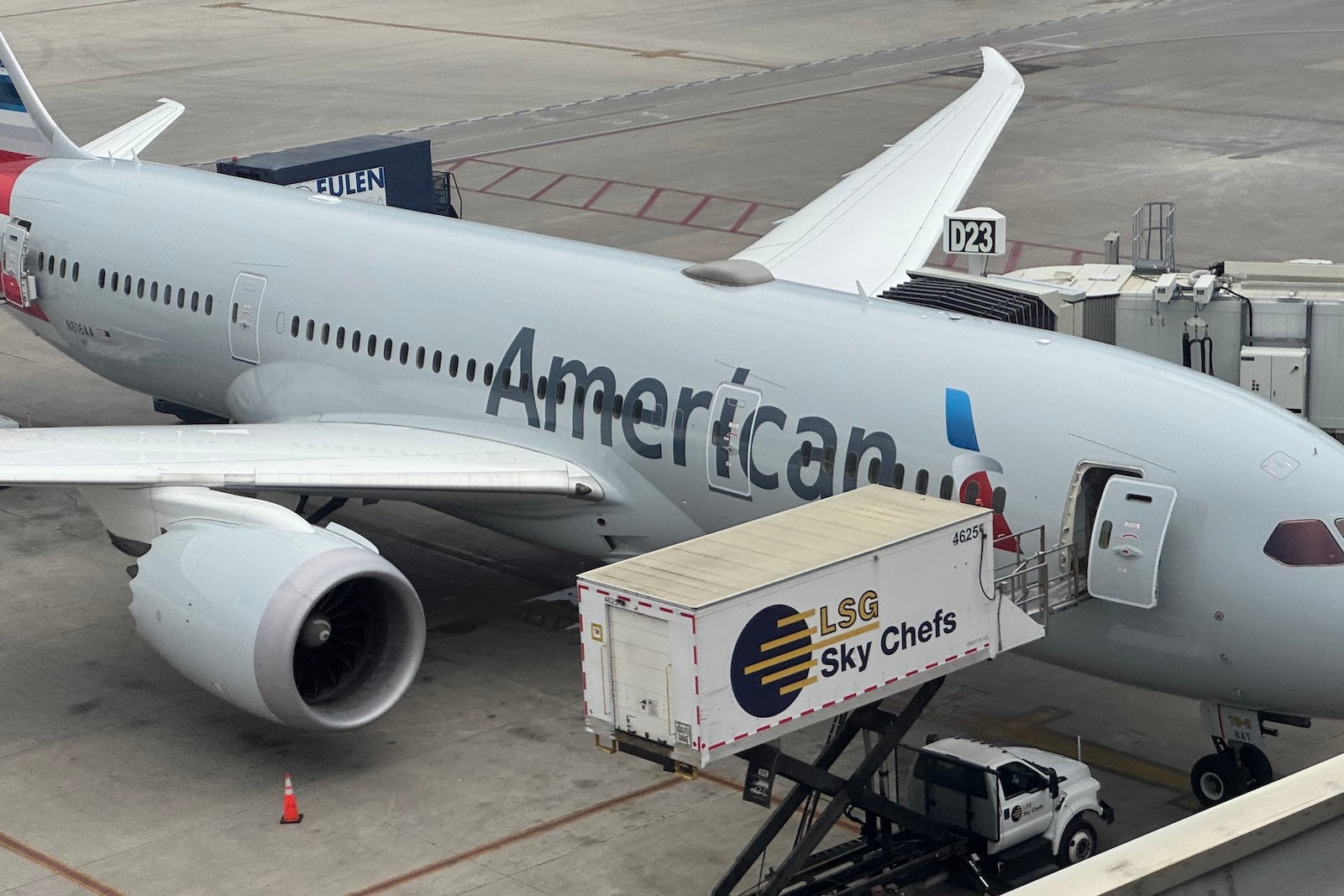
SEAN CUDAHY/THE POINTS GUY

Could history repeat itself?

Skyrocketing jet fuel costs have eaten into airlines’ bottom lines, adding particular pressure to a handful of low-cost carriers that had already been struggling to turn a profit.

This month, Delta Air Lines CEO Ed Bastian noted that a similar situation in the past led to a wave of corporate deals that created today’s airline industry, which is dominated by a small number of very large carriers.

“What drove consolidation was higher fuel prices back in 2009, 2010, 2011,” Bastian told analysts on this month’s earnings call. “So I anticipate higher fuel prices will cause much more significant structural reform than we’ve seen over this period.”

Spirit’s struggles front and center

Delta isn’t alone in that prediction.

In rebuffing United on Friday, American seemed to foreshadow future merger activity, acknowledging that “changes in the broader airline marketplace may be necessary.”

A key factor in all of this: beleaguered Spirit Airlines, which is currently in Chapter 11 bankruptcy for the second time. Reports say it could be on the brink of liquidation.

Although Trump was dismissive of an American-United tie-up on CNBC Tuesday, he was far more bullish on a deal involving the Florida-based budget airline.

“I don’t mind mergers,” Trump said, echoing past comments by Transportation Secretary Sean Duffy. (Last month, Duffy noted that Trump “loves to see big deals happen.”)
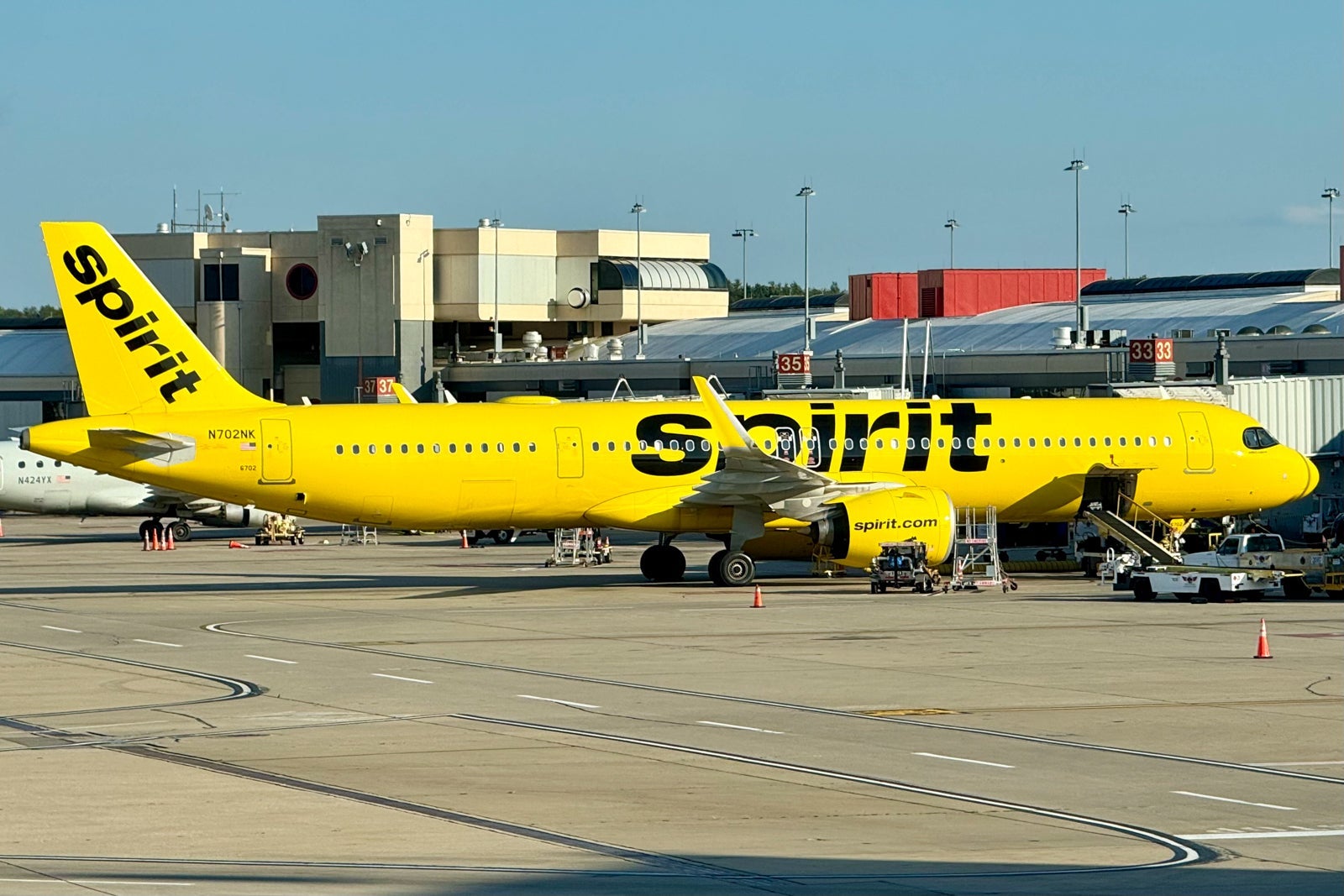
ZACH GRIFF/THE POINTS GUY

“I’d love somebody to buy Spirit, as an example,” Trump added Tuesday, while suggesting the administration might be open to providing federal aid to the budget airline.

“Maybe the federal government should help that one out,” he said.

A fifth large airline?

Even the passenger advocacy group Flyers Rights, which seldom supports airline industry consolidation (since it tends to drive up fares) acknowledged there’s one type of deal it would support: A merger that creates a fifth large airline to go toe-to-toe with the industry’s four titans — perhaps an acquisition by Alaska Airlines, the organization said.
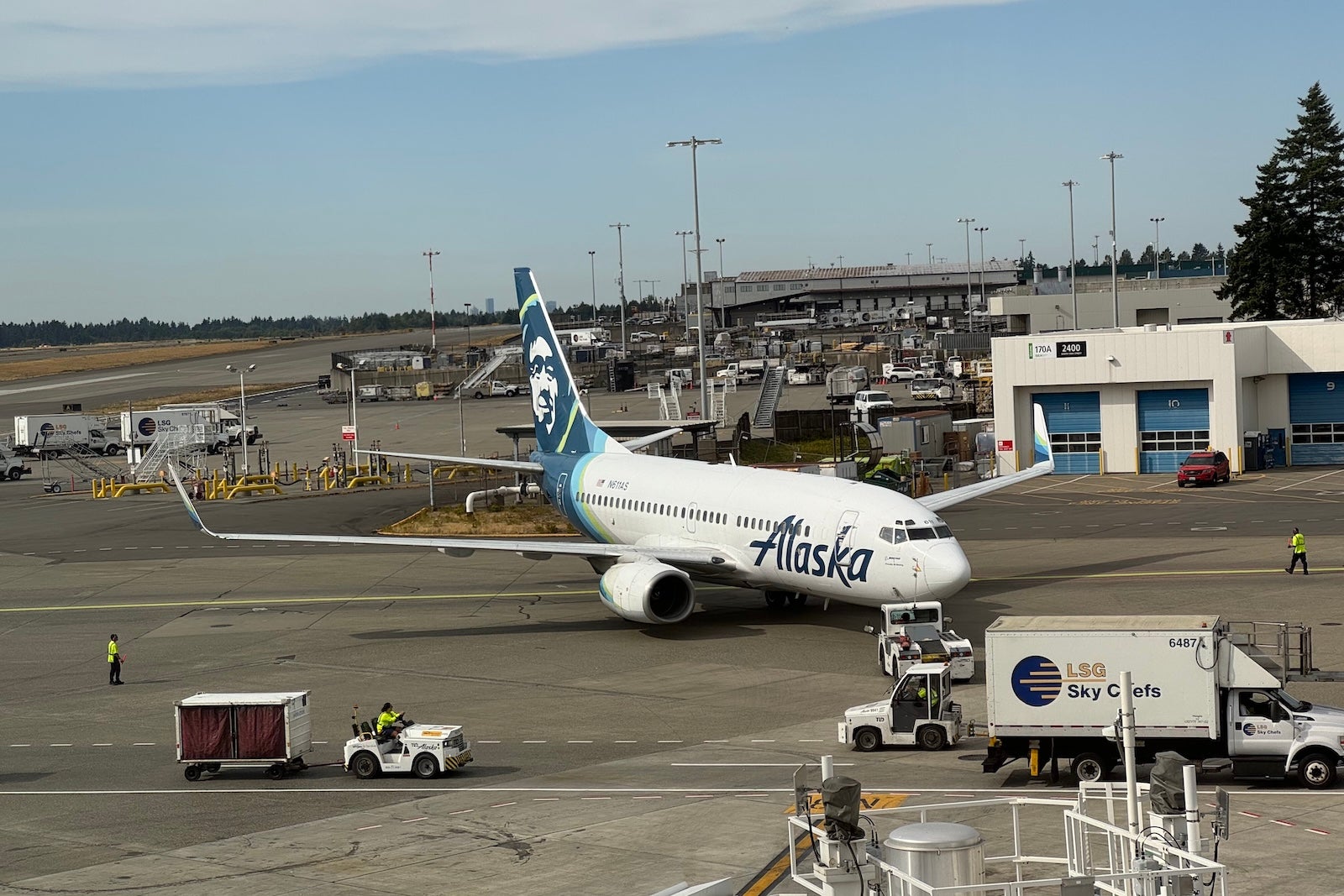
alaska airlines plane
Alaska Airlines plane pushes back in Seattle. SEAN CUDAHY/THE POINTS GUY

Alaska solidified itself as America’s fifth-largest carrier with its acquisition of Hawaiian, which closed in 2024. However, it still remains far smaller than American, Delta, United and Southwest Airlines.

Looking ahead

We expect to hear a lot more talk on Wednesday, when United holds its first-quarter earnings call.

Related reading:


Source link

Leave a Reply

Subscribe to Our Newsletter

Get our latest articles delivered straight to your inbox. No spam, we promise.

Recent Reviews


Types of DBA’s – Table of Content

There are many kinds of DBAs. But the most common type is general DBA, who carries out all the administrative and data-oriented tasks. Some DBAs are specialized in building systems, while other DBAs concentrate on the maintenance and development of existing systems or on limited areas of the database management and administration. In large organizations, the responsibilities of DBAs are generally divided into different types of jobs.

Types of DBA’s include:

System DBA: DBA’s in this role concentrates on technical issues rather than that of business issues, mainly in the field of system administration. System DBA is also responsible for installing the latest DBMS versions, applying the maintenance fixes, setting system parameters, setting the OS, installation of third-party DBA tools, transaction processors, and networks to run on the DBMS, allowing DBMS to work with storage management softwares and devices, ensuring adequate storage of the DBMS and interfacing with other technology needed for database applications. 

System DBAs do not often participate in the effective implementation of applications and databases. They may help adjust applications when OS settings or complex DBMS settings need to be changed. In fact, the work of the DBA system usually only exists if the organization has no official system administration or a system programming department.

                 Take your career to next level in SQL Server DBA with HKR. Enroll now to get SQL Server DBA Certification Course Training!

Database Analyst: We don’t really have a fixed definition of this position. At times, Junior DBAs are designated as Database Analysts. In some cases, a database analyst plays a similar role as the database architect. At times, the Data Administrator is called a Database Analyst or Data Analyst. And sometimes, some companies use the term data analyst rather than a database administrator.

Data Modeler: Generally, a data Modeler is responsible for the subset of the responsibilities of a data architect. Generally, a data modeler is not considered as a DBA; however, it is not a strict rule.

SQL Server DBA Training

  • Master Your Craft
  • Lifetime LMS & Faculty Access
  • 24/7 online expert support
  • Real-world & Project Based Learning

Database Architect: Some of the organizations create separate positions as database architects to develop and implement new databases. The database architect is responsible for new design as well as development work and does not participate in the administration, maintenance, or adjustment of applications and established databases. Database architect plans new databases to support existing or new applications. The reason for creating separate positions for these duties is that the skills needed to design new databases differ from the skills needed for the maintenance of the existing database implementation. Database Architect is similar to general-purpose DBA to have expertise in data management and modeling.

Task-Oriented DBA: Large organizations may create highly specialized DBAs to focus on a particular DBA task. They are very rare outside large organizations. An example of task-oriented DBA is recovery and backup DBA, whose job is to ensure the recoverability of the databases of the organizations. However, most of the organizations do not have such a specialization. When it is possible, these task-oriented DBA’s will make sure that highly skilled specialists are engaged in important DBA tasks. 

Data Warehouse Administrator: Organizations that establish data warehouses to carry out in-depth data analytics often employ DBAs particularly for monitoring and supporting the data warehouse environment. He must be a competent DBA with complete knowledge of the differences between data warehouses and databases which support OLTP. Database Administration needs experience with business Intelligence and query tools, ETL skills, knowledge on data warehousing technologies like ETL, OLAP, etc., specialized database design of data warehousing, etc.

Enroll in our Netezza DBA Training program today and elevate your skills!

Database Management & Administrations, dba-types-description-0, Database Management & Administrations, dba-types-description-1

Subscribe to our YouTube channel to get new updates..!

Performance Analyst: Performance analysts are one particular kind of task-oriented DBA. They are more common than that of task-oriented DBA’s. They concentrate only on the performance of the database applications. They need to understand all the details and all the SQL coding nuances for performance and have the capacity to develop performance databases. They possess thorough DBMS technical knowledge in order to be able to make proper changes to the DBMS and system settings as required. But, the performance analyst is not expected to be system DBA. He should be able to reach out to application developers to assist them in facilitating appropriate program changes for performance.

The Performance Analyst is typically the most qualified and senior-most member among the DBA staff. It is a role he has grown up with because of the experience and respect he earned in past tuning efforts.

Application DBA: Unlike the system, DBA is the application DBA. The DBA application concentrates on the database design and the continuous support and administration of the databases for a particular application or part of applications. The application DBA is capable of being an expert in writing and debugging complicated SQL and understands the best ways to include database requests in application programs are. The application DBA should be able to manage database change, performance adjustment, and most other DBA roles. The main difference is that the focus of application DBA is on a particular subset of applications instead of the overall implementation of the DBMS and the database environment. 

Some organizations do not hire application DBAs. But, wherever Application DBAs are available, DBAs of general-purpose are always needed to support the entire database environment and the infrastructure. And when there are no application DBAs in the organization, general-purpose DBAs are recruited to support particular applications and also to maintain the database environment of the organization.

        Top Frequently asked SQL Sever Interview Questions & Answers for freshers & experienced professionals

SQL Server DBA Training

Weekday / Weekend Batches

Conclusion:

Obviously, there are other types of DBAs as well. The fact is that the DBA job title doesn’t involve a single job. There are a lot of jobs that come under the category of database administrator.

In this blog, we have seen various types of DBAs. These types of DBA positions exist according to the responsibilities and the tasks that are assigned to them. We hope you found the blog “Types of DBAs” useful. For more blogs, stay tuned to HKR Trainings website.

Related Article:


Source link