Amex Blue Business Cash vs. Graphite Business Cash


Business owners have many options when deciding on a card for their expenses. American Express offers many choices, including cash-back cards for those who prefer earning that type of reward, either by racking up statement credits or Reward Dollars.

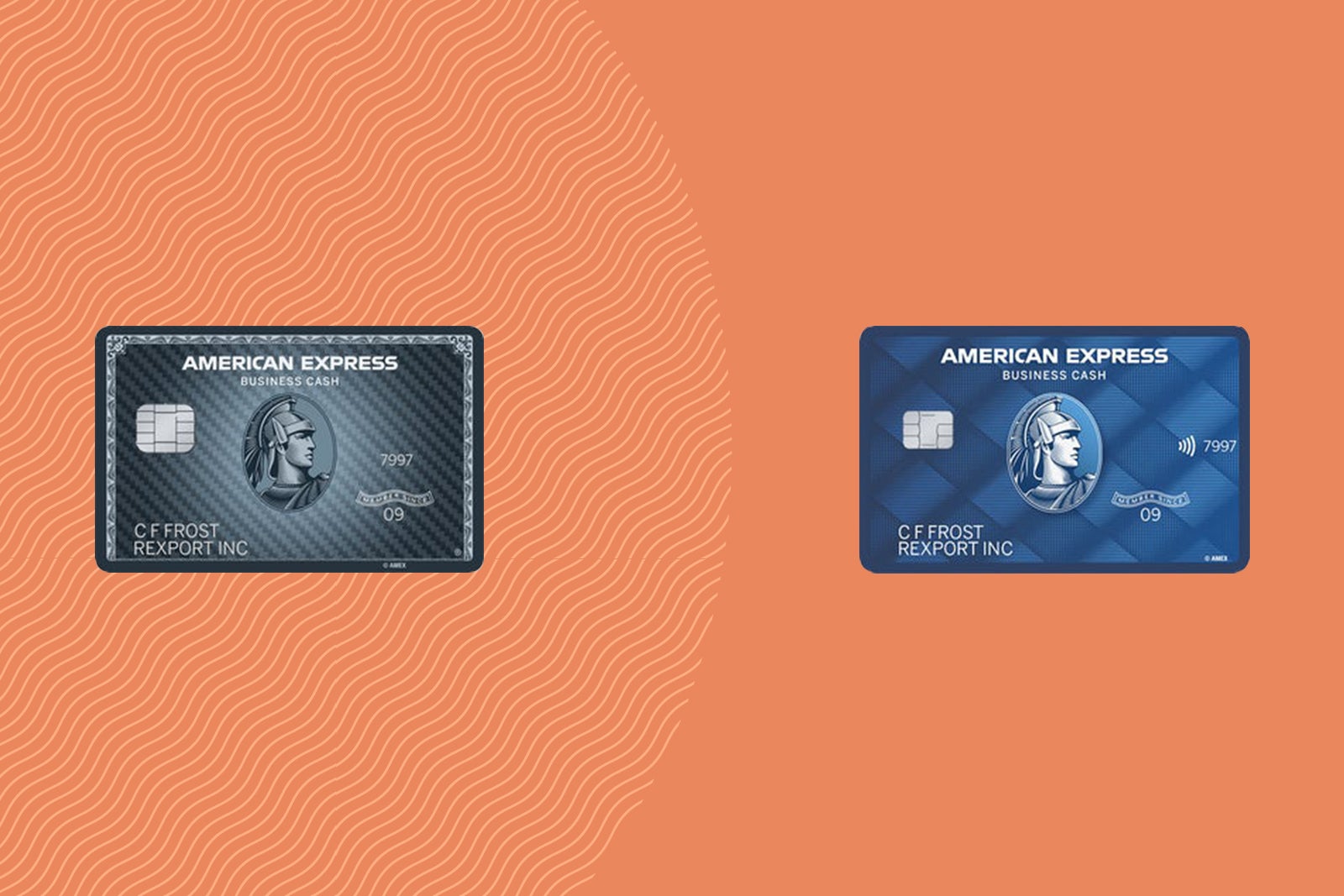
The The American Express Blue Business Cash™ Card is a classic, simple option best oriented for side hustlers or those with smaller businesses. Meanwhile, the Graphite™ Business Cash Unlimited Card is ideal for high-spending businesses seeking elevated cash-back rewards.

Let’s compare and contrast the Blue Business Cash and Graphite cards to help you determine which Amex business cash-back card suits you best.

Blue Business Cash vs. Graphite comparison

Card Blue Business Cash Graphite

  • 2% cash back on the first $50,000 in eligible purchases each calendar year, then 1% cash back

Cash back appears as an automatic monthly statement credit.

  • 5% cash back on flights and prepaid hotels booked through American Express Travel® Online
  • 2% cash back on all other eligible purchases (no purchase limit)

Cash back is received in the form of Reward Dollars that can be redeemed as a statement credit and at Amazon.com checkout.

Earn a $250 statement credit after spending $3,000 on purchases in the first three months of card membership.

Earn $1,500 cash back in the form of Reward Dollars after spending $50,000 on purchases in the first six months of card membership. Reward Dollars can be redeemed as a statement credit and at Amazon checkout.

  • Expanded Buying Power (spending power is not unlimited)
  • Extended warranty (up to one year on purchases with manufacturer warranties of five years or less)* and purchase protection (90 days against theft or damage)*
  • Global Assist Hotline**
  • Secondary car rental loss and damage insurance^

  • Access to Amex’s business management tools
  • Pay Over Time access (on eligible purchases; subject to the Pay Over Time limit; variable APR 17.74% — 28.49%)
  • Receive up to $2,400 in annual statement credits to use in the next calendar year on Amex One AP monthly fees after spending $250,000 eligible on purchases in a calendar year (subject to auto-renewal)
  • Travel and purchase protections

*Eligibility and benefit levels vary by card. Terms, conditions and limitations apply. Visit americanexpress.com/benefitsguide for details. Policies are underwritten by AMEX Assurance Company.

**Eligibility and Benefit level varies by Card. Terms, conditions and limitations apply. Please visit americanexpress.com/benefitsguide for more details. Card Members are responsible for the costs charged by third-party service providers.

^Eligibility and benefit level varies by card. Not all vehicle types or rentals are covered, and geographic restrictions apply. Terms, conditions and limitations apply. Visit americanexpress.com/benefitsguide for details. Policies are underwritten by AMEX Assurance Company. Coverage is offered through American Express Travel Related Services Company, Inc.

Related: How to apply for an Amex business card

Blue Business Cash vs. Graphite welcome bonus

New applicants for the Blue Business Cash can earn a $250 statement credit after spending $3,000 on purchases in the first three months of card membership.

Meanwhile, new Graphite card applicants earn $1,500 cash back in the form of Reward Dollars after spending $50,000 on purchases in the first six months of card membership. Reward Dollars can be redeemed as a statement credit and at Amazon checkout.

Reward your inbox with the TPG Daily newsletter

Join over 700,000 readers for breaking news, in-depth guides and exclusive deals from TPG’s experts
Graphite and Blue Business Plus showdown art
THE POINTS GUY

The bonus on the Blue Business Cash is much easier to earn, as it requires a significantly lower spending threshold than the Graphite card. However, the Graphite card’s offer is much more lucrative.

Before you apply, remember that Amex allows you to earn only one bonus per card in your lifetime. So, time your application carefully.

Winner: Graphite. Though its spending requirement is substantially higher than the Blue Business Cash, if you run a high-spending business, the higher bonus is better for you. However, if you can’t comfortably meet the Graphite card’s spending requirement, the Blue Business Cash card is still a decent option.

Related: What is a credit card welcome offer? How they work and how to maximize value

Blue Business Cash vs. Graphite benefits

While neither card has a long list of benefits, there are a few perks worth noting on each.

The Blue Business Cash‘s Expanded Buying Power feature is a highlight. It allows cardmembers to exceed their spending limit without incurring over-limit fees or penalties, and to earn cash-back rewards on these purchases as well. Just remember that your spending power with Expanded Buying Power is not unlimited.

Note that you must make your minimum payment each month, including any over-limit purchases. Either way, we always recommend paying your balance in full to avoid interest.

The Blue Business Cash also provides secondary car rental coverage, extended warranty and purchase protection. These benefits are solid and make sense for a no-annual-fee card.

MOMO PRODUCTIONS/GETTY IMAGES

Meanwhile, the lackluster benefits on the Graphite card make it hard for most business owners to justify its $295 annual fee.

The only perk that has the ability to offset the annual fee directly is the card’s up to $2,400 in annual statement credits to use in the next calendar year on Amex One AP monthly fees (subject to auto-renewal), but you won’t unlock this unless you spend a whopping $250,000 eligible on purchases in a calendar year.

This likely won’t come into play for most cardmembers, making the Graphite a less-than-ideal choice for most business owners given its annual fee.

Still, you won’t have a preset spending limit with the Graphite card, as your spending limit will adjust based on your purchase, payment and credit history. You’re also eligible for Pay Over Time# and multiple travel and purchase protections with this card.

#On eligible purchases; subject to the Pay Over Time limit; variable APR 17.74% — 28.49%.

Winner: Blue Business Cash. While neither card provides exceptional benefits, the Blue Business Cash provides a decent suite for no annual fee. With the Graphite card, its underwhelming perks make it quite difficult to justify its $295 annual fee.

Related: Your complete guide to shopping protections on American Express cards

Earning cash back with the Blue Business Cash vs. Graphite

Simplicity is paramount with the Blue Business Cash, as cardmembers earn 2% cash back on the first $50,000 in eligible purchases each calendar year, then 1% cash back thereafter.

There are no bonus categories. So, if you’re looking for a solid catch-all card and you don’t expect to spend more than $50,000 on the card in a calendar year, this is a simple way to earn a flat 2% back on everything.

Woman with mail
D3SIGN/GETTY IMAGES

The Amex Graphite card provides one bonus category, offering 5% cash back on flights and prepaid hotels booked through Amex Travel Online. On all other purchases, you’ll earn 2% cash back on all other eligible purchases with no purchase limit. Cash back is received in the form of Reward Dollars that can be redeemed as a statement credit and at Amazon.com checkout.

The Graphite is better for businesses that plan to exceed the $50,000 spending limit in a calendar year, since there’s no cap on the 2% rate.

Finally, it’s important to note that the Blue Business Cash places a 2.7% fee on foreign transactions, while the Graphite card charges no foreign transaction fees. If you need a card for purchases abroad, the Graphite is a much better choice.

Winner: Graphite. The Blue Business Cash doesn’t offer any bonus categories, and its 2% category is capped at $50,000 in spending in a calendar year. This isn’t the case on the Graphite.

Related: The best 2% cash-back credit cards

Redeeming cash back with the Blue Business Cash vs. Graphite

The cash back earned on the Blue Business Cash is automatically applied as a monthly statement credit, which means you’ll be effectively reducing your business expenses every time cash-back rewards post to your account.

Meanwhile, the Graphite card earns cash back in the form of Reward Dollars that can be redeemed as a statement credit and at Amazon.com checkout.

business owner sitting store front
MASKOT/GETTY IMAGES

Both options are quite limited, though the Blue Business Cash’s earnings are significantly less flexible. With the Graphite, you’ll at least get the option to use your cash-back rewards at Amazon. Either way, most cardmembers are likely to redeem for a statement credit anyway.

Winner: Graphite. While its two redemption options are still quite rigid, they are less restrictive than the Blue Business Cash.

Related: Are cash-back credit cards worth it?

Should I get the Blue Business Cash or the Graphite?

Whether you should apply for the Blue Business Cash or Graphite card comes down to how much your business spends and whether you want to pay an annual fee.

If you’ll put at least $50,000 on the card (ideally in the first six months to earn the welcome bonus), the Graphite card is likely the better fit.

You’ll earn at least 2% cash back in the form of Reward Dollars that can be redeemed as a statement credit and at Amazon.com checkout on all of these purchases, and you’ll collect the bonus.

Small business owners of a food truck
MASKOT/GETTY IMAGES

Keep in mind that the Graphite card charges an annual fee of $295, which may be hard for your business to justify year after year, given its limited benefits.

On the other hand, if you’ll be spending below $50,000 on your Amex business card in a calendar year, the Blue Business Cash is likely the best choice. For no annual fee, you’ll earn 2% cash back on the first $50,000 in eligible purchases each calendar year, then 1% cash back after you reach that threshold.

So, as long as you stay below this limit, you’ll earn the same base return on up to $50,000 in purchases each calendar year on the Blue Business Cash as you would on the Graphite (though you won’t receive as high a welcome bonus).

Related: How to choose the best credit card for you

Bottom line

Whether you keep it simple with the Blue Business Cash or spend enough to make the Graphite card a workhorse, it’s likely your business will be better off with either one of these Amex card options.

While these two cards are quite different, they do share the purpose of helping business owners keep their personal and business transactions separate, which is a solid financial strategy for many.

So, when you’re weighing between the Blue Business Cash and the Graphite, it mostly comes down to how much you spend, the features you want and whether you want to tack on an annual fee.

To learn more, read our full reviews of the Blue Business Cash and Graphite Business Cash.


Apply here: The American Express Blue Business Cash Card

Apply here: Graphite Business Cash Unlimited Card


For rates and fees of the Amex Blue Business Cash, click here.
For rates and fees of the Amex Graphite card, click here.


Source link

Leave a Reply

Subscribe to Our Newsletter

Get our latest articles delivered straight to your inbox. No spam, we promise.

Recent Reviews


We’ve all experienced those moments when we say something and realize our wording wasn’t perfect. Yet from the other person’s nod or response, we can tell they understood our meaning perfectly well. We don’t feel the need to repeat ourselves with better phrasing. This is simply part of being human.

A similar situation occurs with income tax filings. Consider a taxpayer whose e-filed return gets rejected due to a technical issue. The taxpayer then submits a paper filing, perhaps using a slightly incorrect form. In both attempts, the IRS receives the essential tax information and understands what the taxpayer is communicating.

In these cases, can the IRS legitimately claim these tax returns were never filed? The case of McDow v. United States, No.1:21-cv-00732 (Fed. Cir. April 1, 2025) addresses this very question. The decision considers when an informal refund claim meets the timeliness requirements and how tax returns and refund claims work together under statutory deadlines.

Facts & Procedural History

The taxpayer in this case had overpaid taxes for multiple years. We are going to focus on the 2013 tax year in this article.

For tax year 2013, the taxpayer made a payment in January 2014. He tried to file his 2013 tax return with the IRS electronically in April 2015, but the IRS rejected the filing. Instead of immediately resubmitting the return, the taxpayer filed a Form 843 (Claim for Refund and Request for Abatement) in December 2016. This form was filed more than two years after his tax payment but within three years of his first filing. The taxpayer eventually filed a formal tax return for 2013 in June 2018.

After the IRS denied the refund claim, the taxpayer filed suit in the court of federal claims. In its first ruling on the government’s motion to dismiss, the court determined that the Form 843 qualified as an informal refund claim and was timely filed within the three-year statutory period. The government then filed a motion for reconsideration, arguing that without a formally filed tax return, an informal claim must be filed within two years of payment—not three years.

Tax Refund Claim Deadlines Under Sec. 6511

Most questions about timing for refund claims involve the IRS not carrying out its duties timely. The IRS does nothing timely.

The IRS audits years in arrears, routinely forces taxpayers to extend the three year audit period for these old years, and then essentially never processes refund claims timely before the three years expires. This puts taxpayers in a position of having to review the rules in Section 6511 regularly to avoid losing refunds–often not for their own fault, but for the IRS’s inability to act timely.

The timing requirements for refund claims are set out in Section 6511 of the tax code. This section creates two different deadlines depending on whether the taxpayer has previously filed a tax return.

Section 6511(a) says that if a taxpayer must file a return, a refund claim “shall be filed by the taxpayer within 3 years from the time the return was filed or 2 years from the time the tax was paid, whichever of such periods expires the later, or if no return was filed by the taxpayer, within 2 years from the time the tax was paid.”

This creates two paths

This creates two paths: taxpayers who file returns generally have three years from the filing date to request a refund. Those who don’t file returns have only two years from the payment date. This one-year difference matters when dealing with tax audits and refund claims. Whether the 2 or 3 year period applies can be problematic for taxpayers as missing the filing deadline by even a few months can lose substantial refund amounts they would otherwise be entitled to receive.

Beyond these filing deadlines

Beyond these filing deadlines, Section 6511(b) also creates “look-back” periods that limit how much a taxpayer can recover even with a timely claim. If a claim is filed within the three-year period, the refund is limited to taxes paid within three years (plus any extension) before the claim. If the claim is not filed within that three-year period, the refund is limited to taxes paid within two years before the claim.

What Is the Informal Claim Doctrine?

Courts created the informal claim doctrine as an exception to the formal requirements for tax refund claims.

We have previously considered several cases involving informal refund claims, such as claims signed by tax attorneys, substantial variance and informal claims, and whether an IRS audit report itself an informal claim. Under these court cases, a document that doesn’t meet all the technical requirements for a formal refund claim may still work as a placeholder if it tells the IRS of the taxpayer’s intent to seek a refund.

For an informal claim to be valid, it must tell the IRS in writing that the taxpayer wants a refund. It must specify the tax year and reasons for the refund claim. And the taxpayer must follow up with a formal refund claim within a reasonable time.

The informal claim doctrine helps prevent taxpayers from losing refund rights due to technical problems, as long as they give the IRS enough notice of their claim. This doctrine helps taxpayers unfamiliar tax returns and filing requirements avoid tax litigation for not following the precise procedural filing requirements.

Courts have used this doctrine in many contexts, including cases where taxpayers sent letters, protests, or other documents that clearly showed they wanted a refund, even if these documents didn’t meet official claim requirements. The doctrine essentially favors substance over form in these situations.

How Does the Informal Claim Doctrine Interact with Sec. 6511’s Deadlines?

The main question in McDow was how the informal claim doctrine works with Section 6511’s timing requirements. Does an informal claim filed before a tax return is filed use the three-year period, or does it use the two-year deadline that applies when “no return was filed”?

The government said an informal claim cannot replace a tax return to trigger the three-year deadline. According to this view, the statute treats “claims” and “returns” as separate documents with separate purposes. While the informal claim doctrine allows an informal document to stand in for a formal refund claim, it doesn’t allow that same document to count as a tax return. Thus, the informal return was never filed for purposes of Sec. 6511.

This matters because Section 6511(a) specifically says that if “no return was filed,” the taxpayer has only two years from payment to file a refund claim. The government argued that an informal claim filed before a tax return must meet this two-year deadline to be timely.

Is a Formal Return Required?

The Court of Federal Claims looked at two key cases: Wertz v. United States and Libitzky v. United States. Both cases dealt with whether an informal claim can use the three-year deadline without a tax return.

In Wertz, another judge on the Court of Federal Claims held that an informal claim must be filed within two years of the tax payment to be timely when no return has been filed. The court said that while the IRS can waive its requirement that a claim be filed on the correct form, it cannot change Congress’s statute of limitations, which represents a waiver of sovereign immunity.

In Libitzky, the Ninth Circuit separated the “limitations period” in Section 6511(a) from the “look-back” period in Section 6511(b). The court defined a “refund claim” as a request for a refund of an overpayment, and the “tax return” as the formal filing with the IRS. The court held that an informal claim filed before a tax return must meet the two-year deadline.

After reviewing these cases, the Court of Federal Claims in McDow agreed with Wertz and Libitzky. The court said the statute requires filing a formal tax return to get the benefit of the longer look-back period. When a taxpayer files an informal claim before filing a tax return, that informal claim must be filed within two years of the tax payment to be timely.

Why Did the 2013 Refund Claim Fail?

When the court applied this to the case, it found that the informal claim for 2013 was untimely. The taxpayer filed Form 843 in December 2016, more than two years after the January 2014 payment to the IRS. While the form might have qualified as an informal claim, it was filed too late to meet the two-year deadline.

The taxpayer also argued that his attempted April 2015 electronic filing should count as a tax return for purposes of the statute of limitations, which would give his Form 843 the benefit of the three-year period. But the court rejected this argument. The court noted that because the IRS rejected the filing, the taxpayer needed to refile. Since the IRS did not consider the rejected filing as a valid return, and the taxpayer did not formally file a return until 2018, the informal claim was subject to the stricter two-year deadline.

The court emphasized that when an electronically filed tax return is rejected, the taxpayer must refile for it to be considered filed. This puts the responsibility on taxpayers to ensure their electronic filings are accepted rather than assuming rejected submissions count as filed returns.

The Takeaway

This case clarifies how the informal claim doctrine works with Section 6511’s timing requirements. An informal claim filed before a tax return must meet the two-year deadline from payment to be timely. This preserves the difference between claims and returns while still allowing the informal claim doctrine to work as an equitable remedy in appropriate cases. For taxpayers seeking refunds, the message is clear: file tax returns promptly, follow up on rejected electronic filings, and watch the deadlines for refund claims. When electronic filings are rejected, taxpayers must act quickly to refile, as rejected submissions do not count as filed returns for purposes of extending the refund claim period.

Watch Our Free On-Demand Webinar

In 40 minutes, we’ll teach you how to survive an IRS audit.

We’ll explain how the IRS conducts audits and how to manage and close the audit.  


Source link