Anthropic’s New Claude Tag Acts as a Virtual Coworker in Slack


Your average Slack bot — an automated assistant you can tag in a Slack conversation — works like this: You tag the bot. It responds. That’s it. Artificial intelligence company Anthropic, which owns the AI chatbot and assistant Claude, wants to deepen that Slack conversation with a new feature called Claude Tag. The idea is that Claude can now build context by drawing on relevant information from Slack channels in a way it couldn’t before.

Anthropic announced in a press release on Tuesday that it will rename the existing Claude app in Slack to Claude Tag on Aug. 3.

AI Atlas

When you add Claude Tag to your Slack workspace, it joins as its own user. You can grant it access to selected channels and connect it to whichever tools, data and even codebases you want it to access.

When tagged, Claude will complete a task in stages before posting a response in a Slack thread.

Anyone in your Slack workspace or Claude organization can use Claude Tag, but if you have a Claude Enterprise plan, you can grant or restrict access to Claude Tag based on roles. 

Claude Tag working by sending messages to others in Slack messaging platform

Claude Tag can work on tasks while you focus on other priorities.

Claude/Youtube/CNET Screenshot

Unlike other Slack bots, Claude Tag will learn everything from the public Slack channels it can access. It can pick up a conversation where the last person who tagged it left off.

With ambient behavior enabled, Claude Tag can remind users about tasks or discussion threads across Slack channels. It can also schedule future tasks for itself and work on these projects. 

Claude sending a message in Slack platform

Claude can proactively message a thread that hasn’t yet been resolved.

Claude/Youtube/CNET Screenshot

You can chat with Claude Tag in a private direct message, or open a right-side panel to access it at any time. In both the panel and direct messages, Claude Tag can do whatever you’ve enabled it to do, including search the web. 

Prices and privacy

The feature is already available in beta for companies subscribed to Claude’s Team and Enterprise plans.

When you tag Claude Tag in a direct message, its usage is billed to your Claude account. If you tag it in a channel, it’s billed to your organization. 

Primary owners or owners can control Claude Tag’s usage, as the app’s limits are based on consumption rather than the number of users. Once a spending limit is reached, Claude Tag begins declining work. 

A representative for Anthropic didn’t immediately respond to a request for pricing information.

Claude Tag remembers channel history, but company admins can review and delete what is retained. Slack conversations with Claude Tag follow each organization’s Slack retention policies, and these conversations are separate from your Claude history. 

If you disconnect Claude Tag from Slack, your conversations are deleted after 30 days. 


Source link

Leave a Reply

Subscribe to Our Newsletter

Get our latest articles delivered straight to your inbox. No spam, we promise.

Recent Reviews


SD Tables in SAP:

The SAP SD module is built on tables and uses them to store data. We’ll go through SAP SD tables and their relationships in this tutorial. SAP SD tables are critical storage for corporate data connected to SAP ERP software’s sales and distribution activities. The SD tables are basically divided into three parts:

These are the SD module’s building blocks, and it’s only natural to address tables in this sequence. Please look at the slides to see how the tables from different blocks were connected. Being an expert in SAP SD necessitates an understanding of these relationships. 

 Become a SAP SD Certified professional by learning this HKR SAP SD Training !

1) Sales

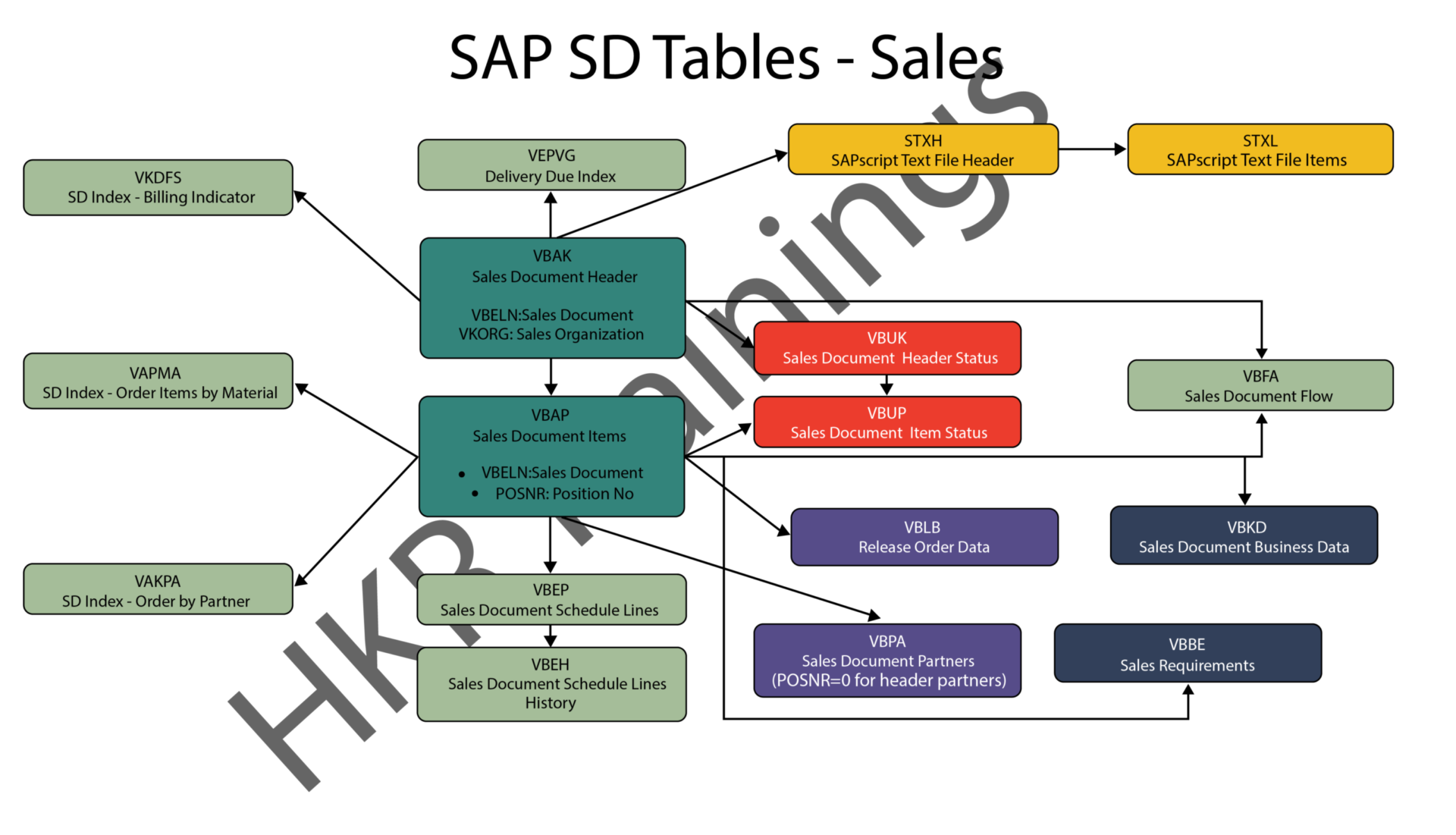
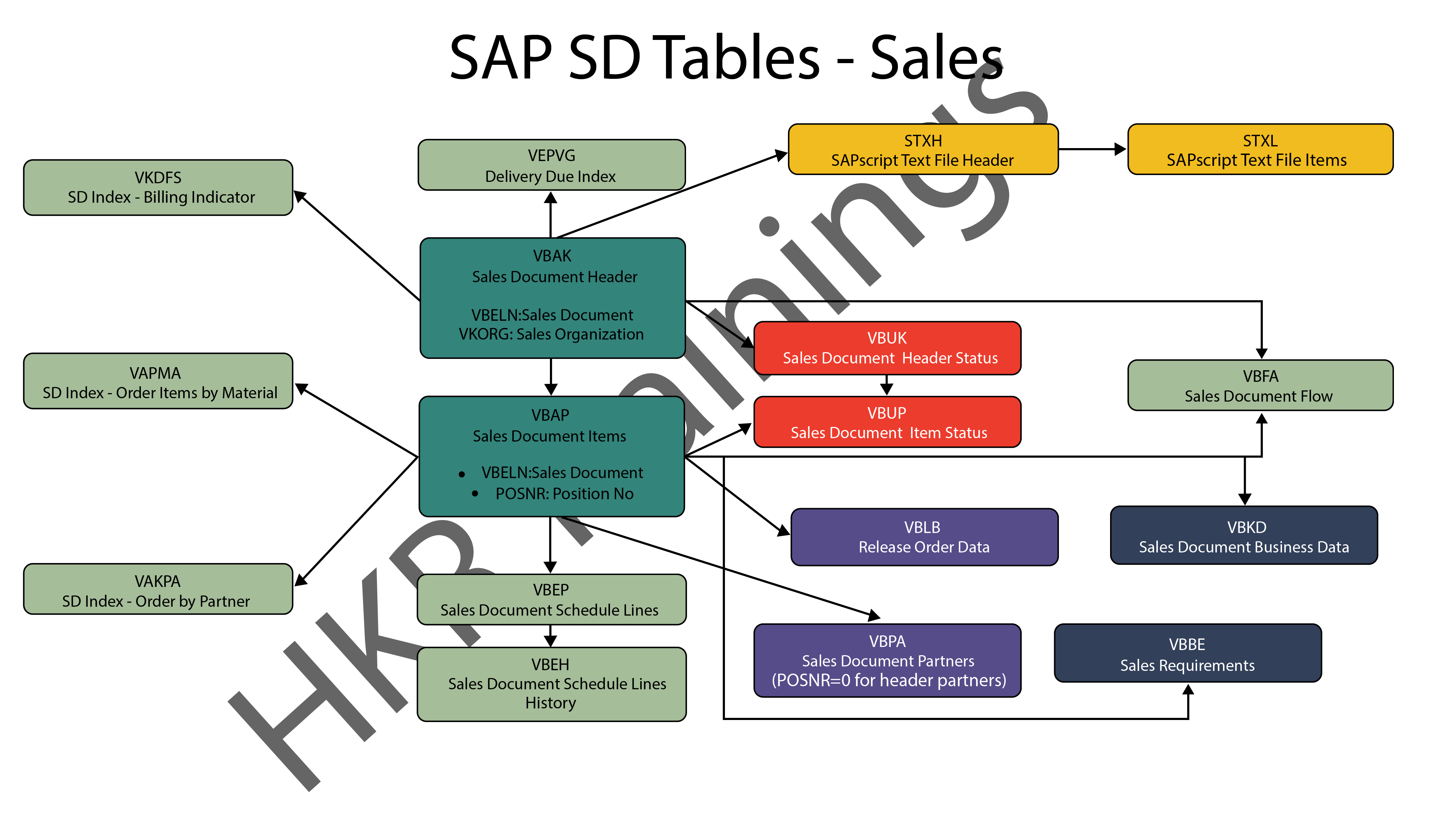
In SAP SD, the first block is about sales procedures.This indicates that the SAP SD tables in this block would be related to sales orders, quotations, and other similar transactions. We designed a visual slide that lists all of the tables and their relationships. 

SAP SD Sales

2) Shipping

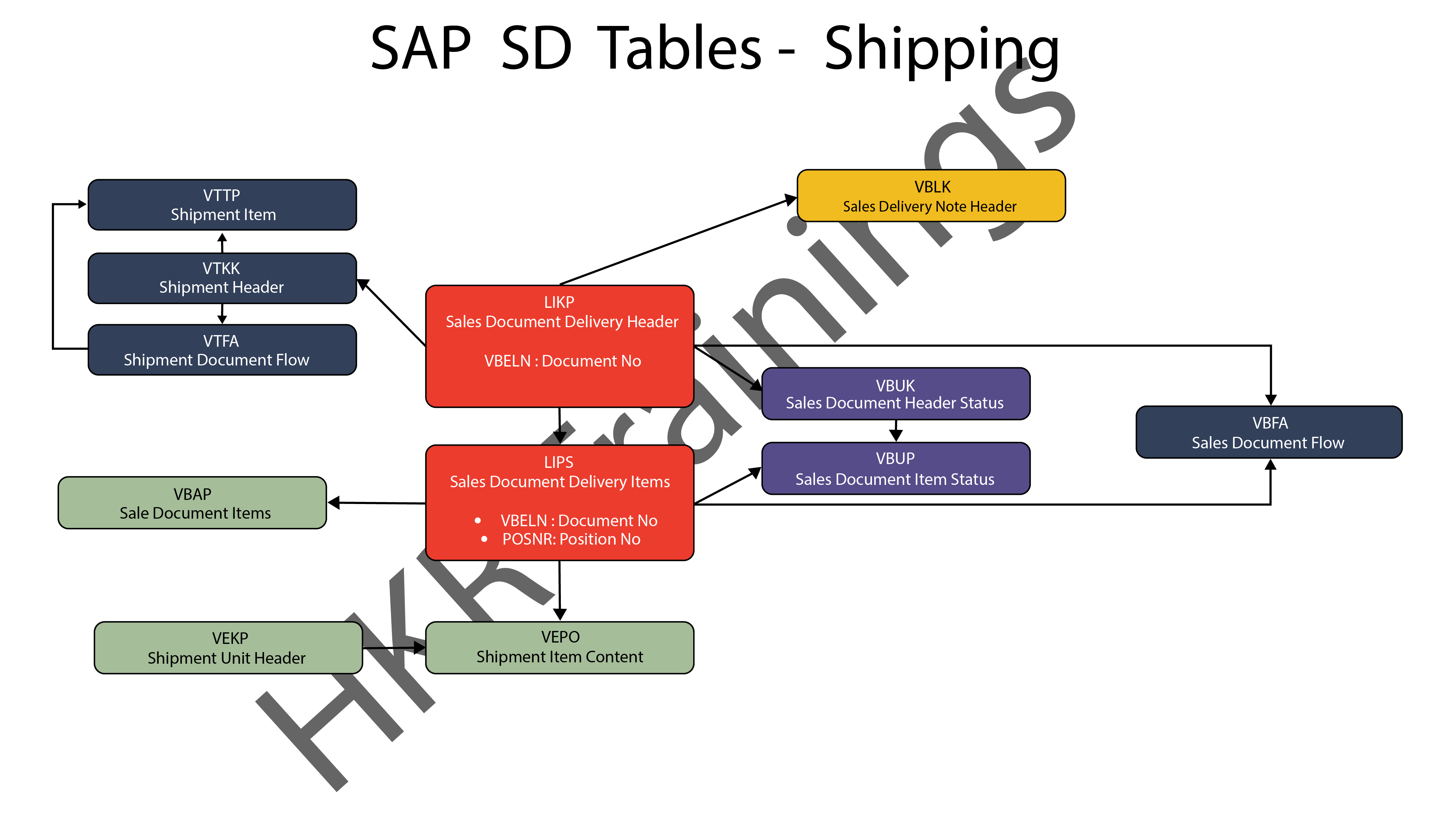
ThIs section is about SAP SD’s shipping processes. In this section, SAP SD tables deal with inbound and outbound deliveries, as well as shipments. Likewise, we’ve created a visual slide with links illustrating table relationships. 

SAP SD Shipping

SAP SD Training

  • Master Your Craft
  • Lifetime LMS & Faculty Access
  • 24/7 online expert support
  • Real-world & Project Based Learning
3) Billing

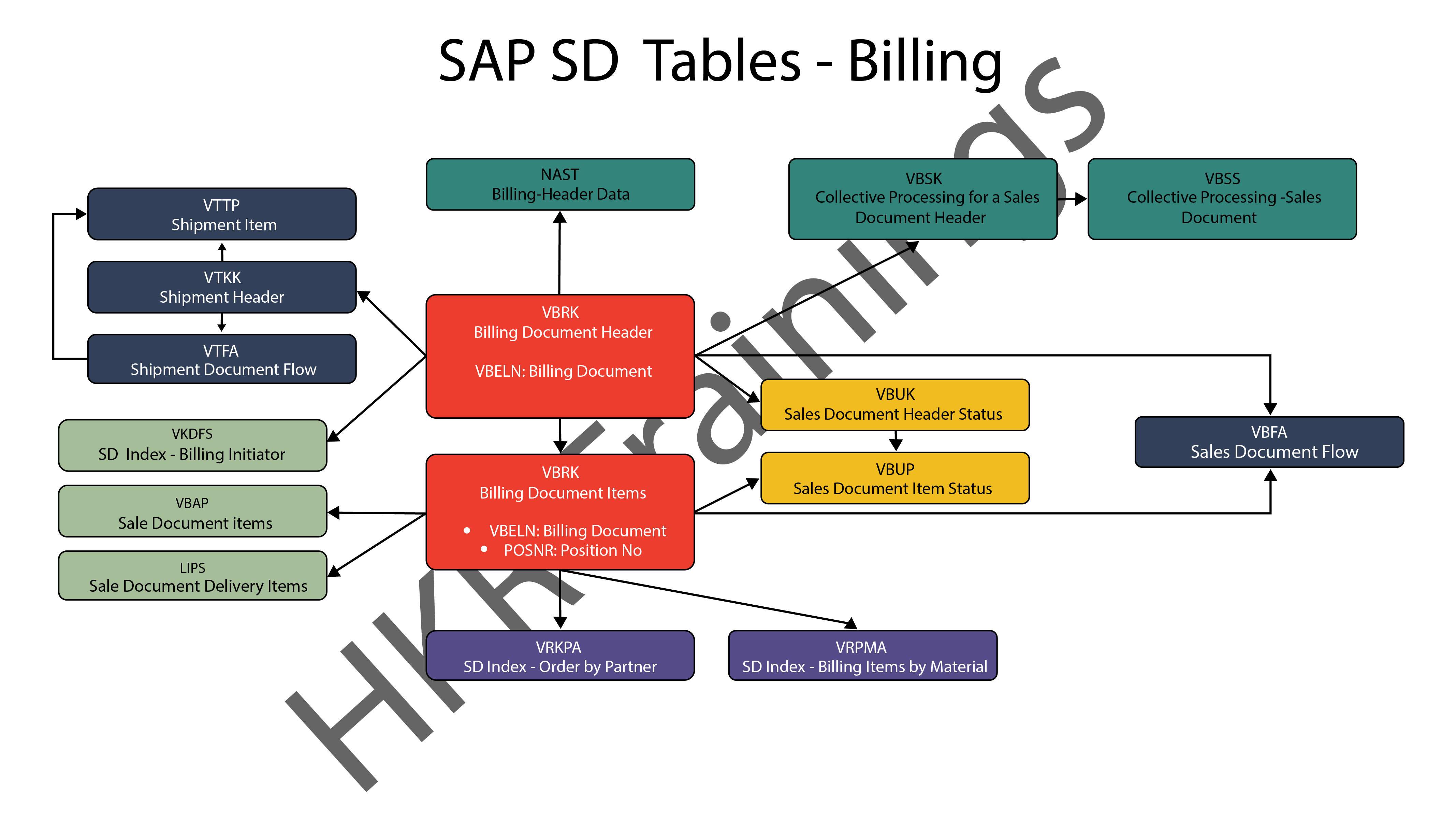
The billing feature of SAP SD is the last but not least. SAP has a variety of tables which are used to support a company’s billing procedures. Billing documents, as well as other related data, such as output conditions, are saved in these tables by SAP. 

SAP SD Billing

Want to know more about SAP SD,visit here SAP SD Tutorial !

SAP SD Significant Tables for Sales and Distribution

The following are the SAP SD tables for customers, sales documents, delivery documents, billing documents, shipping unit.

1) Customers

KNA1: General Data

KNB1: Customer Master – Co. Code Data (payment method, reconciliation acct)

KNB4: Customer Payment History

KNB5: Customer Master – Dunning info 

KNBK: Customer Master Bank Data

KNKA: Customer Master Credit Mgmt.

KNKK: Customer Master Credit Control Area Data (credit limits)

KNVV: Sales Area Data (terms, order probability)

KNVI: Customer Master Tax Indicator

KNVP: Partner Function key

KNVD: Output type

KNVS: Customer Master Ship Data

KLPA: Customer/Vendor Link

2) Sales Documents

VBAKUK: VBAK + VBUK

VBUK: Header Status and Administrative Data

VBAK: Sales Document – Header Data

VBKD: Sales Document – Business Data

VBUP: Item Status

VBAP: Sales Document – Item Data

VBPA: Partners

VBFA: Document Flow

VBEP: Sales Document Schedule Line

VBBE: Sales Requirements: Individual Records

Top 30 frequently asked SAP SD Interview Questions !

3) SD Delivery Document

LIPS: Delivery Document item data, includes referencing PO

LIKP: Delivery Document Header data

4) Billing Document

VBRK: Billing Document Header

VBRP: Billing Document Item

5) SD Shipping Unit

VEKP: Shipping Unit Item (Content)

VEPO: Shipping Unit Header

Acquire SAP Basis certification by enrolling in the HKR SAP Basis Training in Pune!

SAPS, sap-sd-tables-description-2, SAPS, sap-sd-tables-description-4

Subscribe to our YouTube channel to get new updates..!

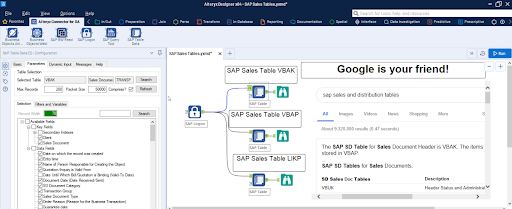
The most significant SAP Sales and Distribution (SD) tables for Alteryx users

For users of Alteryx and the DVW Alteryx Connector for SAP, we’ll now look at the most significant SAP Sales and Distribution (SD) tables 

SAP Sales and Distribution table

Related Articles SAP SD Modules !

The following SAP systems contain SAP Sales and Distribution tables:

  • SAP ECC 
  • SAP ERP
  • SAP S/4HANA

SAP Transaction Tables for Sales and Distribution (SD)

The SAP SD transaction tables for sales, delivery and billing process is as follows: 

1) Sales Document Tables

The documents of SAP Sales include:

  • Inquiries
  • Quotations
  • (Sales) Orders
  • Contracts
  • Credit Memo Requests
  • Debit Memo Requests 

The following are the most important tables in a sales document:

  • VBAK – Sales Document: Header Data
  • VBAP – Sales Document: Item Data 

SAP SD Training

Weekday / Weekend Batches


2) Delivery Document Tables

The documents of SAP Delivery include:

  • Delivery / Shipping Notifications
  • Deliveries

The key Delivery Document tables are:

  • LIKP – SD Document: Delivery Header Data
  • LIPS – SD document: Delivery: Item data 

Related Articles SAP SD Flow ! 

3) Billing Document Tables

The documents of SAP Billing include:

  • Invoices
  • Credit Memos
  • Debit Memos
  • Intercompany Invoices

The key Billing Document tables are:

  • VBRK – Billing Document: Header Data
  • VBRP – Billing Document: Item Data

Master Data Tables for SAP Sales and Distribution (SD)

  • KNA1 – General Data in Customer Master
  • KNB1 – Customer Master (Company Code)
  • KNKK – Customer master credit management: Control area data
  • KNVV – Customer Master Sales Data 

Data Tables for SAP Sales and Distribution (SD) Configuration

  • TVFK – Billing: Document Types
  • TVFKT – Billing: Document Types: Texts
  • TVKO – Organizational Unit: Sales Organizations
  • TVZB – Customers: Terms of payment 
  • TVZBT – Customers: Terms of Payment Texts

Conclusion:

We hope this blog is very helpful in knowing various tables discussed on SAP SD.   


Source link