Medically reviewed by Oluseun Olufade, MD
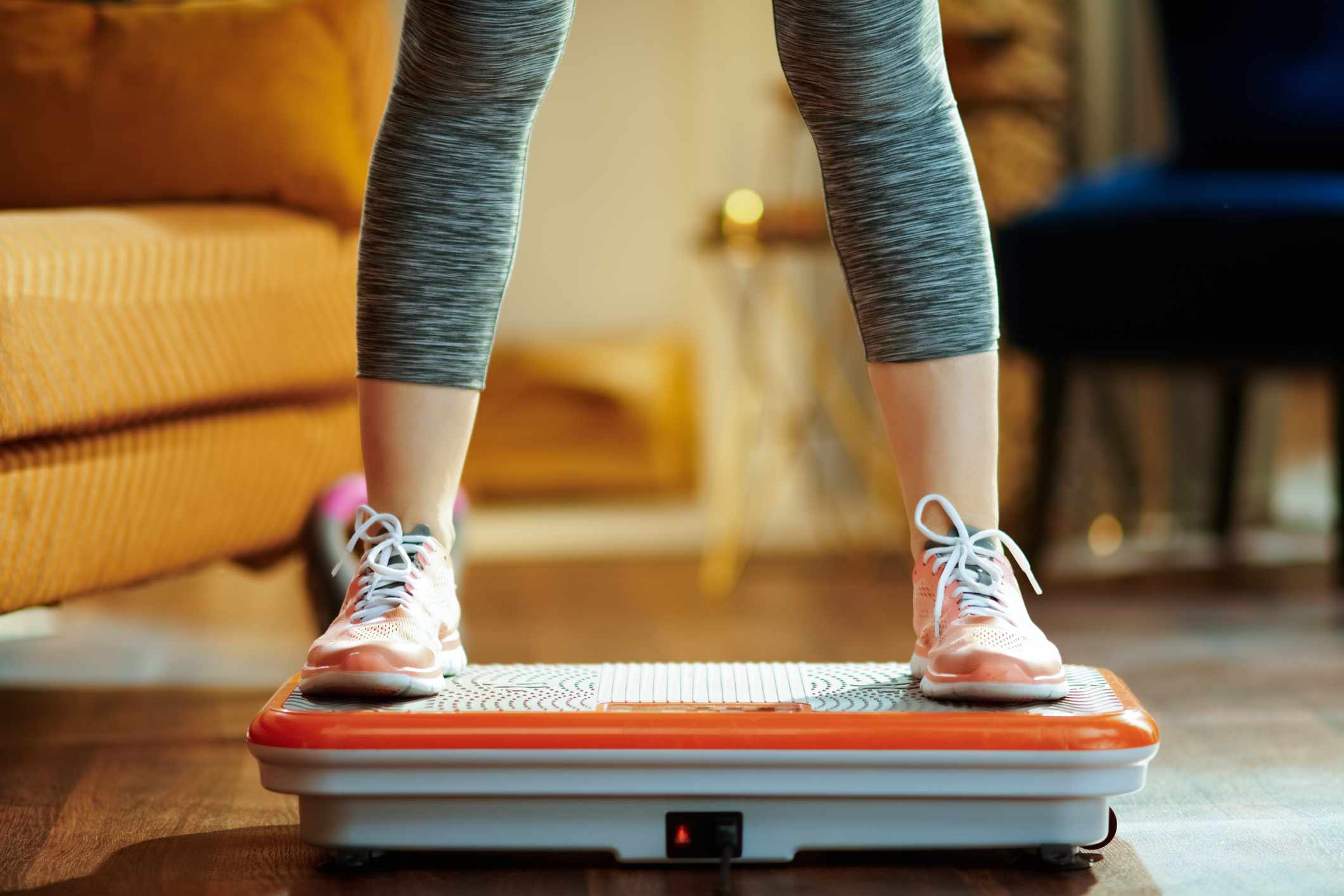
:max_bytes(150000):strip_icc():format(jpeg)/Health-GettyImages-VibrationPlates-32a8b5df3ee04449ae122ae6ac34e8f1.jpg "Closeup on young woman in fitness clothes in the modern house training using vibration power plate.")
- Vibration plates trigger rapid muscle contractions, which may modestly improve muscle strength, recovery, and balance.
- Evidence for benefits like increased bone density or lymphatic drainage is limited.
- They may be safe as a supplement to exercise, but they should not replace traditional strength or weight-bearing training.
Vibration plates—also known as whole-body vibration machines—are exercise platforms that shake rapidly while you stand, sit, or perform movements on them.
They’ve become increasingly popular nowadays. Influencers are singing their praises on social media, and they’re featured in doctors’ offices. The purported benefits range from lymphatic drainage to increased muscle strength and improved bone density. But are there proven benefits, or is it just another wellness and fitness fad?
First, What Are Vibration Plates?
Vibration plates vibrate in the 1-2 millimeter range in up-and-down and side-to-side movements.
The purpose of these devices is to trigger your muscles to contract repeatedly, which proponents say may help strengthen your muscles and bones. But how does this work exactly?
"When muscles sense a stretch or movement, they send a signal to the spinal cord, which then communicates back and causes the muscles to contract," said Brad Weening, MD, orthopedic surgeon and member of the Royal College of Physicians and Surgeons of Canada, in his YouTube show Talking With Docs. This is called the muscles' tonic vibration reflex (TVR).
In simple terms, muscles get stronger because contractions create stress, and your body adapts to handle that stress better next time.
Potential Benefits
The three key areas where there is some evidence are the following.
Improved Bone Density
There’s some evidence that vibration may help improve bone density. Bones are constantly remodeling, and as you age, your bones may get weaker due to a decline in certain hormones, like estrogen. Menopause can often contribute to a loss of bone density, so females tend to have a higher risk of osteoporosis.
Vibration plates may help you strain your bones, therefore helping to increase bone density. "Bones like the see strain," said Paul Zalzal, orthopedic surgeons and members of the Royal College of Physicians and Surgeons of Canada, in Talking With Docs. "However, the research is kind of mixed. There’s no real, good, conclusive evidence that says vibration plates can increase your bone density to any significant degree."
So while vibration plates may be a supplement for people who aren’t able to do most forms of exercise, they shouldn’t be a replacement for weight-bearing exercise and impact activities for most people.
Muscle Strength and Recovery
There is better data to support that vibration plates may help to increase muscle strength and recovery. "It has been shown that your muscle strength can improve with the use of vibration plates in the 10-15% range," said Weening.
However, that’s pretty low when compared to resistance training, which may help improve your strength 50-100%, according to Weening. Therefore, vibration plates can once again be a supplement, and not a replacement to your training.
The way that works is that as the machine vibrates, it forces your muscles to contract and relax dozens of times each second. So while that may help strengthen your muscles somewhat, there isn’t much research to support strong claims.
There is also some research that shows that using vibration plates after exercise may help clear the lactate in your muscles faster, helping you recover faster. Lactic acid tends to build up in your muscles during intense exercise as your body breaks down glucose for energy, and is one of the biggest contributors to muscle soreness.
Balance
According to Zalzal and Weening, this is the real benefit of a vibration plate. Studies have shown that there is some degree of improvement in your balance when using a vibration plate, which can translate to a decreased risk of falling.
"This is really important in the aging population because there’s a lot of comorbidities associated with falls: head injuries, hip fractures, etc." said Zalzal.
Lymphatic Drainage
There is some evidence that indicates that vibration plates may have some effect in helping your lymphatic system, though existing evidence is very limited.
Your lymphatic system relies on muscle contractions to drain fluid. Vibration plates cause rapid, repeated muscle contractions, which can mimic this "muscle pump." The muscle contractions stimulated by vibration plates may stimulate blood circulation and cause your blood vessels to dilate.
Some studies in lipedema (a condition that causes abnormal, symmetrical fat accumulation) patients show greater reductions in limb size when vibration is added to manual lymphatic drainage.
However, there are very few high-quality human studies directly measuring lymphatic drainage from vibration plates.
Should You Try a Vibration Plate?
It doesn’t look like trying vibration plates causes any harm if you’re reasonably strong and have good balance. In fact, you may reap a few benefits.
What’s important is to know that there is very limited evidence in humans that support it’s many purported benefits.
According to Zalzal and Weening, you should talk to your healthcare provider before using vibration plates, if:
- You’ve had a joint replacement
- You had a recent injury
- You had a significant fracture
- You have significant balance issues
"I still wouldn’t recommend it. I’d say go and exercise, get a trainer, do your physical therapy, etc," said Zalzal. "But it’s okay to use as a supplement."