
What Is Artificial Intelligence?
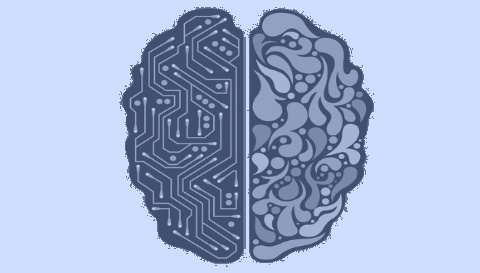
Artificial intelligence, one of today’s burgeoning computer science technologies, is poised to usher in a new era of global change by giving rise to clever machines. Artificial intelligence has become pervasive in our world. It is currently engaged in a wide range of subfields, from the general to the specialized, including self-driving cars, chess play, theorem proving, music performance, painting, etc. What is it then?
Artificial intelligence is really a technique for teaching a computer, a robot operated by a computer, or software to think critically and creatively like a human mind. AI is achieved through examining the cognitive process and researching the patterns of mankind’s brain. These research projects produce systems and software that are intelligent. It can therefore be defined as a field of computer science that allows us to build intelligent machines capable of thinking and acting like people
Become a Artificial Intelligence Certified professional by learning this HKR Artificial Intelligence Training !
Why Artificial Intelligence
Future possibilities have been hinted at multiple times by artificial intelligence. The key advantages of learning AI are as follows:
- AI aids in managing, analyzing, and generating useful information for future decision-making from a massive volume of data.
- Nearly every facet of society benefits from AI, including healthcare, education, transportation, decision-making, cybersecurity, and better workplaces and homes.
- AI contributes to a better user experience that makes it easier to utilize gadgets and applications.
- AI is a rewarding job option with limitless future potential.
- In general, AI will deliver more solutions that are optimized for people and businesses to support them in each and every decision.
- You will be able to question established working practices and alter your general worldview thanks to AI. You could advance your career by emphasizing your desire for positive change and your enthusiasm to master the most recent technologies.
Realted Article: History of Artificial Intelligence
Types of Artificial Intelligence
Based on its capabilities & functionalities, artificial intelligence may be divided into several types. Let’s go through each category one at a time.
Artificial Intelligence Types—Based on Capabilities
Based on its capabilities, Artificial intelligence can be described into 3 categories:
1.Narrow AI
One particular application of artificial intelligence is called ANI. Among the most prevalent varieties of AI are now in use. ANI is also referred to as a weaker AI because it lacks the intelligence to perform tasks on its own outside of its capabilities. Self-driving automobiles, chess-playing computers, image recognition, voice recognition, and purchase recommendations on e-commerce websites are some examples of ANI. However, each ANI contributes to the building of strong Artificial Intelligence.
Following are a few ANI examples:
- An ANI that operates within a constrained, specified range is Apple’s Siri. It frequently struggles with things that are outside of its capabilities.
- Another ANI that uses Machine Learning (ML), natural language processing, as well as cognitive computing to process data and provide answers is IBM Watson.
- Google Translate, recommendation systems, picture recognition software, Google’s page-ranking algorithm, & spam filtering are more examples of ANI.
2.General AI
AGI is a sort of artificial intelligence that can reason and act in ways akin to humans. Making a system intelligent and capable of acting like a person on its own is the goal of AGI. Although they do not yet exist, researchers are concentrating on creating machines based on AGI.
The following list of AGI examples includes:
- One of the most popular experiments towards AGI is the Fujitsu K computer. One second of brain activity may be simulated in just about 40 minutes.
- Tianhe-2, a supercomputer, has a record of 33.86 petaflops, or quadrillions of clock cycles per second (calculations per second). Although it seems impressive, the human brain is efficient enough to do much more—one exaflop, or a billion clock cycles every second.
3.Super AI
Theoretically, ASI is smarter than humans. It is more adept at performing jobs than people. According to this theory, AI has advanced to the point where it is comparable to human emotions & experiences, i.e., it elicits its own emotions, ideas, needs, and desires.
- Thinking, taking decisions on their own, solving puzzles, and forming judgments are some of ASI’s essential qualities.
- AI that surpasses human intelligence and enables machines to execute any task more effectively than people is known as ASI.
- ASI also referred to as powerful AI, has the capacity to think, plan, learn, communicate, solve riddles, and make decisions.
- There isn’t a good example of ASI at the moment. However, since several industrial titans are concentrating on creating powerful AI, ASI will soon come to life.

Artificial Intelligence Training
- Master Your Craft
- Lifetime LMS & Faculty Access
- 24/7 online expert support
- Real-world & Project Based Learning
Artificial Intelligence Types—Based on Functionalities
Artificial Intelligence can be categorized as follows, based on its Functionalities:
1.Reactive Machines
- Reactive machines are the earliest and most fundamental sort of artificial intelligence. They make decisions in a reactionary manner, not drawing on memories from the past.
- Reactive machines use a computer system to perceive the environment and take appropriate action.
- Reactive machines concentrate only on the current situation, which they then respond to.
- Reactive robots, according to artificial intelligence expert Rodney Brooks, are limited to performing the specific tasks they are given to them because they have no concept of the outside world.
- Google’s AlphaGo and IBM’s Deep Blue Systems are two examples of reactive machines.
2.Limited Theory
- Machines with limited memory can make decisions by learning from past data.
- The data kept in the little memory, however, can only be accessed for a short while.
- Virtual assistants like Siri, self-driving cars, and chatbots are a few instances of computers with a small amount of memory.
Self-driving cars employ artificial intelligence with a small amount of memory. It keeps track of how a certain vehicle is moving around other cars both right now and over time. The static data of an artificial intelligence device, such as lane markings and traffic signals, are then supplemented with the acquired data.
Such information can assist a vehicle in making decisions on lane changes and avoiding cutting off other traffic. The goal of Mitsubishi Electric has been to advance this technology for autonomous vehicles.
3.Theory of Mind
The theory of mind interacts in a way that takes into account its understanding of people, animals, sentiments, & objects in the world. This artificial intelligence is the least evolved of all the categories. However, some scholars are working hard to create it.
Theory-of-mind and the robot head Kismet, developed in the late 1990s by MIT researcher Dr. Cynthia Breazeal, are examples of real-world applications of AI. The ability of this robot head to replicate and identify human emotions is a crucial development in this technology. Kismet, however, is unable to track or direct attention toward people.
Sophia from Hanson Robotics is another example of this sort of artificial intelligence in action. Sophia can see thanks to the cameras in her eyes and the computer algorithms that control them. She was now able to maintain eye contact, identify people, and follow faces.
4.Self-awareness
- Self-awareness is regarded as the pinnacle of artificial intelligence’s evolution.
- Machines are conscious and aware of themselves.
- Self-aware machines will have greater intelligence than people.
- Such machines do not already exist; as of yet, this is just a theoretical idea.
Self-aware AI might be able to recognize human emotions in addition to comprehending its own conditions, features, and states. These artificially intelligent machines would not only be able to recognize and arouse emotions in those with whom they engage, but will also have their own emotions, beliefs, and desires.
Importance of Artificial Intelligence
The importance of AI may be summarised as follows:
- Repetitive learning and data-driven discovery are automated by AI. Artificial intelligence is capable of reliably completing repetitive, high-volume, automated tasks without getting tired.
Existing products gain intelligence thanks to AI. Most of the time, AI would not be offered as a standalone application. As with Google Assistant, which was given as functionality to a new era of mobile phones, AI capabilities will instead be applied to items you already are using to better them. - AI adapts by using algorithms for progressive learning, which allow the data to do the programming. The algorithm transforms into a predictor or a classifier. The algorithm can therefore educate itself on how to play any activity and can also learn what goods to recommend online next.
- AI uses neural networks with numerous hidden layers to interpret more and more data. Deep learning models require a large amount of data because they derive their knowledge straight from the data. They get more accurate the more data one can supply them.
Applications of Artificial Intelligence
he following are some of the most widespread commercial implementations of AI in actual applications:
Algorithms are employed in the finance industry to distinguish between fraudulent and legitimate activity by tracking user behavior for outlays, logins, or shady transactions.
- AI bots are now employed in customer support to manage consumer inquiries and provide answers to frequently asked concerns.
- Combining Al and ML technology, algorithms in cyber security may now anticipate anomalies, identify dangers to protect against by studying previous attacks, and even alert the system for upcoming alerts.
- AI is transforming virtual assistants by using voice recognition tools like Alexa, Siri, Google Voice, and Cortana to directly accept user orders.
- The usage of AI in our current era is highlighted by Tesla’s Autopilot and Google Driverless Cars, particularly in automation. Elon Musk has even continued to claim that AI-powered driverless vehicles will be able to forecast customers’ destinations based on their past behavior.
- One industry that has solely benefited from the application of AI is robotics. Industries all around the world are constantly looking for ways to improve the tasks carried out by these automated machines

Subscribe to our YouTube channel to get new updates..!
Goals of Artificial Intelligence
- The following are artificial intelligence’s primary objectives:
- Replicate the intellect of humans
- Deal with knowledge-intensive problems
- Building a thoughtful relationship between perception and action
- Creating a machine that can carry out jobs that call for human intelligence, like:
a.Build a theorem’s proof
b.Playing chess
c.Plan a surgical procedure
d.Driving while in the midst of traffic - Developing a system that can behave intelligently, pick up new skills on its own, show, explain, and give advice to its user.
Recommended Audience
This tutorial has been prepared while keeping in mind the needs of a beginner in the domain. Hence, this is an elementary-level tutorial meant for individuals aspiring to embark on the journey of Artificial Intelligence and comes with an easy guide to make you feel more at ease.
Prerequisites
You should have a basic understanding of information technology, be comfortable using the Internet and computers and have a working understanding of data before beginning this Artificial Intelligence tutorial. These fundamentals will aid in your understanding of AI ideas and enable you to advance more quickly through your learning process.
Artificial Intelligence Training
Weekday / Weekend Batches
Conclusion
We have always found technical advancements to be fascinating. Presently, we are experiencing the greatest AI developments in history. This has not only affected the future of every industry, but it has also served as a catalyst for new technologies like big data, robotics, and the IoT. There is no doubt that AI will continue to grow in the future at the rate at which it is developing. As a result, as of 2022, AI is a fantastic field to kickstart your career. The demand for qualified AI professionals in this field will increase as AI and related technologies advance.
Related articles:

Stephan is the sports journalist for the Maple Grove Report.