The fine can now potentially hit 99 million AUD, or $68 million.
Matt Cardy/Getty Images
After becoming the first in the world to implement a social media ban for those under 16, Australia isn’t doubling down. In a press release, the Australian government announced that it will double the maximum penalty for any social media companies breaking its minimum age law, from 49.5 million to 99 million AUD, or more than $68 million.
“It’s clear big tech are not doing enough to comply with the law,” Anthony Albanese, the country’s prime minister, said. “These changes reflect the seriousness with which we take any failure by social media companies to comply with our world-leading law.”
Along with the new penalty threshold, the Australian government is granting its eSafety Commissioner, Julie Grant, more enforcement power. Now, the commissioner can demand social media companies provide evidence of how they’re stopping children under 16 years old from starting an account. Notably, the Australian agency can gather evidence regarding compliance with the ban from third parties, like from age verification or app store providers, according to the press release. The country’s online safety agency also said it’s still “actively investigating potential non-compliance” with Facebook, Instagram, Snapchat, TikTok and YouTube.
While the government said it has already seen more than five million under-16 accounts removed, deactivated or restricted since the ban went into effect in December, there have been some recent studies and polls that note the potential ineffectiveness. In April, a charity organization called the Molly Rose Foundation found that 61 percent of more than 1,000 kids polled between 12 and 15 years old still had access to social media. More recently, the University of Newcastle published a study that claimed that more than 85 percent of Australian teens under 16 are still on social media apps.
The SAP SD module is built on tables and uses them to store data. We’ll go through SAP SD tables and their relationships in this tutorial. SAP SD tables are critical storage for corporate data connected to SAP ERP software’s sales and distribution activities. The SD tables are basically divided into three parts:
These are the SD module’s building blocks, and it’s only natural to address tables in this sequence. Please look at the slides to see how the tables from different blocks were connected. Being an expert in SAP SD necessitates an understanding of these relationships.
Become a SAP SD Certified professional by learning this HKRSAP SD Training!
1) Sales
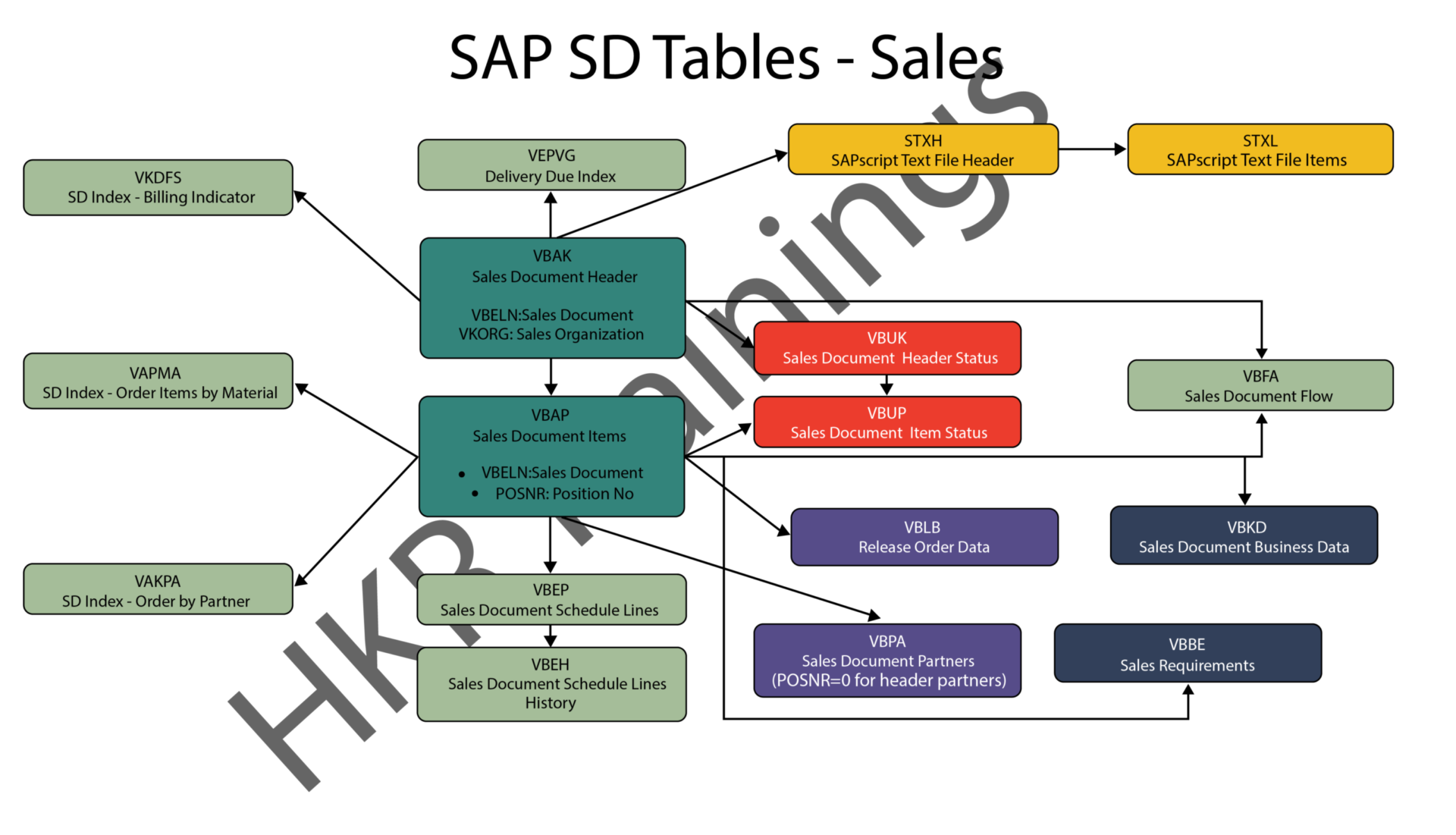
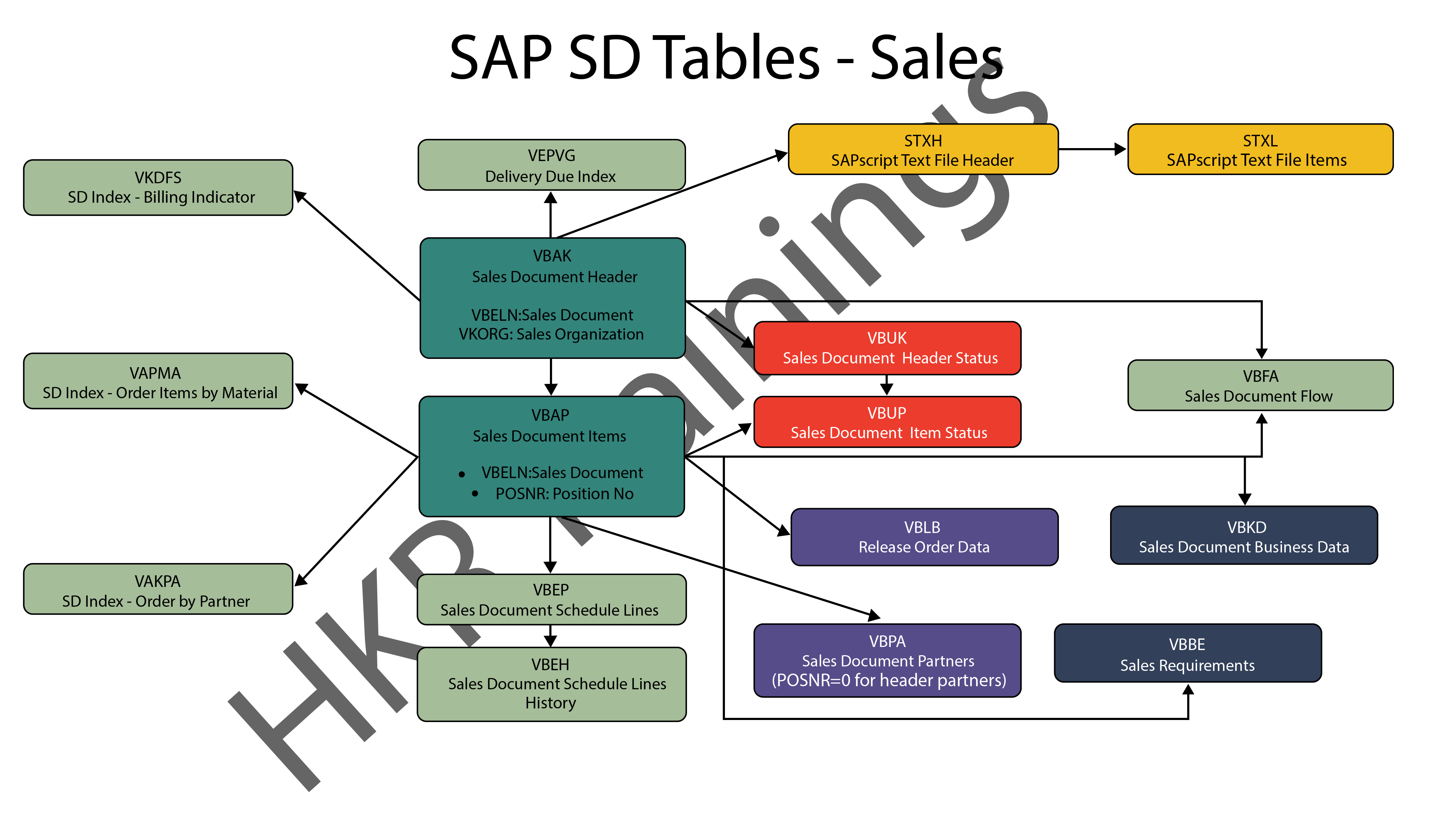
In SAP SD, the first block is about sales procedures.This indicates that the SAP SD tables in this block would be related to sales orders, quotations, and other similar transactions. We designed a visual slide that lists all of the tables and their relationships.
2) Shipping
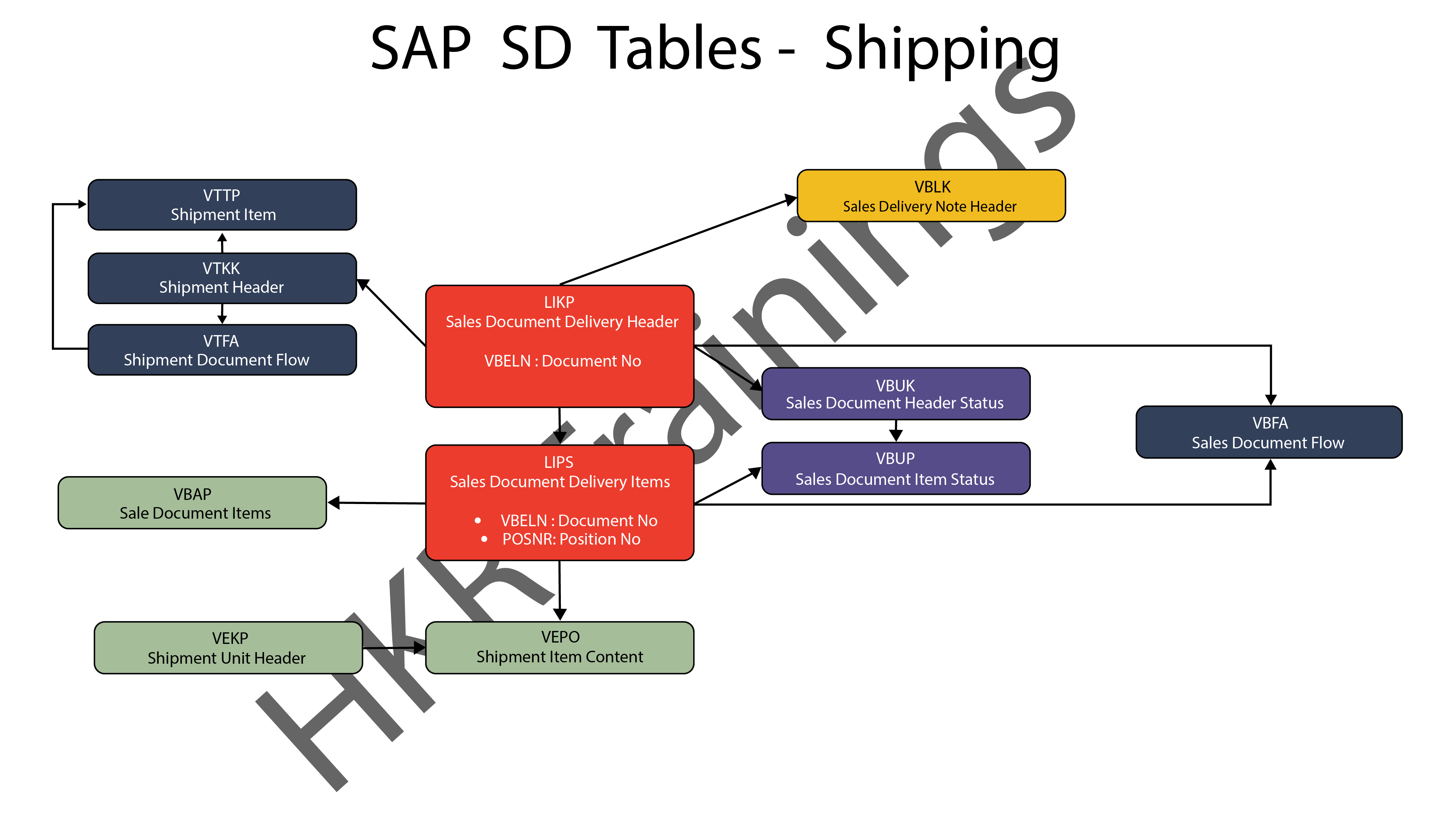
ThIs section is about SAP SD’s shipping processes. In this section, SAP SD tables deal with inbound and outbound deliveries, as well as shipments. Likewise, we’ve created a visual slide with links illustrating table relationships.
SAP SD Training
Master Your Craft
Lifetime LMS & Faculty Access
24/7 online expert support
Real-world & Project Based Learning
3) Billing
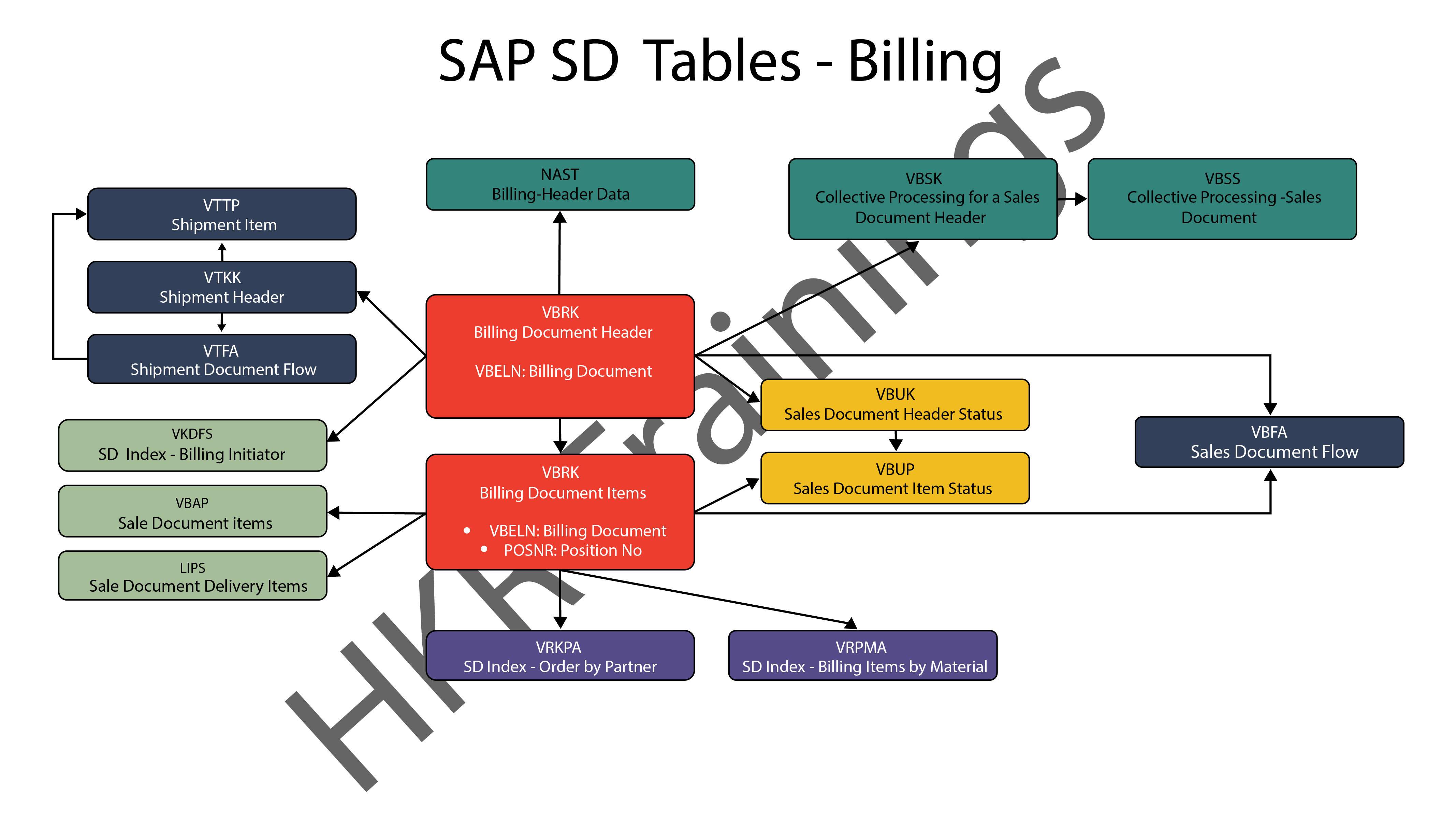
The billing feature of SAP SD is the last but not least. SAP has a variety of tables which are used to support a company’s billing procedures. Billing documents, as well as other related data, such as output conditions, are saved in these tables by SAP.
To provide the best experiences, we use technologies like cookies to store and/or access device information. Consenting to these technologies will allow us to process data such as browsing behavior or unique IDs on this site. Not consenting or withdrawing consent, may adversely affect certain features and functions.
Functional
Always active
The technical storage or access is strictly necessary for the legitimate purpose of enabling the use of a specific service explicitly requested by the subscriber or user, or for the sole purpose of carrying out the transmission of a communication over an electronic communications network.
Preferences
The technical storage or access is necessary for the legitimate purpose of storing preferences that are not requested by the subscriber or user.
Statistics
The technical storage or access that is used exclusively for statistical purposes.The technical storage or access that is used exclusively for anonymous statistical purposes. Without a subpoena, voluntary compliance on the part of your Internet Service Provider, or additional records from a third party, information stored or retrieved for this purpose alone cannot usually be used to identify you.
Marketing
The technical storage or access is required to create user profiles to send advertising, or to track the user on a website or across several websites for similar marketing purposes.