Brash CNN founder Ted Turner dies


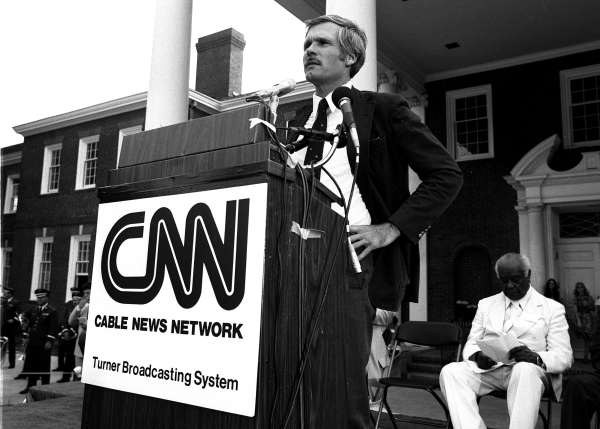
On June 1, 1980, Ted Turner launched CNN at a converted Jewish country club in Atlanta.

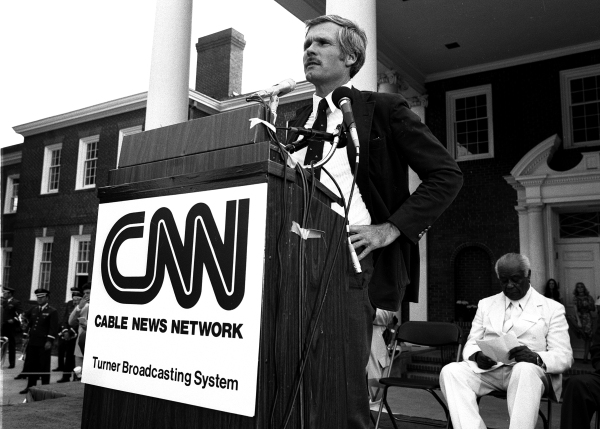
On June 1, 1980, Ted Turner launched CNN at a converted Jewish country club in Atlanta.
Rick Diamond/Getty Images/Archive Photos

Ted Turner — the bullish founder of CNN and a suite of other cable channels, not to mention a bison steakhouse, a non profit designed to prevent the proliferation of nuclear weapons and an international sports competition — died Wednesday at the age of 87. He had announced just before his 80th birthday that he had Lewy Body Dementia, a degenerative disease that causes dementia and muscle failure.

Turner never seemed at a loss for brass or chutzpah.

"If Alexander the Great could conquer the known world, why couldn't I start CNN?" Turner once told Oprah Winfrey.

He launched the Cable News Network — the nation's first continuous all-news television station — on June 1, 1980 at a converted Jewish country club in Atlanta. The network broadcast news 24/7 from that point on and indeed built a global array of bureaus.

Former CNN chief news executive Eason Jordan says Turner took inspiration from 24-hour radio stations that relayed news headlines, and endless sports highlights on ESPN. Turner remained baffled why the broadcast giants — ABC, NBC and CBS — hadn't launched cable stations.

"To him it was just the most logical thing in the world and he couldn't understand why nobody else was doing it," Jordan says. "So he was going to do it."

Sixteen years later, NBC (in partnership with Microsoft) and Fox would launch sibling cable news channels. Each ultimately found success by embracing strong (though opposing) points of view. Broadcast networks subsequently sought to replicate the original cable ethos with stripped down streaming services.

Turner, a colorful figure with a Southern drawl and rail-thin mustache, had pronounced views himself, often (though not exclusively) of a liberal bent. But he wanted his station to reflect the news, not ideology. He thought human understanding across borders would benefit from reporting on stories and people around the world.

"He was a visionary, a trailblazer, a rabble-rouser, a do-gooder — and he thought there would be a market for it," Jordan says.

Ted Turner sits in his office in October 1986. “He was a visionary, a trailblazer, a rabble-rouser, a do-gooder," says former CNN chief news executive Eason Jordan.
Ted Turner sits in his office in October 1986. "He was a visionary, a trailblazer, a rabble-rouser, a do-gooder," says former CNN chief news executive Eason Jordan.
Jean-Louis Atlan/Sygma

Turner often carried a mischievous twinkle in his eye. And his values had been incubated in an earlier era.

Jordan joined CNN in 1982 while he was still in college, working overnights as a desk assistant during his first few years. Back then, Turner often slept in a pull-down Murphy bed in his office above the newsroom. He would come down to the newsroom to grab coffee, Jordan recalls, but did not usually interact with the staff. The first time they met, Jordan says, was because Turner had a guest.

"It was Raquel Welch," Jordan says. "They were both in bathrobes. And Ted was so proud of himself for having such good company that he introduced himself and Raquel Welch to everyone in the newsroom at 4 o'clock in the morning."

‘Chicken Noodle News’

CNN has been a mainstay of television journalism for so long it's hard to remember that it was often underestimated in its infancy.

In the 1980s, many people didn't understand what the fuss was about, longtime broadcast journalist Joie Chen recalls.

"Many people didn't even have cable yet. I didn't have cable growing up," says Chen, who joined CNN as an international anchor in 1991. "In those early years, you know, CNN was just considered 'Chicken Noodle News' and Ted Turner was at first just considered a dilettante."

CNN became a training ground for journalists who would be hired by better paying outlets. Chen left CNN in 2001, later working at CBS and Al Jazeera.

"Look, we were young and at times very shoddy, but we were the only game in town and we did some extraordinary things," Jordan says.

Over time, whenever news was happening, CNN was there. CNN broadcasted live when catastrophe struck the space shuttle Challenger and its crew in 1986.

And in 1991, CNN experienced a defining moment — effectively owning television coverage of the first US-led war against Iraq. It was the only U.S. network able to broadcast live from Baghdad as bright flashes from bombs lit the sky.

Anchor Bernard Shaw and Pulitzer Prize-winning war correspondent Peter Arnett were among those CNN journalists who projected calm under fire.

Chen recalls Turner never intended for his journalists to become famous and, she contends, he underpaid his staff.

"We were always told Ted's mantra was, 'You are not the star; the news is the star," she says. She left CNN at the end of 2001.

Competition grows

Even as he struck an exuberant tone, Turner's mood could swing to depression. He also battled again and again with rival media tycoon Rupert Murdoch – and even threatened to do so with his fists in Las Vegas, as The Guardian recounted.

Murdoch's New York Post in turn questioned Turner's sanity. Meanwhile, Turner maintained a friendly rapport with the late Cuban autocrat Fidel Castro.

Ted Turner and his actress wife, Jane Fonda, at their wedding ceremony in 1991.
Getty Images/Hulton Archive

In later years, as CNN competed not just with other cable channels but digital news outlets and social media, it lagged behind its TV peers in ratings. Executives turned over prime time to higher-rated opinion panel discussions featuring ideological clashes.

Conservatives and pro-Trump commentators repeatedly accused the network of listing to the left.

But it retained its journalistic DNA to a significant extent, rising to the moment as its reporting teams covered political developments, natural disasters and armed conflicts. That was part of Turner's legacy too.

Turner married and divorced three times; his third marriage was to Hollywood and fitness star Jane Fonda in 1991.

He also took on lots of debt – and investors – to make ambitious deals at a time when his main rivals, including Murdoch, were launching all-news cable stations. Eventually, it became too much.

In 1996, Turner sold CNN and the rest of his company, Turner Broadcasting System, Inc., to Time Warner for about $7.34 billion – a move he deeply regretted. A few years later – in 2000 – Time Warner sold itself to AOL, against Turner's wishes. The AOL deal is considered one of the worst mergers in U.S. corporate history. Turner has called it "one of the biggest disasters that have occurred to our country."

In 2001, his marriage to Fonda — a source of strength – ended. And shortly after that, he was completely out at AOL, separating from the company he'd spent a half-century building.

"I lost Jane. I lost my job here," Turner said in a 2012 interview on CNN's “Piers Morgan Tonight.”

He added, earning laughter from Morgan, "I lost my fortune, most of it, got a billion or two left. You can get by on that if you economize,"

Yet he demonstrated resilience. "You carry on. And I found other things to do."

‘Other things to do’

Turner had been finding other things to do for years. He was relentlessly competitive and an accomplished yachtsman.

In the 1970s, Turner bought a television station and made it into the national "superchannel" now known as TBS; He also bought the Atlanta Braves to ensure content for it. The Braves became one of the nation's most popular baseball teams during the generation he owned or ran it; the team appeared repeatedly in the World Series in the 1990s and early aughts.

In 1986, Turner launched the Goodwill Games, an international competition meant to bypass the Cold War fights that had broken out over the Olympics. It lasted until 2001.

Turner hoisted the Commissioner's Trophy after his Atlanta Braves won the 1995 World Series against the Cleveland Indians.
Ronald C. Modra/Sports Illustrated via Getty Images/Sports Illustrated

In 1997, as Turner was being honored by the United Nations, he pledged to donate a billion dollars to it. With that money, he created what's known as The UN Foundation that has helped the international institution endure.

As the years progressed, Turner created the Nuclear Threat Initiative to secure loose nuclear weapons in the former Soviet republics and elsewhere. He also gave widely to conservation and anti-global warming efforts. His philanthropy helped inspire the "Giving Pledge" of Warren Buffett, Bill Gates and other billionaires – and he was one of the first signatories to it.

He also founded Ted's Montana Grill with hopes of making bison a popular alternative to beef. Turner had been raising bison on his many ranches, and saw the restaurant chain as a way to reach customers while saving the species from extinction.

"I was 10 years old when I first read about them," he told Bethesda Magazine in 2015. "I said then I was going to work hard, see if I can make some money, and then I'm going to buy some land and raise bison and see if I can get the herd back away from the door of extinction."

In his final years, the flamboyant showman retreated from the public eye. Ever direct, he publicly acknowledged his affliction with Lewy Body Dementia, or LBD, in 2018. He spent much of his later life out of the public eye, whether in Atlanta or riding horses and fishing at his vast properties in Montana.

Copyright 2026, NPR


Source link

Leave a Reply

Subscribe to Our Newsletter

Get our latest articles delivered straight to your inbox. No spam, we promise.

Recent Reviews


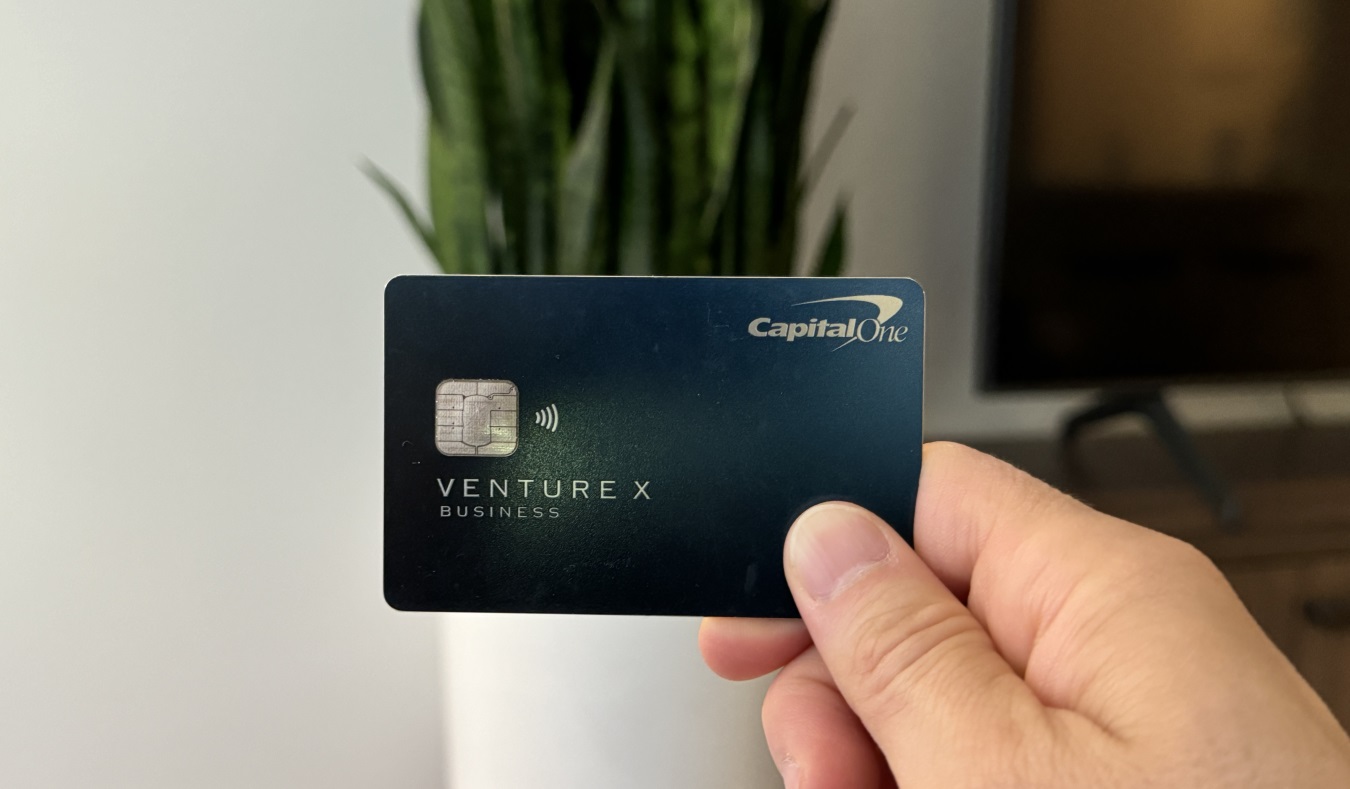
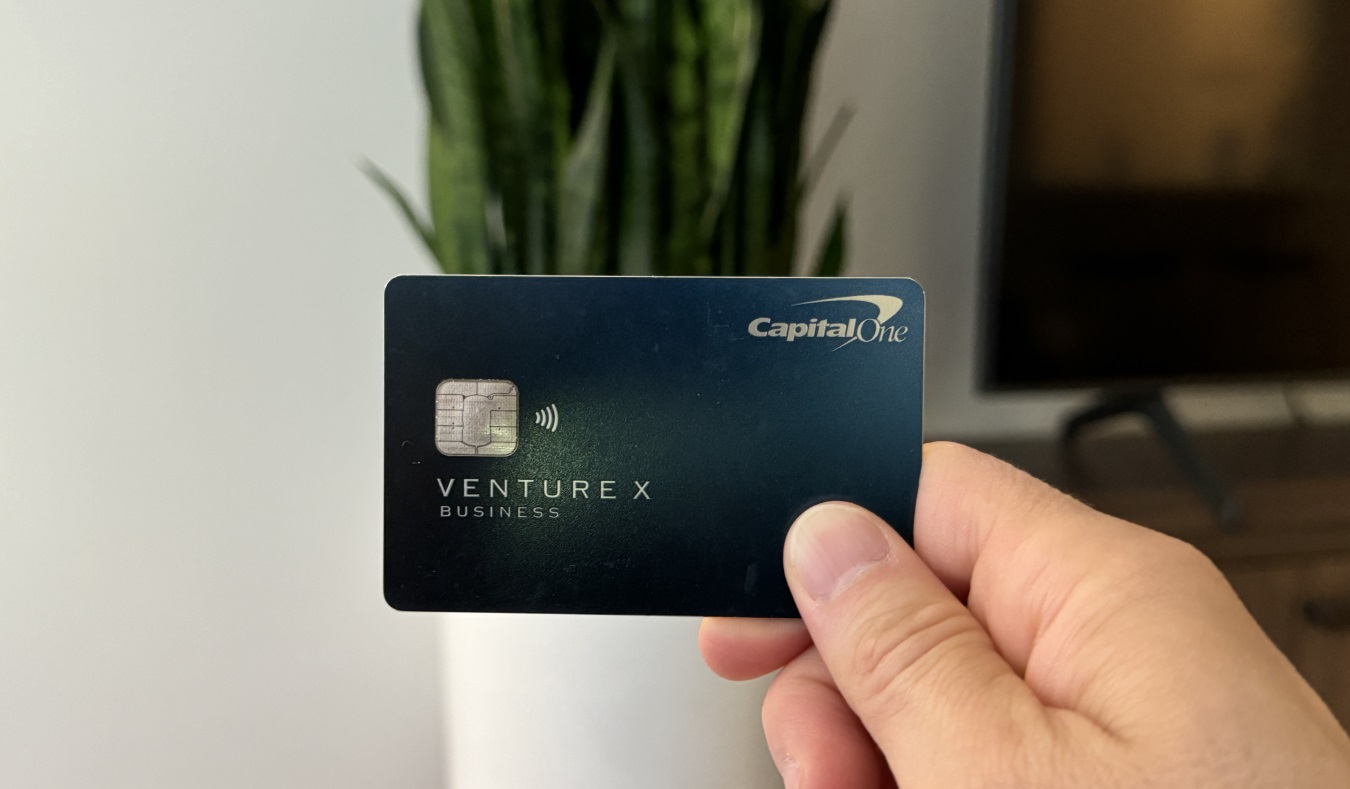
Nomadic Matt holding up his Capital One Venture X business card
I’m a sucker for a good travel rewards card. Over the years, I’ve collected a small handful of them — not because I love juggling annual fees, but because the right cards can save you a lot of money on flights, hotels, and travel perks you’d otherwise pay out of pocket for.

Not only do I have a bunch for my personal expenses but I have a couple for this business too. One of my favorite business credit cards is the Capital One Venture X Business Credit Card. It’s Capital One’s top-tier business product. I love it because there’s a big welcome offer, lounge access to over 1,300 airport lounges, annual travel credits, and a simple 2x reward on all spending (which ensures you are always earning multiples miles per dollar spent).

To help you decide if this card is for you, here’s my full review of the card and why I love it so much:


What is the Capital One Venture X Business Card?

The Capital One Venture X Business Credit Card is a travel rewards card issued by Capital One. It comes with a $395 annual fee that is way lower than the other premium business cards out there. And I think you can easily get way more value than the annual fee costs. Here’s a quick look at the main perks:

  • Earn 150,000 bonus miles once you spend $30,000 in the first 3 months from account opening
  • 2 miles per $1 on all purchases, no category restrictions
  • 5× miles on flights booked through Capital One Travel
  • 10× miles on hotels and rental cars booked through Capital One Travel
  • $300 annual travel credit (through Capital One Business Travel)
  • Every year, you’ll get 10,000 bonus miles after your account anniversary date.
  • Enjoy access to 1,300+ airport lounges worldwide, including Capital One Lounge locations and Priority Pass™ lounges, after enrollment
  • Up to $120 statement credit for TSA Precheck or Global Entry
  • No foreign transaction fees


Using Your Capital One Miles

Capital One miles can be redeemed in a few ways. One is by booking travel directly through Capital One’s portal. While I usually don’t recommend booking through credit card portals, to fully benefit from the Venture X’s travel credit (and to get the 5x and 10x miles offers) you’ll need to use their portal.

Another option is to use your miles to get reimbursed for any travel purchase. For 90 days after making such a purchase, you can reimburse yourself at a redemption rate of one cent per mile. After 90 days, and for all other purchases, you can use miles as cash back, at a redemption rate of 0.5 cents per mile (but avoid doing this, as it’s not a good value).

You can also use your Capital One miles in the Capital One Entertainment portal to book tickets for concerts, sports events, and more. Occasionally, Capital One offers cardholder-only events and presale opportunities too. While you’ll get just 0.8 cents per mile for tickets (not the best value), it’s still a fun and unique way to redeem miles.

However, you’ll get the most out of your miles by transferring them to Capital One’s 15+ airline and hotel partners. While the actual value varies based on what you book, you can usually find airline and hotel redemptions worth much more than the aforementioned one cent per mile. (The process is pretty straightforward and can be done through your Capital One account.)

Here are Capital One’s current travel partners:

  • Accor Live Limitless
  • Aeromexico Club Premier
  • Air Canada Aeroplan
  • Air France/KLM Flying Blue
  • Avianca LifeMiles
  • British Airways Executive Club
  • Cathay Pacific Asia Miles
  • Choice Privileges
  • Emirates Skywards
  • Etihad Airways Guest
  • EVA Air Infinity MileageLands
  • Finnair Plus
  • I Prefer Hotel Rewards
  • Japan Airlines Mileage Bank
  • Qantas Frequent Flyer
  • Qatar Airways Privilege Club
  • Singapore Airlines KrisFlyer
  • TAP Portugal Miles&Go
  • Turkish Airlines Miles&Smiles
  • Virgin Red
  • Wyndham Rewards


Pros of the Venture X Business Card

As someone who travels constantly for work, I’m always looking for ways to earn miles faster and make airport life a little less painful. I like this card for the simple 2x miles on everything. I use a lot of other cards that can get you 3 or 4x on certain categories like advertising or non-portal travel spend like flights and hotels. But when it comes to dining, museums, transportation, etc, there’s not a lot of ways to get more than 2x per dollar spent on a business card. So, I use this Venture X for anything I can’t get more than 2x per dollar.

Here’s a deep dive into some of the main perks:

$300 Travel Credit
Each year, you get a $300 credit toward bookings made through Capital One Business Travel (flights, hotels, or car rentals). If you’re already booking travel regularly, this credit is basically free money — and it immediately drops your effective annual fee from $395 to $95.

The catch? You do have to book through Capital One’s travel portal. It’s powered by Hopper, so the interface is clean and prices are usually competitive. I’ve found some good deals there.

Lounge Access
You get access to Capital One Lounges and Priority Pass lounges. Capital One’s own lounges are actually great — spacious, modern, good food — though they’re still limited location. But they are expanding how many they have and I personally think they are way better than the other lounges competitor banks have. You also get Priority Pass access t o over 1,300 lounges globally, which is a common but really nice perk.

Anniversary Bonus
Every year on your account anniversary, you’ll get 10,000 bonus miles (worth about $100 toward travel). It’s a nice “thank you” that helps offset the annual fee even further.
 

Should You Get This Card?

The Capital One Venture X Business Credit Card is best for small- to medium-sized business owners who travel regularly and can put at least $30,000 to ensure they meet the welcome offer requirements.

Overall, I think the Capital One Venture X Business is one of the best-value premium business cards out there right now. It’s not as benefit-packed or as flashy as the The Business Platinum Card® from American Express or the Chase Sapphire Reserve for Business?, but it’s easier to use, has a less expensive annual fee, gets you lounge access, and an easy to understand earning structure.

It’s one of the cards I use the most often for my business. I highly recommend getting it.

Stop paying full price for travel!

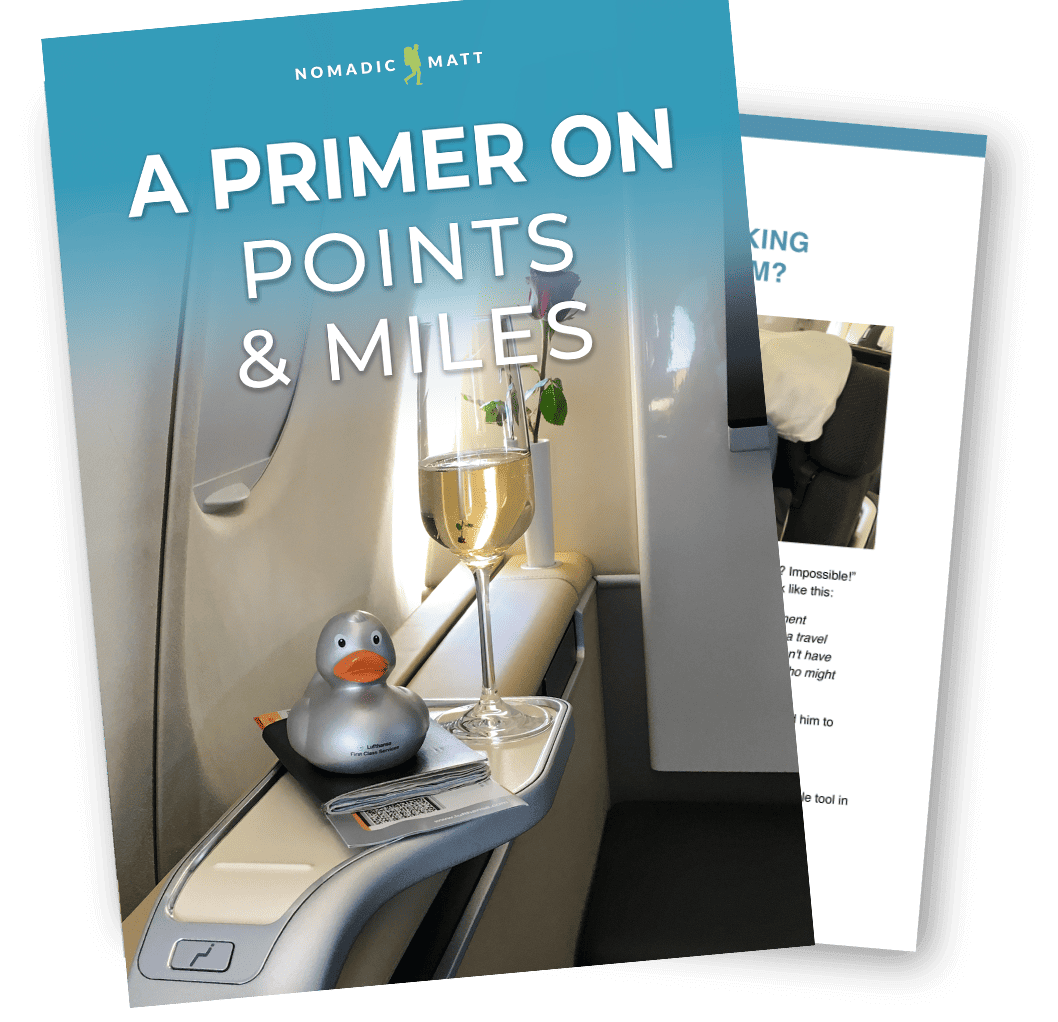
Download my free guide to points and miles and learn how to use points and miles for free travel! It’s how all the pros travel so much! In this guide, I’ll show you:

  • How to Pick a Credit Card
  • How to Earn Up to 10x Miles on Your Spending
  • How to Redeem Your Points
  • And a Ton of Other Money Saving Tips!
Points and Miles

Book Your Trip: Logistical Tips and Tricks

Book Your Flight
Find a cheap flight by using Skyscanner. It’s my favorite search engine because it searches websites and airlines around the globe so you always know no stone is being left unturned.

Book Your Accommodation
You can book your hostel with Hostelworld. If you want to stay somewhere other than a hostel, use Booking.com as it consistently returns the cheapest rates for guesthouses and hotels.

Don’t Forget Travel Insurance
Travel insurance will protect you against illness, injury, theft, and cancellations. It’s comprehensive protection in case anything goes wrong. I never go on a trip without it as I’ve had to use it many times in the past. My favorite companies that offer the best service and value are:

Want to Travel for Free?
Travel credit cards allow you to earn points that can be redeemed for free flights and accommodation — all without any extra spending. Check out my guide to picking the right card and my current favorites to get started and see the latest best deals.

Need a Rental Car?
Discover Cars is a budget-friendly international car rental website. No matter where you’re headed, they’ll be able to find the best — and cheapest — rental for your trip!

Need Help Finding Activities for Your Trip?
Get Your Guide is a huge online marketplace where you can find cool walking tours, fun excursions, skip-the-line tickets, private guides, and more.

Ready to Book Your Trip?
Check out my resource page for the best companies to use when you travel. I list all the ones I use when I travel. They are the best in class and you can’t go wrong using them on your trip.


Source link