Fact checked by Nick Blackmer
:max_bytes(150000):strip_icc():format(jpeg)/Health-GettyImages-957613764-e652c941334644d3bae7d744fdb72eb8.jpg "Woman feet walking on the steps.")
Credit: baona / Getty Images
- A social media trend has people “pounding the stairs” to support bone health.
- Experts say the activity may stimulate bone remodeling, a process that helps build stronger bones.
- However, pounding the stairs should not replace a well-rounded exercise routine for bone health.
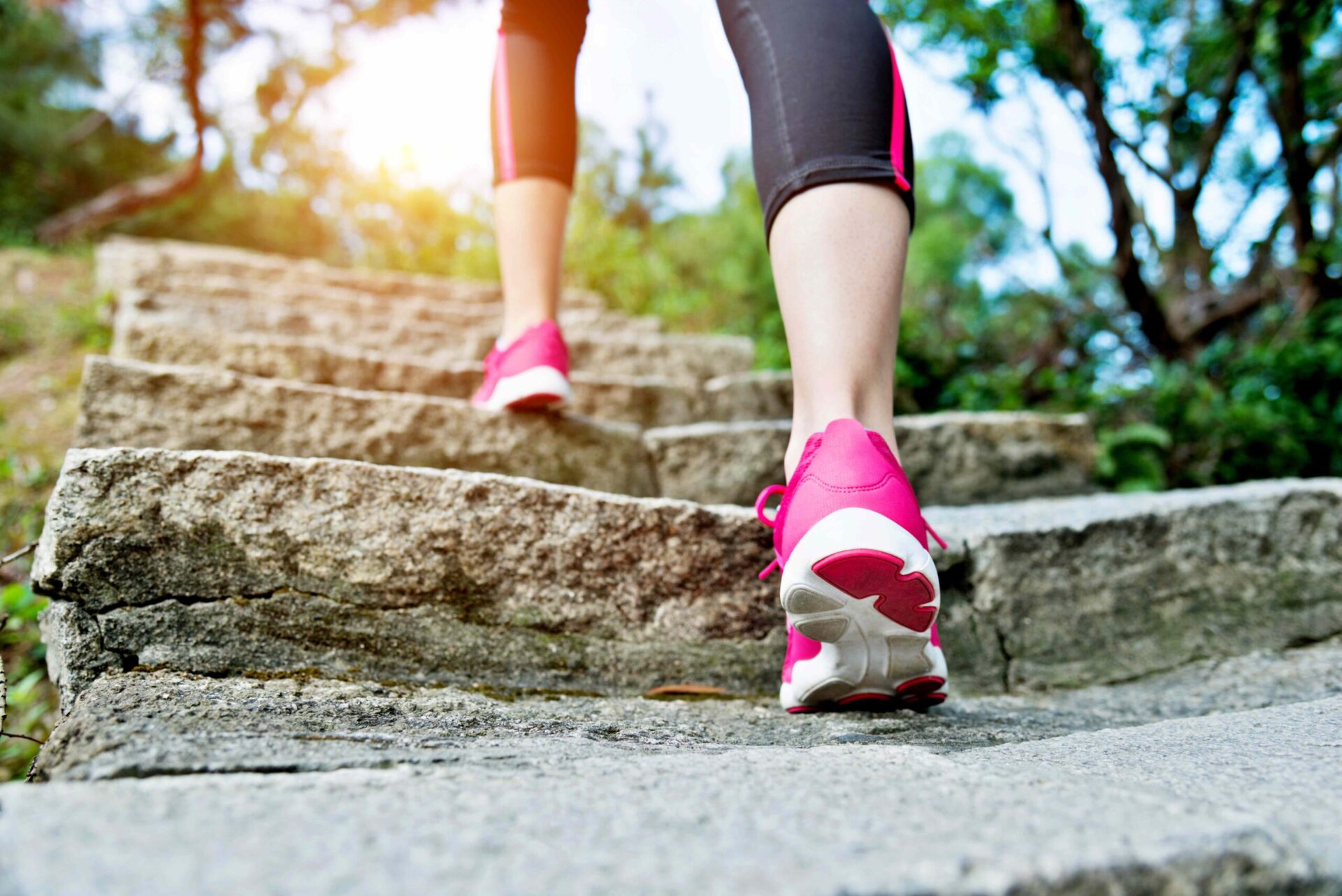
It’s no secret that exercise is a crucial bone-building activity, but recent social media chatter has focused on one strategy in particular: walking forcefully up the stairs.
The activity appears to have gained attention after orthopedic surgeon Vonda Wright, MD, recommended it during a 2024 appearance on the Begin Again podcast. During the interview, Wright said everyone should “pound up the stairs” to support bone health.
Since then, some users have shared videos of themselves trying the technique, while others have weighed in on whether it works. So how effective is the strategy? Here’s what to know about pounding the stairs and bone health.
Can Pounding the Stairs Benefit Your Bones?
There’s some merit to the notion that pounding the stairs can benefit your bones, said Jason Snibbe, MD, a board-certified orthopedic surgeon and sports medicine specialist.
Forceful movements like stair stomping place stress on bones, which can stimulate bone remodeling, a continuous process involving the breakdown of old bone and formation of new bone. When bones are exposed to higher forces, the body adapts by strengthening them over time.
“Essentially, bones need stress to become denser and stronger,” Snibbe said, which is why astronauts are prone to bone loss in space, where there’s no gravity.
Research suggests that even simply climbing the stairs regularly—without the pounding—can help maintain bone density, especially compared with lower-impact activities like walking.
Having strong bones is important for mobility and can help reduce the risk of fractures caused by osteoporosis, which makes bones weak and brittle. While experts say supporting bone health is important at any age, it becomes especially crucial in midlife for women, who face a higher risk of bone loss due to declining levels of bone-protecting estrogen.
Does the Practice Have Any Downsides?
Just because pounding the stairs may promote bone health doesn’t mean everyone should do it, said Ashley Joi, CPT, a trainer and former Division I athlete based in Los Angeles.
For some people, the activity could lead to shin splints, knee irritation, or even stress fractures. People with osteoarthritis in their hips or knees may also find pounding the stairs too challenging or painful, Snibbe added.
If your body isn’t used to forcefully climbing stairs or other high-impact exercises, it’s best to build up to them gradually, noted Alexander Rothstein, EdD, NSCA-CSCS, ACSM-EP-C, program coordinator of exercise science at New York Institute of Technology. “Those who haven’t been doing it should err on the side of slower, gentle weight training—building up their confidence, lifting slightly heavier weights—rather than doing things very fast or high impact.”
So, Should You Start Pounding the Stairs?
For people who aren’t prone to pain or injury, “pounding the stairs” isn’t necessarily a bad idea for bone health, the experts said.
But Snibbe cautioned that the movement should be just one small component of a broader exercise program that also includes activities like jump training and resistant training, which have some of the strongest evidence for improving bone density.
Specifically, Snibbe said research suggests that performing 40 to 50 jumps daily may help increase bone density in the hips and spine, while exercises like squats, deadlifts, and hip thrusts can also play a meaningful role.
Rothstein, who generally recommends more traditional load-bearing exercises for bone health over pounding the stairs, said the key test of a good bone-building exercise is whether it feels challenging for your muscles. Feeling like you’re actively exerting yourself is usually a good indicator that you’re generating enough load to trigger bone remodeling, he added.
Keep in mind, however, that what is considered challenging varies by person—for some, a run or a forceful stair climb can provide that stimulus, while for others, walking can be enough.
As for frequency, Snibbe recommends resistance training at least two to three times a week, along with other impactful cardio exercises.