Medically reviewed by Brendan Camp, MD
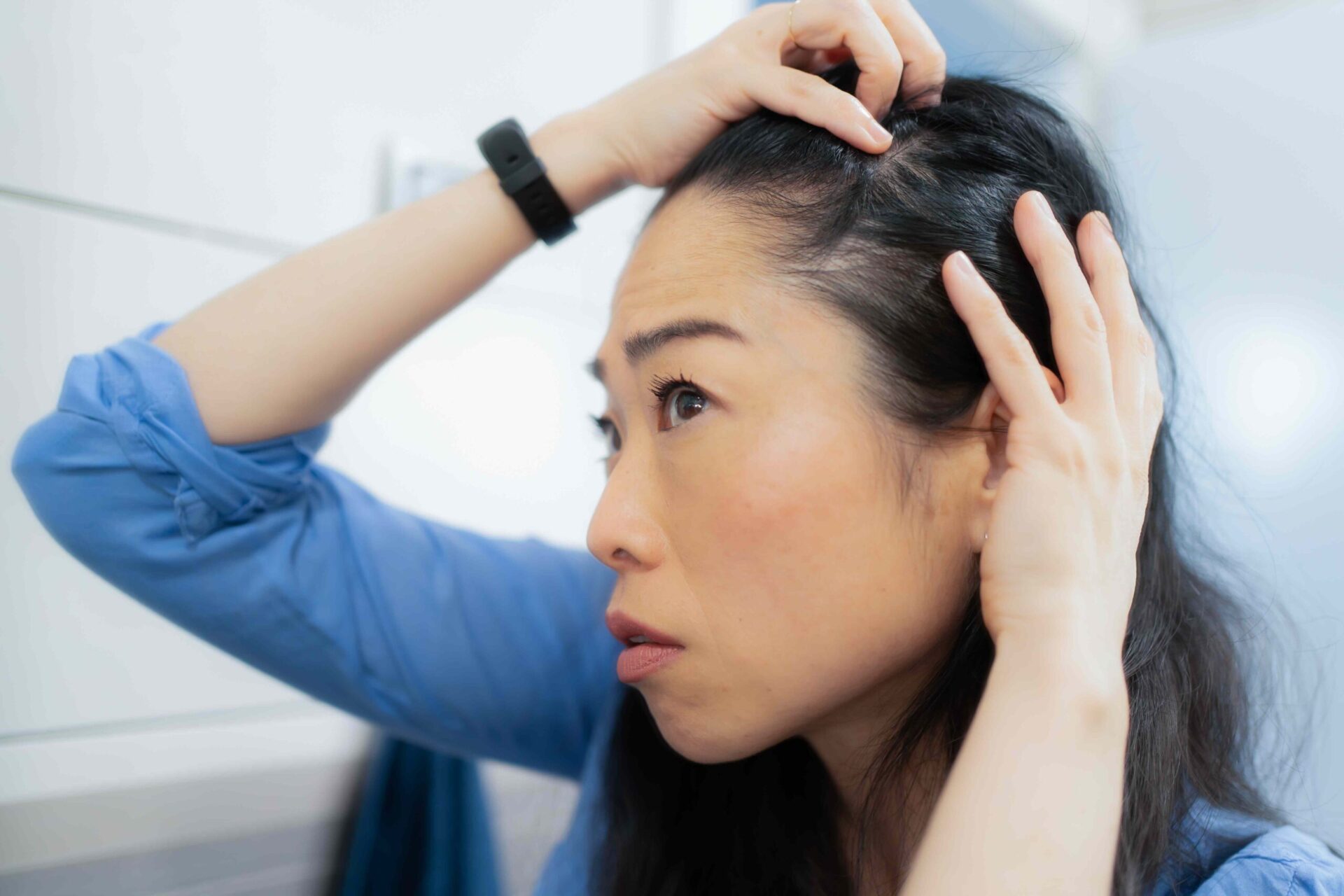
:max_bytes(150000):strip_icc():format(jpeg)/Health-GettyImages-2278447923-41cee1f1a86b4a019c8de34cb7409865.jpg "A person examining their scalp closely using their hands in a bathroom setting")
Credit: KanaiPixel / Getty Images
- The scalp undergoes age-related changes similar to the rest of the body.
- Scalp health is not yet a proven biomarker of overall aging. Although researchers are exploring links between scalp characteristics and biological aging, scalp health alone cannot predict how quickly a person is aging.
- Hair-related changes like graying, thinning, reduced density, and different texture may be associated with underlying biological aging processes occurring throughout the body.
Just like any other part of the body, the scalp undergoes several age-related changes over time. However, scalp health isn't used to predict overall aging. Instead, scalp health may provide information about biological aging, or the decline of cellular function over time.
Why Can't the Scalp Predict Overall Aging?
One reason the scalp can't predict overall aging is that its health is heavily influenced by external exposures. Sun damage, hairstyling practices, hair treatments, environmental pollution, and genetics can all affect the scalp independently of a person's age.
Although scalp changes may accompany aging, current evidence suggests they primarily arise from biological processes within the scalp and hair follicles rather than directly reflecting the health of other organs.
Scalp health is often considered one piece of a much larger picture. Factors such as cardiovascular health, muscle mass, metabolic function, cognitive performance, and blood-based biomarkers remain more established measures of biological aging.
How the Scalp Changes With Age
While the scalp isn't an accurate predictor of overall aging, it does change with age. Like facial skin, the scalp undergoes both intrinsic aging, driven by genetics and biological processes, and extrinsic aging, caused by environmental factors such as ultraviolet (UV) radiation, pollution, heat, and chemicals.
Aging scalp tissue often shows:
- Reduced epidermal thickness
- Fewer sebaceous (oil) glands
- Lower blood vessel density
- Increased oxidative stress
- High levels of chronic low-grade inflammation
Scalps of older individuals may also show signs of cellular senescence, a process in which cells stop dividing but remain metabolically active. Senescent cells accumulate with age and release inflammatory molecules that can affect surrounding tissues.
Why Researchers Are Interested in These Age-Related Changes
A 2025 review described the scalp and hair follicle as an interconnected aging system. The study noted that age-related changes in the scalp environment, including reduced microcirculation and structural changes in the skin, may influence how hair grows and ages.
Researchers are particularly interested in the scalp because hair changes are often among the earliest visible signs of aging. Visible changes in hair, such as graying, thinning, or changing texture, can often reflect underlying biological aging processes occurring throughout the body.
Can the Scalp Reveal Anything About Your Health?
While scalp health cannot predict how quickly you're aging overall, certain scalp changes may sometimes signal underlying health issues. For example:
- Diffuse hair shedding can occur with nutritional deficiencies.
- Premature graying has been linked to oxidative stress and, in some studies, cardiovascular risk factors.
- Chronic scalp inflammation may accompany autoimmune conditions.
- Sudden hair thinning can occur during periods of significant physical or emotional stress.
Researchers are also exploring whether scalp imaging, microbiome analysis, and noninvasive measurements of scalp physiology could improve the detection and monitoring of age-related changes in the scalp and hair follicle.
How To Support an Aging Scalp
Although aging is inevitable, several lifestyle habits may help maintain a healthier scalp environment:
- Protect your scalp from UV damage: The scalp is often exposed to sunlight, particularly for people with thinning hair. Wearing hats and using scalp-friendly sun protection may help reduce photoaging.
- Prioritize nutrient-dense foods: Hair follicles are among the body's most metabolically active structures. Adequate intake of protein, iron, zinc, vitamin D, and omega-3 fatty acids can support healthy hair growth and scalp function.
- Manage stress: Chronic stress can increase inflammation and oxidative stress, both of which have been associated with hair aging.
- Address scalp conditions early: Consider visiting a dermatologist (a doctor who specializes in conditions of the hair, skin, and nails) if you have persistent dandruff, itching, redness, or excessive shedding.
- Follow a consistent scalp care routine: Cleaning gently, maintaining the scalp barrier, and treating underlying scalp concerns may help support a healthier environment for hair growth as you age.