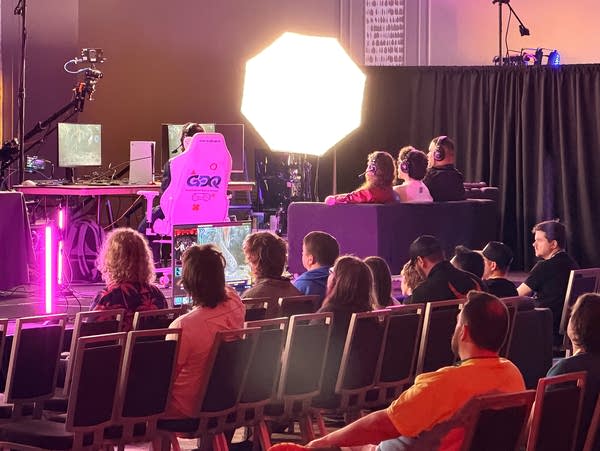
Head to the Hilton in downtown Minneapolis this week and you’ll find hundreds of ravenous fans with their eyes glued to projector screens, cheering in unison at the wins and gasping at the losses.
But if you’re looking for the World Cup watch party, that’s across the street.
Inside, gamers came together for this year’s Summer Games Done Quick, an annual video game speedrunning showcase that consistently raises millions of dollars for Doctors Without Borders.
“Speedrunning is basically playing a game to however you define completion, as fast as possible,” said Ashley Farkas, owner and business director of Games Done Quick.
Part of SGDQ’s mission is to show the variety of speedrunning, which materializes any way from a flawless run through Bowser’s castle in “Super Mario Bros.” to changing how many frames per second a game outputs to glitch through a doorway.
Participants, or runners, have spent months perfecting their games of choice, discovering new exploits or strategies just to shave seconds off their times.
While that sounds like a solitary process, the runners of SGDQ want people to know the scene is anything but.
“Speedrunning has morphed into not just beating a game as quickly as possible, but working together with other people to collaborate in solving problems in breaking the game and beating the game as quickly as possible,” said runner Clayton Lundgren, who goes by adef online.
“Most of this community really exists online together, and the times that we're able to physically be together are at events like this, which only happen twice a year,” Farkas said. “When people are flying in from all over the place, they have an entire week to spend together, and you can just feel the energy in this event.”
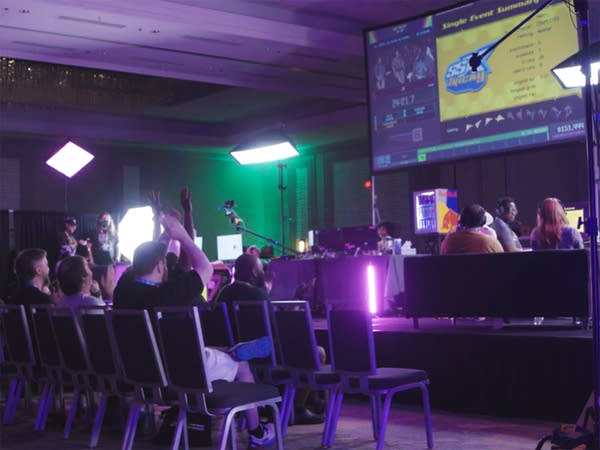
SGDQ is one of several events put on by Games Done Quick. Its sister event, Awesome Games Done Quick, happens each January.
“There are people from literally all walks of life here, and GDQ champions diversity and inclusivity in a way that I don't see a lot of other gaming spaces,” Lundgren said. “Naturally, there are lots of people at this event who've probably never speedrun a game in their lives, who are just here to hang out with friends they've met in these spaces or just to feel safe and included in a cool, fun room.”
Lundgren’s run, set for Friday afternoon, is a testament to the range of games on display. He’ll be running “Balatro,” a 2024 title where the player combines poker hands with randomized bonuses to chase the highest score they can. While the game is seemingly endless for most players, he hopes to break it within an hour.
“Because of the specific limitations of [‘Balatro’s’] number storage format, only up to a certain number can be stored before it overflows. And this number is ridiculously high … you're not going to get to a number this high in your Excel spreadsheet,” Lundgren said. “But in ‘Balatro,’ you can score remarkably high if you play in a very particular way. … If you go beyond about 10 to the 308th power, the game breaks, and it starts displaying your score as basically infinity.”
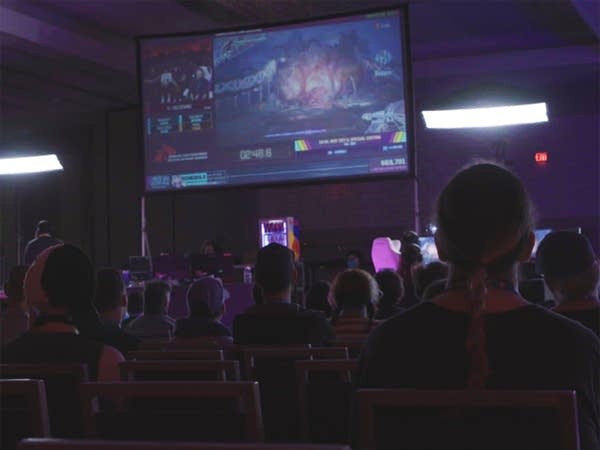
Runners at SGDQ accomplish these feats while being watched by hundreds of spectators in the venue, plus tens of thousands more people watching the live stream at home on Twitch and YouTube.
Andy Hill, also known as Bluekandy, said it’s a tightrope walk to put on a show for the crowd without losing control of a run. He had his fifth run on stage Sunday when he landed a world record for 2025’s “Kirby Air Riders.”
“I had some experience with what to expect when I look back behind me and I'm up on the stage, what I'm listening to – because you hear your own voice and your headset,” Hill said. “You have to be in that mindset of like what to expect and not get distracted, be able to focus in on what matters based on the information that's coming into you.”
Hill’s particular run was made possible by meeting a donation incentive. Throughout the event, viewers can donate online not only to enter to win prizes, but to influence how runners approach their games (renaming a character, taking a different route) and to add bonus games to the schedule.
Donations come from fans, sponsors and, occasionally, developers whose games are being showcased in the moment. While runners are essentially “breaking” the games, it’s all out of love for the hobby.
Last year’s event raised $2.46 million. The highest-earning SGDQ was in 2022 in Bloomington, which raised $3.05 million in the first in-person event since the COVID-19 pandemic.
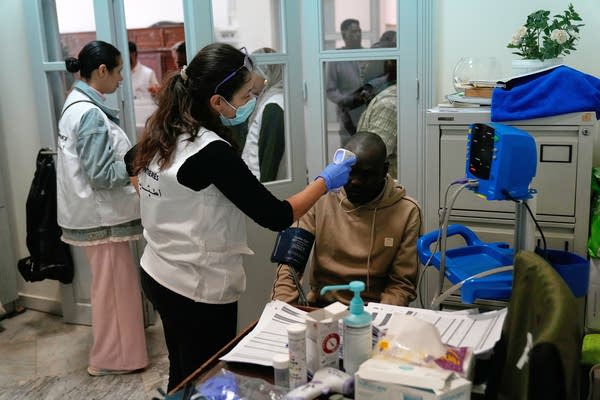
Since 2013, SGDQ has raised tens of millions of dollars for Doctors Without Borders, or Médecins Sans Frontières (MSF). The organization works in over 70 countries around the world to provide medical care regardless of race, religion, gender or ability to pay.
Greta Doucette, the organization’s senior marketing associate for peer-to-peer and streaming programs, said what started out as an email has turned into a rock-solid relationship between the organizations.
“[MSF] is driven by our principles of independence, impartiality and neutrality, and we do a lot of bearing witness of what we are seeing in the countries and the places that we are working,” Doucette said. “And the community of Games Done Quick, they are just so passionate and caring and want the best for humans — and that's exactly what Doctors Without Borders does, too.”
“One of the reasons why I decided to work with MSF is that the organization delivers,” said pediatrician Dr. Jean Junior.
Junior, who has worked under MSF since 2024 in the Democratic Republic of the Congo, West Darfur and South Sudan, said funds raised by events like SGDQ allow doctors guarantee a standard of care for their patients.
“You can say, ‘Here's your diagnosis, here's our treatment plan, and we got the stuff — we have your blood, the fluids, the antibiotics, the nutritional supplements, all of this stuff.’ We're able to provide to the families, and families know this,” Junior said.
The Twin Cities have been part of Summer Games Done Quick’s identity for almost as long as MSF. While January’s Awesome Games Done Quick has bounced around the country, SGDQ has been firmly planted in Minnesota since 2015 – except for two remote years during the COVID-19 pandemic.
“Everyone loves it here,” Farkas said. “The local restaurants and different centers and businesses always are excited when we come to town, because we have a community that really loves to go out and explore the city and go do things.”
Part of this year’s set even has stars with runners’ names painted onto the background, a shoutout to First Avenue in Minneapolis.
The event runs through Saturday night. While onsite attendance requires registration, the 24/7 live stream of the event is free to watch on Twitch and YouTube.