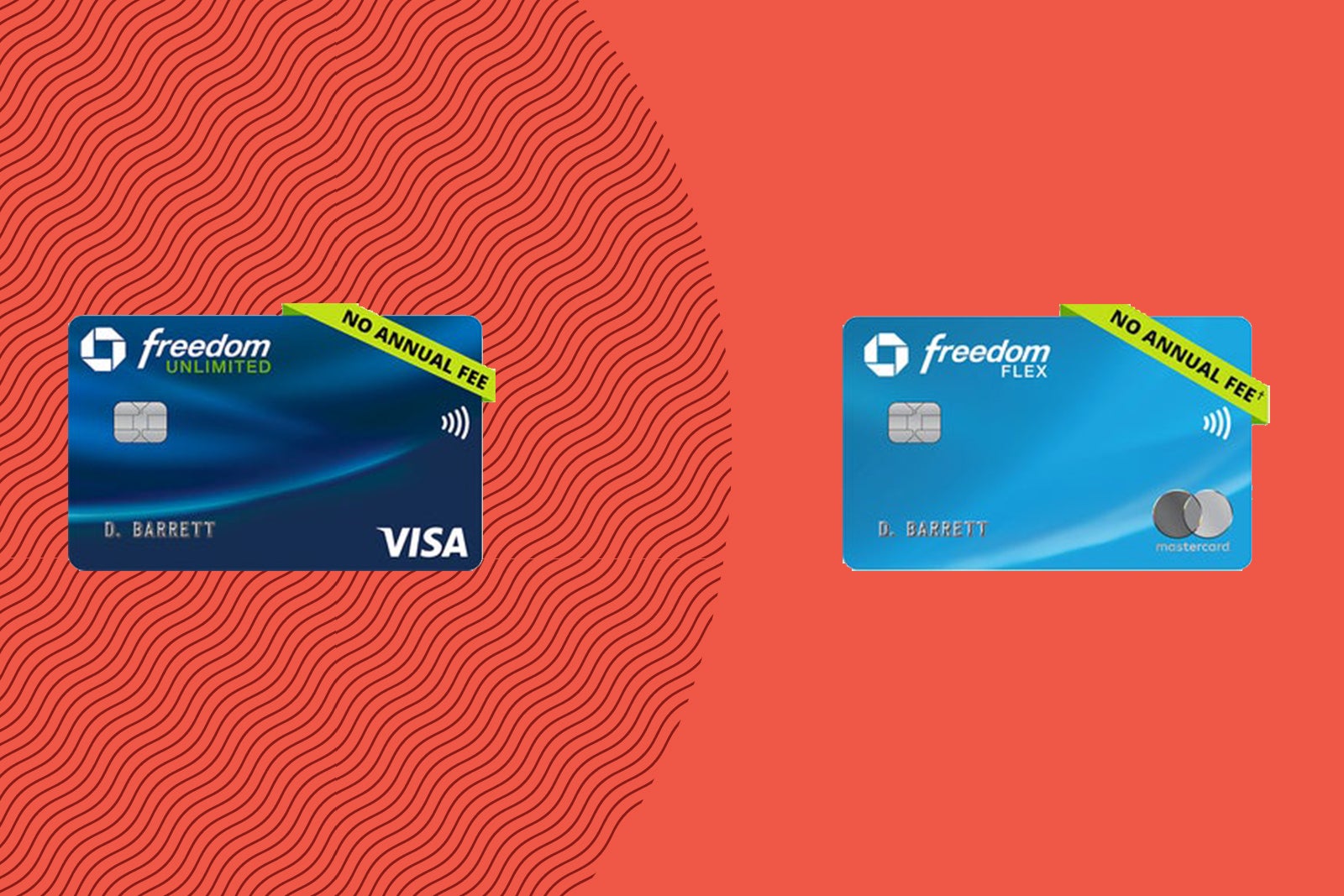
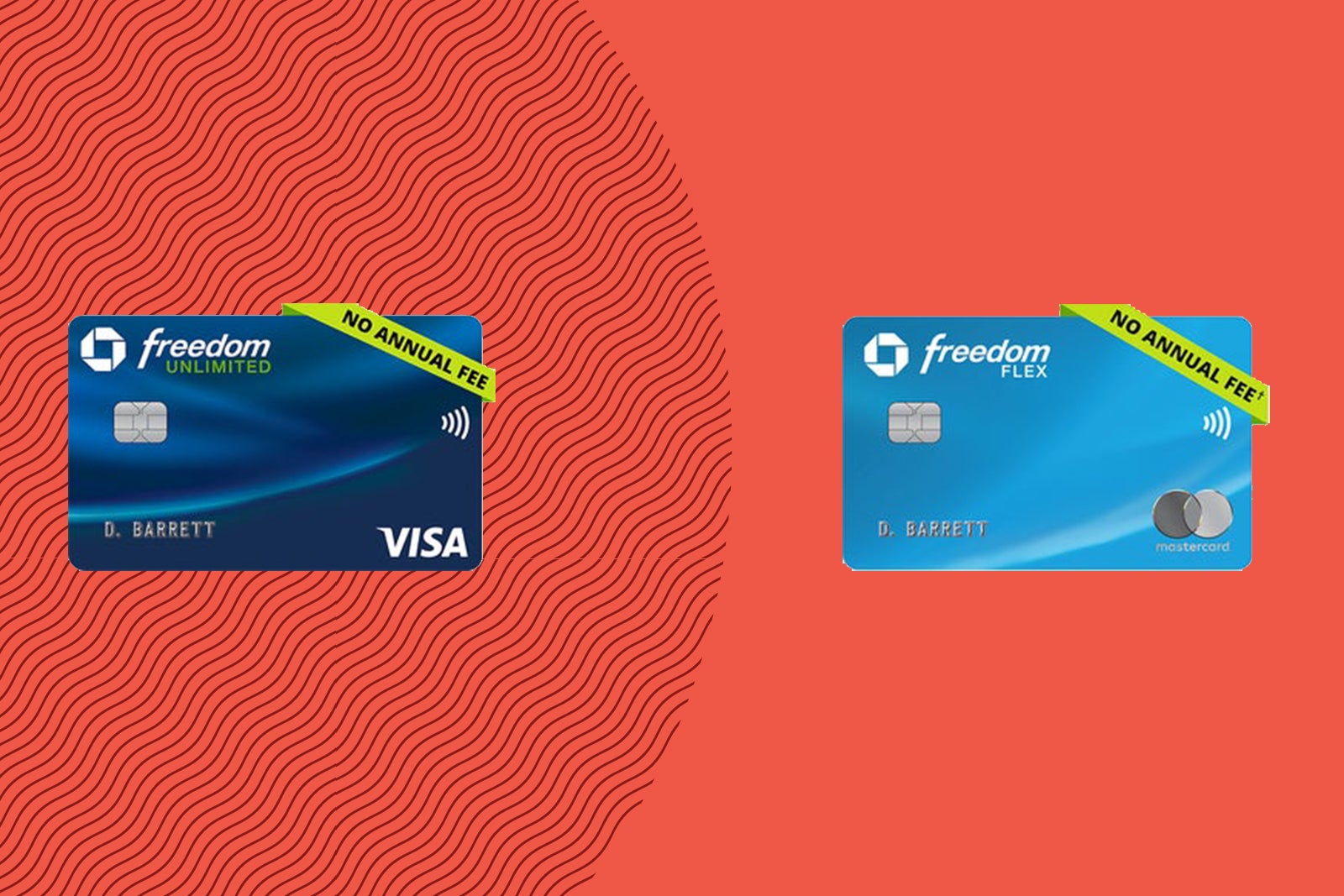
Chase Freedom Flex vs. Chase Freedom Unlimited comparison


Chase’s array of personal credit card products ranges from the ultrapremium Chase Sapphire Reserve® (see rates and fees) to no-annual-fee cash-back cards. With so many options, picking the right card can be difficult if you aren’t sure what you want.

Thanks to Chase’s 5/24 rule, which means you might automatically be rejected for most Chase cards if you’ve opened five or more cards in the last 24 months, it’s crucial to have a clear strategy for which Chase cards you want to add to your wallet.

In this showdown, we’re looking at two of Chase’s most popular no-annual-fee credit cards: the Chase Freedom Flex® (see rates and fees) and the Chase Freedom Unlimited® (see rates and fees).

By themselves, both earn cash-back rewards. However, you can pair either card with a premium card in the Chase Ultimate Rewards ecosystem, such as the Chase Sapphire Preferred® Card (see rates and fees), to turn those rewards into Ultimate Rewards points.

Then, you can transfer those points to travel partners for maximum value.

Let’s review each card’s details to see which makes more sense for you.

Chase Freedom Flex vs. Chase Freedom Unlimited comparison

Card Chase Freedom Flex Chase Freedom Unlimited

None

None

Earn $200 cash back after spending $500 on purchases in the first three months from account opening.

Earn a $250 bonus after spending $500 on purchases in the first three months from account opening.

  • 5% cash back on up to $1,500 in combined purchases in bonus categories each quarter you activate
  • 5% cash on travel booked through Chase Travel℠
  • 3% cash back on dining (including takeout and eligible delivery services)
  • 3% cash back at drugstores
  • 1% cash back on all noncategory bonus purchases

  • 5% cash on travel booked through Chase Travel
  • 3% cash back on dining (including takeout and eligible delivery services)
  • 3% cash back at drugstores
  • 1.5% cash back on all noncategory bonus purchases

  • Trip cancellation/interruption insurance
  • Auto rental collision damage waiver
  • Extended warranty protection
  • Travel and emergency and assistance services
  • Purchase protection
  • Cellphone protection

  • Trip cancellation/interruption insurance
  • Auto rental collision damage waiver
  • Extended warranty protection
  • Travel and emergency and assistance services
  • Purchase protection

Chase Freedom Flex vs. Chase Freedom Unlimited welcome bonus

The Freedom Flex offers a welcome bonus of $200 cash back after spending $500 on purchases in the first three months after account opening.

At face value, this bonus is worth $200; however, according to TPG’s April 2026 valuations, if you also hold a premium Chase card and transfer your points, they can be worth $410.
THE POINTS GUY

Right now, new Freedom Unlimited cardholders can earn a $250 bonus after spending $500 on purchases in the first three months from account opening.

Reward your inbox with the TPG Daily newsletter

Join over 700,000 readers for breaking news, in-depth guides and exclusive deals from TPG’s experts

If you hold an eligible Chase card, this bonus can be worth $513 with the help of transfer partners, according to TPG’s valuations.

Winner: Chase Freedom Unlimited. Its bonus is worth more, even if you don’t hold a premium Chase card.

Chase Freedom Flex vs. Chase Freedom Unlimited benefits

The Freedom Flex and the Freedom Unlimited offer nearly identical travel and purchase protections.

However, cellphone protection is where they differ. With the Freedom Flex — which is a Mastercard — you can get up to $800 per claim and $1,000 per year in cellphone coverage (cardholders can file a maximum of two claims in a 12-month period, and a $50 deductible cap applies per claim). You’re eligible for this coverage when you pay your monthly phone bill with your Freedom Flex.

Woman using her phone
D3SIGN/GETTY IMAGES

Given that these two no-annual-fee cards come from the same card family and are issued by the same bank, it isn’t surprising that they don’t differ drastically.

That said, the inclusion of cellphone insurance could tip the scales in favor of the Freedom Flex if you don’t have another card that offers this protection.

Winner: Freedom Flex. Its cellphone protection benefit is useful for cardholders in the event of damage or theft.

Related: The best cards for trip cancellation and interruption insurance — and what it actually covers

Earning cash back with the Chase Freedom Flex vs. the Chase Freedom Unlimited

These credit cards are cash-back-earning cards by default. They both offer 5% cash back on travel booked through Chase Travel, 3% cash back on dining (including takeout and eligible delivery services) and 3% cash back at drugstores.

A woman putting away her bag in the overhead compartment
RUDI_SUARDI/GETTY IMAGES

Where they diverge is that while the Freedom Unlimited has a flat 1.5% earning rate on all nonbonus spending (compared to just 1% with the Freedom Flex), the latter offers 5% cash back on up to $1,500 in rotating quarterly bonus categories, which include a variety of merchants and purchase categories throughout the year (activation required). The Freedom Unlimited does not offer this benefit.

Winner: Tie. It depends on whether you want to work to keep up with quarterly rotating bonus categories with the Freedom Flex or opt for a simple flat rate with the Freedom Unlimited.

Related: Best Chase credit cards

Redeeming cash back with the Chase Freedom Flex vs. the Chase Freedom Unlimited

Redeeming your hard-earned cash back with either credit card is quite simple. The traditional options are to redeem for a statement credit or receive a direct deposit into most U.S. checking and savings accounts. You can also redeem your rewards for gift cards.

Smiling Young Man Wearing a Brown Turtleneck Sweater Paying his Bills on his Laptop Computer (Side View)
FRESHSPLASH/GETTY IMAGES

Another redemption option is to book travel through Chase Travel to cover airfare, hotel stays and rental cars by paying entirely with rewards or a combination of rewards and cash. You can also redeem points toward purchases made through The Shops at Chase, which includes products from brands such as Apple, Breitling and Tumi. Both of these redemptions process at a rate of 1 cent per point.

If you have an eligible premium Chase card, you’ll be able to redeem your rewards through Points Boost.

Winner: Tie. Both cards have identical redemption options.

Related: Chase Ultimate Rewards points: How to redeem for maximum value

Transferring cash back with the Chase Freedom Flex vs. the Chase Freedom Unlimited

A better way to use your rewards from either the Freedom Flex or the Freedom Unlimited is to transfer them to one of Chase’s premium travel cards, something we call the Chase Trifecta.

These premium Chase cards include the Chase Sapphire Preferred Card, the Ink Business Preferred® Credit Card (see rates and fees) and the Chase Sapphire Reserve.

HYATT

You can transfer these combined points to any of Chase’s 14 transfer partners for even more value. The value you can gain from your points when transferring to travel partners is unlimited.

TPG credit cards editor Olivia Mittak typically uses her Ultimate Rewards points for Hyatt stays. In 2025, she spent 10 nights at Hyatt hotels across Germany without paying anything out of pocket, thanks to Chase points. She was able to do this by transferring her Ultimate Rewards points to World of Hyatt.

Winner: Tie. Both cards share the same transfer partners if paired with a premium card.

Related: The most award-friendly hotel program: Everything you need to know about World of Hyatt

Should I get the Chase Freedom Flex or the Chase Freedom Unlimited?

Due to its rotating quarterly bonus categories, the Freedom Flex is more beneficial if your spending habits change throughout the year (activation required). Cellphone protection is also a helpful perk, especially for a no-annual-fee card.

Conversely, the Freedom Unlimited is ideal for those who prefer simplicity and want guaranteed rewards without the need to track or activate bonus categories, making it a great choice for beginners.

Of course, you can always opt for both cards. Olivia holds both the Freedom Flex and the Freedom Unlimited; together, these cards form an important part of her card strategy.

Related: 4 reasons why I recommend the Chase Freedom Flex to beginners

How to switch from the Chase Freedom Flex to the Chase Freedom Unlimited?

Both the Freedom Flex and the Freedom Unlimited fall within the same family of Chase’s cash-back cards; therefore, you can easily switch between the two.

Switching cards is as simple as calling the customer service phone number found on the back of the card and requesting a product change to either card.

Young casually clothed woman online shopping from her domestic kitchen
PEKIC/GETTY IMAGES

When switching from one card to another, you forgo earning the welcome bonus on the card. This is an important aspect to keep in mind, as you’ll miss out on a chunk of cash-back rewards.

Bottom line

Whether you opt for the Freedom Flex or the Freedom Unlimited, these cards fit nicely into just about every type of credit card strategy.

If you’re new to the world of points and miles and have a more limited credit history, these cards are often easier to get approved for than premium cards such as the Chase Sapphire Reserve.

They can also help you build a strong relationship with Chase while earning valuable rewards — but resist the temptation to redeem them for cash back until you get an eligible premium Chase card later.

Even if you’re a more advanced award traveler, you can get a lot of value from these cards.

To learn more, read our full reviews of the Freedom Unlimited and the Freedom Flex.


Apply here: Chase Freedom Unlimited
Apply here: Chase Freedom Flex


Source link

Leave a Reply

Subscribe to Our Newsletter

Get our latest articles delivered straight to your inbox. No spam, we promise.

Recent Reviews


What is Tableau?

Tableau Desktop is a type of business intelligence tool that is also an interactive data visualization software company founded by Christian Chabot, part Hanrahan, and Chris Stolte in the year 2003. The company headquarters is located in Mountain View, California, United States. Tableau is a visual analytics solution that allows people to explore and analyze data with simple drag-and-drop operations.

Take your career to next level in Tableau with HKR.Join Tableau Training now.

What is Salesforce?

Salesforce is a complete cloud-based solution designed to provide Customer relationship management. This software sells complementary enterprise applications focused on customer services, marketing automation, analytics, and application developments. It keeps everyone happy and informed, and that means you can gain more profitability.Salesforce.com is an American-based cloud software company headquartered in San Francisco. This company was founded in 1999 and developed by Marc Benioff, Parker Harris.

Tableau Vs Salesforce :

Before jumping into the mentioning major differences between the Tableau and Salesforce Report, we would like to define what Salesforce report is:

Salesforce report :

Salesforce report and dashboard is also a business intelligence and out-of-the-box data analytical tool. They are intuitive, customized, and work well for all types of organizations.Now let us know the major differences based on the features;

One-line :

  • Salesforce report and dashboard offer go-to options for a quick win based upon real-time data.
  • Whereas the Tableau dashboard provides an exploration and sharing across a broad range of data and use cases.

Where your users are:

  • Salesforce users are the audience here.
  • When it comes to the tableau, salesforce, as well as non-salesforce users, access this tool.

Salesforce integration:

  • Native to Salesforce, no integration is required.
  • Whereas Tableau requires a simple, and quick ingestion to ingest salesforce data.

Wider tech stack:

  • This condition is not applicable to Salesforce.
  • Whereas in Tableau, if users want the option of on-premise architecture, and more flexibility around how the BI platform fits in with the business tech stack. They also need remote and federated queries.

Skills required:

  • Salesforce requires quick to install, and intuitive skills.
  • To work with the tableau tools, only tableau expertise is needed.

Artificial intelligence capabilities:

  • Sales cloud is not applicable.
  • Time Series modeling, and integration of Einstein discovery insights.

Salient features of the Tableau :

Here we have listed a few primary features based on the partners’ support it offers. They are;

  • Tableau Desktop software helps people to see and understand the data.
  • Offers a revolutionary new approach to business intelligence. Tableau allows you to quickly connect, visualize and help to share data with a seamless experience from the PC to the iPad.
  • Tableau partner implementation partners play a key role in helping organizations by assisting to transform and run their business simply.
  • They can help you identify, buy, build, implement, service, support, and run the Tableau solutions that best fit the business needs.
  • Responsible for project schedule, development, testing, execution, and delivery.
  • Tableau Desktop helps you to utilize the features included in your subscription and functional tips on how to optimize your business process and to make use of the reporting tools.
  • Manage the project for Tableau implementation in your organization as a system integrator.

Salient features of the Salesforce :

The attractive features of salesforce help the organizations to return a greater impact on its productivity and sustainability. They are:

Cloud-based Assessments:

The Salesforce Solution is a completely cloud-based service. Any requirements related to your company like new hardware purchases, software installation, local storage of files, and time stream. With salesforce, users will be able to easily and fastly switch from their already existing software to Salesforce.

Interdepartmental Integration method:

Salesforce CRM software helps the user to collaborate with multiple departments to achieve goals and true collaboration to work together. Departments like sales, marketing, customer services, and analytical. All these departments have the same information and analytics to produce effective outcomes.

Offers universal compatibility:

Salesforce allows the entire user to bring their ideas in the case of a software approach. This software solution takes these ideas or hazards to make them accessible across all the major software platforms and devices.

Provides advanced level automation:

This is nothing but coaching their customers through their pipelines which are having hundreds of steps involved. The training may include form filling, software updates, and automated devices. With the Salesforce software, all these pieces of training are easy to learn and implement.

Contact management :

In earlier days, there was a tradition that they wanted to do any kind of business with only known people. But Salesforce is breaking that tradition because it enables the entire customers to contact their business people easily throughout the world. So you can build relationships with people and produce valuable results.

Good sales tracking records:

It’s always been difficult to collect customer leads and resolve any issues related to business. So salesforce makes it easier for their customers to collect the business leads and helps them build efficient relationships with them.

Tableau Certification Training

  • Master Your Craft
  • Lifetime LMS & Faculty Access
  • 24/7 online expert support
  • Real-world & Project Based Learning

Tableau advantages:

Below are the key benefits of the Tableau, they are;

  • Tableau offers intuitive and attractive user interface services.
  • Provides seamless integration with modern big data platforms from Hadoop to Google BigQuery.
  • Offers an extensive roster of native data connections allowing easy integration with data from many sources.
  • High responsiveness – Tableau is supported by mobile platforms.
  • Offers powerful community collaborations.
  • Constraint development – new updates are regularly released and are easy to install.
  • Provide reliable customer support.
  • A vast library of video materials about the tools, online courses, and learning blogs.

If you want to Explore more about Tableau? then read our updated article – Tableau Tutorial

Salesforce advantages:

The following are the key advantages of using a Salesforce solution. Salesforce always helps to establish a relation between Customers and business enterprises. Let me make a point one by one:

  • High-rated customer success rate.
  • It’s a cloud leader.
  • World’s most trusted cloud.
  • Multi Tenant platform.
  • Data scalability is huge.
  • Fast application development and customization.
  • Offers complete CRM (Customer relationship management).
Business Intelligence & Analytics, tableau-vs-salesforce-description-0, Business Intelligence & Analytics, tableau-vs-salesforce-description-1

Subscribe to our YouTube channel to get new updates..!

Tableau disadvantages:

Below are the major disadvantages of the Tableau:

  • While working with Tableau, initial data preparation is required (Remember only structured data).
  • Some of the features in the Tableau may seem too specialized and restricting through tableau is intended for broader use.
  • Although tableau is great for analytical purposes, Tableau and other Business intelligence tools cannot replace financial reporting applications.
  • Given the ability to establish “row-level” security at the data level, but implements it in a bit of a precarious way.
  • There is no concept of versioning with the Tableau Server.
  • Requires some IT consultancy (especially with the tableau servers).

Salesforce disadvantages:

Below are the few disadvantages of Salesforce;

  • Lack of flexibility: while the salesforce provides various customization tools, the reality is that Salesforce.com supports over a million users using the same solution, and varying too far from that solution is not a feasible option.
  • Lack of functionality: The company seems to use a tools approach to compensate for missing functionality.
  • System downtime: Recurring system downtime and service interruptions over the last two years have been a major sore spot for many customers.
  • Lack of SLA (service level agreement): Salesforce.com’s practice of selecting which customers to provide SLAs is unacceptable.

Click here to get latest Tableau Interview Questions and Answers 

Tableau Certification Training

Weekday / Weekend Batches

Final thought:

Most organizations are always in a dilemma to decide which is the best dashboard tool to implement. The Tableau Vs Salesforce article helps our readers to choose the best tool based on the comparison. These two tools are widely used and they are best in their own way. To learn core concepts, and become an expert with respect to these software don’t forget to visit our website.

Related Articles :


Source link