Chase Freedom quarterly categories: 2026 calendar


If you have the Chase Freedom Flex® (see rates and fees) or legacy Chase Freedom®* in your wallet, take note: It’s your last chance to activate your Chase Freedom categories for this quarter.

Through June 30, you can earn 5% cash back (or 5 points per dollar spent) with Amazon, Chase Travel℠ (elevated 9% cash back for Freedom Flex cardholders), Feeding America and Whole Foods. After activating, you’ll earn at these rates on up to $1,500 in combined spending across these four categories (then 1% back).

Here’s what you need to know about this quarter’s categories.


Last chance: Activate your Chase Freedom Q2 categories


*This card is no longer available to new applicants. The information for the Chase Freedom has been collected independently by The Points Guy. The card details on this page have not been reviewed or provided by the card issuer.

Chase Freedom Q2 2026 categories

Through June 30, Freedom and Freedom Flex cardholders can earn 5% cash back (or 5 points per dollar spent) on up to $1,500 in combined purchases across these bonus categories (then 1% back):

  • Amazon
  • Chase Travel (Freedom Flex cardholders can stack this with the card’s standard Chase Travel category to earn 9% total cash back)
  • Feeding America
  • Whole Foods Market
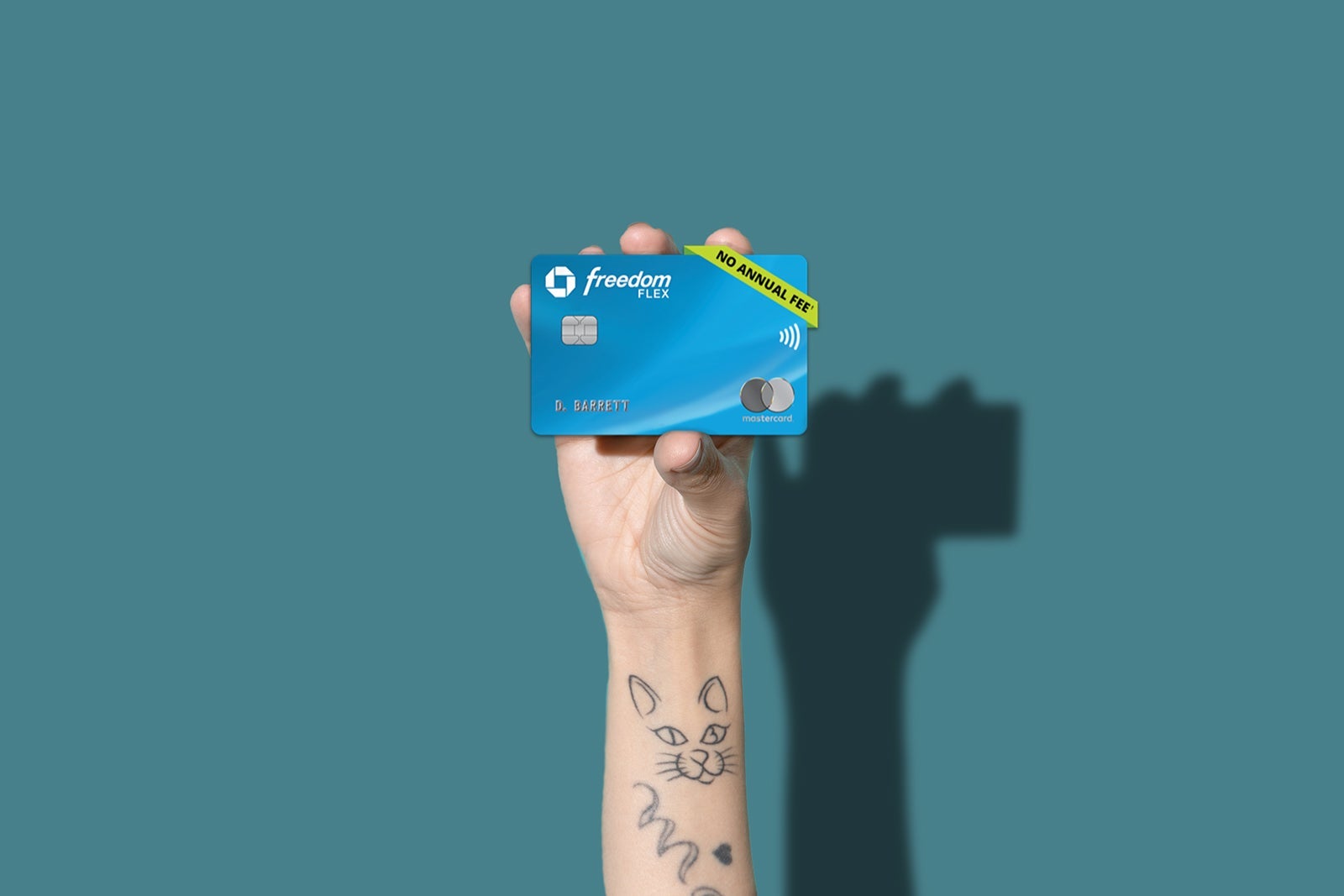
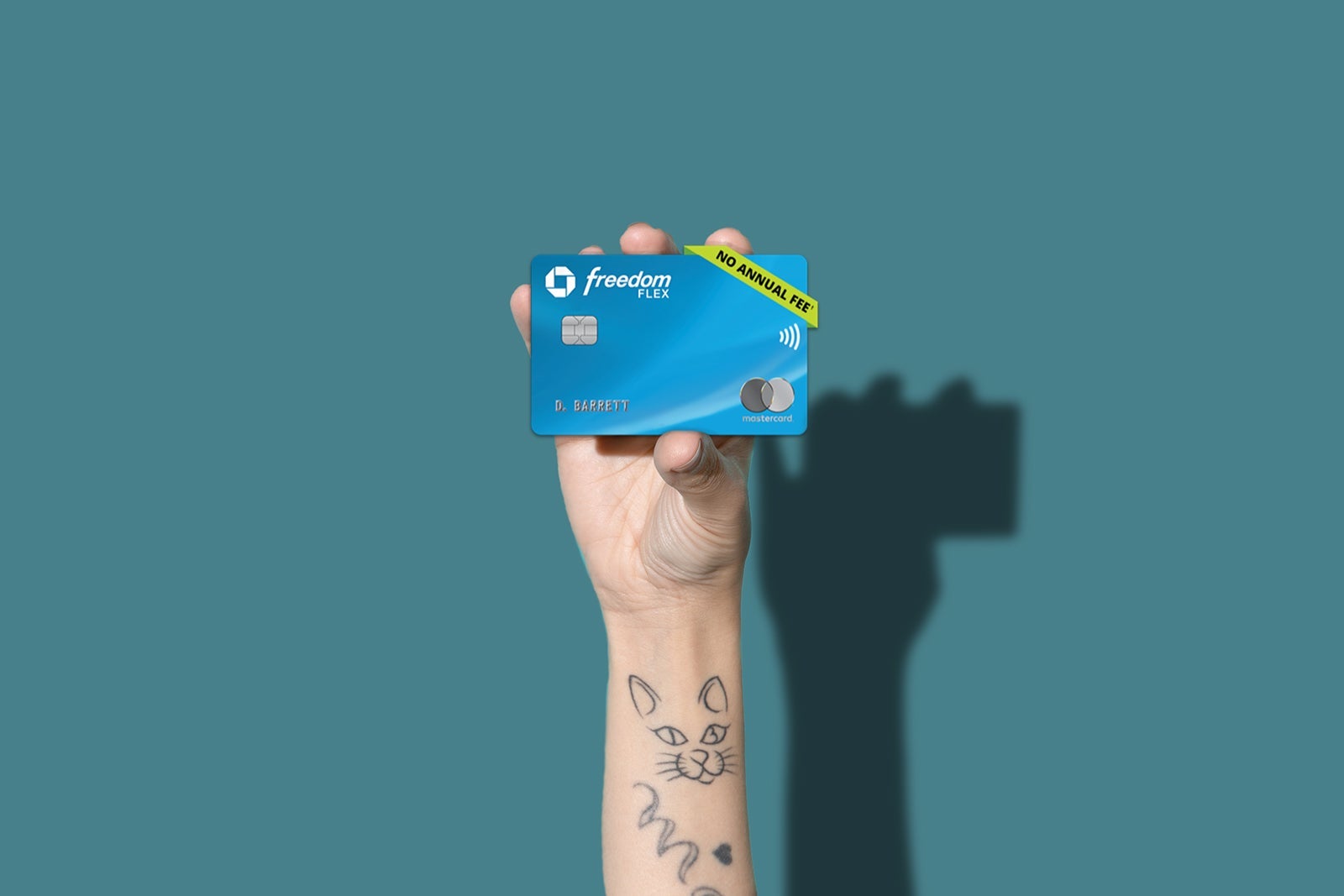
a hand holds a credit card
THE POINTS GUY

Whole Foods has only appeared once before, back in 2020. Amazon has appeared a few times over the Freedom’s history. And while this is Feeding America’s debut as a stand-alone quarterly category, select charities were featured most recently in Q4 2024.

Activate this quarter’s categories now to unlock their bonus-earning potential. You must activate by June 14, so this is your last chance.

Reward your inbox with the TPG Daily newsletter

Join over 700,000 readers for breaking news, in-depth guides and exclusive deals from TPG’s experts

It’s simple to complete this process through your Chase account; just provide your last name, the last four digits of your card and your ZIP code.

Analyzing the Q2 bonus categories

Given Chase issues Amazon’s Prime Visa, it isn’t surprising to see Amazon return as a quarterly category. And Whole Foods is owned by Amazon, so it makes sense for it to appear alongside its parent company.

With flight prices on the rise, it’s a great time to lock in any deals you’ve found. That makes Chase Travel’s arrival as a quarterly category great timing.

Finally, Chase has recently featured select charities more frequently, a nice touch for anyone who makes regular charitable donations.

The information for the Prime Visa has been collected independently by The Points Guy. The card details on this page have not been reviewed or provided by the card issuer.

woman with credit card
DRAGANA991/GETTY IMAGES

Here are the details:

  • Amazon: Amazon is a giant in the e-commerce space, so it should be easy to take advantage of this bonus category. Many Freedom cardholders could likely hit the quarterly $1,500 spending limit in just this category alone.
  • Chase Travel: If you happen to find a deal through Chase Travel, now’s the time to book it. By the time this quarter ends, summer travel will be getting into full swing, so consider booking soon (especially with fuel prices rising). That’s especially true if you’re a Freedom Flex cardholder, since you can stack your quarterly earnings with the card’s standard Chase Travel category for 9% total cash back.
  • Feeding America: Food insecurity affects millions, so your money will go toward a great cause with a donation to Feeding America. Make sure to donate directly through Feeding America to get your bonus rewards; otherwise, your purchase may not code correctly, robbing you of your 5% bonus cash back (or 5 points per dollar spent).
  • Whole Foods: If you live near a Whole Foods, consider switching your grocery shopping to this brand for Q2. It’s rare to earn 5% cash back (or 5 points per dollar spent) on groceries with no annual fee, so take advantage of the opportunity while you can.

Remember that Chase limits the 5% cash back (or 5 points per dollar spent) you can earn to the first $1,500 spent in combined bonus categories each quarter. After you reach the maximum, you’ll earn 1% back (or 1 point per dollar spent) on these purchases.

Chase Freedom rotating categories history

Year Quarter Bonus categories

Q2

Amazon, Chase Travel (elevated 9% cash back for Freedom Flex cardholders), Feeding America and Whole Foods Market

Q1

American Heart Association, dining (elevated 7% cash back for Freedom Flex cardholders) and Norwegian Cruise Line

Q4

  • Chase Travel (elevated 9% cash back for Freedom Flex cardholders), department stores and Old Navy
  • PayPal (December only)

Q3

Gas and EV charging stations, Instacart and select live entertainment

Q2

  • Amazon and select streaming services
  • Internet, cable and phone services (June only)

Q1

  • Select grocery stores, fitness club and gym memberships, self-care and spa services, and Norwegian Cruise Line purchases
  • Tax preparation and insurance (March only)

Q4

McDonald’s (elevated 7% cash back for Freedom Flex cardholders), PayPal, pet shops and veterinarian services, and select charities

Q3

Gas and EV charging stations, movie theaters and select live entertainment

Q2

Hotels booked through Chase Travel℠, dining and Amazon (different earning rates depending on the card, i.e., 9%, 7% and 5%, respectively, for the Freedom Flex; 5% for all three categories for the Freedom)

Q1

Select grocery stores, fitness club and gym memberships, and self-care and spa services

Q4

PayPal, select charities and wholesale clubs

Q3

Gas and EV charging stations, and select live entertainment

Q2

Amazon and Lowe’s

Q1

Grocery stores, gym memberships and fitness clubs, and Target

Q4

PayPal and Walmart

Q3

Gas stations, rental cars, movie theaters and select live entertainment

Q2

Amazon and select streaming services

Q1

Grocery stores and eBay

Q4

PayPal and Walmart

Q3

Grocery stores and select streaming services

Q2

Gas stations and home improvement stores

Q1

Wholesale clubs, select streaming services and internet, cable and phone services

Q4

PayPal and Walmart

Q3

Amazon and Whole Foods Market

Q2

Grocery stores, gym memberships and fitness clubs, and select streaming services

Q1

Gas stations, internet, cable and phone services, and select streaming services

Q4

Chase Pay, PayPal and department stores

Q3

Gas stations and select streaming services

Q2

Grocery stores and home improvement

Q1

Gas stations, drugstores and tolls

Q4

Wholesale clubs, department stores and Chase Pay

Q3

Lyft, Walgreens and gas stations

Q2

Groceries, PayPal and Chase Pay

Q1

Mobile wallets, gas stations and internet, cable and phone service merchants

Q4

Walmart and department stores

Q3

Restaurants and movie theaters

Q2

Grocery stores and drugstores

Q1

Gas stations and local commuter transportation

Q4

Wholesale clubs, drugstores and department stores

Q3

Restaurants and wholesale clubs

Q2

Grocery stores and wholesale clubs

Q1

Gas stations and local commuter transportation

Q4

Amazon, Zappos, Audible and Diapers.com

Q3

Gas stations and Kohl’s

Q2

Restaurants, Bed Bath & Beyond, H&M and Overstock

Q1

Grocery stores, movie theaters and Starbucks

Q4

Amazon, Zappos and department stores

Q3

Gas stations and Kohl’s

Q2

Restaurants and Lowe’s

Q1

Gas stations, movie theaters and Starbucks

Chase Freedom bonus categories FAQs

How do rotating categories work?

Each quarter, Chase announces a group of bonus categories that will earn 5% cash back (or 5 points per dollar) throughout the upcoming three-month period (on up to $1,500 in combined spending each quarter).

Generally, these categories are announced halfway through the month before the new quarter starts to give cardmembers time to activate new categories beforehand. However, you can activate your categories until midway through the last month of the quarter.

The categories tend to repeat periodically. For instance, grocery stores, restaurants and gas stations are all common categories you’ll notice frequently pop up on the bonus calendar. So, depending on the categories and whether you can maximize them, these two cards can offer quite a nice chunk of cash back or bonus points over the year.

How much cash back can I earn each quarter?

Chase limits the 5% cash back (or 5 points per dollar) to the first $1,500 spent in combined bonus categories each quarter you activate the bonus.

While that may not sound like a lot, that cash back adds up over time. Maximizing the cash-back categories each quarter, you’ll earn $75 in cash back quarterly and up to $300 per year. For a no-annual-fee credit card, that’s a lot of value.

Woman sitting on the floor with a laptop
ROCKAA/GETTY IMAGES

Alternatively, suppose you have a card that earns transferable Chase Ultimate Rewards points, like the Chase Sapphire Preferred® Card (see rates and fees). In that case, you can combine the rewards from your Chase Freedom or Freedom Flex card with those you earn from your more premium Ultimate Rewards-earning card. By doing this, your rewards become fully transferable.

If you combine rewards this way, your $300 in bonus cash back would be worth 30,000 Ultimate Rewards points. TPG’s March 2026 valuations peg Chase points at 2.05 cents apiece, making the 30,000 points you can earn in a year worth $615.

How do I activate my 5% categories each quarter?

You can head to Chase’s site to activate your 5% cash back (or 5 points per dollar) categories for this quarter. You can also register through the Chase mobile app.

Here’s how to register:

1. Head to the Chase bonus activation page, or log into your Chase account.

2. Enter your last name, the last four digits of your card number and your billing ZIP code. If you don’t have your card on hand, log in to your Chase account to retrieve these digits.

3. Click “Activate your 5%” to register.

4. If you have multiple Chase Freedom cards, make sure to register each one.

5. Save a screenshot of your activation in case of any issues later, though you should also receive a “You’re Activated!” confirmation email.

Can I have both the Chase Freedom and the Chase Freedom Flex to double my earning potential?

Yes, you can have both cards. So, if you already have the Chase Freedom and want to add the Chase Freedom Flex to your wallet, you’re free to do so.

Remember that the original Freedom card is no longer open to new applicants. If you’d rather only have one, though, the Freedom Flex is available as a product change.

Of course, you’ll also want to ensure you’re eligible for a new Chase card.

How do I maximize my Freedom and Freedom Flex cards?

The most important thing is to activate your card to earn 5% cash back (or 5 points per dollar) each quarter in the specific categories and then use your card for purchases in those categories.

You can set up a recurring reminder in your calendar or sign up for the TPG newsletter. (We send out a reminder when it’s time to activate every quarter, plus tips and tricks for how to maximize your card strategy and score some excellent award redemptions.)

Business freelance adult asian woman using credit card online payment via smart phone
WIPHOP SATHAWIRAWONG/GETTY IMAGES

In addition to the rotating bonus categories, the Freedom Flex accrues 5% cash back on all other travel booked through Chase Travel℠, 3% cash back on drugstore purchases, 3% cash back on dining (including eligible delivery services) and 1% unlimited cash back on all other purchases.

Better yet, when paired with a Chase credit card that earns fully transferable Ultimate Rewards points, such as the Chase Sapphire Reserve® (see rates and fees) or the Chase Sapphire Preferred, the Chase Freedom Flex’s 5% cash back effectively becomes 5 Ultimate Rewards points per dollar. You can learn all about this in our guide detailing the “Chase Trifecta”.

Bottom line

If you’re a Chase Freedom or Freedom Flex cardholder, you’ll earn 5% cash back (or 5 points per dollar spent) on Amazon, Chase Travel (elevated 9% cash back for Freedom Flex cardholders), Feeding America and Whole Foods Market through June 30.

Activate these categories before June 14 so you don’t miss out on any bonus rewards. And remember that Chase limits your quarterly bonus category earnings to the first $1,500 of combined spending each quarter.

To learn more, read our full review of the Chase Freedom Flex.


Apply here: Chase Freedom Flex


Source link

Leave a Reply

Subscribe to Our Newsletter

Get our latest articles delivered straight to your inbox. No spam, we promise.

Recent Reviews


Business owners have choices in how to fund their corporations. Should they contribute cash? Property? Perhaps a promissory note?

There may be some benefit of using a promissory note. You get stock in your company without immediately parting with cash or other assets. The promissory note sits on the company’s books as a receivable, and you control when (or if) it gets paid. Ultimately, when you do this, this leads to questions about your tax basis in the stock.

This question matters when you later sell the stock. Higher basis means less taxable gain (or a deductible loss). So if you contribute a $500,000 promissory note for stock, you get a $500,000 tax basis that reduces your gain on sale of the company.

Not surprisingly, the IRS frequently challenges these transactions. The tax treatment of promissory notes exchanged for stock in controlled corporations has resulted in numerous tax disputes over the years, this is in addition to other similar contribution arrangements involving promissory notes, such as stuffing a corporation with assets before a corporate sale without issuing stock.

The recent case Alioto v. Commissioner, T.C. Memo. 2025-125 gets into this issue. The case invovles a shareholder’s promissory note and the question of what the tax basis is in the stock received from the controlled corporation.

Facts & Procedural History

Alioto incorporated, Probity, an Ohio corporation focused on transportation and logistics consulting. Alioto served as Probity’s sole director and owned all 1,000 shares of stock. By 2014, Probity was receiving program fees and commission income.

In June 2014, Alioto entered into an employment agreement with Probity (signed by his wife as Treasurer) that promised him $550,000 in compensation that was payable in a lump sum on January 31, 2018. Alioto never received this compensation.

The stock ownership then went through several transfers. These transfers are important for this case as Alito takes the position that these transfers establish his tax basis in the stock shares. Alioto transferred 501 shares to his wife for $5.01 (a penny per share) in August 2014. A week later, she transferred 376 shares back to him for the same price. The next day, she transferred the remaining 125 shares to Probity itself.

On February 3, 2015, Alioto signed a promissory note to “purchase” those 125 treasury shares from Probity for $500,000. The note required payment (with 3% annual interest) by February 5, 2018. Alioto himself valued the shares at $4,000 each. His wife signed on behalf of Probity. The note gave Alioto the right to offset the $500,000 obligation against amounts Probity owed him under the employment agreement. Alioto made no payments on the note, asserting it was offset by his unpaid salary.

Between March and November 2015, Alioto sold 298 shares of Probity stock to family members and business associates for $142,720. The sales progressed from $130 per share in March to $260 per share in May and July, and finally to $2,000 per share between August and November.

On his 2014 tax return, Alioto had reported a negative adjusted gross income for 2014 and he never filed a 2015 return to report the 2015 transactions.

The IRS audited his 2014 return and then added the 2015 year. It issued a notice of deficiency determining unreported income for both years. The IRS also examined Probity’s returns as well to ensure that the income and expenses of Alioto are properly reported.

One of the issues on the audit was the income from the transfer of the stock in 2015. During the audit, Alito argued that he held two groups of stock with different tax basis: 875 shares with $0.01 basis per share (“penny stock”) and 125 shares with $4,000 basis per share (the treasury stock acquired via the promissory note). According to Alioto, he sold 36 of the high-basis shares in 2015, which would have produced a capital loss rather than a capital gain. The IRS determined capital gain income of $142,170. Alioto petitioned the U.S. Tax Court.

Section 351 and Nonrecognition Treatment for Corporate Contributions

Section 351(a) of the tax code provides that “no gain or loss shall be recognized if property is transferred to a corporation by one or more persons solely in exchange for stock in such corporation” if immediately after the exchange those persons control the corporation. Control means ownership of at least 80% of the total combined voting power and 80% of the total number of shares of all other classes of stock. The policy behind this rule makes sense. When business owners are simply changing the form of their ownership (from direct ownership of property to indirect ownership through corporate stock), Congress decided not to impose an immediate tax.

This nonrecognition treatment extends beyond contributions of tangible property. It applies when shareholders transfer cash, equipment, real estate, patents, and yes, even promissory notes to their corporations in exchange for stock. The question isn’t whether Section 351 applies to such transactions. It almost always does when the control requirement is met. The real question is what happens to the shareholder’s basis in the property contributed.

Section 351 transactions are very common in business. A shareholder contributes property worth $100,000 (with a $60,000 basis) to their wholly-owned corporation in exchange for stock. Under Section 351(a), they recognize no gain on the contribution, even though the stock they receive is worth $100,000. But what’s their basis in that stock?

Basis Determination Under Section 358

Section 358(a)(1) answers the basis question. It provides that “the basis of the property permitted to be received under section 351 without the recognition of gain or loss shall be the same as that of the property exchanged.” This is called “substituted basis” or “exchanged basis.” The shareholder’s basis in the stock received equals their basis in the property they contributed.

This rule preserves the built-in gain (or loss) for later recognition. Using the example above, the shareholder contributed property with a $60,000 basis and $100,000 value. Under Section 358(a)(1), their stock basis is $60,000. If they later sell the stock for $100,000, they’ll recognize the $40,000 gain that was deferred when they made the contribution. The tax hasn’t been forgiven, just postponed.

The substituted basis rule applies regardless of what type of property the shareholder contributed. Real estate, equipment, inventory, intellectual property—the shareholder’s basis in the stock equals their basis in whatever they put in. This leads to a logical question: What’s a shareholder’s basis in a promissory note they create and contribute to their controlled corporation?

When Does a Promissory Note Create Basis?

The Tax Court in Alioto relied on Alderman v. Commissioner, 55 T.C. 662 (1971), for the proposition that “a taxpayer incurs no cost in making such a note and that the basis to the taxpayer is zero.” This makes intuitive sense. You’re writing an IOU to yourself (or rather, to your company that you control). You haven’t parted with anything of value. You haven’t incurred any economic cost. Therefore, you have zero basis in your own promise to pay.

Under Sections 351 and 358, this zero basis carries over to the stock received. The shareholder exchanges property (the promissory note) with zero basis for stock. Under Section 358(a)(1), the stock basis “shall be the same as that of the property exchanged”—which is zero.

This result frustrates business owners who want to create basis through paper transactions. But it reflects sound tax policy. Allowing shareholders to create basis by giving IOUs to their own controlled corporations would let them manufacture tax losses at will. They could contribute a $1 million promissory note for stock, claim $1 million of basis, immediately sell the stock, and generate a tax loss without any real economic investment or loss.

The problem gets worse in closely held corporations where the shareholder controls both sides of the transaction. There’s no arm’s-length negotiation. No real expectation of payment. No genuine economic substance. Just paper shuffling designed to create tax benefits.

The Peracchi Exception: Notes Backed by Business Risk

But what if the promissory note isn’t just paper? What if there’s genuine risk that the shareholder will have to pay? That’s the question the Ninth Circuit addressed in Peracchi v. Commissioner, 143 F.3d 487 (9th Cir. 1998) and that the court in this case distinguished in a footnote in the case.

In Peracchi, a shareholder contributed both cash and a promissory note to his corporation in exchange for stock. The Ninth Circuit held that the note could create basis equal to its face value because it was “contributed to an operating business which is subject to a non-trivial risk of bankruptcy or receivership.” The court reasoned that if the business failed, creditors could enforce the note against the shareholder personally. This created real economic risk and real economic cost.

The Peracchi exception makes economic sense. If a shareholder gives their corporation a $500,000 promissory note, and the corporation later goes bankrupt with creditors who can enforce that note, the shareholder faces genuine liability. They might actually have to pay $500,000 to satisfy creditors. That’s a real economic burden, not just paper shuffling.

The Ninth Circuit emphasized that the exception applied because the note was contributed to “an operating business” with real bankruptcy risk. This wasn’t a shell corporation or passive investment vehicle. It was an active business with operations, creditors, and the possibility of financial failure. That business risk made the promissory note meaningful.

Peracchi created a circuit split. The Ninth Circuit allows basis in promissory notes when there’s genuine business risk of enforcement. Other circuits have not adopted this exception. The Tax Court noted in Alioto that Peracchi represents the minority view. Most courts follow Alderman and hold that a shareholder’s promissory note to their controlled corporation creates zero basis, period.

For taxpayers in the Ninth Circuit (which includes California, Oregon, Washington, Alaska, Hawaii, Arizona, Nevada, Idaho, and Montana), Peracchi remains good law. Business owners in those states can potentially claim basis in promissory notes contributed to their corporations if they can show genuine business risk. But the exception is narrow and one has to document the transfers, which many taxpayers fail to do.

Why Alioto’s Note Failed the Peracchi Test

The Alioto court distinguished Peracchi on several grounds. First, and most fundamentally, Alioto retained the ability to “unilaterally extinguish his debt by offset” with the employment agreement. The promissory note required Alioto to pay Probity $500,000 (plus interest) by February 5, 2018. But his employment agreement provided that Probity owed him $550,000 on January 31, 2018—just five days earlier. The note explicitly gave Alioto the right to offset one obligation against the other.

This offset provision destroyed any claim of genuine debt. Alioto controlled both obligations. He decided whether Probity would pay him under the employment agreement. He decided whether to exercise his right to offset the note. The entire arrangement was “wholly in Mr. Alioto’s control and exceedingly unlikely” to result in any actual payment by anyone. This wasn’t a note backed by business risk. It was a circular arrangement designed to cancel itself out.

The court also found several other deficiencies that showed the note lacked economic substance. There was no payment schedule for principal or interest. Probity had “no clear source of income that might assure” it could pay the employment compensation that Alioto would then use to pay the note. The whole structure suggested that “the parties did not contemplate that the obligation would be met.”

Most tellingly, Alioto’s own testimony “suggests that the two agreements were meant to cancel each other out, with no indication that Probity planned to pay Mr. Alioto anything under the employment agreement or that Mr. Alioto planned to pay under the promissory note.” When the taxpayer himself admits the arrangements were designed to offset each other, it’s hard to argue there’s genuine debt with genuine risk.

The court applied “special scrutiny” to the transaction, as required for dealings between closely held corporations and their shareholders. The Court cited Electric & Neon, Inc. v. Commissioner, 56 T.C. 1324, 1339 (1971), for this principle. When a shareholder controls all aspects of a transaction with their corporation—deciding what the corporation pays them, what they pay the corporation, and whether to offset one against the other—courts examine such arrangements skeptically.

Even if Alioto had been in the Ninth Circuit (he wasn’t—he was in Ohio, which falls under the Sixth Circuit), he couldn’t satisfy the Peracchi exception. Peracchi requires “non-trivial risk of bankruptcy or receivership” that would force the shareholder to pay creditors on the note. Alioto had no such risk. He could unilaterally eliminate his obligation through the offset provision. No creditors could force him to pay. No bankruptcy would make him write a check. The note created no real economic burden.

The Takeaway

This case highlights the stock basis questions that come up when promissory notes are given by shareholders to their controlled corporations. This can result in zero basis in stock received, even when structured as formal transactions with interest and maturity dates. As in this case, when shareholders retain the ability to unilaterally extinguish their debt through offset provisions or other control mechanisms, courts will find the notes lack economic substance and create no basis. The Peracchi exception remains available in the Ninth Circuit for notes contributed to operating businesses with genuine bankruptcy risk, but that exception is narrow and one has to document the transaction to prove it. Business owners capitalizing their corporations must ensure that debt instruments reflect real economic obligations with realistic prospects of payment, not just paper transactions that cancel themselves out through related party agreements.

Watch Our Free On-Demand Webinar

In 40 minutes, we’ll teach you how to survive an IRS audit.

We’ll explain how the IRS conducts audits and how to manage and close the audit.  


Source link