
Stay tuned — we’ll update this page with application links as they become available.
Great news — the best-ever offer for the Chase Sapphire Preferred® Card (see rates and fees) is back.
For a limited time, new Sapphire Preferred cardholders can earn a very impressive 100,000 bonus points after spending $5,000 on purchases in the first three months from account opening.
This rare offer is a full 25,000 points higher than the standard offer we’ve seen in recent months. To put some real numbers to it, TPG values 100,000 Chase points at over $2,000 based on our June 2026 valuations when maximized with Chase’s transfer partners.
Combined with the card’s recent refresh and new benefits, this is easily one of the most compelling rewards card offers currently available.
Here’s what you need to know about this limited-time offer.
A 100,000-point offer for the Sapphire Preferred is rare
The Chase Sapphire Preferred was first introduced in 2009, and the 100k welcome bonus offer has only appeared three times in the 17 years since its launch: first in 2021, then in 2025 and now again in 2026.
While six-figure welcome bonuses have become more common across the credit card industry, they’re typically attached to business cards or premium cards with much higher annual fees or loyalty currencies that TPG values less highly.
That’s what makes this offer stand out.

Reward your inbox with the TPG Daily newsletter
Join over 700,000 readers for breaking news, in-depth guides and exclusive deals from TPG’s experts

The Sapphire Preferred carries a modest $95 annual fee, yet awards Chase Ultimate Rewards points — one of the most valuable and flexible rewards currencies available.
Based on TPG’s valuations, 100,000 Chase points are worth approximately $2,050 due to the variety of high-value ways to redeem them, making this one of the strongest welcome bonus values we’ve seen this year, especially on a card with a low annual fee.
Who is eligible for the 100,000-point Chase Sapphire Preferred bonus?
For many, the 100,000-point question will be who is eligible for the limited-time bonus.
Generally speaking:
- You can’t earn the Sapphire Preferred’s bonus if you’ve previously received a welcome bonus on the Sapphire Preferred.
- Chase may also consider factors such as your overall card history and the number of cards you’ve opened or closed recently.
- You need to be under the issuer’s 5/24 rule, which states that applicants who have opened 5 or more cards in the past 24 months are likely to be denied.
However, due to a relatively recent change, you can have the Chase Sapphire Reserve® (see rates and fees) and still be eligible for the Chase Sapphire Preferred.
Here’s a full look at who is eligible for the Chase Sapphire Preferred.
What can you do with 100,000 Chase points?
The real appeal of this offer isn’t just the size of the bonus — it’s what you can do with the points.
And one of the main reasons for that is that Chase not only offers solid ways to use points within its own ecosystem (such as Points Boost), but also has valuable transfer partners, including United MileagePlus, Air Canada Aeroplan, Air France-KLM Flying Blue and World of Hyatt.
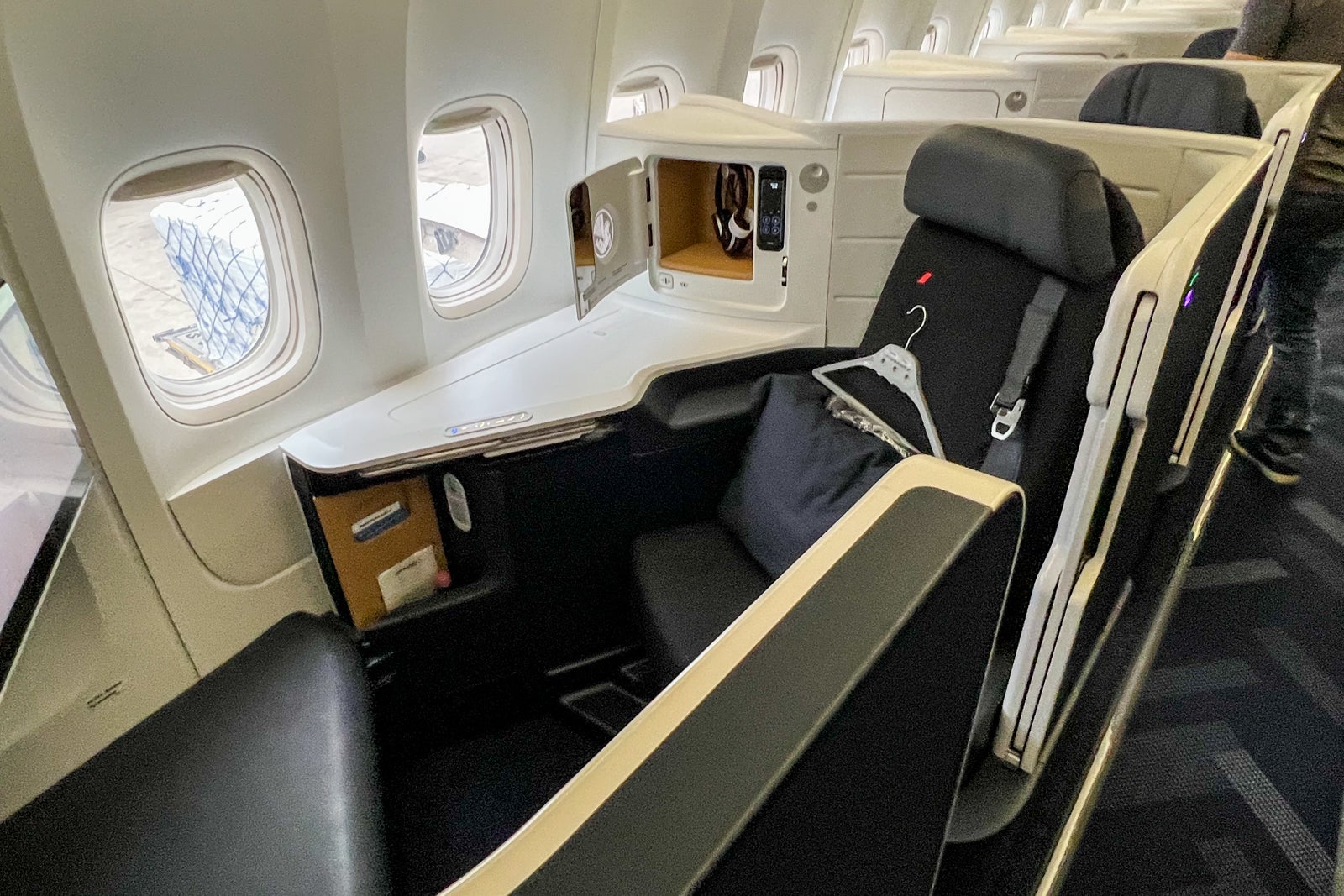
With these transfer partners, you can get outsized value from your Chase points.
A few examples you could book with 100,000 bonus Chase points include:
- Europe in Business Class: Fly to Europe in business class on United Airlines via United MileagePlus or Air Canada Aeroplan from around 80,000 miles (plus taxes and fees) each way, or book via Air France or KLM starting at 60,000 Flying Blue miles (plus taxes and fees).
- Multiple domestic flights: Take six to ten domestic economy flights (book via United, Aeroplan or Flying Blue to fly on United or Delta Air Lines).
- Hyatt stays: Stay at Hyatt properties around the world, starting at 15,000 Hyatt points for hotels such as the Hyatt Place Moab or Hyatt Regency Grand Cypress near Disney World or 25,000 World of Hyatt points for higher-end resorts such as the dreamy Park Hyatt Maldives Hadahaa.

Prefer simplicity? The 100,000-point bonus is still worth at least $1,000 toward travel booked through Chase Travel℠ at a fixed value of 1 cent per point — and potentially up to $1,500 via Points Boost. That’s a strong floor value even if you never transfer points to airline or hotel partners.
Related: Chase Points Boost: A valuable new redemption option or a disappointing devaluation?
Is the Chase Sapphire Preferred still one of the best rewards cards?
Just a few days ago, Chase announced some changes for the Chase Sapphire Preferred, including an increase in the annual hotel credit, new 3 points per dollar bonus categories and that the transfer ratio to Hyatt is changing from 1:1 to 4:3.
That means to book a 15,000-point hotel as mentioned above within the World of Hyatt ecosystem, you’d now need to transfer 20,000 Chase points if you’re a new cardholder. (Cardholders prior to June 15, 2026, have access to the 1:1 transfer rate until Oct. 1, 2026.)

The Hyatt transfer ratio change makes some hotel redemptions more expensive than before. However, Chase Ultimate Rewards points remain highly flexible thanks to a deep roster of airline and hotel transfer partners, so you have lots of options when it comes time to book a trip.
Here are some additional new elements to the Sapphire Preferred:
- Increased travel credit: Annual hotel credit for reservations booked through Chase Travel increased from $50 to $100, more than offsetting the $95 annual fee.
- New Global Entry, TSA PreCheck, or NEXUS credit: Cardmembers will receive one statement credit of up to $120 every four years when the application fee is charged to the card.
- New bonus-earning rates: You can now earn 3 points per dollar on gas, EV charging and vacation home rentals booked on Airbnb, Vrbo, Plum Guide, HomeAway, Homestay.com and Vacasa.
- Built-in travel protections expanded: The card now offers emergency evacuation and transportation coverage.
So, yes, there’s no doubt that the Sapphire Preferred remains a top travel rewards card both as the perfect starting place for those newer to points and miles and those who simply want to keep things easy and affordable on a card with excellent earning bonus categories, built-in perks and redemption options, all with just a $95 annual fee.
In fact, for those who don’t utilize the Hyatt transfer option — or who also have the Chase Sapphire Reserve that is maintaining the 1:1 ratio — the Sapphire Preferred has never been better.
Related: 7 Chase Sapphire Preferred benefits you might not know about
Should you apply for the 100,000-point Chase Sapphire Preferred offer?
It’s very rare to see a welcome offer this large on a card with just a $95 annual fee.
While several cards currently offer six-figure bonuses right now, most come with substantially higher annual fees or less valuable rewards currencies.
When the dust settles with some recent Hyatt changes, it’s possible that Chase points from the Sapphire Preferred will be worth a little bit less than before, but they will still be one of the most valuable types of points to exist.
And since the 100,000-point Sapphire Preferred offer has historically appeared only briefly before disappearing again, if you want to get this incredible bonus, I’d absolutely recommend applying sooner rather than later.
Related: Is the Chase Sapphire Preferred worth the annual fee? I say yes
Bottom line
There’s no guarantee Chase will keep this limited-time offer around for very long, and between the size of the bonus, the card’s low annual fee and the recent benefit refresh, this is shaping up to be one of the most compelling credit card offers of 2026.
So, if you’re eligible to earn the 100,000 bonus points and are ready to add to your points piggy bank, this is the moment you’ve been waiting for.
To learn more, read our full review of the Chase Sapphire Preferred.

Stacie Harris is a local resident and reporter of the Maple Grove area. Stacie reports on medicine and science for the Maple Grove Report.