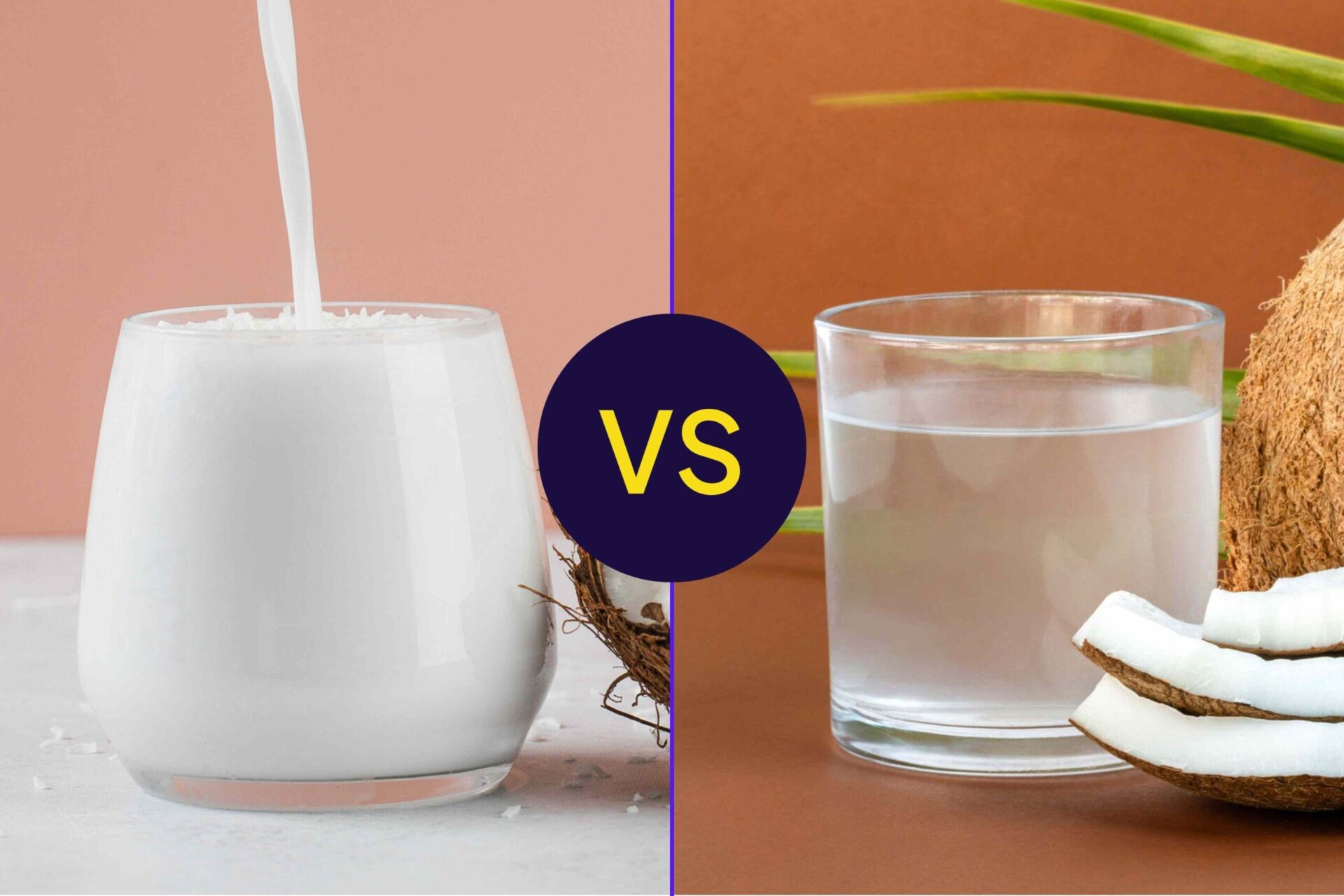
:max_bytes(150000):strip_icc():format(jpeg)/coconutmilkvswater-6c972b1ba6f44e31a2849f48f1648dc2.jpg "Comparison between a glass of coconut milk on the left and a glass of coconut water on the right with a VS symbol in the center")
Credit: Health / Getty Images
- Coconut water is richer in electrolytes and may be better for hydration and blood pressure support.
- Coconut milk provides more calcium and vitamin D but is higher in saturated fat.
- The best choice depends on your health goals, nutrient needs, and overall diet.
Coconut milk and coconut water both come from coconuts, but they have very different nutrition profiles. They may offer different benefits for hydration and heart health.
Coconut Water Is Better for Hydration
Coconut milk and coconut water are both fluids, so they can contribute to your daily hydration needs. However, coconut water is the better choice if you’re looking to replace fluids and electrolytes.
Coconut water is the clear liquid found inside young coconuts. It naturally contains electrolytes, including potassium, sodium, magnesium, and calcium, which help support fluid balance, muscle contractions, and nerve signals.
Coconut water is lower in sodium than many traditional sports drinks, but it still provides sodium and potassium to help replace fluids and electrolytes lost through mild to moderate sweating.
A cup of unsweetened coconut water contains around 62 milligrams of sodium and 396 milligrams of potassium—more potassium than a medium banana.
Some research suggests coconut water may support hydration similarly to traditional sports drinks during endurance exercise. In a 2023 study of experienced cyclists, coconut water had similar effects on hydration, exercise performance, heart rate, and sweat loss compared to a sports drink.
Coconut Water May Be Better for Heart Health
Coconut water may have an advantage over coconut milk when it comes to heart health.
Its high potassium content may help support healthy blood pressure by offsetting the effects of sodium and helping blood vessel walls relax. Potassium also plays an important role in heart function and muscle contractions.
Coconut milk, which comes from the flesh of mature coconuts, offers some potential benefits. It contains phenolic antioxidant compounds, which may help protect cells from damage that can increase the risk of heart disease.
It also contains medium-chain triglycerides (MCTs), a type of fat that may be metabolized differently than some other saturated fats. Some small studies suggest coconut milk may affect cholesterol differently than other saturated fat sources, but research is limited and mixed.
The American Heart Association (AHA) recommends limiting saturated fat to no more than 6% of daily calories.
Since coconut milk is still high in saturated fat, people with high cholesterol or heart disease may want to use it in moderation.
How Do Their Nutritional Profiles Compare?
While both products come from coconuts, their nutrition profiles are very different. Here's how they compare per 1-cup serving:
| | Coconut Water | Coconut Milk |
| Calories | 43.2 | 74.4 |
| Fat | 0 grams (g) | 4.99 g |
| Saturated Fat | 0 g | 4.99 g |
| Protein | 0.5 g | 0.5 g |
| Carbohydrates | 10.2 g | 7.01 g |
| Sodium | 62.4 milligrams (mg) | 45.6 mg |
| Potassium | 396 mg | 45.6 mg |
| Calcium | 16.8 mg | 451 mg |
| Magnesium | 14.4 mg | 0 mg |
| Vitamin D | 0 International Units (IU) | 101 IU |
Coconut water is higher in potassium and magnesium, making it the better choice for hydration and electrolyte replacement. Coconut milk has more calories, fat, and saturated fat, but fortified varieties provide much more calcium and vitamin D.
Canned coconut milk is much higher in calories and fat than the refrigerated coconut milk beverages sold as dairy-free milk alternatives.
Other Health Considerations
Beyond hydration and heart health, there are a few other factors to consider when choosing between coconut milk and coconut water.
- Kidney health: Coconut water is high in potassium. This can be helpful for many people, but people with chronic kidney disease or those on a low-potassium diet may need to limit it.
- Bone health: Many coconut milk beverages are fortified with calcium and vitamin D, which support bone health. Coconut water contains small amounts of calcium but is not usually fortified.
- Calories and fullness: Coconut water is lower in calories and fat. Coconut milk is richer and may be more filling because it contains more fat.
- Dairy-free diets: Both are naturally dairy-free. Coconut milk may be a better option for people looking for a creamy milk alternative.