Medically reviewed by William Truswell, MD
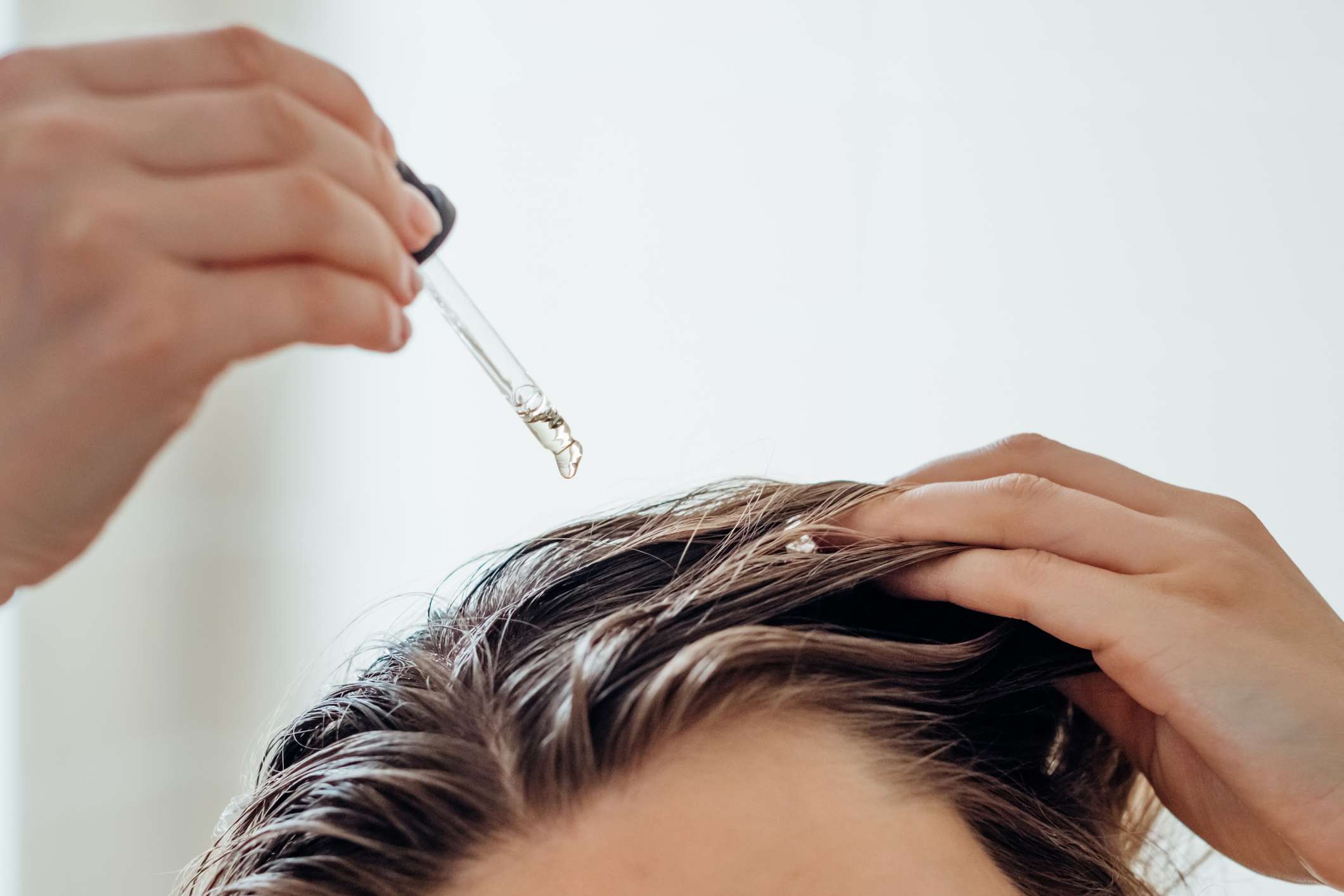
:max_bytes(150000):strip_icc():format(jpeg)/Health-GettyImages-DandruffHairLoss-b6da916d1b7240e6b54e6a8dccd33235.jpg "Woman applies oil to her hair with pipette")
- Dandruff can lead to temporary hair shedding because scalp inflammation and scratching may disrupt the normal hair growth cycle.
- Treating dandruff with medicated shampoos and addressing scalp inflammation early can help reduce shedding.
- See a dermatologist if hair shedding lasts more than six to eight weeks, worsens suddenly, becomes patchy, or does not improve.
If you’ve started to notice more hair in the shower drain recently, don’t panic. It’s possible that dandruff could be to blame. Also known as seborrheic dermatitis, dandruff is an incredibly common condition that affects as many as 10% of people. While the hair shedding that can accompany it may naturally cause stress and worry, the good news is that this type of hair loss is reversible.
How Dandruff May Lead to Hair Loss
Scalp irritation and inflammation can disrupt your normal hair growth cycle by pushing hairs prematurely into the shedding phase, explained Dara Spearman, MD, a board-certified dermatologist. This causes the surrounding environment of your hair follicle to become less stable, which can weaken the anchoring of the hair shaft and allow your hair to shed more easily.
“Frequent scratching can also cause mechanical trauma that leads to breakage and increased shedding over time,” said Spearman. “In some cases, chronic inflammation may contribute to follicular stress that makes regrowth less efficient.”
While occasional itching is not usually harmful, persistent irritation should be taken seriously. The key is addressing scalp symptoms as soon as they appear rather than waiting for them to worsen, according to Spearman.
“The environment in which the hair grows is crucial,” added Jessica Weiser, MD, FAAD, board-certified dermatologist with Weiser Skin MD. “Inflammation, redness, and irritation all impact the health of the hair follicles and therefore impede proper growth of hair.”
How Treating It Could Help
Scalp inflammation caused by dandruff can increase oxidative stress, which can negatively affect the microenvironment of your hair follicles, according to Lady Dy, MD, a board-certified dermatologist and dermatopathologist and founder of Dy Dermatology Center. And when left untreated, this ongoing inflammation combined with scratching can cause you to shed some hair.
Dermatologists commonly recommend medicated shampoos containing ingredients such as ketoconazole, zinc pyrithione, selenium sulfide, or salicylic acid to control yeast and reduce scale. The key is using these products consistently.
“Most patients need to leave the shampoo on the scalp for several minutes before rinsing,” said Spearman. “If over-the-counter options are not effective, prescription treatments may be necessary to control inflammation.”
The use of growth factor-based hair serums may also support a healthier environment and can be incorporated into a comprehensive hair growth treatment plan. But treating the scalp disease, such as inflammation, scales, redness, and pain, comes first, according to Dy.
Are There Other Scalp Conditions That May Lead to Hair Loss?
There is a broad range of scalp conditions that can cause hair loss. “These conditions are divided into non-scarring and scarring etiologies,” said Weiser. “Non-scarring reversible causes of hair loss include [dandruff], hormonal hair loss, autoimmune hair loss known as alopecia areata, telogen effluvium, and more.”
Scarring hair loss, which cannot be reversed, includes complex medical diagnoses, said Weiser. “In these conditions, there is noticeable absence of pores or follicle openings because the follicles are replaced with fibrotic scar tissue.”
Some examples include:
- Lichen planopilaris
- Frontal fibrosinf alopecia
- Fentral centrifugal cicatricial alopecia
- Discoid lupus erythematosus
Dermatologist Tips to Reduce Hair Loss from Dandruff
According to Weiser, scalp care is a lot like skincare—you don’t want to wait for there to be a problem before you start good maintenance. “Washing the scalp regularly with high-quality ingredients can remove excess build-up and oils to create a more balanced environment and less opportunity for microbial infection,” she said.
For an oily scalp, more frequent washing may be necessary, or clarifying shampoos may be useful. “Gentle exfoliation with a scalp mask or deep hydration with a scalp treatment can be options depending on the unique patient’s scalp needs,” said Weiser.
Also, adding anti-fungal shampoos and anti-inflammatory products can be useful for seborrheic dermatitis. This may reduce unwanted fungal elements and reduce inflammation and itching.
Dy recommends these additional things to do:
- Be aware of potential symptoms and recognize signs early
- Practice good hygienic hair care and wash your hair at least three times a week
- Use products that gently exfoliate scale build-up and contain anti-yeast properties
- Avoid scratching and practice gentle hair care
- Seek care early from a dermatologist
When Should You See a Dermatologist for Dandruff?
If you have persistent shedding lasting longer than six to eight weeks, you should be evaluated, especially if the hair loss is accompanied by itching, burning, or visible scalp changes. Sudden increases in hair shedding or patchy areas of loss are also important warning signs.
“If over-the-counter dandruff treatments do not improve symptoms within a few weeks, that is another indication to seek medical evaluation,” said Spearman. “A dermatologist can perform a scalp exam and sometimes recommend lab testing to identify underlying causes. Some types of hair loss are reversible when treated promptly.”