DJI’s Osmo Pocket 4P Promises 17 Stops Of Dynamic Range


It will also come in white this time as well as black.
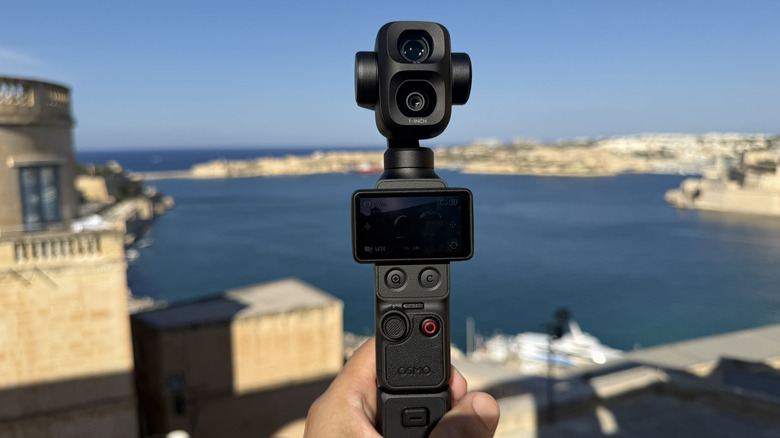
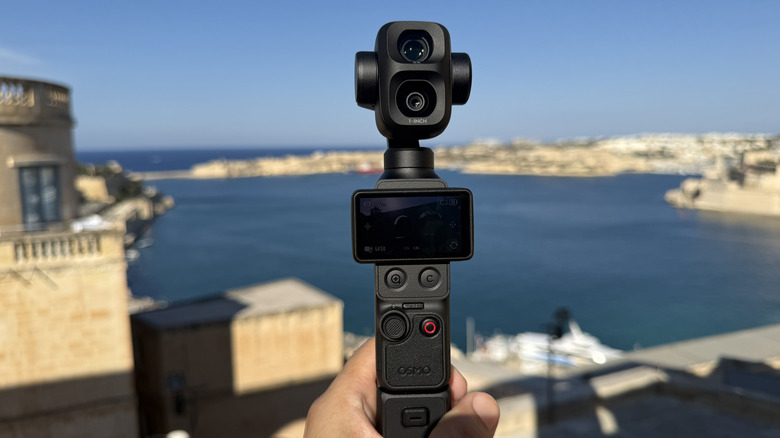
At an event in Malta, DJI has released some more information about its incoming pro gimbal camera, the Osmo Pocket 4P. A successor to the hyper-popular Osmo Pocket 3 vlogging camera (alongside the mainstream Osmo Pocket 4), the Pocket 4P comes with two cameras: one with a regular wide lens like the Pocket 4, and another with a 3x zoom lens for portraits and product shots. 

DJI now says that the Osmo Pocket 4P will offer 17 stops of dynamic range, which would beat every other consumer-level camera and put it on par with Arri’s mega-expensive cinema cams. DJI also introduced a new log mode, D-Log2, that will allow users to take full advantage of that extra dynamic range. The 17-stop claim will need to be verified, of course, once the camera is officially released. 

DJI also revealed the focal length of the lens as equivalent to 60mm for a full frame camera, making it handy for portraits and product shots, along with a “large” aperture that it didn’t yet reveal. Since we already knew this was a 3x zoom, that puts the main camera at about 20mm, giving users both ultra-wide and portrait options. 

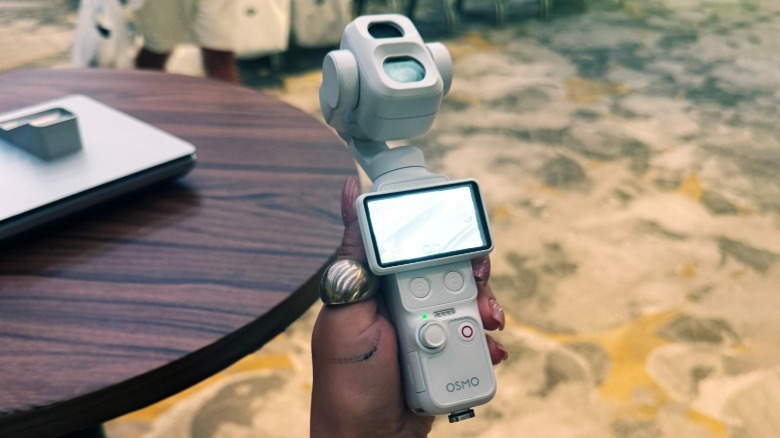
The other main piece of news is that the Osmo Pocket 4P will come in white as well as black. That’s the same color as the Pocket 4P’s main rival, the Insta360 Luna Ultra, and gives buyers another color option. Like the latter, it could prove to be a dust and dirt magnet, however. 
The company is keeping all other specs under wraps, including things like the price, resolution and frame rates. This information isn’t too hard to find, though, due to leaks and the fact that the camera is already on sale in China, as per DJI’s usual wonky staggered release schedule. There’s still no release date for Europe or North America, but you can likely expect it to go on sale some time early next quarter.


Source link

Leave a Reply

Subscribe to Our Newsletter

Get our latest articles delivered straight to your inbox. No spam, we promise.

Recent Reviews


Python Partial Function – Table of Content

Python partial function

A partial function is one of the tools in the Functools module. ‘Functools’ is a module provided by python for higher-order functions, i.e., act on or return other functions. ‘Functools’ contains tools for functional-style programming. 

Partial functions help in calling another function with the positional arguments (args) and keyword arguments (keywords). We can fix some values in certain arguments.We can create new functions without having to replicate the body of the original function. 

  Become a python Certified professional  by learning this HKR Python Training !

Python Training Certification

  • Master Your Craft
  • Lifetime LMS & Faculty Access
  • 24/7 online expert support
  • Real-world & Project Based Learning

Creating a partial function

Let us create a partial function that calculates the cube roots of the given numbers.

from functools import partial

#Create a function

def exponent(a,b):        

return a ** b

#Create a partial function that calculates cube roots

result = partial(exponent,3)

print(result(4))

The first function is for defining exponent arguments. The second function ‘result’ is created for fixing the value ‘3’ in the arguments to send to the main function – exponent. The output for the above program will be 81. If you want to generate square roots of given numbers, you can just replace the value ‘3’ with ‘2’ in the result partial function.


Here is one more program which performs multiplication of different numbers. 

from functools import partial

def expression(a,b,c,d):

return a*2 + b*3 + c*4 + d

result = partial(expression,5,6,7)

print(result(10))

The output for this program will be 66.


Big Data Analytics, python-partial-function-description-0, Big Data Analytics, python-partial-function-description-1

Subscribe to our YouTube channel to get new updates..!

Benefits of partial functions

Here are some benefits of using partial functions in your code.

  • We can construct variants of existing functions.
  • Partial functions are used to derive values from normal functions.
  • A partial function is similar to bind functionality in c++.
  • We can call the partial functions in multiple places of our code.It helps in code reusability.
  • Reduce the number of lines in your code.

   Top 50 frequently asked Python interview Question and answers !

Python Training Certification

Weekday / Weekend Batches

Conclusion

Partial functions help in removing redundancy.It also improves your coding capability.It is especially used in applying a range of different inputs to a single object (or) set somethings as constant in arguments of a function.So what are you waiting for? Try out creating different kinds of partial functions and have fun.Do check out our other python tutorials and blogs on python to increase your skill level.

Related Articles:

1. Python Operators

2. Python Split Method

3. Python Generators

4. Python List Length

5.Highest paying jobs in India


Source link