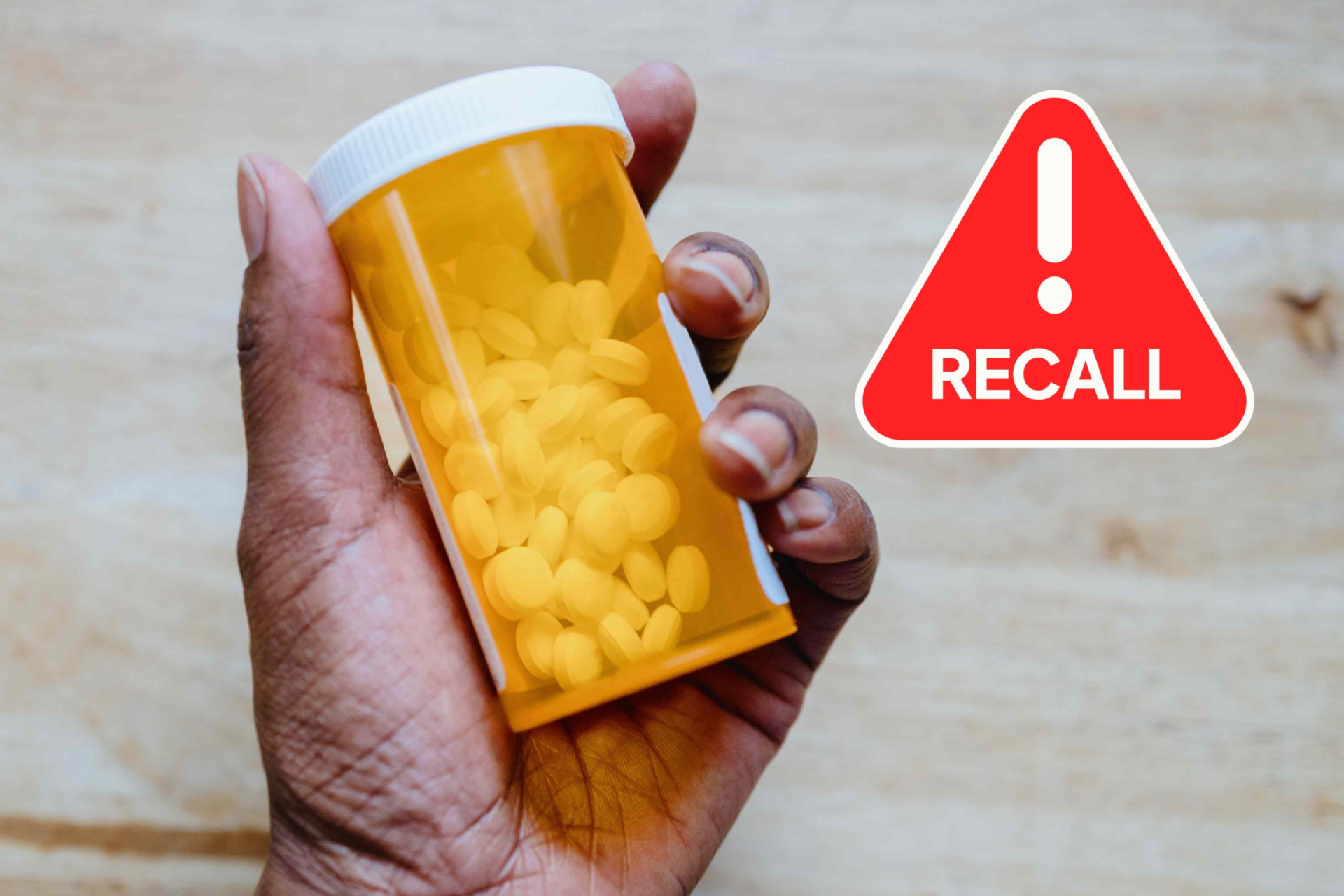
:max_bytes(150000):strip_icc():format(jpeg)/Health-antidepressant-recall-3dc4ca985dd44bf58815fa3a01c60aca.png "A hand holding a pill bottle recall warning symbol displayed nearby")
Credit: Grace Cary / Getty Images / Health.com
- Almost 375,000 bottles of the antidepressant duloxetine have been recalled.
- The drugs may contain unsafe levels of nitrosamines, chemicals that can raise the risk of cancer over time.
- The recall was given the second-highest risk level, but talk to a healthcare provider before stopping the medication.
Nearly 375,000 bottles of the antidepressant duloxetine have been recalled, according to the Food and Drug Administration. Breckenridge Pharmaceutical, Inc. recalled the medication on June 4 due to higher-than-acceptable levels of nitrosamines, chemical compounds that may increase the risk of cancer if people are exposed to them above acceptable levels for long periods of time.
On June 8, the FDA gave the recall the second-highest risk level, Class II, indicating the potential for temporary or reversible health consequences from the affected drugs.
Which Antidepressants Were Recalled?
The manufacturer recalled two doses of prescription-only duloxetine, which can be identified with the following information:
Duloxetine Delayed-Release Capsules, USP, 30 mg
- Size: 1,000 capsules
- Expiration date: April 2027, with lot code: 241180C
- Affected quantity: 14,729 bottles
Duloxetine Delayed-Release Capsules, USP, 60 mg
- Sizes: 90 capsules and 1,000 capsules
- Expiration date: November 2026, with lot code: 232311
- Expiration date: January 2027, with lot code: 240316
- Expiration date: February 2027, with lot codes: 240317, 240318, 240315C, 240373C, 240370C, 240375C, and 240413C
- Expiration date: April 2027, with lot codes: 240978C and 241052C
- Expiration date: May 2027, with lot code: 241074C
- Affected quantity: 359,676 bottles
What You Should Do
If you have the recalled duloxetine, contact your doctor or pharmacist for a replacement and ask about the best course of action. Class II recalls pose the risk of adverse health consequences, but stopping a medication could be riskier.
“While recall notifications can be frightening, it’s important to contact your healthcare provider right away for advice before making any changes to your medication routine,” Jennifer Young, PharmD, BCPS, CSP, lead medication safety specialist at the Institute for Safe Medication Practices, previously told Health. “Some medicines … should not be stopped suddenly.”