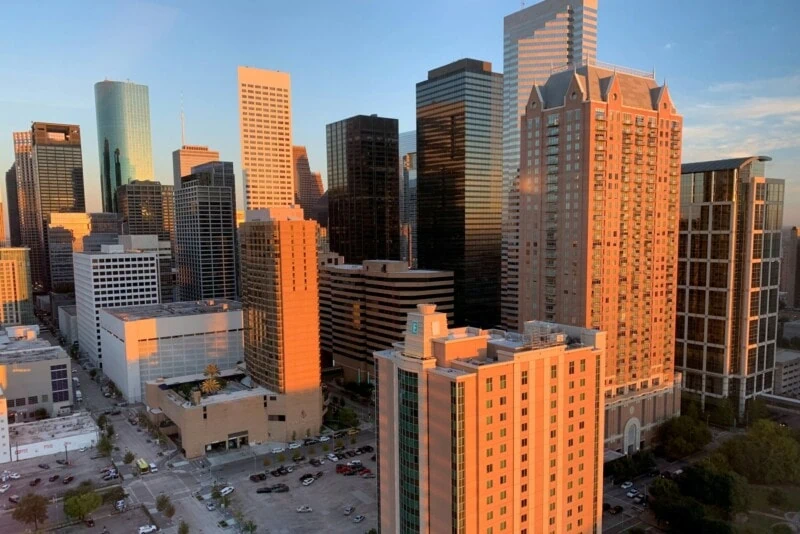

The world’s greatest sporting event is heading to the heart of Texas, and our Houston World Cup 2026 Guide is here to ensure you don’t miss a single moment of the action. As one of the premier host cities for the FIFA World Cup 26, Houston is preparing for an unprecedented influx of international fans, bringing a global carnival atmosphere to the Bayou City.
With seven matches scheduled at the world-class NRG Stadium, including high-stakes group stage fixtures and critical knockout rounds, Houston will be a central hub for soccer history.
From the vibrant FIFA Fan Festival in EaDo to the electric watch parties in Midtown, this Houston World Cup 2026 Guide provides the expert insights you need to navigate the city like a local.
Whether you’re looking for the best METRORail routes to the stadium, seeking out the city’s legendary Tex-Mex and international cuisine, or scouting the top soccer bars like Pitch 25, we have you covered. Get ready to experience Houston’s legendary hospitality as it takes center stage for the most expansive World Cup ever held.
By the Numbers
- Stadium: NRG Stadium, Houston, TX
- Capacity: 72,220
- World Cup Matches Hosted: 7 group stage matches and two knockout round matches
- Tournament Dates: June 11 – July 19, 2026
- Metro population: ~7.8 million – fourth largest city in the United States
- Languages spoken: 145+
- Location: NRG Park – approximately 5-10 miles south of Downtown Houston
- Average June high: 93°F (34°C) with heat index regularly above 105°F
- Average June humidity: 70–75%
Why Houston Is the Most Underestimated World Cup Host City

Nobody puts Houston at the top of their World Cup list. That is a mistake that will become obvious the moment you land.
A city built by immigration – Every World Cup nation competing in 2026 has a significant community that already calls Houston home. For a tournament celebrating 48 nations and their fan cultures, Houston is the one host city where those cultures don’t need to travel – they arrived decades ago and never left.
The food will genuinely shock you – The most globally diverse city in America produces the most interesting food city in America. Tex-Mex at a level that defines the category. The best fajitas you’ve ever had in a strip mall you’d never have found without a local. Vietnamese, Nigerian, Brazilian, Colombian – all represented at an authenticity level that requires generations of cooking to achieve.
NRG Stadium has a retractable roof – Climate-controlled matches in Texas Gulf Coast heat. Critical.
The city knows how to host – Super Bowls, Final Fours, Copa América. Houston delivers world-class events in a BIG Texas way.
The people are warm in a way that’s hard to explain – “I don’t miss Texas but I miss Houston every day” is something you hear repeatedly from people who’ve left. Something about this city makes people feel welcome in a way that’s impossible to fake.
Houston vs Dallas – Which Is Better for Attending the World Cup?
|
Houston |
Dallas |
|
|
Stadium |
NRG – 72,220, retractable roof |
AT&T – 80,000+, retractable roof |
|
Stadium spectacle |
Excellent |
Slightly more iconic |
|
Food scene |
Best of any host city |
Outstanding |
|
Rail to stadium |
Direct METRORail |
No direct rail |
|
Fan culture |
More organic, more global |
Strong, more structured |
|
Hotel prices |
Lower |
Slightly higher |
|
City character |
Global, diverse, raw |
Polished, business-forward |
|
Best for |
Food, culture, authentic diversity |
Stadium experience, nightlife |
The honest verdict: Dallas delivers the bigger stadium spectacle. Houston delivers the more authentic World Cup experience – the fan cultures, the food, the genuine international energy that comes from a city built by the world rather than visited by it.
Check out our complete Dallas World Cup 2026 Guide.
Houston Reality Check
Houston rewards curiosity and punishes laziness. If you stay near your hotel and eat at chains, you will leave thinking the city is mediocre. That’s on you.
The city is massive and car-dependent. The heat and humidity are not theoretical – June in Houston is physically demanding and every outdoor plan needs to be built around it. There is no “pretty” in the traditional sense. No postcard skyline, no cobblestone streets, no European charm.
What Houston has instead is depth. The food hubs along Harwin Drive and Hillcroft. The Vietnamese neighborhoods in Midtown and Bellaire. The Nigerian community in Southwest Houston. The art museums that rival anything in the country. The NASA facility that put humans on the moon and coined the phrase “Houston, we have a problem.”
Plan everything. Hydrate constantly. Explore aggressively. The city rewards it with one of the most surprising travel experiences in America.
The Houston World Cup Strategy
- Stay in Midtown, Downtown, or the Museum District – Rail access, walkability, and the best neighborhood character
- NRG Stadium is 5 miles from Downtown – The most accessible major World Cup venue in the US
- Take the METRORail – $1.25, 20 minutes, the best match day transit value of any host city
- Eat Vietnamese, Nigerian, or Brazilian food within your first day – In addition to the mandatory Tex-Mex
- Schedule outdoor activities for early morning and after 6pm – The 11am–5pm heat window is not survivable without planning
- Book the Marriott Marquis Houston – Texas-shaped lazy river pool, direct METRORail access
- Make restaurant reservations 5–7 days in advance for destination dining
NRG Stadium – What to Know

NRG Stadium is the home of the Houston Texans and one of America’s most experienced major event venues.
Key stadium facts:
- Capacity: 72,220 for World Cup configuration
- Retractable roof – climate-controlled when closed
- Located in NRG Park, 5 miles south of Downtown
- Has hosted Super Bowl XXXVIII and LI, multiple Final Fours, Copa América Centenario 2016
- Direct METRORail Red Line access from Downtown
The retractable roof is essential – Gulf Coast heat with humidity makes extended outdoor exposure in June genuinely dangerous. Closed roof means air conditioning and one of the most comfortable match environments of any US host city.
5 miles from Downtown – One of the most accessible World Cup venues in America. The METRORail removes virtually all match day logistics stress.
Arrive 90 minutes early – World Cup security plus 72,000 people requires it.
Stadium Logistics – The Full Breakdown
METRORail Red Line – Best Option
METRO’s Red Line runs from Downtown Houston directly to NRG Park/Reliant Station.
- Departure: Main Street Square or any Red Line stop south
- Journey time: ~20 minutes from Downtown
- Cost: $1.25 flat fare
- Insider tip: Board two stops north of NRG on your return to guarantee a seat rather than waiting in the post-match platform crowd
Rideshare Cost Estimates (Match Day)
|
From |
Pre-Match |
Post-Match (Immediate) |
Post-Match (30 min wait) |
|
Downtown Houston |
$20–35 |
$70–110 |
$30–45 |
|
Midtown |
$18–30 |
$65–100 |
$25–40 |
|
Museum District |
$15–25 |
$60–90 |
$22–35 |
|
Galleria/Uptown |
$30–50 |
$85–130 |
$40–60 |
The rule: METRORail first, rideshare second. Post-match, wait 20–25 minutes before calling.
Parking
Pre-book through NRG Park’s official portal – approximately $30–60 depending on lot.
Post-Match Exit Reality
NRG Park’s proximity to Loop 610 and US-59 means post-match traffic clears faster than AT&T Stadium (Dallas) or Hard Rock Stadium (Miami). The METRORail option removes most post-match stress entirely.
A Perfect Houston Match Day Timeline
7:30 AM – Kolache for breakfast. The Czech-Texan pastry Houston made its own. Any kolache shop in Midtown or Downtown. Know the pronunciation before you order: koh-LAH-chee.
9:00 AM – Discovery Green park before the heat builds. The skyline, the open space, the city waking up.
10:30 AM – Vietnamese lunch in Midtown. Pho, bánh mì, or bún bò Huế at a level that rivals any city in America.
12:30 PM – Hotel. Rest. The 11am–5pm Houston heat window is not optional to navigate.
3:30 PM – METRORail Red Line to NRG Park. $1.25, 20 minutes, no traffic.
4:30 PM – Arrive at NRG. Explore the complex, find your section, and absorb the scale.
6:00 PM – Kickoff.
9:00 PM – METRORail back to Downtown or rideshare to Midtown.
10:00 PM – Post-match food and drinks. Houston’s bar scene runs late.
Getting Around Houston

METRORail – Essential for Match Days
The Red Line serves NRG Stadium directly. $1.25, 20 minutes from Downtown. The best match day transit value of any US host city.
Rideshare – Primary for Everything Else
Uber and Lyft are widely available. See cost table above. Book 30–45 minutes before departure on match days. Wait at least 30 minutes post-match before ordering for the best rates.
Rental Car – Recommended for Multi-Day Visitors
Houston’s food corridors – Harwin Drive, Hillcroft, Bellaire – require a car to access properly. The city’s sprawl makes rideshare expensive over multiple days. Expedia has some great car rental offers.
Driving Warning
HWY 45 is always heavy – locals avoid it. Loop 610 is the better option. Budget time generously for every drive.
Best Neighborhoods to Stay
Midtown: Best Overall
Houston’s most walkable neighborhood. Excellent restaurants, bars, and direct METRORail access to NRG Stadium. The best base for World Cup visitors.
Downtown Houston: Best for Transit
Discovery Green, the Theater District, and METRORail to NRG Stadium. Downtown location, connected to the George R. Brown Convention Center, with the iconic Texas-shaped lazy river pool. The best World Cup base hotel in Houston.
Museum District: Best for Culture
Walking distance from the Museum of Fine Arts, Houston Museum of Natural Science, Hermann Park. Quieter, well-connected by METRORail.
Galleria/Uptown: Best for Luxury
Premium hotels, high-end dining, the Galleria mall. Further from the stadium but well-served by rideshare.
Where NOT to Stay
- Bush Intercontinental Airport (IAH) – 25+ miles north of everything
- Suburban hotels without METRORail access – Houston’s sprawl makes them isolating
Hotel Reality – What to Expect
Houston is more affordable than coastal host cities and more affordable than Dallas for comparable quality.
- Expect 2–2.5x normal June pricing – lower multiplier than Dallas, Miami, or NYC
- Midtown and Downtown properties book first
- The Marriott Marquis specifically – book early given World Cup demand
- Minimum stay requirements possible during peak periods
Where to Eat and Drink

Houston rewards curiosity and punishes laziness – and nowhere is that more true than the food scene. The most globally diverse city in America produces the most interesting food city in America. This is where you eat adventurously or you miss the point entirely.
Make reservations 5–7 days in advance for Houston restaurants during the World Cup.
The Non-Negotiables
Ninfa’s on Navigation – Where the fajita was invented in 1973. Documented culinary history. The original Navigation Boulevard location is the one worth going to.
Pappasito’s Cantina – Houston’s beloved Tex-Mex institution. The beef fajitas are the standard by which all others are judged.
Goode Company BBQ – Houston BBQ done right. The jalapeño cheese bread is as important as the brisket.
Vietnamese district (Little Saigon) – Midtown and Bellaire – Pho, bánh mì, bún bò Huế, and Gulf Coast-influenced Vietnamese seafood dishes at a level that reflects generations of cooking. One of the great food experiences in America that most visitors never discover.
Pre-Match
Caracol – Uptown – Mexican coastal cuisine – ceviches, seafood, mezcal. One of Houston’s most celebrated restaurants.
Brennan’s of Houston – Downtown – Houston’s legendary Creole restaurant. The turtle soup is an institution.
Xochi – Downtown – Hugo Ortega’s Oaxacan restaurant. Steps from the Theater District and METRORail.
Post-Match
Axelrad Beer Garden – Midtown – Houston’s beloved outdoor bar. Bocce court, craft beer, relaxed energy – perfect after a full match day.
Washington Avenue – Houston’s nightlife strip – Multiple bars and clubs, heavily populated post-match.
The Houston Non-Negotiables
- Fajitas at Ninfa’s – where they were invented
- Vietnamese pho – from Little Saigon, aka Vietnamtown
- Kolache for breakfast – every morning
- Gulf Coast seafood – shrimp, oysters, crab fresh from the Gulf
- Nigerian food in Southwest Houston – Houston has the largest Nigerian population in Texas with one of the great underreported food experiences in America
Houston Fan Culture – Where Fans Will Actually Be
Note: The following fan community sections reference nations expected to qualify for World Cup 2026. Verify the final 48-team qualification list at FIFA.com before your trip.
Mexico fans – The East End, Magnolia Park, and East Downtown (EaDo) will be transformed for Mexico matches. Taqueria strips and cantinas along Navigation Boulevard packed from morning to midnight.
Brazil and Argentina fans – Houston’s South American communities concentrated in Midtown and the Galleria area. Brazilian and Argentine bars and social clubs will be electric for South American matches.
Honduras, El Salvador, and Guatemala fans – The East End’s Central American communities make the neighborhood extraordinary for CONCACAF nation matches.
South Korea fans – Houston’s Korean community in the Beltway 8 area and Bellaire will fully mobilize. Korean sports bars standing room only.
European nation fans – Houston’s international energy sector includes a significant European expatriate population. Midtown bars and Washington Avenue for France, England, Germany, and Spain matches.
Houston is the host city where every match has a local crowd that’s been waiting years for this moment.
If You Want to Do Houston Big
The Marriott Marquis Houston – The Texas-shaped lazy river pool is genuinely the best hotel amenity of any World Cup host city. It is exactly as good as it sounds.
Post Oak Hotel – Houston’s most luxurious property in the Galleria area. The only Forbes Five-Star hotel in Texas.
Space Center Houston VIP Tour – Private and after-hours access to NASA’s Johnson Space Center. Walking the actual Apollo-era mission control rooms. The Houston luxury experience nobody else offers.
Houston Theater District – The second-largest performing arts district in America after New York City. The Houston Grand Opera, Symphony, and Houston Ballet operate at a caliber that matches anything in the country.
Gulf Coast private seafood dinner – Fresh Gulf shrimp, oysters, and red snapper with Houston’s skyline as backdrop. The luxury food experience unique to this city.
Houston Mistakes to Avoid
- Staying near your hotel and eating at chains – Houston rewards curiosity and punishes laziness. The best experiences require effort to find.
- Underestimating the heat and humidity – The most physically demanding weather of any US host city. Plan every outdoor activity around it.
- Not exploring the international food districts – Tex-Mex and BBQ are entry points. Harwin Drive and the Vietnamese neighborhoods are the revelation.
- Calling Uber immediately post-match – Wait 20–25 minutes, take the METRORail if possible
- Skipping the METRORail – The best and most underutilized World Cup transit option in America
- Booking an airport hotel – IAH is 25+ miles from everything
- Treating Houston like a lesser Dallas – A completely different city with a completely different identity
Best Tours and Experiences to Book
Space Center Houston
NASA’s Johnson Space Center. Actual mission control rooms, spacecrafts, and more. Essential to visit in Houston.
Space Center Houston VIP Behind-the-Scenes Tour
After-hours access to areas not open to general visitors. One of Houston’s elite experiences.
Houston Food Tour – Vietnamese and Tex-Mex
Two of Houston’s greatest food traditions in one guided experience.
Buffalo Bayou Park Kayak Tour
Houston’s waterway park from the water. A completely different perspective on the city.
Galveston Island Day Trip
50 miles south. Historic Strand District, Gulf beaches, fresh seafood. Worth the half-day trip.
Private Chef Experience
Gulf Coast cuisine prepared privately. The luxury Houston food experience.
Beyond the Game – Houston in June

Space Center Houston – A full day minimum. The Apollo mission control room alone justifies the trip.
Museum District – The Museum of Fine Arts Houston is world-class. Hermann Park is beautiful in June. A full cultural day easily accessible via the METRORail from your hotel
Discovery Green – Downtown Houston’s urban park. Free outdoor concerts, food vendors, skyline backdrop. The city’s living room.
Buffalo Bayou Park – Houston’s green space. Trails, kayaking, public art, best downtown skyline views.
The East End and Navigation Boulevard – Houston’s Latino cultural hub. The murals, the taquerias, the history.
Day Trips:
- Galveston – 50 miles south, Gulf beaches and Victorian history
- San Antonio – 3 hours southwest, the Riverwalk and the Alamo
- Austin – 2.5 hours northwest, music capital of Texas
Houston Heat Reality
June in Houston is the most demanding weather of any US World Cup host city.
- Daily highs of 91-95°F with heat index regularly reaching 105-110°F
- 70-75% average humidity – Gulf Coast wet heat, not Dallas dry heat
- You will be soaked within minutes of outdoor exposure
- 11am-5pm is the danger window – outdoor activities for early morning and after 6pm only
- NRG Stadium’s retractable roof is the essential match day feature
- Afternoon thunderstorms possible – brief and heavy
Electrolyte packets are mandatory. Cooling towels are essential. Light moisture-wicking clothing only.
What to Pack for Houston
See our complete FIFA World Cup 2026 Packing List for everything else
Fan Zone Information
FIFA will establish an official Fan Zone in Houston for World Cup 2026 in the EaDo neighborhood (East Downtown). It’s the city’s soccer hub, home to Shell Energy Stadium where the MLS Houston Dynamo FC play their home games. A likely location already humming with soccer fandom.
Given Houston’s extraordinary international diversity, expect the fan zone to reflect the most genuinely global atmosphere of any US host city with food, drinks, live performances, and more!
Conclusion
Houston doesn’t ask for your approval.
The fourth-largest city in America. The most ethnically diverse major city on the planet. A food scene that rivals anywhere in the world. A World Cup fan culture that’s been building for decades – not manufactured for this moment.
Plan everything. Bring an open mind. Hydrate constantly.
Houston will exceed every expectation you arrive with.
Read More:
FIFA World Cup 2026 Packing List
Houston World Cup 2026 FAQ
Where is the World Cup stadium in Houston?
NRG Stadium at NRG Park, approximately 5 miles south of Downtown Houston.
How do I get to NRG Stadium for the World Cup 2026?
METRORail Red Line from Downtown – 20 minutes, $1.25. The best match day transit value of any US host city. Rideshare alternative – pre-match from Downtown expect $20–35, post-match wait 20–25 minutes.
Houston or Dallas for the World Cup?
Dallas for the bigger stadium spectacle. Houston for better food, direct rail to the stadium, more organic fan culture, and lower hotel prices. See Section 2 for the full breakdown.
What is the weather like in Houston during the World Cup?
Hot and extremely humid. Daily highs of 91–95°F with heat index above 100°F. NRG Stadium’s retractable roof provides climate control for match days.
What is the must-eat food in Houston?
Fajitas at Ninfa’s on Navigation – where they were invented. Vietnamese pho in Midtown. Gulf Coast seafood anywhere that’s not a chain. Kolache every morning.
How far is Houston from Galveston?
Approximately 50 miles south – 50–60 minutes by car.

Stacie Harris is a local resident and reporter of the Maple Grove area. Stacie reports on medicine and science for the Maple Grove Report.


:max_bytes(150000):strip_icc():format(jpeg)/Health-Anchovies-vs-Sardines-abf78393ed254f7fb6103ad3b603bfd0.png "Comparison between canned anchovies and sardines, side by side.")