Fact checked by Nick Blackmer
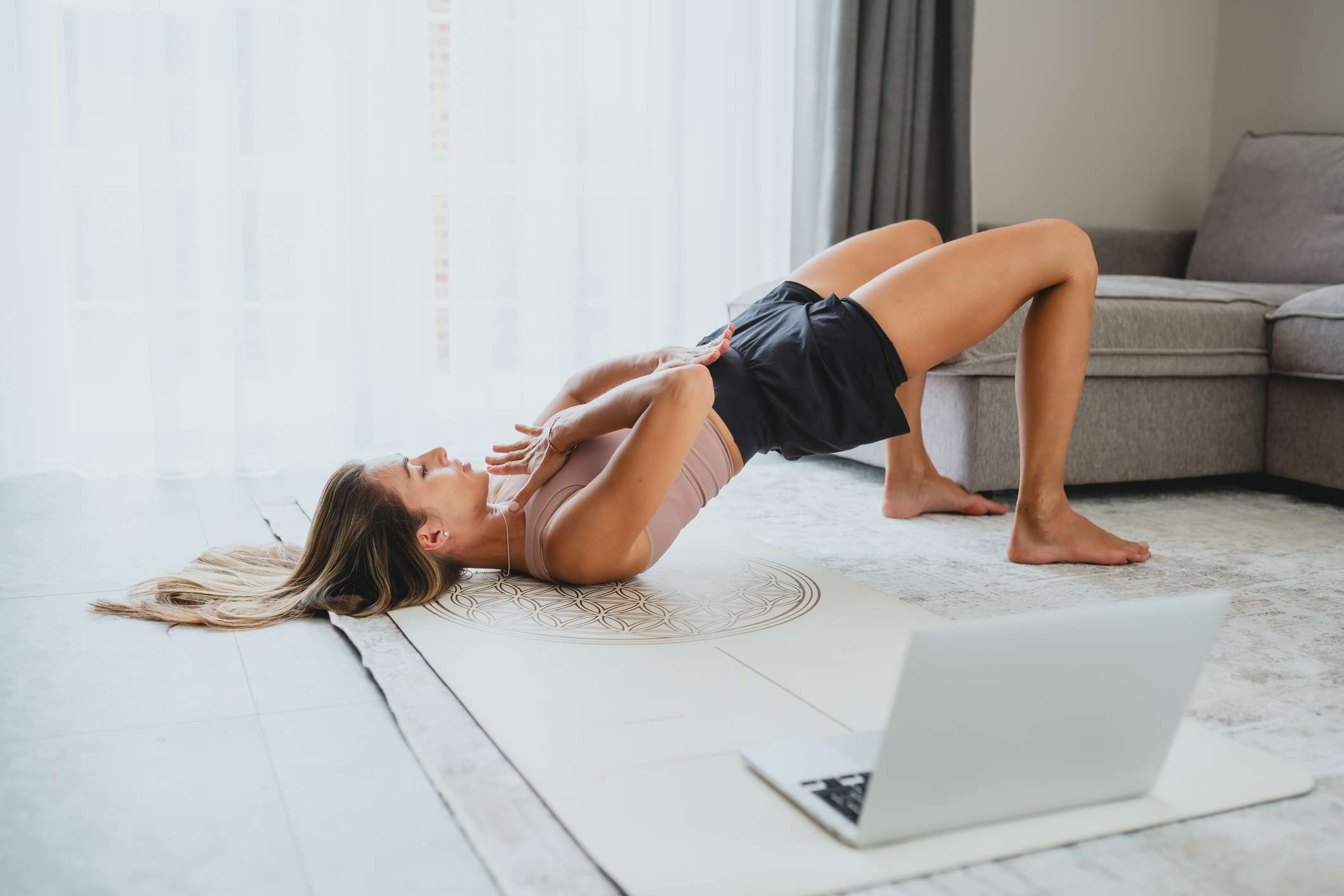
:max_bytes(150000):strip_icc():format(jpeg)/Health-GettyImages-BridgePose-dbcc09451ca6479584e6b983b0184570.jpg "A woman holding a bridge pose on the floor of her home")
- The bridge pose tests the endurance and coordination of the glutes, hamstrings, core, and pelvic stabilizers.
- Difficulty holding the position may signal muscle fatigue, weakness, limited mobility, or poor movement control.
- Building bridge pose endurance can improve balance, mobility, stair climbing, and overall function as you age.
Holding a bridge pose can look pretty simple at first glance, but as you hold the pose, this simple move can become a real challenge for your glutes, hamstrings, and core. But is this move just about the burn, or can it hint at important info about your body? Read on for tips on building your bridge-pose endurance—and why it’s important.
What Does Bridge Pose Actually Test?
To do a bridge pose—also known as a glute bridge hold—you lie on your back with your knees bent and your feet flat on the floor, then press through your heels to raise your glutes off the floor.
It’s an isometric hip extension exercise that can look easy if you're just holding it, but it’s actually pretty tough. “Gravity is going to want to bring your hips down, so your glutes and hamstrings have to actively work to keep your hips upright, and your core muscles to keep your pelvis from tilting one way or the other,” Kimberly Melvan, DPT, CSCS, sports physical therapist and owner of RunCoachPT, told Health. “It’s a great exercise to work on endurance training.”
These muscles are working together when you hold a bridge pose:
- Gluteus maximus (the largest muscle in your glutes)
- Hamstrings
- Adductor magnus (inner thigh)
- Transverse abdominis (deep core muscles)
- Obliques
- Erector spinae (spinal muscles)
Other small muscles help complete the move, including your pelvic floor muscles, which help stabilize you, and your gluteus minimus and medius, which help keep your pelvis level. “A bridge hold can tell you how your hips, pelvis, and core work together and can provide clues about muscular endurance and pelvic stability,” said Melvan.
This has a big carryover into everyday life, since activities like walking or going up and down stairs require your core to stay stable and your pelvis to stay level as you move.
How Long Can Most People Hold a Bridge Pose?
Unlike other common exercises like push-ups or squats, there’s no real standardized data on the average time people can hold a bridge pose.
The following ranges, based on Melvan’s experience with clients, can be considered solid starting points for young adults 18–40:
- Beginner: 10–30 seconds
- Intermediate: 30–60 seconds
- Advanced: 60+ seconds
As you get older, endurance tends to decrease, so max hold times often decline. If you're older than 50, the ranges can look like:
- Beginner: 10–20 seconds
- Intermediate: 20–50 seconds
- Advanced: 50+ seconds
What If Bridge Pose Feels Hard?
The bridge pose can feel difficult for a number of reasons:
- Muscle cramping
- Lower back or hip tightness or discomfort
- Muscle shaking
- Difficulty elevating hips or keeping them up
These don’t necessarily mean something is wrong, but they could be providing important info about your body. For instance, “cramping or dropping of your hips to one side could be an indicator of weakness or muscle fatigue,” said Melvan.
Lower back discomfort or tightness might be due to arching of your back, or your back muscles tacking on too much of the work to overcompensate for a lack of hip strength or control. And trouble getting your hips up in the first place might indicate a lack of mobility in your hip joints or the muscles that help you extend your hips.
How To Build Your Endurance
The best way to build your endurance for glute bridge holds is to gradually increase hold time. Whatever your age, try starting with 10 seconds per bout to see how that feels. “Then add 10 seconds a week to your hold time, focusing on form and alignment in your hips,” said Melvan.
“Don’t sacrifice form for time,” she said. Make sure your spine stays neutral and neither hip drops. “You can think of ‘squeezing your glutes together’ before you lift and tuck your pelvis in as well,” she said.
Incorporating other exercises into your workout program that work similar muscles can help build the strength you need to hold the bridge pose longer. These include:
- Hip thrusts
- Romanian deadlifts
- Step-ups
- Squats
Adding core moves like planks or bird-dogs, as well as exercises that work on hip mobility, can be helpful. Finally, if you notice any red flag symptoms when you’re doing bridge pose—like sharp or significant pain in your groin, hips, or back, or any numbness or tingling in your back, butt, or lower legs—these can be signs to loop in a healthcare provider or physical therapist.
Is Holding a Bridge Pose Important for Health?
While you don’t normally lie down and lift your hips up during a normal day, the endurance of training those hip extensors and trunk muscles can help translate to other activities, such as walking, going up stairs, getting in the car, or getting up from a chair.
Glute strength, spinal stability, and core stabilization translated to less lower back pain and a better quality of life. Additionally, a 2022 review of 59 studies found that hip strength plays a crucial role in balance and mobility.
That means the strength you can build with bridge pose can be particularly important as you get older. “Maintaining glute strength, endurance, and stability can help you immensely as you age, when balance and fear of falling become more prevalent,” said Melvan.