Fact checked by Nick Blackmer
:max_bytes(150000):strip_icc():format(jpeg)/HDC-GettyImages-980313888-96ea06ddfc5842cb8dc5a4efdf5352e1.jpg "Three people exercising outdoors performing squats")
Credit: Drazen_ / Getty Images
- Squats mirror daily movements and indicate strength, balance, and independence, especially as these abilities decline with age.
- There’s no universal squat number; performance varies. Proper form and control matter more than doing higher repetitions.
- Start with bodyweight, use modifications, progress gradually, and allow recovery time to build strength and prevent injury.
While you might associate squatting with loading up a barbell and cranking out some heavy reps, the movement isn’t limited to the gym. In fact, you're probably squatting throughout the day without even realizing it: crouching down to pet your cat, slipping into the driver’s seat of your car, even standing up from your sofa—those movements all use the same squat pattern.
This makes the squat a functional move—and a key indicator of lower-body strength. Find out what that means for your health, how many you should shoot for, and how to get better at squatting so you can do more of them.
Why Squats Are a Powerful Fitness Test
“A bodyweight squat is a great screen of overall movement quality because it combines strength, mobility, coordination, and control in one pattern,” Evan Williams, CSCS, strength and conditioning coach for the Milwaukee Bucks, told Health. “By looking at body position and movement quality, it can reveal strength limitations, mobility restrictions, coordination issues, and compensations across the ankles, hips, knees, and trunk.”
This is particularly important as we age, since those qualities tend to naturally decline as we get older, he said. And that can contribute to age-related issues, like balance problems. “Because squatting closely mirrors tasks like sitting down, standing up, and picking objects off the ground, it’s a strong indicator of functional independence and fall risk,” Williams said.
The ability to squat with ease, then, may be protective: According to a 2020 study published in the Journal of Back and Musculoskeletal Rehabilitation, older adults who performed better on a modified half-squat test scored better on a measure of gait and balance abilities.
Squats are also effective strength-builders, particularly for your quads, glutes, and hamstrings. But they’re really about the bigger picture. “The squat reflects how well someone can control their body in everyday movements—not just how strong they are,” Williams said.
How Many Squats You Should Be Able to Do?
Like with most things in the fitness space, there’s no one right number here. How many squats you can do without stopping depends on a lot of things, including muscular endurance, mobility, movement mechanics, body weight, limb length and leverage, cardiovascular fitness, training experience or movement familiarity, and age. “Together, these factors determine not just how many squats someone can do, but how efficiently and consistently they can perform the movement,” Williams said.
Still, you can check out these squatting ranges used by the American Council on Exercise (ACE) as a general benchmark for what’s considered “good” for each age group:
Men
- Ages 18–25: 44-49
- Ages 26–35: 40-45
- Ages: 36–45: 35-41
- Ages 46–55: 29-35
- Ages 56–65: 25-31
- Ages 65+: 22-28
Women
- Ages 18–25: 37-43
- Ages 26–35: 33-39
- Ages 36–45: 27-33
- Ages 46–55: 22-27
- Ages 56–65: 18-24
- Ages 65+: 17-23
How To Do a Squat (the Right Way)
“Form is key when performing squats because it determines whether you’re actually building strength or just moving through repetitions,” Williams said.
Follow the steps below to do a proper bodyweight squat:
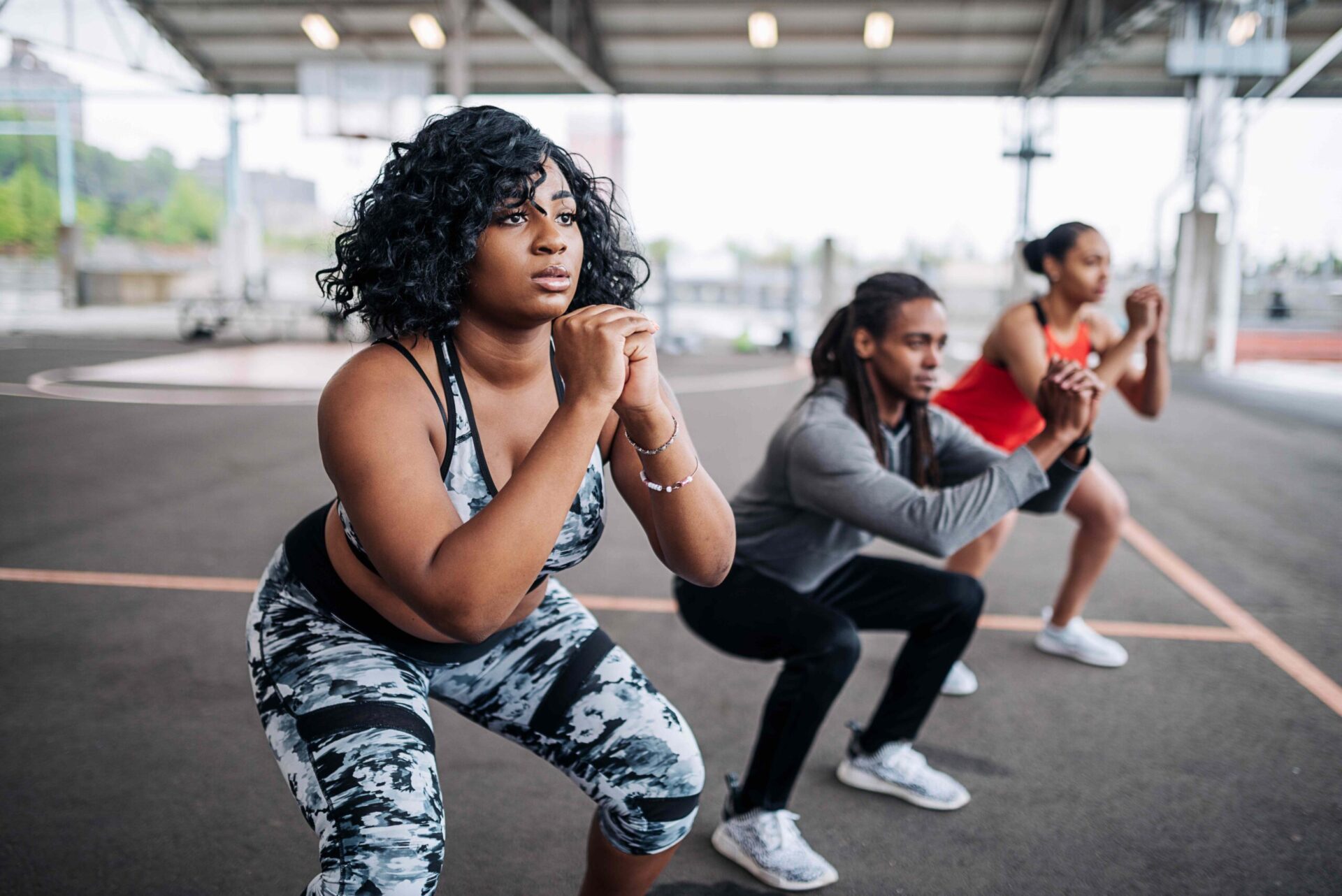
- Stand with feet shoulder-width apart, or slightly wider than shoulder-width, keeping your weight centered in the midfoot.
- Push your hips back and bend your knees to lower into a squat—as though you're sitting down in a chair. Keep your chest upright, making sure your back doesn't arch or shoulders don’t arch.
- Drive your weight evenly through the floor to push through your midfoot and stand back up to your starting position.
Keep the entire movement slow and controlled. “This reduces reliance on momentum and ensures the muscles are properly loaded throughout the movement,” Williams said. “A good starting point is three sets of 10 to 15 reps, two to three times per week, focusing on consistent depth, control, and clean mechanics."
How To Build Your Squat Strength
If you’re struggling with bodyweight squats, you can try modified versions until you build the strength, mobility, and motion control you need for a full version.
You can squat to a chair, step, or box. “This helps teach depth control and builds confidence in the bottom position,” Williams said. Another option is to use some sort of external support—like TRX straps, rings, or holding onto a squat rack—to help with balance so you can focus on mechanics.
Squatting with a mini-band wrapped around your knees can help improve movement control, too. This can be particularly helpful if you struggle with your knees caving in while you squat, said Williams.
Finally, incorporate other lower-body exercises into your workout program that target similar muscle groups to build squatting strength. Great options include split squats, lunges, step-ups, glute bridges, and wall-sits, said Williams.
Leveling Up Your Squats
Once you feel comfortable with bodyweight squats, you may want to progress the exercise by adding weight.
The goblet squat is a solid entry into weighted squats. With a goblet squat, you hold a dumbbell or kettlebell against your chest as you perform the move. As you get stronger, you can continue increasing the weight gradually to keep challenging your muscles.
Once you feel good about goblet squatting, you can try other versions, like Smith machine or barbell variations, said Williams.
Keep consistent with squats, but don’t overdo it—this isn’t a case where more is better. You don’t want to do them everyday; make sure you leave at least 48 hours in between squat sessions. “Without adequate recovery, fatigue can lead to breakdowns in movement quality, leading to reduced depth, knee collapse, or rushed, uncontrolled reps,” Williams said. “Recovery is where adaptation and strength gains actually take place.”