Medically reviewed by William Truswell, MD
:max_bytes(150000):strip_icc():format(jpeg)/Health-GettyImages-1149714919-0f870a106ee64887bb320aafe1c54eb1.jpg "Person applying a facial scrub while looking in a mirror highlighting a skincare routine")
Credit: Artem Varnitsin / Getty Images
- Dermatologists typically recommend using chemical exfoliants, like alpha hydroxy acids (AHAs) and beta hydroxy acids (BHAs).
- People with dry or sensitive skin can usually exfoliate about once or twice a week without irritation.
- People with oily or acne-prone skin may be able to exfoliate three to four times a week, or even daily.
How often you exfoliate your skin depends on your skin type and the method you use. If you use a chemical exfoliant, the strength of the product may also affect how often you can use it.
How Often Should You Exfoliate?
Generally, most people should exfoliate about two days a week. This includes exfoliating your face and body.
The outer layer of your skin (the epidermis) constantly sheds dead skin cells. Eventually, these dead skin cells can build up, leading to dullness, clogged pores, and a rough skin texture.
Exfoliating regularly helps remove dead skin cells for smoother, brighter skin. Some exfoliation methods can also help unclog pores to reduce acne breakouts, reduce the appearance of fine lines, and fade scars. However, exfoliating too frequently can damage your skin.
Can You Exfoliate Every Day?
Most people’s skin can’t tolerate daily exfoliation. However, some oily and acne-prone skin types can handle exfoliating every day.
How often you can safely exfoliate your skin starts with understanding your skin type:
- Sensitive or dry skin is more prone to dryness and irritation after exfoliation. Aim to exfoliate about one to two times a week.
- Oily or acne-prone skin can typically handle more exfoliation. You may be able to exfoliate three to four times a week, or daily with milder exfoliators.
- Normal or combination skin is typically less sensitive, but it can still experience dryness. Aim to exfoliate about two to three times a week.
Chemical vs. Physical Exfoliation
Chemical exfoliation products—like serums, peels, toners, or exfoliating pads—use alpha hydroxy acids (AHAs) and beta hydroxy acids (BHAs) to dissolve stubborn dead skin cells.
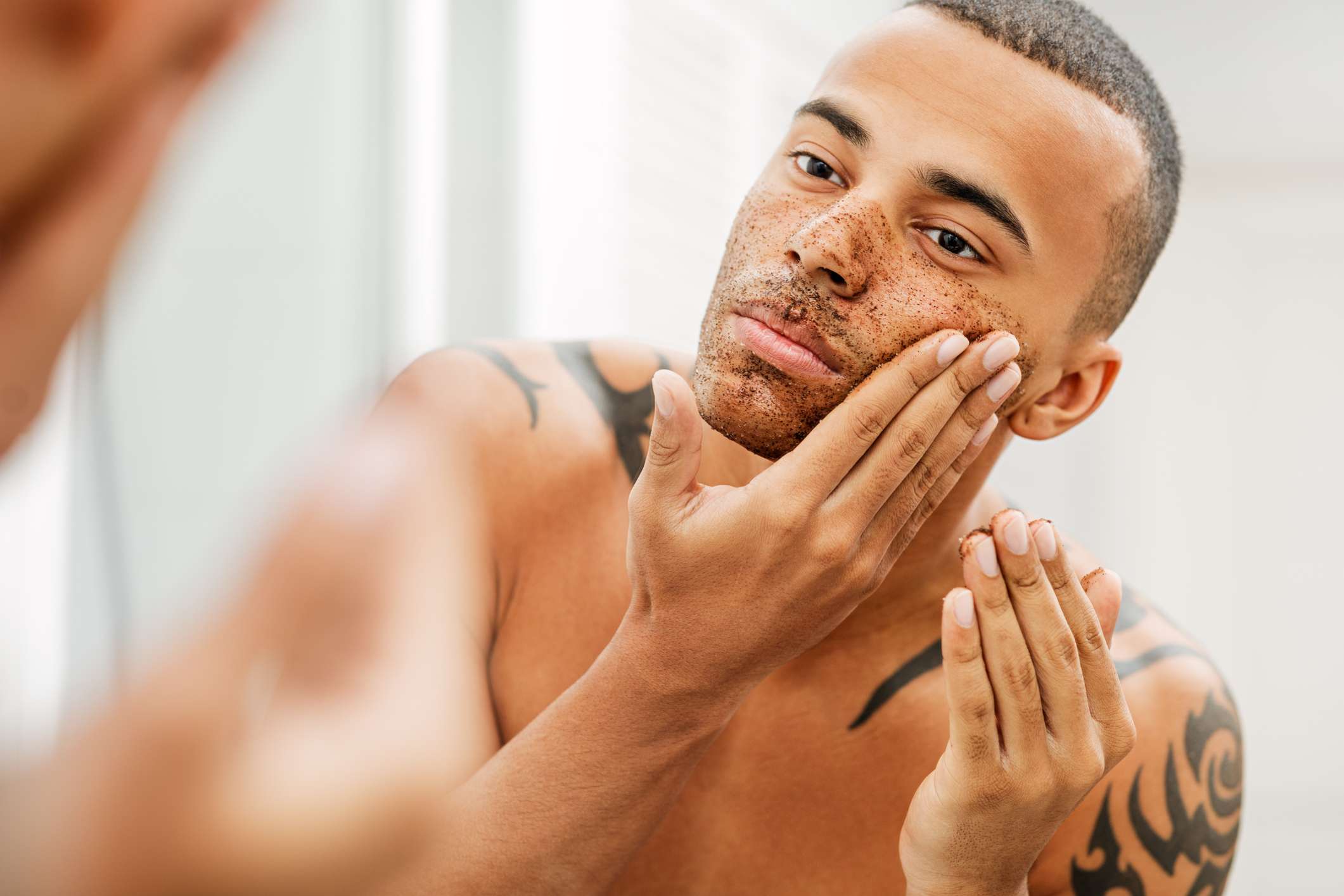
Physical exfoliation involves using abrasive scrubs, brushes, or pads to physically remove dead skin cells from the skin’s surface.
Dermatologists typically recommend using chemical exfoliation for the face and body a couple of times a week. However, products with lower concentrations of AHAs and BHAs may be used more frequently.
Physical exfoliators are more likely to irritate and damage the skin, especially when used too often. Physical exfoliation may also be too irritating for dry, sensitive, or acne-prone skin.
If your skin is prone to dark spots, you should also avoid physical exfoliation. Harsh physical exfoliants may make dark spots worse. If you want to use physical exfoliation, try combining a mild chemical exfoliant with a washcloth to exfoliate the body one to two times a week.
Which Exfoliator Is Best for Your Skin Type?
Choosing the best chemical exfoliant for your skincare routine also depends on your skin type. Different chemical exfoliants you can use on your face and body include:
- Glycolic acid: This AHA can improve skin texture, unclog pores, and boost collagen production. It works for most skin types, but can irritate sensitive, dry skin.
- Lactic acid: This gentle AHA improves skin texture, unclogs pores, and increases hydration—making it an ideal exfoliator for sensitive and dry skin.
- Mandelic acid: This gentle AHA reduces dark spots and inflammation, which is better for acne-prone, sensitive, and darker skin tones.
- Salicylic acid: This popular BHA exfoliates and reduces oil production—which is great for oily and acne-prone skin.
Watch Out for Product Interactions
Be careful mixing prescription retinoids, retinol, and benzoyl peroxide products with chemical exfoliants. Mixing these products with exfoliation can lead to irritation, dryness, peeling, and breakouts. You may need to alternate product use or exfoliate less frequently to avoid interactions. If your goal is to reduce dark spots (hyperpigmentation), stronger AHAs like glycolic acid may also worsen dark spots in darker skin tones.
How to Exfoliate at Home
You can exfoliate any time of day. However, AHA exfoliation treatments can make your skin more sensitive to sunlight, so nighttime exfoliation can be a safer choice. Since some exfoliation products work differently, you should also follow your specific product’s instructions.
These tips can also help you exfoliate safely:
- Always do a patch test: Before using a new chemical exfoliator on your face or body, test the product on a small patch of skin to make sure you won’t have a skin reaction.
- Exfoliate before shaving: Whether you’re shaving your body or face, chemical exfoliation before shaving can help remove dead skin that clogs your razor.
- Be gentle with your skin: Gently massage chemical exfoliants into your skin using circular motions for about 30 seconds.
- Avoid open, irritated skin: Exfoliating will only further irritate and dry open cuts, wounds, or sunburnt skin.
- Rinse with warm water: If your exfoliator requires rinsing, use cool or warm water, not hot. Hot water can dry out your skin even more.
- Moisturize: Always follow exfoliation with a moisturizer to help rehydrate your skin and avoid excess dryness.
- Use an SPF: Apply a sunscreen with an SPF of 30 or higher every morning, especially if you use an exfoliator with AHAs.
What Happens If You Exfoliate Too Often?
Exfoliating too frequently can damage your skin barrier by removing protective oils and hydration. Damaged skin is more prone to irritation, dryness, and infections.
Signs you’ve over-exfoliated your skin include:
- Red or irritated skin
- Burning or stinging
- Skin peeling
- Increased acne breakout
If you notice irritation after exfoliating, try reducing how often you exfoliate. The product you’re using may also be too strong for your skin type.
If the irritation doesn’t go away or gets worse, stop exfoliating and consider seeing a board-certified dermatologist for guidance.