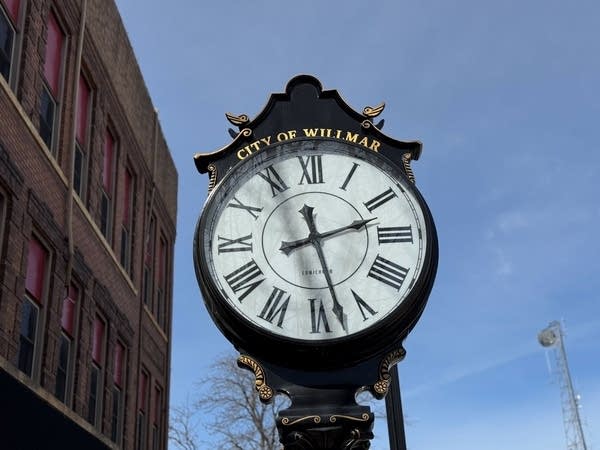
When Immigration and Customs Enforcement operations ramped up across Minnesota earlier this year, many immigrant populations went into hiding out of fear of detainment. The City of Willmar, with a foreign-born population of roughly 17 percent, was no exception.
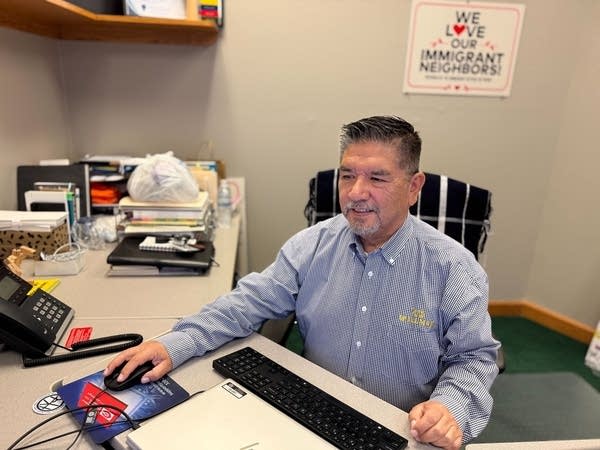
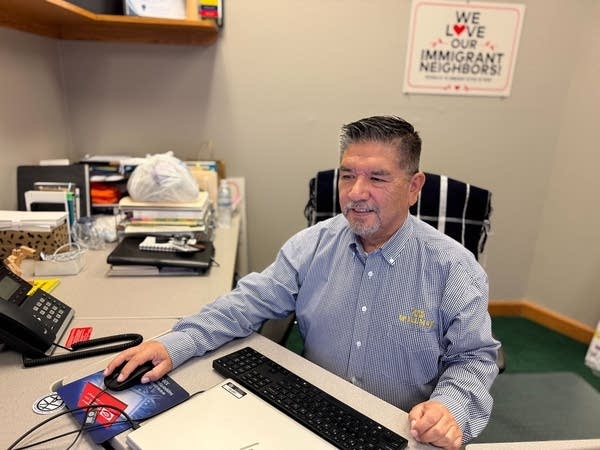
John Salgado Maldonado, from Chile, is one of Willmar’s residents who stayed indoors to avoid ICE agents earlier this year, despite being a legal U.S. resident. He was frightened by reports of ICE agents detaining people regardless of their citizenship status.
“You don't know what's coming,” Salgado Maldonado said. “You don't know. You're seeing that even citizens who look Latino, they were taken away.”
Salgado Maldonado works on community outreach with Woodland Centers, a local mental health nonprofit. He said that after he spoke with his workplace about his situation, they let him work from home. Now that ICE operations have wound down, he’s finally felt comfortable enough to go outside again.
“I have to carry my paperwork everywhere,” Salgado Maldonado said. “I think that is something that is just because of my look. Like [being] Latino-looking.”
However, despite the fear Salgado Maldonado felt earlier this year, he said he also saw a community grow closer together.
A community in hiding
As director of community growth at the City of Willmar, Pablo Obregon’s role requires him to help build trust among the diverse populations that reside there, whether through events celebrating their heritage or activities that help neighbors meet one another.
When Obregon heard about President Donald Trump’s initiative to enforce immigration law more aggressively, he began coordinating educational meetings to teach people their rights when confronted by an immigration officer.
“[Those know your rights workshops] happened last winter of 2025,” Obregon said. “January of 2026, of course, that was just the heaviest of our experience with immigration [enforcement] here in our community.”
Obregon said ICE agents were present in the area for weeks. When reports came in of ICE agents detaining people, such as restaurant workers at a local Mexican joint, immigrant communities started feeling nervous and many decided to stay home from work, school and other activities.
How local resources adapted
Bill Adams, the Willmar public schools superintendent, said some families said they were pausing their attendance at classes because they were afraid of detention by immigration enforcement.
“We did offer an online learning opportunity for families that didn’t feel safe returning to school because of fear that they, as legal immigrants, would be detained,” Adams said. “We had an influx of that in our pre-K-12, and we did have adult education basic ed students take advantage of some of our online programming as well.”
Attendance in February later improved to the point where there were more students than average, Adams said.
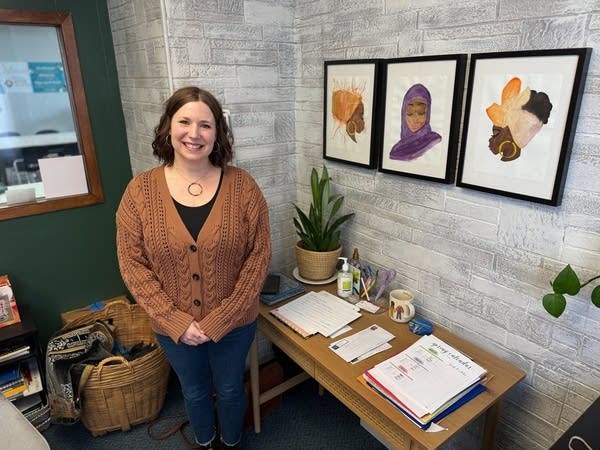
Other groups, such as Arrive Ministries Willmar, a refugee resettlement agency, also saw demand drop for its services earlier this year. The organization offers classes and support for immigrants.
Jenny Groen, the group’s program manager, said many nonprofit leaders were concerned about seeing how many people were in hiding.
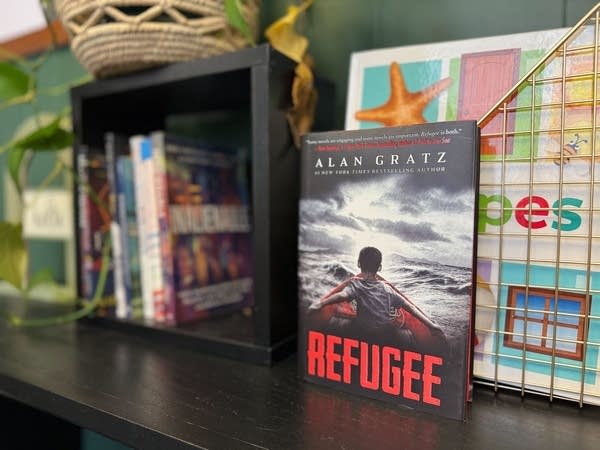
“We saw nearly all of our neighbors that had been attending groups or classes,” Groen said. “[They were] just staying at home and not really going anywhere, not going to school, work, the grocery store, nothing. And it went on for weeks.”
Groen and other nonprofit leaders reached out on social media to ask people for help covering these families’ needs, such as toiletries and groceries. Volunteers responded in droves. That, Groen said, fostered relationships between neighbors that hadn’t existed before.
“Families that maybe didn't know that they were even seen or noticed before — now, they had volunteers show up for six weeks in a row, and they realized how much they were seen, how much they were wanted,” Groen said.
Newly forged friendships
Every week, Laura Molenaar, a retired teacher from New London, would drive 20 minutes to teach sewing classes to immigrant women at Arrive Ministries in Willmar.
“There's a wonderful team of women who are involved in that,” Molenaar said. “I wouldn't say that I am the most skilled, but we can get the job done.”
Different families would come and go to class each week until Arrive Ministries paused its services during the height of the ICE surge. At that point, Molenaar and her husband signed up to help immigrant families however they could.
“My husband and I were asked to help a young woman self-deport,” Molenaar said. “She had a little baby, and her husband had been arrested, and she was going to self-deport, so we were available and picked her up in the wee hours of the morning and took her to the airport.”
The mother left behind her son’s car seat and little orange jacket, along with the keys to her apartment, Molenaar said.
“That was a really dark day because this apartment had everything that a family needed in it,” Molenaar said. “Toys for her child and all the hopes that this young couple had in their life here.”
Dropping off the mom and child at the airport was one of the most difficult things she’s had to do, she said. However, not all of her volunteering experience was that harrowing.
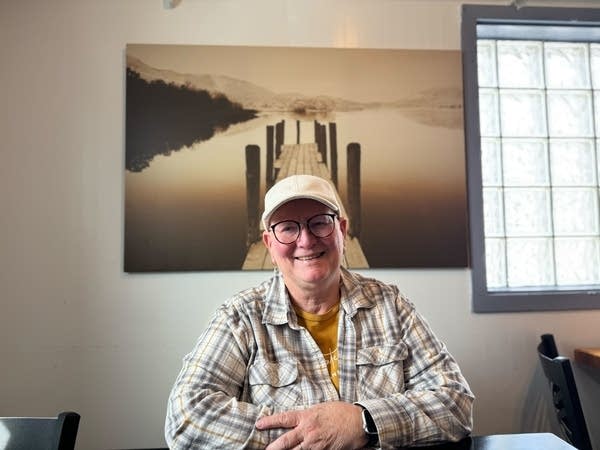
There was a family that Molenaar became close to after getting to know the mom, who would attend her sewing classes. The family went into hiding to avoid interactions with ICE officers, as their asylum status in the U.S. had been revoked.
She’d help drop off groceries and even drive their daughter to school, as the parents were afraid for her to take the school bus.
“Then it was last week that our little second grader said she'd like to start riding the bus again,” Molenaar said. “So now I kind of miss them.”
She still stays in touch and helps run errands. However, due to the family’s immigration status, Molenaar worries about their future in the U.S.
For now, while the environment that pushed Molenaar to become closer to this family may not have been ideal, she says the ensuing relationship has been a gift.
“Prior to the arrests and things that were happening in Willmar, and then out of necessity, that acquaintance became friendship, which grew into, I would say, even a deeper relationship of great care for each other,” Molenaar said.
A community grapples with the aftermath of the ICE surge
Obregon, Willmar’s director of community growth, said the city is assessing the effects of the aftermath of the ICE surge. There are already economic effects of people missing work to avoid ICE agents. There’s also the trauma of what they experienced.
“We are starting to communicate with our mental health providers and to make sure that they are getting equipped themselves,” Obregon said. “Because we want to make sure that we are ready to prevent further long-lasting consequences of this aftermath of ICE presence in our community.”
He added it’ll be important to continue hosting events that celebrate the various cultures among the immigrant populations in Willmar. That includes events such as the city’s upcoming International Heritage Festival in late April.
“People want to be there as a way to [say] we are one community, and all of these things are probably just making us stronger instead of weaker,” Obregon said.
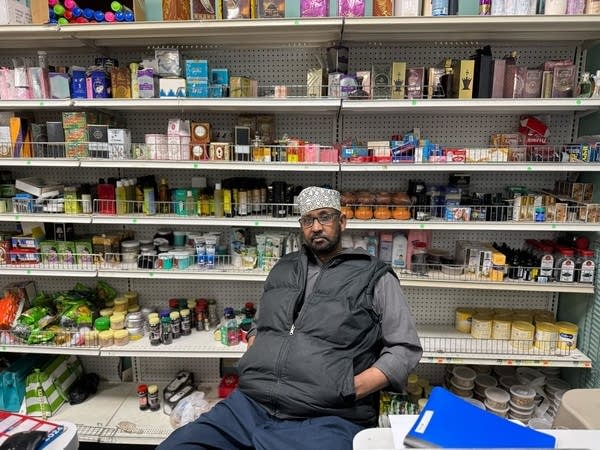
Local businesses, such as Ainu-Shams Halal and Grocery, are also hoping for a return to normalcy. Abdullahi Omar is the owner of the business, which has been here for 14 years. He said business collapsed at the start of the year, and while it’s been improving, customers are still not passing by as often as they used to.
“I hope in the future, [this] won't happen again, because this will affect everybody, and it can be a disaster for the business,” Omar said. “When people run away, when people are not coming, when people are not buying, that's a problem for business.”
John Salgado Maldonado, from Chile, is now organizing a community-based art project that’ll ask people to paint rocks. He’ll later collect them all to create a mosaic representing a period when many had to stay home.
He said the fear people experienced amidst the ICE surge reminded him of his experience in Chile.
“I was born in a dictatorship, the Pinochet dictatorship,” Salgado Maldonado said. “I remember how that process impacted the community, ripped out the community, because no one could trust anyone.”
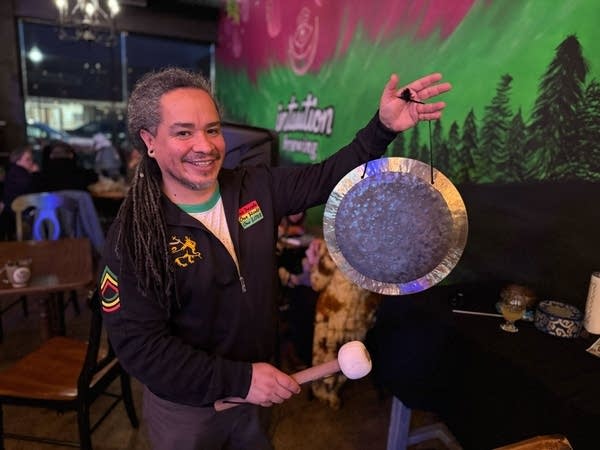
He was surprised to see how differently people behaved in Willmar, by contrast. People did show up for each other. It comforted him to know he wasn’t alone, although he still worries about a second wave of ICE officers forcing him back into hiding.
“But you know what? If this happened again? We know that we have people; we know that we have community,” Salgado Maldonado said.
And that, he said, is a certainty he didn’t have before.