Lena Waithe is making rare comments about her brief marriage to Alana Mayo.
The 42-year-old creator of The Chi recently visited Dax Shepard‘s Armchair Expert podcast for an episode published on Monday (June 1), where she talked about her relationship with the film executive, also 42.
Lena and Alana started dating in 2014 and got engaged in 2017. They married in November 2019. Two months later, in January 2020, they announced their separation, with Alana filing for divorce in November 2020. It was finalized in May 2021.
During the podcast, Lena explained their decision to breakup was because she wasn’t as happy as she thought she would be, but thought, “This is what I’m supposed to be doing.”
She continued, “I just didn’t have the language or understanding of that,” adding that it felt as if her “happiness didn’t feel like it was important.”
Eventually, she and Alana realized they “wanted different things,” particularly when it came to having children.
“That’s a pretty big life change. And so, at that time, I just kept putting it off. And so, that wasn’t me lying. It was me still trying to understand what I wanted and who I wanted to be. And I think that’s why, for me, it’s really important having this perspective stepping back.”
“All I knew was, ‘I want to be with this person. I want to have this house. I want to have this dog. I want to have this mural.’ But then I didn’t ask myself, ‘But where do you want to be in five years, really?’” Lena explained.
The Master of None writer also reflected on the end of her marriage, calling it a “car crash” that she did not handle especially well, she explained, “I just sort of like, was driving the car too fast, not knowing the gear, and just sort of going. I wish I could have landed the plane better.”
“Ultimately, and again, it’s about giving yourself grace and kind of looking back at it and go ‘Oh, you could have handled that much better.’ ‘You could have dealt with that in a different way,’ ” she said, before explaining she knows they’re both where they need to be after parting ways.
“I don’t have any ill will toward anyone,” she said, adding, “[The] ill will is toward myself.”
Lena revealed she was dating Cynthia Erivo in May 2022 and the couple are reportedly still together.
The final season of The Chi is now airing on Paramount+. Find out more details and watch the trailer here!
Saunas and steam rooms use heat to improve circulation, support muscle recovery, and reduce stress.
Regular heat exposure may benefit heart health, mood, and inflammation, though more research is needed.
Different types of saunas and steam rooms offer similar benefits, so choosing one depends on personal preference and goals.
People have been using the heat therapy from saunas and steam rooms for centuries to improve well-being and promote relaxation. Not only do these tools support muscle recovery after an intense workout, but they also boost circulation and reduce stress.
What Happens to Your Body in a Sauna?
Regular sauna use can have a positive impact on your body. Short bursts of intense heat raise your skin and body temperature, which researchers have found triggers your brain to start regulating your temperature. This activates systems in your body that control your stress levels and your hormones. You may notice changes like an increased heart rate, improved blood flow to your skin, and sweating.
Sauna use causes blood vessels to widen and may, over time, support reduced inflammation and cellular stress responses—but it’s not a direct or immediate cure-all for cell damage or inflammation.
Some researchers believe that the stress from the high heat may also mimic exercise and could be useful for people with limited mobility. However, more research is needed to fully understand the health benefits.
The Three Main Types of Saunas, Explained
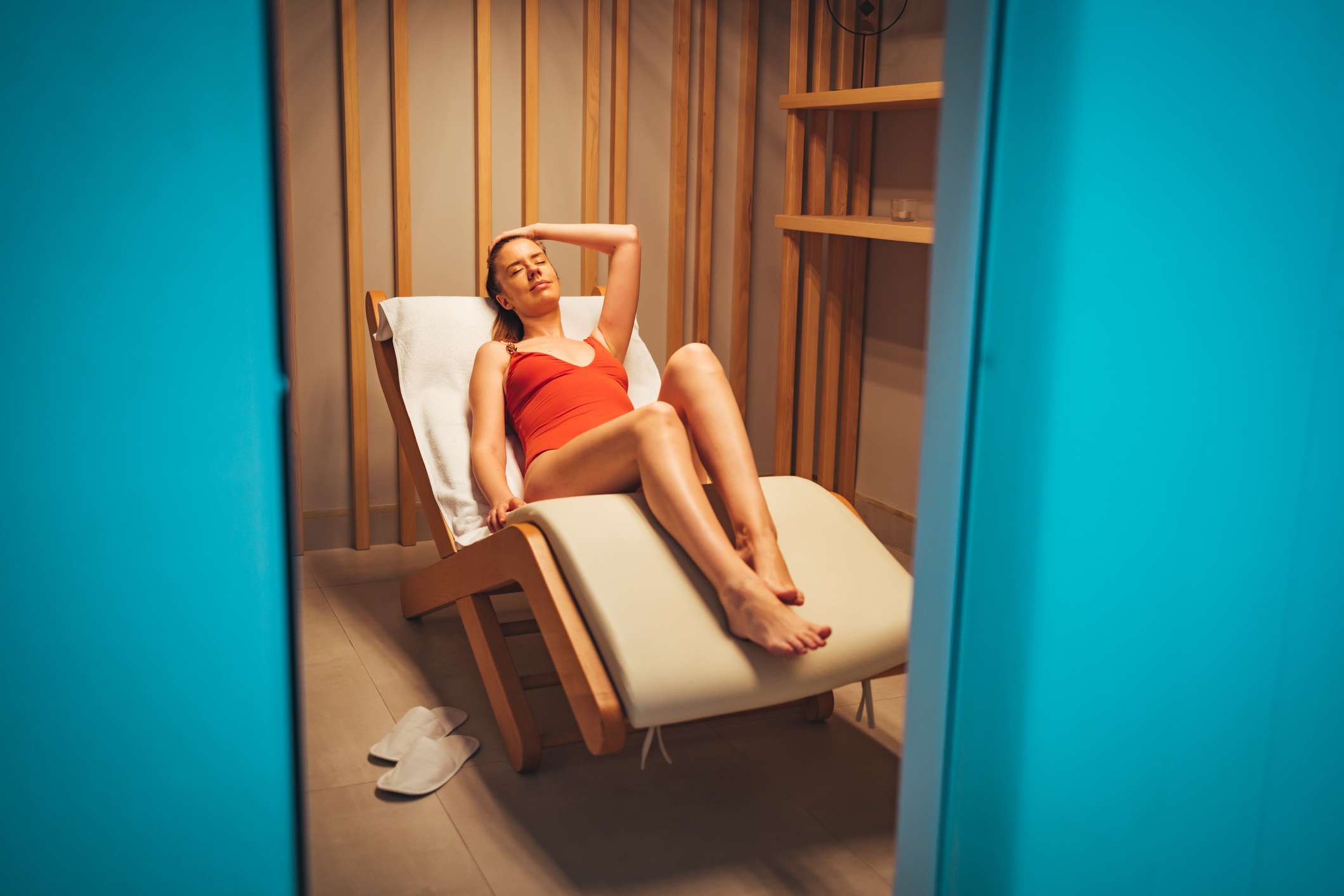
There are several different types of saunas, such as dry saunas, infrared saunas, and steam rooms. Here's what you need to know about each.
Dry Sauna (Traditional Sauna)
A traditional or dry sauna offers high heat and low humidity and is usually found in local gyms and spas. Typically, the air is dry with 10% to 20% humidity, and the room is heated to a high temperature of at least 176 degrees Fahrenheit, sometimes higher.
Steam Sauna
A steam room uses water vapor to create a warm, moisture-filled room with dense, misty air. For comfort, most steam rooms operate at a lower temperature than saunas, typically around 110 to 120 degrees Fahrenheit, but can feel warmer due to the humidity. Like saunas, you can find them at gyms and spas.
Infrared Sauna
These saunas are dry saunas that emit infrared light waves to heat the body directly and do not use water or humidity. They can run a wide range of temperatures, from 113 to 165 degrees Fahrenheit. These types of saunas are popular in wellness spaces or among those who practice “biohacking.”
Potential Health Benefits and Risks of Saunas
Regular use of saunas and steam rooms can support heart health, improve circulation, and boost muscle recovery, as heat therapy increases blood flow and reduces tension.
There’s also some limited evidence that it can rid your body of impurities and heavy metals. However, more research is needed to fully understand the health benefits of heat therapy. Heat therapy is not widely studied, particularly regarding steam rooms.
The available research is promising. Here are some ways you might benefit from using a sauna or steam room.
Boosts heart health: A long-term, 15-year study found that visiting a sauna two to three times a week lowered the risk of dying from heart disease by 25% compared with once per week. Meanwhile, using the sauna four to seven times a week decreased this risk by 77%.
Enhances exercise benefits: One study found that combining regular sauna use with regular exercise can improve heart health by lowering cholesterol and blood pressure.
Promotes longevity: Your lifespan could potentially be longer when you use a sauna regularly, according to a 2021 review of several large studies. Researchers found that sauna use can slow aging, largely due to its cognitive, heart, and muscle benefits.
Improves mood: Regular sauna users may experience less depression and anxiety, and can be a useful tool for people in high-stress jobs.
Who Shouldn't Use Saunas?
While there are a number of benefits to utilizing a sauna or a steam room, these tools are not right for everyone.
For instance, people with certain heart conditions or those who are heat-sensitive may experience more adverse reactions than benefits from heat therapy.
Overuse can also cause dehydration, muscle cramps, and electrolyte loss. Consult with a healthcare provider before using a sauna or steam room, especially if you have any underlying health concerns.
Is One Type Actually Better for You?
There is little research identifying which type of heat therapy is best for overall health and well-being. Instead, both have benefits and can help you achieve your wellness goals. Most of the well-supported benefits come from heat exposure itself, rather than from the specific sauna type.
When deciding between the two, choose the sauna or steam room based on which you have the most access to—you will benefit from either. However, if you have access to both a sauna and a steam room, use the one you prefer and are more likely to stick with in order to see long-term benefits.
If your goal is health (especially heart health), consistency matters far more than the type of sauna you pick.
Which Sauna Should You Choose Based on Your Goals?
If you are fortunate enough to have regular access to both a sauna and a steam room, then you can make a choice between the two based on your goals:
For skin concerns: A steam room. If you suffer from dry skin or want to open your pores, the moist heat can hydrate your skin, encourage detoxification, and boost skin health.
For detoxification: A dry or infrared sauna. Because saunas cause you to sweat, your body may flush out toxins and impurities. There’s also some evidence that using a sauna can help rid your body of heavy metals.
For improved circulation and heart health: A dry or infrared sauna. These can help dilate your blood vessels and improve blood flow. These changes, when done consistently, could benefit heart health.
For improved breathing: A steam room. Moist heat is effective at opening your airways. Some people find that saunas are helpful for conditions like asthma.
For relaxation: Any. Not only does the atmosphere of saunas help reduce stress levels, but it also can improve mood and overall well-being.
For muscle recovery: Any. In a steam room, the moist heat willsoothe sore muscles and joints and can be useful for conditions like arthritis or muscle stiffness. Meanwhile, dry or infrared saunas can promote relaxation, soothe muscle tension, and reduce pain and discomfort.
To provide the best experiences, we use technologies like cookies to store and/or access device information. Consenting to these technologies will allow us to process data such as browsing behavior or unique IDs on this site. Not consenting or withdrawing consent, may adversely affect certain features and functions.
Functional
Always active
The technical storage or access is strictly necessary for the legitimate purpose of enabling the use of a specific service explicitly requested by the subscriber or user, or for the sole purpose of carrying out the transmission of a communication over an electronic communications network.
Preferences
The technical storage or access is necessary for the legitimate purpose of storing preferences that are not requested by the subscriber or user.
Statistics
The technical storage or access that is used exclusively for statistical purposes.The technical storage or access that is used exclusively for anonymous statistical purposes. Without a subpoena, voluntary compliance on the part of your Internet Service Provider, or additional records from a third party, information stored or retrieved for this purpose alone cannot usually be used to identify you.
Marketing
The technical storage or access is required to create user profiles to send advertising, or to track the user on a website or across several websites for similar marketing purposes.






:max_bytes(150000):strip_icc():format(jpeg)/Health-GettyImages-TypesOfSaunas-f03979ce340d4bfba326fadf6086fd24.jpg "Serene woman relaxing in infrared sauna.")