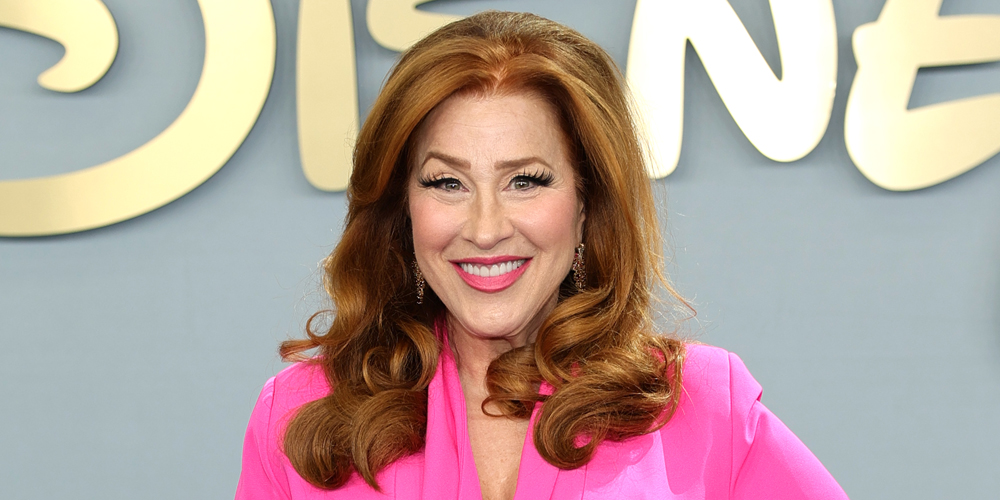
Lisa Ann Walter Reveals Why She Rejected ‘The Real Housewives of Beverly Hills’ 5 Different Times


Lisa Ann Walter talks turning down RHOBH
Getty

Lisa Ann Walter could have been on The Real Housewives of Beverly Hills!

The 62-year-old Abbott Elementary star recently opened up about turning down the reality show multiple times.

In a new interview with Betches, Lisa was asked if she knew who Alicia Carmody was and she immediately asked if it was a Real Housewives person. Yes, she’s on the new Real Housewives of Rhode Island!

However, Lisa then revealed that she’s actually never watched any Real Housewives show before, and later shared she has been asked numerous times to join the Beverly Hills cast.

“I’m gonna lie, I saw a moment,” she clarified. “Did not see the episode, but I did see Teresa [Giudice] flip the table.”

“All due respect, Andy Cohen. All due respect to these women who have made a career. I don’t like to promote women fighting with women,” the actresses added.

Lisa then revealed, “You know, they asked me to be on the [RHOBH], five times, and I said, I’m not a housewife. I’m not a wife.”

“And they were like, ‘We’re not doing… the girls don’t have to fight.’ And I said, ‘I don’t have a house. I don’t live in Beverly Hills, and I’m not a wife. The only thing I’ve got is real.’ And, you know, no shade to people who love this. I watch 90 Day Fiancé, so who am I to judge?”

She then jokingly added, “I should be on the show. You should do a Real Housewives of just my house. I would do the show if I’d never had to leave my house.’

If you didn’t know, these ladies have also turned down being on the Real Housewives

The post Lisa Ann Walter Reveals Why She Rejected ‘The Real Housewives of Beverly Hills’ 5 Different Times appeared first on Just Jared – Celebrity News and Gossip | Entertainment.




Source link

Leave a Reply

Subscribe to Our Newsletter

Get our latest articles delivered straight to your inbox. No spam, we promise.

Recent Reviews


Learn the difference between accountability and responsibility — and why building a more accountable team starts with what you do as a leader.

Do you want your team to be more accountable?

If you’re like most of the CEOs I work with, you do.

You want clear ownership. You want clear communication. You want consequences for missing targets.

But here’s what most CEOs miss: holding accountability is your responsibility, not theirs.

In this essay, I’ll explain the difference between accountability and responsibility, and share the questions you need to ask to make sure you’re doing your part.

What is accountability?

I define accountability as the ability to account for one’s actions and decisions.

There are two sides to accountability: 

  • Being accountable: that’s the person giving an account.
  • Holding someone accountable: that’s the person they are giving it to.

The most common form of accountability is a report that shows:

  1. The numbers
  2. The story behind them. 

In fact, the word account can refer to numbers (think accounting) or stories (an account of what happened).

Reporting is powerful because it forces people to check in on their goals, what they’ve done, and what to do next. And great reports can create a self-managing system where the report does a lot of the heavy-lifting.

Accountability has benefits: it helps people remember and focus on their goals, and it can maximise their learning. Plus, it keeps stakeholders informed.

However, accountability is only half of the equation.

The other part is responsibility, and without it, accountability isn’t nearly as helpful.

What is responsibility?

I define responsibility as the ability to respond with effective actions and decisions.

So is the manager or the teammate responsible for getting results? 

This needs to be crystal clear:

  • Your team is responsible for getting results.
  • You are responsible for the team itself.

Your team is responsible for planning their work, making commitments, and solving problems in order to get results.

However, you are responsible for selecting the right people, communicating expectations, and supporting them as best you can.

Accountability is a service. It’s goal is to increase a person’s level of responsibility.

Haven’t you craved some accountability so you followed through on something important?

It actually starts with you, not them.

The first step in driving accountability is to check in with your responsibilities first: 

  • Have you selected the right people? 
  • Have you communicated expectations? 
  • Have you supported them and provided them with accountability?

Because the consequences you want aren’t actually on them, they are on you.

Answering these questions? That’s accountability.

Actually doing something about them? That’s taking responsibility.

Related Reading: 

Originally published on February 25th, 2026


How do top founders actually scale?

I’ve coached CEOs for 10,000+ hours—here’s what works.
Join 17,000+ founders learning how to scale with clarity.

Unsubscribe any time.


Source link