Since 2013, 23 artists from Minnesota and surrounding states have participated in the Native American Artist-in-Residence Program at the Minnesota Historical Society. The program was established to support Native American artists in their research of traditional art forms.
During their residency, artists are financially supported and given access to museums across the state for research purposes. Artists then create pieces of artwork based on their research.
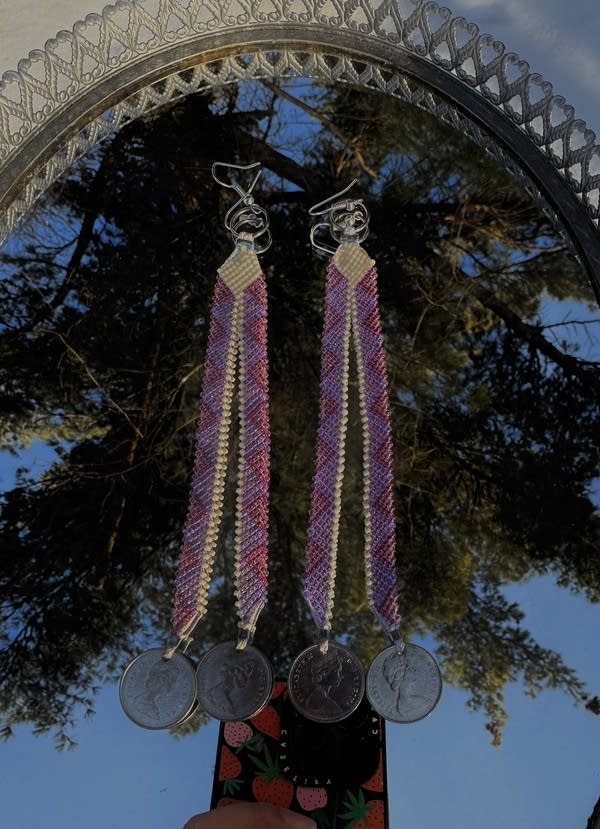
Program specialist Chloe Brodt Cashman says the historical society collects a piece from each artist to add to its collection at the end of each artist's residency.
“For example, we have [a] painted hide that's almost 200 years old. Now, we have a brand-new hide to show that continuation of art practice, that resiliency through culture and through arts,” Brodt Cashman said.
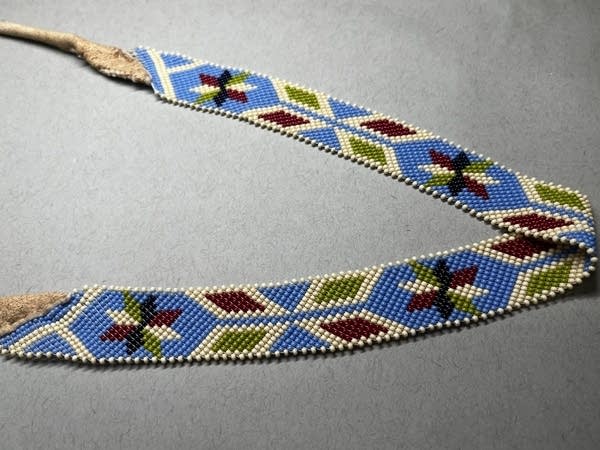
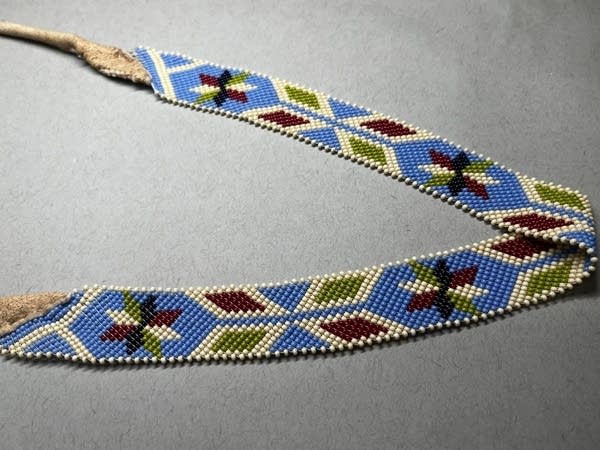
Jennifer Adams is a citizen of the Ho-Chunk Nation in Wisconsin. She is currently researching paaxge beadwork, a traditional Ho-Chunk style of beadwork used in regalia and jewelry.
She says it's a lesser-known form of Indigenous beadwork.
Adams’ journey with paaxge beadwork began over a decade ago. She says her family would hold what she calls “immersion camps” for themselves. For a week, they would immerse themselves in Ho-Chunk culture.
Through her research, Adams plans to create a paaxge beadwork pattern book to share with her community. As a part of the residency, artists also propose a community-driven project.
“Things get misconstrued over time, and it's really important that we keep this knowledge alive and passing it on to our children and our youth,” Adams said.
Giizh Agaton Howes is a citizen of the Fond du Lac Band of Lake Superior Chippewa in northern Minnesota. She is the founder and owner of Heart Berry, a business that sells Native American-designed apparel, blankets and other accessories.
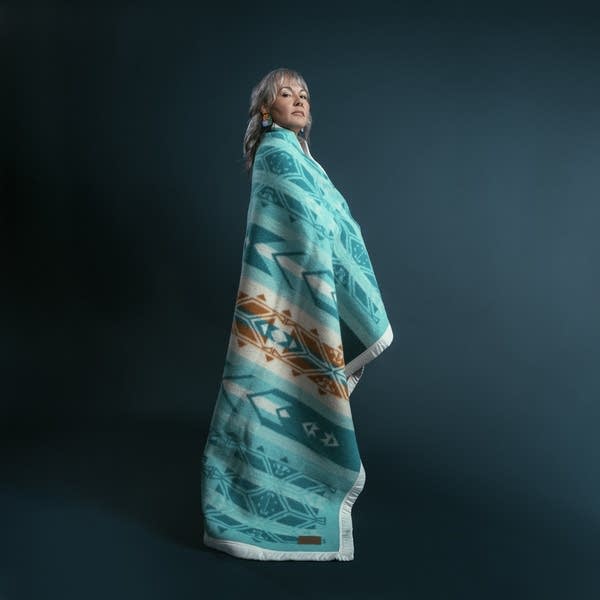
Agaton Howes was an artist-in-residence from 2018 to 2019. During her time at the Minnesota Historical Society, she focused her research on moccasins, particularly Ojibwe split toe moccasins.
“A part of the reason that I really like moccasins is because it's really a tool of care and love. It’s for every transition in your life, from when you're born and even after you die,” Agaton Howes said. “I think our ancestors were really smart, and were like, ‘This is this way that you can show love for somebody.’”
Through her time with the program, Agaton Howes created a moccasin pattern book with the help of an apprentice for community members to access to make their own moccasins.
The book is titled “Nookomis Obagijigan,” or “Grandmother’s Gift” in English. Instructions in the book are written in both Ojibwe and English languages.
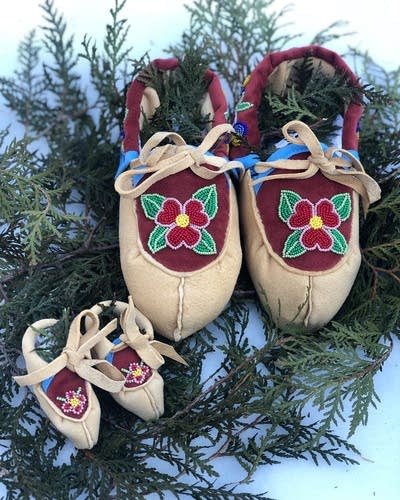
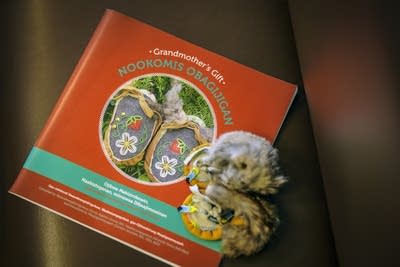
Agaton Howes says her project came to fruition at the thought of her grandmother—someone who, she says, never received a pair of moccasins until Agaton Howes made her a pair.
She says knowledge of moccasin making became less common during the boarding school era.
“For me in particular, creating this book, this tool, has been something I've been able to carry into the future and use in so many other ways and, in that same vein, has been able to impact lots of other people's lives and their ability to also engage with this art form,” Agaton Howes said.
Similarly, Cole Redhorse Taylor centered his research on moccasins during his residency, which began in 2018. Redhorse Taylor is a citizen of the Prairie Island Indian Community, near Red Wing. He researched pucker toe moccasins, often associated with Ojibwe culture, and their use in Dakota culture.
He says many people in the Dakota community are unaware that pucker toe moccasins are also part of Dakota culture. During his residency, he researched Indigenous trade in the region.
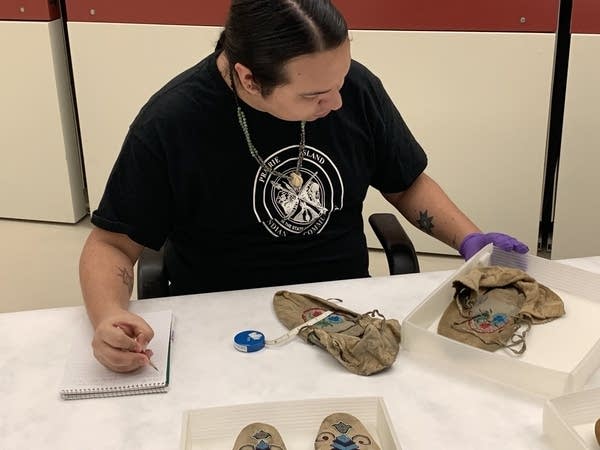
Redhorse Taylor says the residency program was “pivotal” in his career as an artist.
“As a Dakota person, it really changed my trajectory of how I viewed myself, how I viewed my ancestors, how I viewed our relationship to Minnesota itself, to our homelands,” he said.
For Redhorse Taylor, traditional art forms are a way to connect with his ancestors and are how he presents himself through clothing, such as regalia. Throughout his years as an artist, Redhorse Taylor has made an array of regalia, including moccasins and beadwork.
“That's what makes us beautiful — is to have that cultural knowledge, those cultural teachings. Those are what make us who we are, uniquely as Native people,” Redhorse Taylor said.
Chandra Colvin covers Native American communities in Minnesota for MPR News via Report for America, a national service program that places journalists into local newsrooms to report on undercovered issues and communities.



:max_bytes(150000):strip_icc():format(jpeg)/Health-GettyImages-1359002988-c5035308e08d4f738370002f8c2c837b.jpg "A person holding a bowl with sliced carrots and apple pieces on their lap")