NPR receives $113 million in charitable gifts


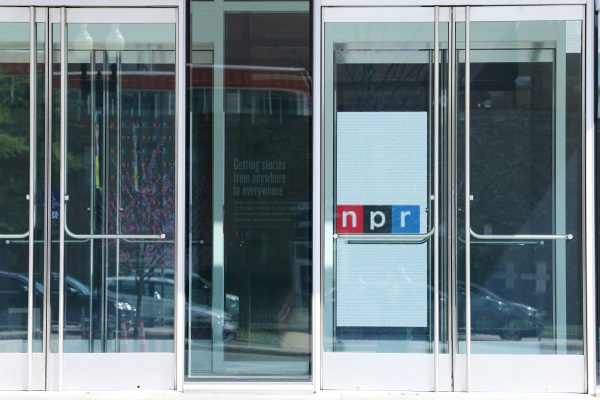
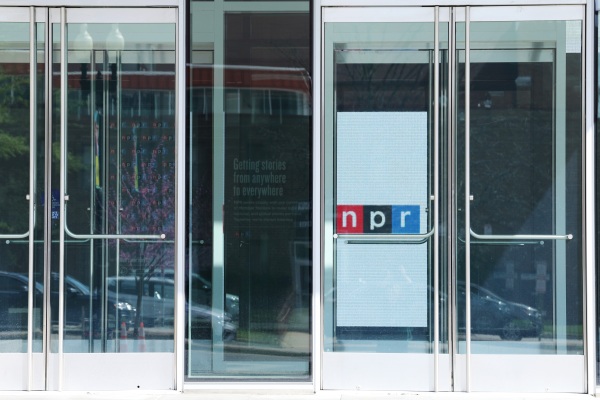
A view of the National Public Radio (NPR) headquarters on North Capitol Street on March 31, 2026 in Washington, D.C.

A view of the National Public Radio (NPR) headquarters on North Capitol Street on March 31, 2026 in Washington, D.C.
NPR has received $113 million in gifts to help it invest in technology and strengthen its ties with public radio stations nationwide.
Anna Moneymaker/Getty Images/Getty Images North America

NPR has received two of the largest gifts in the public media network's existence, totaling $113 million. They will go toward fueling innovation in NPR's use of digital technology, increasing its connection with audiences, and ensuring the viability of public radio stations after Congress eliminated all federal funding for public media.

NPR President and CEO Katherine Maher said the gifts would help to set up the network and its stations for the next 50 years, beyond the radio network infrastructure that sprang up in 1970 from a coalition of community and university-owned public radio stations across the country.

Maher said that requires NPR and its stations to use tech to collaborate more effectively in providing programs and news coverage, to analyze how people are consuming their offerings and to discern how to raise money more effectively to pay for it. She said the gifts would be "catalytic investments" in NPR's future.

"Audiences don't just listen in their cars or in their kitchens," Maher said. "They're reading, they're viewing, they're listening on the go."

The donations would help answer a key question, Maher said: "How do we make sure that we have the infrastructure necessary to be able to deliver the high quality reporting to people in all those places when they want?"

The philanthropist Connie Ballmer contributed $80 million specifically toward ensuring NPR transforms its technology to meet the needs and serve the interests of public media audiences on whatever platforms or devices they may seek it.

Connie Ballmer (left) and her husband Steve Ballmer, who owns the Los Angeles Clippers, attend opening night of the Intuit Dome, where the team plays in L.A., on August 15, 2024.
Connie Ballmer (right) and her husband Steve Ballmer, who owns the Los Angeles Clippers, attend opening night of the Intuit Dome, where the team plays in L.A., on August 15, 2024.
Rodin Eckenroth/FilmMagic

"I support NPR because an informed public is the bedrock of our society, and democracy requires strong, independent journalism," Ballmer, a former member of the NPR Foundation board, said in a statement. "My hope is that this commitment provides the stability and the spark NPR needs to innovate boldly and strengthen its national network."

Ballmer and her husband, former Microsoft CEO Steve Ballmer, have given away more than $3 billion in recent years, according to a joint interview they gave last year to the "Chronicle of Philanthropy."

Another donor, who has elected to remain anonymous, has given NPR $33 million to build and acquire tools and services that will be shared with public media organizations across the nation. The network intends to aid stations in analyzing their audiences, marketing themselves, and raising money, among other things.

The gifts arrive at a time of great financial strain for public media.

End of federal funding

Last summer, under pressure from President Trump, the Republican-led Congress voted along party lines to claw back all $1.1 billion in federal funding that lawmakers and the president had already approved for public media. The move represented the shattering of a tradition of bipartisan support for public broadcasting stretching back more than a half-century.

The average public radio station lost about 10% of its annual budget; for public television stations and PBS, the figure stood closer to 15%. NPR itself lost about 1 to 2% of its annual budget with the end of federal dollars. The elimination of federal funds has forced widespread layoffs throughout the system.

Though NPR owns no stations, more than 240 public radio stations are full NPR News member stations and hundreds of others carry some of its content.

NPR moved to shore up station finances by easing the fees it charges them to carry its major news programs, such as Morning Edition and All Things Considered, and to offer assistance in fund-raising, marketing, and other endeavors.

The gifts announced Thursday are the largest NPR has received since Joan B. Kroc, the widow of McDonald's magnate Ray Kroc, left more than $200 million to the network. That bequest, in 2003, elevated NPR's newsgathering capabilities, allowing it to open international bureaus and NPR West in Culver City, Calif. It also established a major endowment that has enabled it to weather a series of financial storms.

In 2018, former NPR CEO Jarl Mohn and his wife Pamela gave the network $10 million from the personal fortune he had made as a tech investor when he announced he would be stepping down from role running the network.

Questions remain about layoffs

Asked about concerns that NPR may still face layoffs to ease ongoing budget strains, Maher noted the contributions announced Thursday were intended for specific purposes, not to build the endowment or to expand news coverage. And, when asked, Maher did not rule out job cuts this year.

"This does not replace federal funding," Maher said. "This does not replace the shortfalls. We still need to continue to operate effectively in order to be able to do the work that we do day in and day out."

Several people within NPR said the network has been planning scenarios for alternative levels of job cuts, though no plans are currently set. Executives also are trying to figure out the degree to which the network could rely more heavily on reporters from local stations for national coverage, staffers said. (They spoke on condition of anonymity because they were not authorized to speak publicly on internal matters.) The ability to do so could be complicated by two factors: the fact that covering the same story often requires a different emphasis for local audiences familiar with a subject, as opposed to a national audience; and the additional strain on local newsrooms, which are often quite small, as a result of the loss of federal funds.

The question of NPR's relationship to its stations was thrown into sharp relief during the Washington debate over federal funding. The Corporation for Public Broadcasting, which had dispensed federal dollars to public media outlets until its demise, had sought to withhold money from NPR last year for a satellite distribution service it provides local stations. A federal judge ruled that CPB officials were trying to distance themselves from NPR in an attempt to appease Trump. Ultimately, CPB paid the money.

In the wake of the loss of federal funds, some stations have decided to rely more heavily on NPR programming as they've been forced to cut their budgets for local news. Yet Maher says the local stations' journalism represents a competitive advantage for NPR.

"This has been my ambition for us as a network since I arrived," said Maher, who became NPR's chief executive in early 2024 after a career spent mostly in the tech world, including as CEO of the Wikimedia Foundation. "My intent was for us to find ways to work together as a network, to be greater than the sum of our parts, so we were able to take advantage of our footprint… to tell stories that matter to the country from the places where that was occurring."

Disclosure: This story was written and reported by NPR Correspondent David Folkenflik and edited by NPR Deputy Business Editor Emily Kopp and Managing Editor Vickie Walton-James. Under NPR's protocol for reporting on itself, no corporate official or news executive reviewed this story before it was posted publicly.

Copyright 2026, NPR


Source link

Leave a Reply

Subscribe to Our Newsletter

Get our latest articles delivered straight to your inbox. No spam, we promise.

Recent Reviews


What is Tableau?

Tableau Desktop is a type of business intelligence tool that is also an interactive data visualization software company founded by Christian Chabot, part Hanrahan, and Chris Stolte in the year 2003. The company headquarters is located in Mountain View, California, United States. Tableau is a visual analytics solution that allows people to explore and analyze data with simple drag-and-drop operations.

Take your career to next level in Tableau with HKR.Join Tableau Training now.

What is Salesforce?

Salesforce is a complete cloud-based solution designed to provide Customer relationship management. This software sells complementary enterprise applications focused on customer services, marketing automation, analytics, and application developments. It keeps everyone happy and informed, and that means you can gain more profitability.Salesforce.com is an American-based cloud software company headquartered in San Francisco. This company was founded in 1999 and developed by Marc Benioff, Parker Harris.

Tableau Vs Salesforce :

Before jumping into the mentioning major differences between the Tableau and Salesforce Report, we would like to define what Salesforce report is:

Salesforce report :

Salesforce report and dashboard is also a business intelligence and out-of-the-box data analytical tool. They are intuitive, customized, and work well for all types of organizations.Now let us know the major differences based on the features;

One-line :

  • Salesforce report and dashboard offer go-to options for a quick win based upon real-time data.
  • Whereas the Tableau dashboard provides an exploration and sharing across a broad range of data and use cases.

Where your users are:

  • Salesforce users are the audience here.
  • When it comes to the tableau, salesforce, as well as non-salesforce users, access this tool.

Salesforce integration:

  • Native to Salesforce, no integration is required.
  • Whereas Tableau requires a simple, and quick ingestion to ingest salesforce data.

Wider tech stack:

  • This condition is not applicable to Salesforce.
  • Whereas in Tableau, if users want the option of on-premise architecture, and more flexibility around how the BI platform fits in with the business tech stack. They also need remote and federated queries.

Skills required:

  • Salesforce requires quick to install, and intuitive skills.
  • To work with the tableau tools, only tableau expertise is needed.

Artificial intelligence capabilities:

  • Sales cloud is not applicable.
  • Time Series modeling, and integration of Einstein discovery insights.

Salient features of the Tableau :

Here we have listed a few primary features based on the partners’ support it offers. They are;

  • Tableau Desktop software helps people to see and understand the data.
  • Offers a revolutionary new approach to business intelligence. Tableau allows you to quickly connect, visualize and help to share data with a seamless experience from the PC to the iPad.
  • Tableau partner implementation partners play a key role in helping organizations by assisting to transform and run their business simply.
  • They can help you identify, buy, build, implement, service, support, and run the Tableau solutions that best fit the business needs.
  • Responsible for project schedule, development, testing, execution, and delivery.
  • Tableau Desktop helps you to utilize the features included in your subscription and functional tips on how to optimize your business process and to make use of the reporting tools.
  • Manage the project for Tableau implementation in your organization as a system integrator.

Salient features of the Salesforce :

The attractive features of salesforce help the organizations to return a greater impact on its productivity and sustainability. They are:

Cloud-based Assessments:

The Salesforce Solution is a completely cloud-based service. Any requirements related to your company like new hardware purchases, software installation, local storage of files, and time stream. With salesforce, users will be able to easily and fastly switch from their already existing software to Salesforce.

Interdepartmental Integration method:

Salesforce CRM software helps the user to collaborate with multiple departments to achieve goals and true collaboration to work together. Departments like sales, marketing, customer services, and analytical. All these departments have the same information and analytics to produce effective outcomes.

Offers universal compatibility:

Salesforce allows the entire user to bring their ideas in the case of a software approach. This software solution takes these ideas or hazards to make them accessible across all the major software platforms and devices.

Provides advanced level automation:

This is nothing but coaching their customers through their pipelines which are having hundreds of steps involved. The training may include form filling, software updates, and automated devices. With the Salesforce software, all these pieces of training are easy to learn and implement.

Contact management :

In earlier days, there was a tradition that they wanted to do any kind of business with only known people. But Salesforce is breaking that tradition because it enables the entire customers to contact their business people easily throughout the world. So you can build relationships with people and produce valuable results.

Good sales tracking records:

It’s always been difficult to collect customer leads and resolve any issues related to business. So salesforce makes it easier for their customers to collect the business leads and helps them build efficient relationships with them.

Tableau Certification Training

  • Master Your Craft
  • Lifetime LMS & Faculty Access
  • 24/7 online expert support
  • Real-world & Project Based Learning

Tableau advantages:

Below are the key benefits of the Tableau, they are;

  • Tableau offers intuitive and attractive user interface services.
  • Provides seamless integration with modern big data platforms from Hadoop to Google BigQuery.
  • Offers an extensive roster of native data connections allowing easy integration with data from many sources.
  • High responsiveness – Tableau is supported by mobile platforms.
  • Offers powerful community collaborations.
  • Constraint development – new updates are regularly released and are easy to install.
  • Provide reliable customer support.
  • A vast library of video materials about the tools, online courses, and learning blogs.

If you want to Explore more about Tableau? then read our updated article – Tableau Tutorial

Salesforce advantages:

The following are the key advantages of using a Salesforce solution. Salesforce always helps to establish a relation between Customers and business enterprises. Let me make a point one by one:

  • High-rated customer success rate.
  • It’s a cloud leader.
  • World’s most trusted cloud.
  • Multi Tenant platform.
  • Data scalability is huge.
  • Fast application development and customization.
  • Offers complete CRM (Customer relationship management).
Business Intelligence & Analytics, tableau-vs-salesforce-description-0, Business Intelligence & Analytics, tableau-vs-salesforce-description-1

Subscribe to our YouTube channel to get new updates..!

Tableau disadvantages:

Below are the major disadvantages of the Tableau:

  • While working with Tableau, initial data preparation is required (Remember only structured data).
  • Some of the features in the Tableau may seem too specialized and restricting through tableau is intended for broader use.
  • Although tableau is great for analytical purposes, Tableau and other Business intelligence tools cannot replace financial reporting applications.
  • Given the ability to establish “row-level” security at the data level, but implements it in a bit of a precarious way.
  • There is no concept of versioning with the Tableau Server.
  • Requires some IT consultancy (especially with the tableau servers).

Salesforce disadvantages:

Below are the few disadvantages of Salesforce;

  • Lack of flexibility: while the salesforce provides various customization tools, the reality is that Salesforce.com supports over a million users using the same solution, and varying too far from that solution is not a feasible option.
  • Lack of functionality: The company seems to use a tools approach to compensate for missing functionality.
  • System downtime: Recurring system downtime and service interruptions over the last two years have been a major sore spot for many customers.
  • Lack of SLA (service level agreement): Salesforce.com’s practice of selecting which customers to provide SLAs is unacceptable.

Click here to get latest Tableau Interview Questions and Answers 

Tableau Certification Training

Weekday / Weekend Batches

Final thought:

Most organizations are always in a dilemma to decide which is the best dashboard tool to implement. The Tableau Vs Salesforce article helps our readers to choose the best tool based on the comparison. These two tools are widely used and they are best in their own way. To learn core concepts, and become an expert with respect to these software don’t forget to visit our website.

Related Articles :


Source link