Fact checked by Nick Blackmer
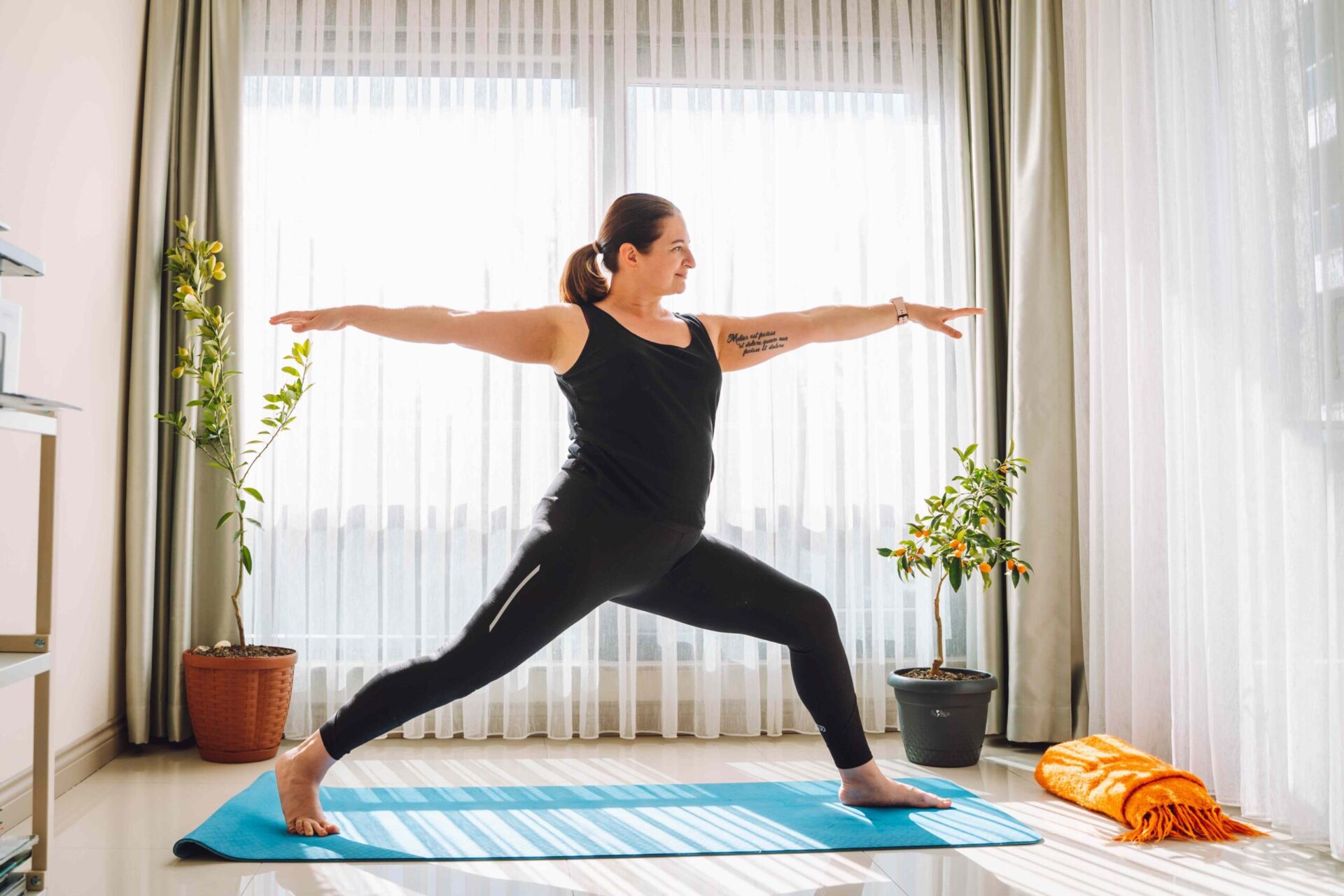
:max_bytes(150000):strip_icc():format(jpeg)/GettyImages-1495869846-3b592d60e31a41bab8fd34bf97f52987.jpg "Woman plus size in black sport clothes do stretching exercises at home in living room against large window")
Credit: Olga Rolenko / Getty Images
- A new review suggests that yoga may help lower blood pressure in people who are overweight or obese.
- The research found only an association and cannot prove that yoga directly caused the blood pressure changes.
- Experts recommend starting yoga gradually, especially if you’re new to exercise.
Yoga may do more than relieve stress—it may improve a key measure of cardiovascular health, a new review suggests.
The new research, which was published in late April in PLOS Global Public Health, found that regularly practicing yoga is linked to lower blood pressure in people who are overweight or have obesity.
Study author Rakhmat Ari Wibowo, PhD, said the finding adds to existing research linking yoga and lower blood pressure. But it points more specifically to potential benefits in this group, which is at higher risk of high blood pressure and may find yoga less intimidating than other heart healthy forms of exercise like running or strength training, he said.
Practicing Yoga May Reduce Blood Pressure
To better understand yoga’s potential effects on blood pressure and other cardiovascular health markers, researchers turned to existing studies on yoga and cardiometabolic outcomes.
They analyzed 30 randomized control trials, 23 of which were conducted in Asian countries, with the remainder taking place in the U.S., Germany, and Australia.
In total, the studies included nearly 2,700 participants free of chronic diseases such as type 2 diabetes, coronary artery disease, and heart failure. Participants had a BMI of either 23 or higher in Asian countries or 25 or over in the other nations. (For reference, the Centers for Disease Control and Prevention considers a BMI between 25 and 29 to be overweight.)
After analyzing the data, the researchers found that participants who practiced yoga saw slight improvements in inflammation markers, blood glucose metabolism, and levels of LDL (the “bad” kind) and HDL (the “good” kind) cholesterol, though not in total cholesterol levels.
Blood pressure, however, appeared to improve the most. Participants experienced a statistically significant average decrease of 4.35 mmHg in systolic blood pressure (the top number) and 2.06 mmHg in diastolic blood pressure (the bottom number).
That reduction is modest, but clinically meaningful, said Cori Russell, MD, a cardiologist with Henry Ford Health. “Even small drops in blood pressure can translate into meaningful reductions in long-term cardiovascular risk across many people,” he told Health.
Notably, significant blood pressure improvements were seen at the group level only among Asian study participants, whose systolic blood pressure dropped an average of 5.52 mmHg and diastolic blood pressure by 2.81 mmHg.
That finding may simply reflect the makeup of the studies included in the review, Manuela M. Kogon, MD, an integrative medicine internist at the Stanford Center for Integrative Medicine, told Health. The small number of participants from non-Asian populations may have made it harder to detect statistically significant differences.
So how much yoga do you have to do to reap these potential improvements? The review suggested that practicing yoga for an hour at least three times weekly over a minimum of 12 weeks was linked to the greatest benefits.
Should You Start Yoga For Blood Pressure Support?
Before viewing yoga as a blood pressure cure-all, it’s important to remember that the study showed only an association between yoga and improvements in cardiovascular markers in people who are overweight or obese. It can’t prove that yoga directly caused these effects. More high-quality trials in diverse populations are still needed, particularly to clarify the optimal frequency, intensity, and duration of yoga practice, Widowo said.
Still, the “evidence is promising,” he added. A 2019 review also found that yoga may help lower blood pressure, this time among people who already had hypertension.
What’s special about yoga, Kogon explained, is that it incorporates mindful relaxation, which can help calm the nervous system and contribute to lower blood pressure. Plus, yoga improves sleep and overall well-being, which can indirectly support cardiovascular health, Russell added.
For people trying yoga for the first time, Kogon recommended starting gradually. “Don’t jump into high intensity workouts of any kind, yoga or otherwise, without building up,” she said, especially for people who are overweight or have underlying conditions like high blood pressure. In those cases, it’s a good idea to consult a doctor beforehand.
Widowo also stressed that yoga should ideally complement other forms of physical activity, such as walking, cycling, and strength training.
“The public health goal is to help people move more, sit less, and build sustainable activity into daily life,” Widowo said. “Yoga may offer an accessible and non-intimidating pathway.”
Studies haven’t conclusively shown that one type of exercise is better than another for lowering blood pressure, but yoga’s potential benefits go far beyond cardiovascular health, according to Kogon. “You can never go wrong with yoga,” she said. “It also increases stamina, mobility, strength, and balance, and can improve mood, cognition, sleep, and pain.”
Given that wide a range of benefits, Russell said recommending yoga is a no-brainer. “It’s not a replacement for medication when that’s needed,” she said, “but it’s a great addition.”