Medically reviewed by Jonathan Purtell, RDN
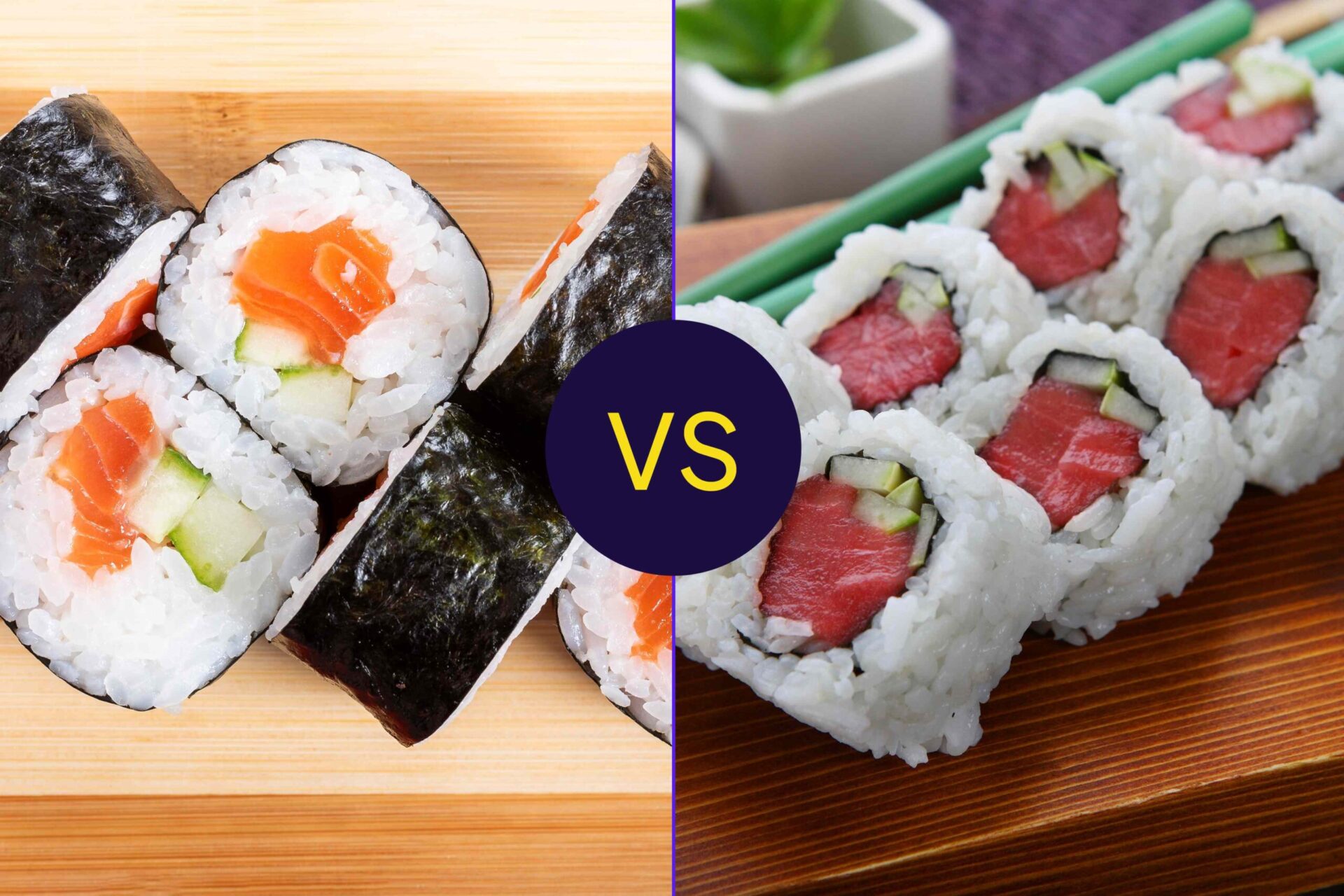
:max_bytes(150000):strip_icc():format(jpeg)/Health-Salmon-VS-Tuna-Sushi-d29a73c3aafd4996847cc6fe6f0ba1d2.jpg "Split view comparing salmon sushi rolls and tuna sushi rolls labeled with VS in the center.")
Credit: Design by Health; Getty Images
- Tuna provides slightly more protein per serving than salmon, though both are excellent sources of protein.
- Sushi made with salmon contains more healthy fats and omega-3 fatty acids, which support heart and brain health.
- Salmon is lower in mercury, making it a safer choice for frequent sushi meals.
Sushi is a delicious dish that makes it easy to add more fish to your diet. Tuna and salmon are some of the most popular seafood options you'll find in sushi—both are generally good for heart and brain health, but they differ in their protein and healthy fat content.
Which Has More Protein: Salmon or Tuna?
The difference is small, but sushi made with tuna likely contains slightly more protein than salmon sushi:
- Raw bluefin tuna: 19.8 g of protein per 3-ounce serving
- Raw Atlantic salmon: 17.3 g of protein per 3-ounce serving
If maximizing protein intake is your main goal, it may be best to stick with sushi rolls made with tuna. Still, both options provide a substantial amount of high-quality, complete protein, meaning they contain all nine essential amino acids (protein building blocks) that your body needs. The significant amounts of protein you get from tuna or salmon help build and maintain muscle, and can also help you stay full between meals.
The Types of Salmon and Tuna Usually Used in Sushi
With its dark red color, most sushi-grade tuna comes from the bluefin, yellowfin, or bigeye varieties—bluefin tuna is particularly prized for sushi, as it’s the fattiest and most flavorful tuna species.
Salmon is known for its bright orange color and mild, buttery taste when used in raw fish dishes like sushi, sashimi, or nigiri. In the United States, Chinook, Atlantic, and sockeye salmon varieties are used most often.
Which Fish Has More Healthy Fats?
Fish like salmon and tuna are known for their healthy unsaturated fats. But put head-to-head, salmon is the clear winner:
- Raw bluefin tuna: 2.58 g of unsaturated fats per 3-ounce serving
- Raw Atlantic salmon: 6.51 g of unsaturated fats per 3-ounce serving
Omega-3 fatty acids, specifically eicosapentaenoic acid (EPA) and docosahexaenoic acid (DHA), are crucial parts of that unsaturated fat content. These omega-3s support heart health, reduce inflammation, and play an important role in maintaining brain function.
For the greatest boost of omega-3s, sushi made with salmon would again be the best choice:
- Raw bluefin tuna: 997 milligrams (mg) of EPA and DHA per 3-ounce serving
- Raw Atlantic salmon: 1,668 mg of EPA and DHA per 3-ounce serving
The American Heart Association recommends eating at least two servings of fatty fish—including salmon or bluefin tuna—per week to make sure you're getting enough omega-3s in your diet.
Is It Safe To Eat Raw Tuna and Salmon?
Sushi made with salmon or tuna can be a good way to get more protein and healthy fats in your diet. However, there are a couple of potential risks to keep in mind if you're eating it frequently.
Mercury Exposure
Mercury is a toxic metal that can cause symptoms like muscle weakness, lack of coordination, peripheral vision loss, and more. Mercury can be found in water and soil, and it can build up in fish tissue over time.
This matters when choosing fish for sushi, especially if you eat it often. Larger fish that live longer—including tuna—tend to accumulate more mercury. Experts recommend limiting consumption and avoiding certain varieties, such as bigeye tuna, during pregnancy.
Meanwhile, salmon usually has lower mercury levels, making it a safer choice for frequent meals.
Raw Fish and Food Poisoning
Eating raw fish is generally safe when it comes from reputable sources that follow proper handling and storage practices. In the United States, most sushi-grade seafood is frozen before use and separated to avoid cross-contamination.
However, even with precautions, raw fish poses a higher risk of foodborne illness than cooked seafood. Because of that, certain groups should avoid raw fish and go with cooked sushi options instead, including:
- Pregnant people
- Young children
- Older adults
- People with weakened immune systems
Which Type of Sushi Should You Choose?
For people who eat sushi frequently, salmon is likely going to be the healthier choice overall. Sushi made with salmon has higher omega-3 content to support heart and brain health, plus it has lower mercury levels.
Tuna can be a good option if you're looking to boost your protein intake, or if you eat sushi less frequently. If you are eating sushi made with tuna more often, try to choose lower-mercury varieties, such as yellowfin, skipjack, or albacore, over bluefin or bigeye tuna.