
The Southwest Rapid Rewards® Plus Credit Card (see rates and fees) is Southwest’s most affordable personal cobranded credit card, offering practical Southwest-specific perks like a free checked bag, anniversary bonus points and preferred boarding for a modest $99 annual fee.
However, loyal Southwest flyers may get more long-term value from one of the airline’s higher-tier cards, which offer richer benefits and stronger earning rates. Card rating*: ⭐⭐⭐
*Card rating is based on the opinion of TPG’s editors and is not influenced by the card issuer.
Southwest Rapid Rewards Plus: The basics
If you’re looking for an entry-level Southwest credit card, the Southwest Plus card offers a straightforward mix of airline perks and ongoing value at a relatively low annual fee.
Here’s what you need to know:
- Annual fee: $99
- Welcome offer: Earn 80,000 bonus points after spending $1,000 on purchases in the first three months from account opening.
- Best for: Southwest travelers seeking airline perks for a low annual fee
- Rewards structure: Bonus points on Southwest purchases plus select everyday and travel categories
- Key benefits: First checked bag free, free standard seat selection (within 48 hours of departure), Group 5 boarding and anniversary bonus points
- Rewards currency: Southwest Rapid Rewards points, best redeemed for Southwest flights

We generally recommend a credit score of 670 or higher to improve your approval odds.
Southwest Rapid Rewards Plus pros and cons
| Pros | Cons |
|---|---|
|
|
Southwest Rapid Rewards Plus key benefits
The Southwest Rapid Rewards Plus includes several practical Southwest perks that can help offset the annual fee if you fly the airline a few times per year.
Southwest travel perks
Cardholders receive several Southwest-specific benefits, including:

Reward your inbox with the TPG Daily newsletter
Join over 700,000 readers for breaking news, in-depth guides and exclusive deals from TPG’s experts
- Free first checked bag (for themselves and up to eight passengers traveling on the same reservation)
- Group 5 priority boarding (for the cardholder and eligible companions)
- Free standard seat selection (within 48 hours of departure)
- One annual 10% flight discount code each anniversary year (excluding Basic fares)
- 25% back on inflight drinks and Wi-Fi purchases
Southwest checked bags typically cost $35 per bag each way, meaning that by checking a bag on three flights per year, you’d already offset the card’s $99 annual fee. I also think the free first checked bag is one of the card’s most valuable ongoing perks now that Southwest charges for checked bags.
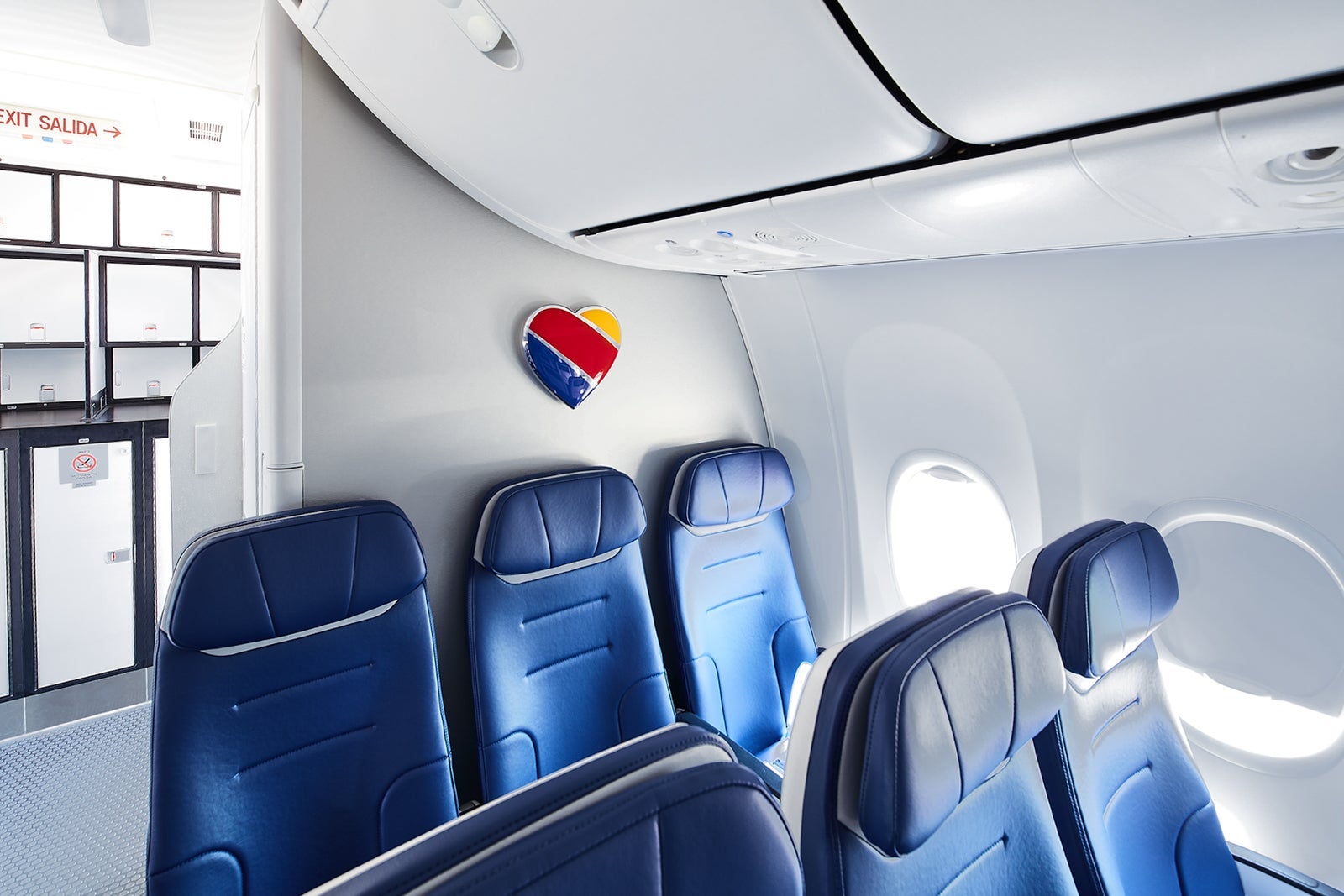
Southwest currently has eight boarding groups, so Group 5 falls near the middle of the boarding process.

Now that Southwest charges for seat selection, choosing standard seats for free could help cardholders save money on future flights.
For benefits like the free first checked bag, Group 5 boarding and standard seat selection, cardholders generally only need to attach their Rapid Rewards number to the reservation (and keep their card account open and in good standing). However, the 25% inflight savings benefit requires payment with the card.
Anniversary and Companion Pass boosts
Beyond the travel perks, the card also offers ongoing value through Southwest’s loyalty program.
Cardholders receive 3,000 anniversary bonus points each year after account renewal and an annual boost of 10,000 Companion Pass qualifying points.
I like that these perks provide value beyond the first year, especially for travelers working toward the Companion Pass.
Travel and shopping protections
While this isn’t a premium travel card, the Southwest Rapid Rewards Plus still includes a solid set of protections:
These benefits can provide meaningful value if something goes wrong during your trip or after a purchase.
How to earn and use your rewards
The Southwest Rapid Rewards Plus keeps things relatively simple when it comes to earning and redeeming Rapid Rewards points.
Earning Rapid Rewards points
With the Southwest Rapid Rewards Plus, you’ll earn:
- 2 points per dollar spent on Southwest purchases
- 2 points per dollar spent at gas stations and grocery stores (on the first $5,000 in combined purchases annually)
- 1 point per dollar spent on all other purchases

I think this card’s rewards structure works best for Southwest loyalists, since a general travel rewards card or cash-back card could offer better returns across many everyday spending categories.
The earning structure is fairly straightforward, though frequent Southwest flyers may prefer the stronger bonus categories offered by Southwest’s higher-tier cards.
Related: Are airline credit cards worth it anymore?
Redeeming Rapid Rewards points
Rapid Rewards points are generally most valuable when redeemed for Southwest flights.
Because Southwest uses dynamic award pricing, redemption rates fluctuate alongside cash fares. The upside is that award availability is usually excellent — if there’s a seat for sale, you can typically book it with points.
TPG senior content strategist Gabrielle Bernardini recently redeemed 38,500 Rapid Rewards points for a round-trip flight from Orlando to Aruba, which would otherwise have cost about $800. That redemption gave her roughly 2 cents per point in value, well above TPG’s May 2026 valuation of Southwest points at 1.25 cents each.
You can also redeem points for gift cards, merchandise, hotel stays and rental cars, though these options typically provide less value.
If you want more flexibility, a transferable-points card like the Chase Sapphire Preferred® Card (see rates and fees) may be a better fit since Chase Ultimate Rewards points transfer to Southwest and multiple other airline and hotel partners.
Related: How to redeem points with the Southwest Rapid Rewards program
Downsides to consider about the Southwest Rapid Rewards Plus
The biggest drawback of the Southwest Plus card is that it offers fewer perks and weaker earning rates than Southwest’s higher-tier cards.
While the $99 annual fee is approachable, the card offers fewer anniversary points, weaker earning rates and fewer premium travel perks than the Southwest Premier and Southwest Priority cards.
Additionally, Rapid Rewards points are most valuable within the Southwest ecosystem. If you prefer flexibility or frequently fly multiple airlines, you may get more value from a general travel rewards card instead.
Southwest Rapid Rewards Plus vs. Southwest Rapid Rewards Priority
If you fly Southwest several times per year, the Southwest Rapid Rewards® Priority Credit Card (see rates and fees) is worth considering.
The Southwest Priority comes with a higher annual fee but offers richer perks, including more anniversary bonus points and additional ongoing Southwest benefits that frequent flyers may find easier to justify long-term.
Meanwhile, the Southwest Plus card is better for occasional Southwest travelers who want airline perks without committing to a higher annual fee.
Related: Comparing the Southwest Rapid Rewards Priority, Premier and Plus credit cards
Is the Southwest Rapid Rewards Plus worth it?
The Southwest Plus card can absolutely be worth it for occasional Southwest flyers who want practical airline perks. Between the free checked bag, anniversary bonus points and seat selection benefits, it’s fairly easy to offset the $99 annual fee if you fly Southwest even a couple of times per year.
But if you’re a frequent Southwest traveler, you’ll likely get more long-term value from one of the airline’s higher-tier cards.
When to apply for the Southwest Rapid Rewards Plus
New Southwest Plus cardholders can earn 80,000 bonus points after spending $1,000 on purchases in the first three months from account opening.
According to TPG’s valuations, this welcome offer is worth $1,000.
Before applying, it’s worth checking Southwest and Chase welcome offer history trends to see whether the current offer is elevated.

The card is subject to Chase’s 5/24 rule. If you’ve opened five or more new credit card accounts from any bank in the past 24 months, you’ll likely be denied.
Additionally, you generally won’t qualify for this bonus if you currently have another personal Southwest credit card or earned a welcome bonus on one within the past 24 months.
Related: The ultimate guide to credit card application restrictions
Other cards to consider if you don’t want the Southwest Rapid Rewards Plus
If the Southwest Plus card doesn’t fit your travel style, there are several other airline and travel rewards cards worth considering, depending on the types of perks and flexibility you want.
The information for the Southwest Rapid Rewards Premier Credit Card has been collected independently by The Points Guy. The card details on this page have not been reviewed or provided by the card issuer.
For more options, check out our full list of the best travel credit cards and best Chase credit cards.
Related: Comparing the Southwest Rapid Rewards Priority, Premier and Plus credit cards
Bottom line
The Southwest Plus card occupies an interesting middle ground: It’s affordable enough for casual Southwest flyers but still offers enough practical travel perks to justify keeping long term.
I think this card hits the sweet spot for occasional Southwest flyers who want airline perks like a free checked bag and better boarding without committing to a premium annual fee. However, if Southwest is your primary airline, you’ll probably get more long-term value from one of the carrier’s higher-tier cards.
Apply here: Southwest Rapid Rewards Plus Credit Card

Stacie Harris is a local resident and reporter of the Maple Grove area. Stacie reports on medicine and science for the Maple Grove Report.