
Spirit Airlines gives update on passenger refunds, points, vouchers


Spirit Airlines has issued refunds for most customers who had flights booked with the airline, representatives for the bankrupt company said Monday — that is, passengers who paid with a credit or debit card.

Flyers who booked Spirit flights with points or vouchers will likely face an uphill climb toward a refund, after the airline abruptly grounded all its planes and halted all operations over the weekend.

Meanwhile, travelers were still working to get home Monday, and other airlines began to swoop in with new routes, filling a void left by Spirit — after transporting its workers and passengers over the weekend.

And some 17,000 now-former Spirit employees entered the new week without jobs.

Here’s the latest on what to know about the biggest collapse of a U.S. airline in a generation.

Spirit Airlines refund status

For months, as rumors swirled about Spirit’s financial woes, one big question remained: What would happen to consumers’ money if they booked a flight and then the airline shut down?

That question seems to have been answered.

Spirit on Monday confirmed it had automatically processed the vast majority of refunds for passengers who had booked their flights via a credit or debit card.

JOSEPH PREZIOSO/AFP/GETTY IMAGES

Because those refunds were processed over the weekend, though, the defunct airline’s website said it “may take time” for refunds to appear on card statements.

Reward your inbox with the TPG Daily newsletter

Join over 700,000 readers for breaking news, in-depth guides and exclusive deals from TPG’s experts

Multiple TPG staffers who had future Spirit flights booked for spring and summer have yet to receive refunds.

If days (and weeks) pass without seeing the refund processed, it might be time to consider backup options via your credit card company.

Read more:

Bags and other add-on fees

The airline claims it will also process refunds for add-on items like baggage, seats and inflight Wi-Fi paid for prior to May 2.

Bad news about points and vouchers.

Unfortunately, the news is far less promising for passengers who booked flights with vouchers or made reservations with Free Spirit points.

Spirit’s official online guidance said decisions on making customers whole for those bookings would be determined at a later date via the bankruptcy court process.

But according to sources familiar with the proceedings, it’s highly unlikely those customers will receive reimbursement.
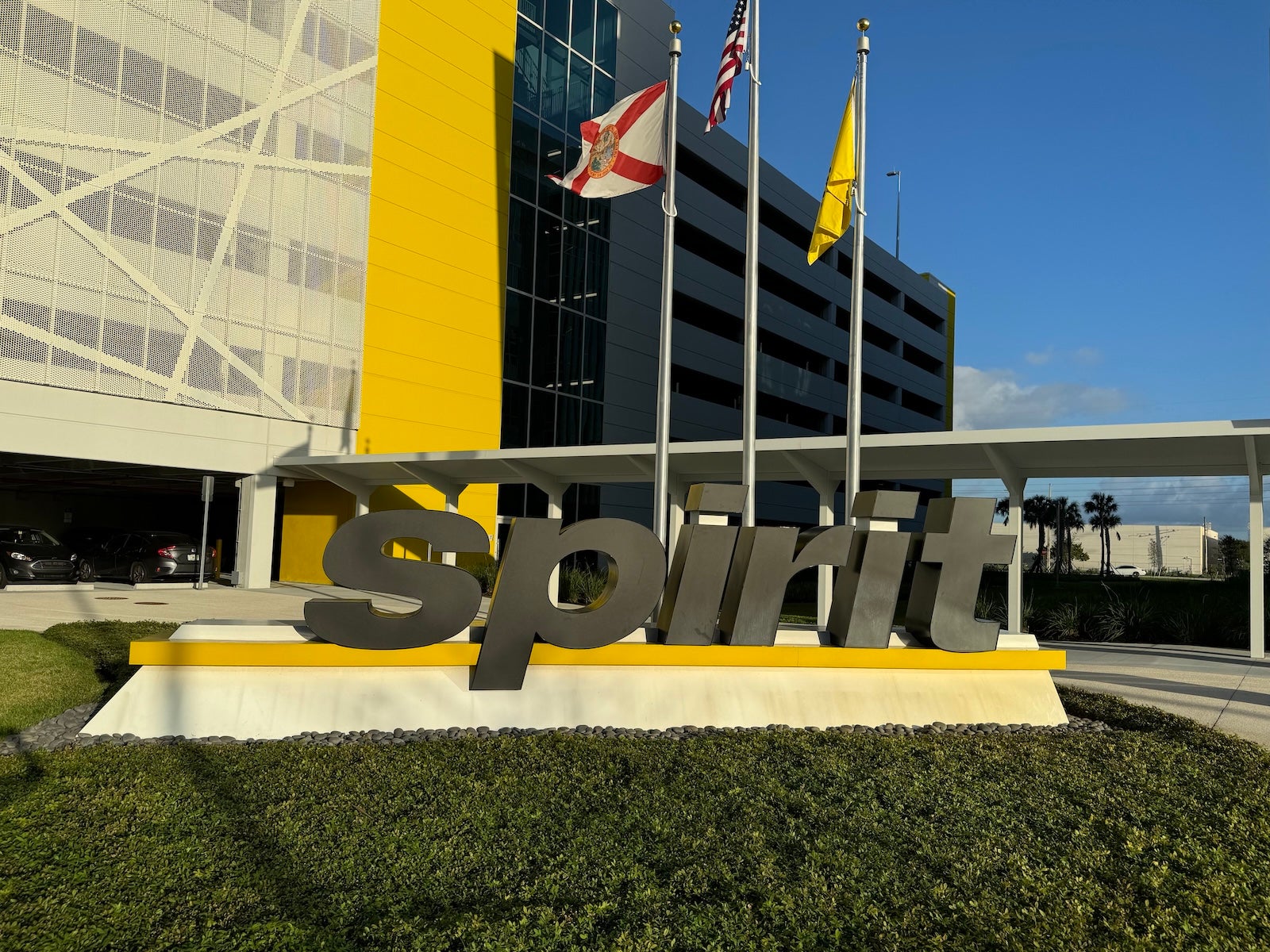
Spirit Airlines headquarters in Dania Beach, Florida. SEAN CUDAHY/THE POINTS GUY

That’s bad news for both award redemptions and voucher bookings, as well as for customers who earned Spirit points through flights and spending on the airline’s cobranded credit card.

Prior to the wind-down of Spirit operations this weekend, TPG valued its points at roughly 1.1 cents apiece.

Passengers scramble to get home

While Spirit executed what it called an “orderly wind-down” of its operations over the weekend, passengers in the middle of their trips faced chaotic conditions as they tried to get home.

Vanessa Jimenez had flown with her family from Texas to Florida for a dance competition, only to learn early Saturday morning that her return flight had been abruptly canceled, along with every other Spirit departure.

She’d pondered driving home to the Houston area before learning that other carriers were offering rescue fares to help stranded flyers get home.

A Spirit Airlines plane pushes back at Dallas Fort Worth International Airport (DFW). SEAN CUDAHY/THE POINTS GUY

“I jumped on United and got us a one-way flight for $200 each,” Jimenez said. “Little more than we were planning to spend and a little bit more than what Spirit charged us, but it was the easiest way to get home versus having to drive a 15-hour drive.”

She’s not alone.

In the first 12 hours after Spirit shut down early Saturday, United Airlines, for one, said it helped the budget carrier’s passengers book 14,000 tickets.

A host of other U.S. carriers were offering price-capped backup options, too.

Long-term worries

Even after every passenger and Spirit employee returns home, the implications for consumers remain, with the loss of a budget airline that long helped keep fares in check across the industry.

“Spirit’s Big Front Seat was the best deal in the sky,” shared Alex, a reader in our TPG Lounge on Facebook, calling Spirit’s demise — and that of its popular first class-ish product — a “huge, huge loss.”

Spirit Airlines’ “Big Front Seat.” ZACH GRIFF/THE POINTS GUY

Another reader, Seth, recalled how the airline’s affordable last-minute fares helped him fly during Hurricane Sandy in 2012 and again when his daughter was born.

“They enabled so many people to travel who couldn’t otherwise on other U.S. carriers,” a third reader, Greg, shared.

Jimenez, for her part, wasn’t optimistic about getting a refund — “probably not,” she said — but what struck her most was the end of an airline that, for all its add-on fees, was the ticket to the sky for so many.

“I think it was affordable for a lot of people, and a lot of families,” she said. “I’m sad and irritated for myself, but I think I’m more sad for the thousands of people that are losing their jobs.”

TPG’s complete coverage of Spirit Airlines’ shutdown:


Source link

Leave a Reply

Subscribe to Our Newsletter

Get our latest articles delivered straight to your inbox. No spam, we promise.

Recent Reviews


Medically reviewed by Kierra Brown, RD

Canned sardines and anchovies are high in protein and healthy fats, plus they have a long shelf life.Credit: Design by Health; Getty Images
Canned sardines and anchovies are high in protein and healthy fats, plus they have a long shelf life.
Credit: Design by Health; Getty Images
  • The nutritional profiles of anchovies and sardines are very similar.
  • Compared to sardines, anchovies contain slightly more protein and omega-3 healthy fats.
  • However, sardines have higher concentrations of many vitamins and minerals, and usually have less added sodium.

Anchovies and sardines are both small, oily fish that are usually canned or jarred. Despite their similarities, anchovies and sardines do have some nutritional differences when it comes to protein, healthy fats, and micronutrient content.

Which Small Fish Has More Protein?

 While both fish are excellent sources of lean protein, anchovies have a slight edge:

  • Sardines, canned in oil: 6.97 grams in a 1-ounce serving
  • Anchovies, canned in oil: 8.19 grams in a 1-ounce serving

The amount of protein your body needs depends on a number of factors, including age, health status, and physical activity levels.

Healthy adults should consume 1.2-1.6 grams of protein per kilogram of body weight, according to updated federal dietary guidelines.

For example, if someone weighs 70 kilograms (or 155 pounds), they may want to consume at least 84 grams of protein every day. A 1-ounce serving of anchovies canned in oil would get them about 10% of the way toward that daily protein goal.

Protein is critical for cell development and repair, contributing to physical growth and development.

Is One a Better Source of Healthy Fats Like Omega-3s?

When it comes to healthy fats in general, sardines come out on top:

  • Sardines, canned in oil: 2.56 grams of unsaturated fat in a 1-ounce serving
  • Anchovies, canned in oil: 1.8 grams of unsaturated fat in a 1-ounce serving

But if you're looking to boost your levels of omega-3 fatty acids—a specific type of healthy unsaturated fat—anchovies are the better choice. A 1-ounce serving contains 594 milligrams of omega-3s, while the same amount of sardines has 278 milligrams.

Consuming more omega-3s and healthy fats in general may benefit multiple different aspects of your health:

  • Heart health: Omega-3s help reduce levels of triglycerides, or fats in the blood; high triglyceride levels are a risk factor for heart disease and stroke. In general, research has shown that eating unsaturated fats in place of saturated fats—the kind found in full-fat dairy, red meat, and tropical oils—reduces your risk of heart disease.
  • Brain health and cognitive function: Some research suggests that insufficient levels of omega-3s may increase the risk of brain health concerns, including Parkinson's disease, schizophrenia, attention deficit hyperactivity disorder (ADHD), and depression. Another study found that omega-3 supplements could improve mild cognitive impairment, a condition that causes memory and thinking issues that can develop into dementia.
  • Eye health: In some studies, people who ate fatty fish (and more omega-3s) had a lower risk of age-related macular degeneration, a condition that can blur vision. Similarly, there's evidence that diets higher in omega-3s could reduce the risk of dry eye disease. However, more research is needed.

How Do They Compare for Vitamin and Mineral Content?

Along with protein and healthy fats, sardines and anchovies are packed with essential micronutrients. However, they contain different amounts of these key vitamins and minerals:

  • Vitamin B12: Sardines have about 10 times more vitamin B12 than anchovies. This B vitamin supports nerve cell function, red blood cell formation, metabolism, and the creation of DNA.
  • Vitamin D: One sardine has the vitamin D content of about eight anchovies. Vitamin D helps the body absorb calcium and supports bone maintenance and growth.
  • Iron: As compared to sardines, anchovies contain about 60% more iron. This mineral helps form red blood cells, supports muscle and tissue function, and more.
  • Phosphorus: Sardines are nearly twice as rich in phosphorous than anchovies are. In fact, a 1-ounce serving of sardines contains about 20% of the daily recommended intake for adults. Phosphorus is key in creating structures in the body, including teeth, DNA, and cell membranes.
  • Calcium: As compared to anchovies, sardines are a better source of calcium, a mineral which helps support and maintain bone health.

Comparing Sardines and Anchovies

Nutritional content always varies based on packaging and other factors, but here's how a typical 1-ounce serving of anchovies compares to a 1-ounce serving of sardines:

Sardines, canned in oil Anchovies, canned in oil
Calories 59 60
Protein 6.97 grams (g) 8.10 g
Total fat 3.23 g 2.75 g
Carbohydrates 0 g 0 g
Calcium 108 milligrams (mg) 65.8 mg
Iron 0.828 mg 1.31 mg
Magnesium 11.1 mg 19.6 mg
Phosphorus 139 mg 71.4 mg
Potassium 113 mg 154 mg
Selenium 14.9 micrograms (mcg) 19.3 mcg
Sodium 87 mg 1,040 mg
Zinc 0.371 mg 0.692 mg
Vitamin B12 2.53 mcg 0.249 mcg
Vitamin D 1.36 mcg 0.482 mcg

In addition to their relatively similar nutritional profiles, sardines and anchovies share many other commonalities.

Both are considered forage fish, and they're often eaten by larger fish or marine mammals. Sardines are a bit bigger—they're 4-12 inches while anchovies are usually 7-8 inches—but both species' relative small size and low position on the food chain ensures they have low mercury levels.

Once they're harvested, anchovies and sardines are usually jarred or canned in water or oil to make them shelf stable. One difference is that canned anchovies are often salt-cured—this gives them a pink color and a salty flavor (as well as high amounts of sodium).

What To Know Before Adding These Small Fish to Your Diet

Anchovies and sardines aren't naturally high in sodium (or salt), but jarred or canned versions often have a lot of salt added.

For instance, a 1-ounce serving of anchovies canned in oil contains 1,040 milligrams of sodium, which is 45% of the recommended daily limit for adults.

Diets high in sodium raise your risk of developing high blood pressure, heart diseases, artery diseases, heart attack, and stroke.

When purchasing canned fish, check the nutrition label and try to find a product that has lower amounts of sodium.

Sardines and anchovies also usually contain bones. The canning process makes these bones safe to eat, though young children and people with swallowing concerns may want to avoid them.


Source link