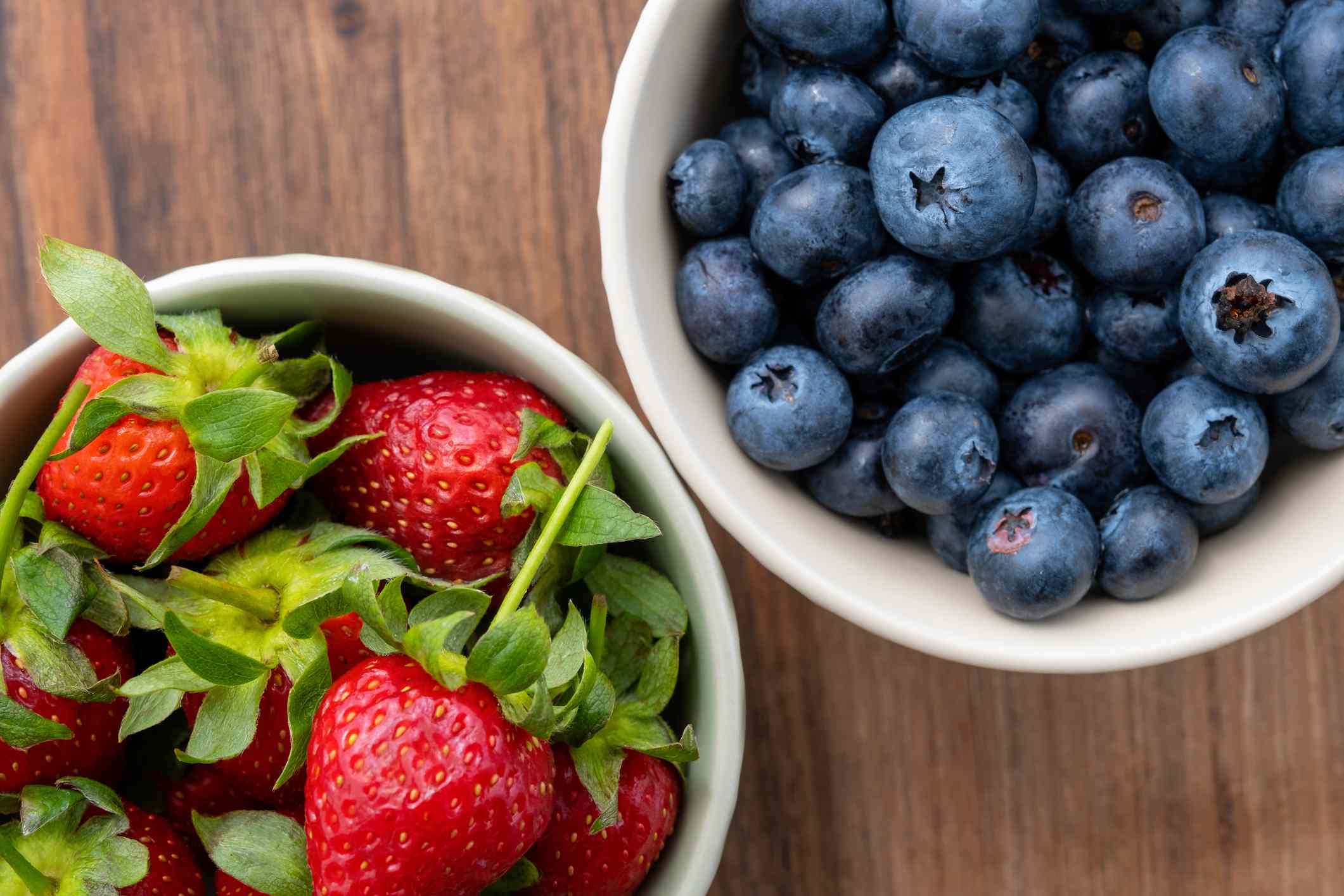
:max_bytes(150000):strip_icc():format(jpeg)/Health-GettyImages-StrawberriesVsBlueberries-337f5dc0131a41178e034e9092952bab.jpg "Closeup top view of blueberries and strawberries on wooden table")
- Strawberries and blueberries are both nutrient-rich berries that provide fiber, antioxidants, and important vitamins.
- Strawberries contain more vitamin C and folate, while blueberries offer higher overall antioxidant levels and slightly more fiber.
- Both berries support heart, brain, and overall health, so eating a variety of berries may provide the greatest benefits.
Strawberries and blueberries are both delicious berries packed with nutrients such as fiber, vitamins, minerals, and protective antioxidants. Though both are nutritious, there are some important differences between the two. Here’s how strawberries and blueberries compare, including which one provides more antioxidants and nutrients.
Blueberries Have More Antioxidants
Berries, such as blueberries and strawberries, are high in antioxidants, which are compounds that help protect your cells from damage caused by unstable molecules called free radicals.
Blueberries and strawberries contain different levels of antioxidants. For example, strawberries contain significantly more vitamin C than blueberries; a cup of halved strawberries provides 89.4 milligrams (mg), 99.3% of the Daily Value (DV). A cup of blueberries contains just 14.4 mg, or 16% of the DV. High vitamin C intake has been linked to many health benefits, such as a reduction in certain cancers and heart disease.
While strawberries are higher in vitamin C, studies show that blueberries contain more total phenolic antioxidants and have a higher total antioxidant capacity, which is a measure of a food’s ability to fight off harmful free radicals.
Due to their high levels of antioxidants, regularly eating blueberries could promote and protect overall health. For example, the antioxidant compounds found in blueberries, such as flavonoids and anthocyanins, help protect against cellular damage and inhibit the production of pro-inflammatory compounds, which may help lower cancer risk.
If you’re looking to maximize the amount of antioxidants in your blueberries, consider purchasing wild blueberries. Some wild blueberries may have 3 to 5 times higher antioxidant capacity than cultivated blueberries.
Vitamin and Nutrient Breakdown
Strawberries and blueberries are both low-calorie fruits that are high in fiber. Blueberries contain slightly more fiber, with a cup covering 12.5% of the DV, while a cup of strawberries covers about 10%. Fiber is important for gut health, supporting regularity and the growth of beneficial bacteria in the digestive tract. Eating more fiber can help you feel full after eating, promoting a healthy body weight.
Blueberries are also higher in manganese, a mineral needed for bone health, immune function, and blood sugar regulation.
However, strawberries are a better source of vitamin C and folate. Vitamin C is essential for immune and skin health and also functions as a powerful antioxidant. Folate is a B vitamin that’s required for DNA synthesis, cellular division, and the maturation of red blood cells. Folate is critical for fetal growth and development, making strawberries an excellent addition to pregnancy diets.
Both Have Important Health Benefits
Berry intake in general has been linked to a lower risk of chronic diseases, like heart disease. A 2021 review found that intake of anthocyanin-rich foods, including berries, was related to a 17% reduced risk of coronary heart disease, a 27% reduced risk of total heart disease incidence, and a 9% lower risk of total heart disease-related death.
Berries could also support brain and skin health. For example, strawberries are an excellent source of vitamin C, which is essential for the production of collagen, the main protein in your body that accounts for 75% of your skin’s dry weight.
The phenolic compounds found in both strawberries and blueberries have been shown to benefit brain health as well and may protect against age-related neurodegenerative diseases.
High berry intake may even protect against all-cause mortality and support overall longevity.
Nutritional Snapshot
Here’s a side-by-side comparison of a 1-cup serving of blueberries and strawberries.
| | Strawberries | Blueberries |
| Calories | 48.6 | 84.4 |
| Carbs | 11.7 grams (g) | 21.5 g |
| Fiber | 3 g | 3.5 g |
| Protein | 1 g | 1.1 g |
| Folate | 36.5 milligrams (mg), 9% of the DV | 8.8 mg, 2% of the DV |
| Vitamin C | 89.4 mg, 99.3% of the DV | 14.4 mg, 16% of the DV |
| Manganese | 0.58 mg, 25% of the DV | 0.49 mg, 26% of the DV |
Strawberries and blueberries are both nutritious, but they contain different levels of fiber, vitamins, and minerals.
Though they’re both low in calories and carbs, strawberries contain fewer calories and carbs per serving. This may make them a better choice for those following very low-carb diets, like keto diets.
Which Should You Choose?
If you enjoy berries, you don’t have to choose between blueberries and strawberries, as both offer significant health benefits and contain an impressive amount of protective antioxidants.
However, you may want to choose one over the other for specific reasons. For example, if you want the most vitamin C-rich berry, choose strawberries, which contain significantly more of this essential vitamin.
If you want the most antioxidant-rich option, choose blueberries, specifically wild blueberries, which can contain up to five times the antioxidant capacity of regular blueberries.
That said, it’s generally recommended to enjoy an array of berries in your diet for the most health benefits.






:max_bytes(150000):strip_icc():format(jpeg)/Health-GettyImages-1372030854-f6ccff4d63064d06a34168480c03d79f.jpg "A woman reads a book while holding a mug sitting on the couch with a blanket")