Aim for a brisk pace to help lower blood pressure with your walks. Credit: AJ_Watt / Getty Images
Walking is a proven, accessible way to help lower blood pressure.
Some research suggests afternoon or evening walks may offer slightly greater blood pressure benefits, but findings are mixed.
Experts agree that consistency matters more than timing—walking regularly is what makes the biggest difference.
Nearly half of adults in the United States have high blood pressure, a leading cause of heart attacks and stroke. Fortunately, walking is an easy and accessible way to lower and manage blood pressure, without medication—but is there a best time to do it to reap the most benefits? We tapped two cardiologists to find out.
Is There a Best Time To Walk For Blood Pressure?
Blood pressure typically rises in the morning and dips in the evening, said Tiffany S. Di Pietro, DO, a cardiologist and founder of Di Pietro Health. People who experience big morning “surges” or higher blood pressure at night are at greater risk for health problems.
That’s where walking comes in. The blood pressure-lowering effects of a single walk can last for hours afterward, Di Pietro explained, a period that doctors call “post-exercise hypotension.” So, the time of day you go on a walk can impact when that blood pressure-lowering window actually occurs.
Some evidence suggests that walking in the late afternoon or evening may benefit blood pressure. A 2019 study, for example, found that evening aerobic activity resulted in a significant reduction in systolic blood pressure following the exercise compared with morning training or the control group. Still, the medical literature is mixed on the timing question, and results can vary from person to person, Di Pietro said. Any differences based on the timing are likely minor and not universal.
There’s also the possibility that intense exercise near bedtime could decrease sleep quality, warned Jason V. Tso, MD, a cardiologist with the Sports Cardiology Program and the Center for Inherited Cardiovascular Disease at the Stanford University School of Medicine. “So, for those who find it hard to sleep after a brisk walk, it is fine to exercise any time of day,” he said.
Ultimately, the experts agreed that the best time to walk to lower blood pressure is whenever you can find the time. With fewer than half of Americans meeting the weekly physical exercise recommendations, prioritizing movement often matters more than the exact timing.
Factors That Influence Walking's Blood Pressure Benefits
Beyond timing, a few factors can influence how effective walking is at lowering blood pressure:
Consistency: The biggest benefits come from consistent movement. “Regular walking over weeks and months is what lowers your average blood pressure,” Di Pietro said.
Your baseline: The higher your starting blood pressure, the more noticeable the benefits of walking tend to be.
Unhealthy habits: Poor sleep and chronic stress can increase blood pressure and blunt the effects of walking. Diet also matters—excess sodium, alcohol consumption, and poor nutrition play a role.
Speed: You'll see the most benefits from walking at a brisk pace that gets your heart rate up. A simple rule of thumb is that you should be able to talk but not sing, Di Pietro said. The American Heart Association recommends at least 150 minutes of moderate-intensity exercise each week, which can include brisk walking, Tso said.
How Walking Reduces Blood Pressure
High blood pressure occurs when the force of blood pushing against the artery walls remains too high for too long, putting pressure on the heart. In general, the narrower the arteries and the more blood the heart pumps, the higher blood pressure tends to be.
At the cellular level, aerobic exercise causes arteries to produce more nitric oxide, which helps them dilate and lowers blood pressure, Tso explained. Walking can also reduce cortisol levels. This makes blood vessels more flexible, further supporting healthy blood pressure.
I’ve been in love with France ever since my first trip to Bordeaux in 2010. Friends I had met back in Thailand showed me around the area and introduced me to French culture. It was my first time in France and I loved the food, the wine, and the people.
But that love became an obsession when, after Bordeaux, I stepped out of the Paris metro and onto the Champs Élysées. The lights, the energy, the mystique! There was magic in the air. I felt like I had known the city my entire life and I was simply returning home.
It’s cheaper than NYC, I had friends there already, I’ve always wanted to learn French, it would make a great base for exploring Europe, and I could start writing my next book there. There’s nothing like a change in scenery to get the creativity flowing!
But the question remained: how do you move to France?
After all, they don’t have a digital nomad visa, and you’re limited to three months if you visit on your regular Schengen tourist visa.
Well, it turns out that it’s not actually that hard. (And while I can only speak for Americans, I suspect the criteria are similar for Canadians, Aussies, Kiwis, and other “developed” nations.)
If you want to move to France, you have four main options:
Student visa
Long-term visitor visa
Entrepreneur
Talent visa
The student visa is pretty straightforward. You need to enroll in a full-time university program and show you have enough funds to support yourself (around 600 Euros per month). A friend is currently there on this visa, as she is doing a nine-month intensive French program to become fluent. You still have to apply for the visa, but if you’re enrolled in an accredited school, you’ll likely get approved. Another benefit to this visa is that you can work part-time on it!
But this visa is contingent on being in school, so if you leave or quit, it’s voided. However, when you are done, you can change this to a “job seekers” visa, which can give you up to another six months in France (or more depending on how long your program was).
I thought about applying for the entrepreneur visa, but the application process is pretty complex and can take months to be approved. You have to set up your business in France — and that is a lot of paperwork. You have to show that your business makes money, has clients (at least one of them being French), and can support you full time (you have to make at least the French minimum wage). They will scrutinize your assets and financials a lot and you’ll need to register your business in France and pay French taxes.
Additionally, France offers a talent visa. If you’re an expert in your field (with verifiable accreditations and accolades), this could be a good visa to apply for, especially if you plan to stay in France for a long time and want to physically work there. But, again, you’ll need to have some source of income and plan to do physical business in the France. If you’re not an academic but someone in the arts, you have to show how you are going to add to the “culture of France” in some way.
While I would meet the requirements for both those visas, the process for either would have been time consuming, and, since I’m not sure France is going to be my forever home, I decided not to go through that process.
So I went with the long-term visitor visa, officially called VLS-TS visiteur. This allows me to stay up to 12 months in France and is renewable in the country. It does come with a lot of restrictions, however: I can’t physically work here and I am not allowed into the French social welfare system.
It’s also the visa a lot of Americans (and most retirees) are coming in on. If you have passive income or retirement savings and just want to live in France, this is a good option for you. It allows you to set up a bank account and it can be renewed pretty much indefinitely.
The paperwork for this visa (which I’ll get into in a bit) essentially comes down to whether or not you can support yourself. French authorities want to make sure you won’t be a burden on the system.
My biggest question centered around whether or not I could “work” on this visa. A lot creators and digital nomads are applying for — and getting — this visa.
But remember: you aren’t allowed to work on this visa so how are you going to work if you can’t work?
So let me take a moment to talk about “work” from a legal standpoint.
As I mentioned, there’s no digital nomad visa that allows you to work in France. And the French tax office said last July that remote work is considered taxable — but there are no official laws that. That’s just their opinion and there’s been no progress in codifying that opinion. In fact, my visa doesn’t even come with a tax number, so it’s impossible for me to be taxed. I couldn’t pay taxes even if I wanted to.
The visa office asks how you’ll support yourself when you are in France and one of the sources of income they accept is “income from work.” I was very open that my means of support would be the income from this blog and my books.
The system there really hasn’t caught up to remote work. It still defines “work” as something you do physically that could take away a job from a French person.
So could I run walking tours in Paris? Nope. Could you work at a café? Nope.
But does writing this blog post count as work? After all, no one is paying for it. It’s a free resource. Does going to a café to work on the next great American novel count? What about my weekly newsletter that has affiliate links (that generate income) in it? Is writing that considered work?
The gray area is considerable, so the best thing to do is to talk to a lawyer. I recommend Daniel Tostado (yes, that’s his real name), one of the biggest American-French immigration lawyers in Paris. He has a huge law firm and regularly meets with government officials to clarify the rules on this. He gave me some solid advice.
For this long-term visitor visa, the application process is pretty easy. You go to the French government website, fill out your application, take the application number to the TLScontact website, and make an appointment. (France outsources the appointment process to this company, which then sends everything to the French consulate for approval.)
The main things you’ll want to demonstrate are that you have accommodation for 90 days on your application and enough income to support yourself. They just want to make sure you aren’t going to be a burden on the system. I went overboard. Here’s what I brought to my appointment:
The application (you need to bring a printout)
A confirmation of the appointment
Extra passport photos
Proof of accommodation (this can be Airbnbs, hotels, or someone’s home — if it’s the latter, make sure that they are the owner!)
A letter attesting I won’t work
A financial summary letter explaining why I am moving there and my source of income
Health insurance that meets French legal requirements (I used Mondassur.)
Three months of bank statements showing regular deposits
A second bank account, my tax returns, and my W-2
I didn’t need the second bank account, tax returns, or W-2 (they weren’t required) but the woman at the appointment said the more proof you had the better and it wouldn’t hurt. And another friend who got this visa didn’t bring beyond what was asked in the application form. But I wanted to take no chances!
At the appointment, the staff double-checks your paperwork, takes your biometric data, collects the fees, and then sends your passport to the embassy for processing. Officially, it takes up to 15 days to process your visa, but everyone I know seems to get it back within a week.
The worst part was not knowing if you are approved until your passport is returned. While you can track the progress of your application, you don’t know the verdict until your passport is back in your hands. While I was waiting (and anxiously spiraling), I looked on Reddit and found that most denials were for lack of income or issues with their accommodation, which seem to be the two most important things to have perfect on your application.
Once you get your visa back, you can enter France any time after the start date. After you enter, you have 90 days to register your visa with the state (they give you a little QR code with instructions). This allows you to “officially” be on this long-term visa. (It’s a more paperwork kind of thing.)
Once that is done, there’s nothing else to do and you can stay in France (and Europe) until your visa expires!
So, if you’re considering moving to France, these are your options. But, as always, I’m not a lawyer and this is not legal advance. In regard to work and other issues or questions, it’s important that you seek legal counsel and get their expert opinion!
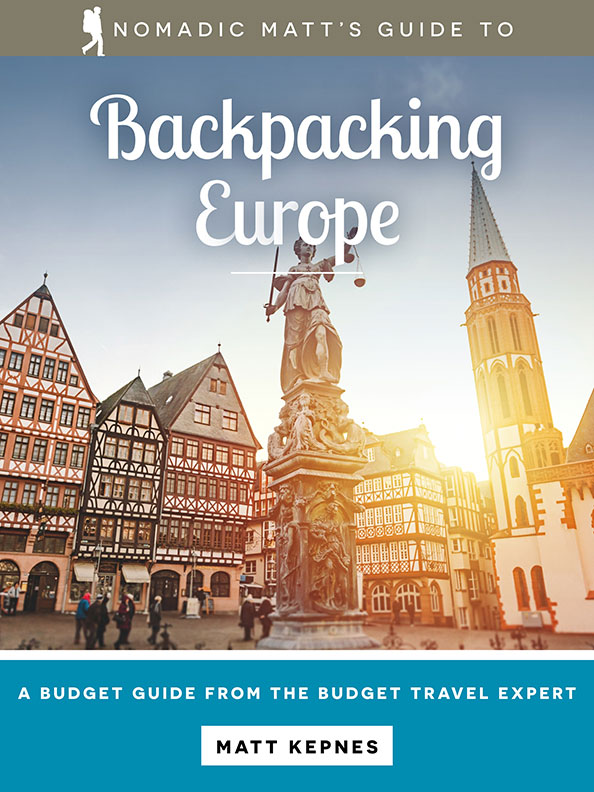
Get Your In-Depth Budget Guide to Europe!
My detailed, 200+ page guidebook is made for budget travelers like you! It cuts out the fluff found in other guidebooks and gets straight to the practical information you need to travel and save money while backpacking around Europe. You’ll find suggested itineraries, budgets, ways to save money, on and off the beaten path things to see and do, non-touristy restaurants, markets, and bars, and much more! Click here to learn more and get started!
Plan your trip to Europe like a pro
Get all my best Europe travel tips as well as free planning guides sent straight to you and see more of the country for less!
Book Your Trip to France: Logistical Tips and Tricks
Book Your Flight Use Skyscanner to find a cheap flight. They are my favorite search engine because they search websites and airlines around the globe so you always know no stone is left unturned.
Book Your Accommodation You can book your hostel with Hostelworld as they have the biggest inventory and best deals. If you want to stay somewhere other than a hostel, use Booking.com as they consistently return the cheapest rates for guesthouses and cheap hotels.
Don’t Forget Travel Insurance Travel insurance will protect you against illness, injury, theft, and cancellations. It’s comprehensive protection in case anything goes wrong. I never go on a trip without it as I’ve had to use it many times in the past. My favorite companies that offer the best service and value are:
Looking for the Best Companies to Save Money With? Check out my resource page for the best companies to use when you travel. I list all the ones I use to save money when I’m on the road. They will save you money when you travel too.
To provide the best experiences, we use technologies like cookies to store and/or access device information. Consenting to these technologies will allow us to process data such as browsing behavior or unique IDs on this site. Not consenting or withdrawing consent, may adversely affect certain features and functions.
Functional
Always active
The technical storage or access is strictly necessary for the legitimate purpose of enabling the use of a specific service explicitly requested by the subscriber or user, or for the sole purpose of carrying out the transmission of a communication over an electronic communications network.
Preferences
The technical storage or access is necessary for the legitimate purpose of storing preferences that are not requested by the subscriber or user.
Statistics
The technical storage or access that is used exclusively for statistical purposes.The technical storage or access that is used exclusively for anonymous statistical purposes. Without a subpoena, voluntary compliance on the part of your Internet Service Provider, or additional records from a third party, information stored or retrieved for this purpose alone cannot usually be used to identify you.
Marketing
The technical storage or access is required to create user profiles to send advertising, or to track the user on a website or across several websites for similar marketing purposes.


:max_bytes(150000):strip_icc():format(jpeg)/Health-GettyImages-1209895480-3651007fe5ad4b88aca440241f79b328.jpg "Two people walking side by side on a paved path near a railing beside the water")