Fact checked by Nick Blackmer
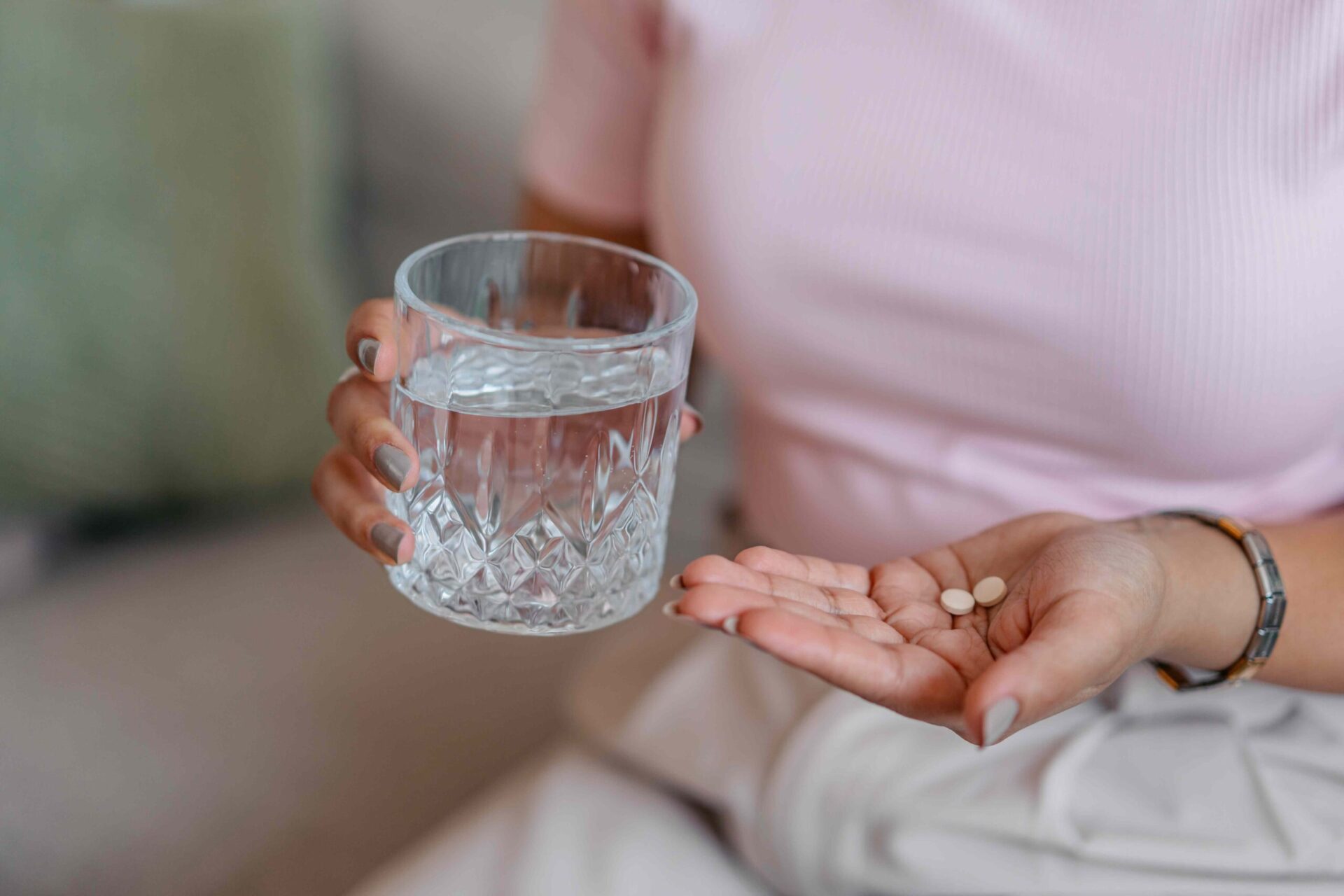
:max_bytes(150000):strip_icc():format(jpeg)/Health-GettyImages-2231097884-0521152937ca448c8495e99c682073d2.jpg "A person holding a glass of water in one hand and pills in the other")
Credit: urbazon / Getty Images
- New research suggests that taking medications with alkaline water may make them release too early, reducing their effectiveness.
- The high pH of alkaline water may weaken a pill’s protective coating before it reaches the intestines.
- Experts recommend taking medications with plain water and checking with a pharmacist if you’re unsure.
The drink you use to wash down pills may matter more than you think.
Research recently published in the journal Pharmaceutics suggests that taking pills with alkaline mineral water may weaken the protective coating on some medications and potentially cause the drug to release too early, making it less effective.
What the Research Found
Many medications, like Prilosec and most varieties of aspirin, have what’s called an enteric coating. These coatings dissolve at specific pH levels to protect medications from the acidic environment of the stomach, allowing them to release later in the small intestine, which has a higher pH.
For the new study, researchers wanted to explore whether exposing medications to different liquids—and different pH levels—would affect how the drug is released, said lead study author Nikolett Kállai-Szabó, PhD, a senior lecturer in the Department of Pharmaceutics at Semmelweis University in Hungary.
To test this, they soaked coated tablets in tap water, filtered water, apple juice, and several brands of alkaline mineral water, representing a range of pH levels.
The alkaline mineral waters weakened the protective coating much more quickly than the other liquids. After just a five-minute soak in one brand—Salvus medicinal mineral water—more than 90% of the drug was released. Meanwhile, tap water, filtered water, and apple juice caused very little drug release after a five-minute soak.
What This Means for You
Though researchers didn’t test this in humans, the findings still suggest that using alkaline water to swallow pills could weaken their protective coating, potentially causing the drug to release too soon.
“This is a very big problem,” Nikolett said. “After that, the therapy is not so effective.”
Premature drug release might also damage the stomach lining and cause side effects such as nausea, abdominal pain, and vomiting, Marina Ivanov, PharmD, an inflammatory bowel disease clinical pharmacist specialist at Mayo Clinic–Arizona, told Health.
Because this was a laboratory study, factors like saliva, digestion, and how quickly a medication moves through the stomach could influence what happens in real life.
Even so, experts said the research fills an important knowledge gap about which drinks should be used when taking pills. “There’s a lack of real information from a lot of the pharmaceutical products that we have,” Ivanov said.
Experts agreed that plain tap or filtered water remain the safest choices for taking most medications. When in doubt, check with your pharmacist for the best drink to take your specific medications with.
“[This study] just shows that people have to talk to their prescriber and their pharmacist,” said Kathleen Gura, PharmD, a clinical pharmacist of GI and nutrition at Boston Children’s Hospital.