Whether you’re new to the world of points and miles or just looking for the best ways to level up your current card portfolio, a strategic credit card pairing is one of the easiest ways to maximize your earning potential.
You’ve likely heard of the most popular card groupings — such as the Chase Trifecta and the Amex Trifecta — but these are far from the only ways to combine credit cards.
Let’s discuss how different credit cards work together to boost your earning power and go over some of the best credit card combinations.
What makes the best credit card combination?
Several factors can make a good card combination.
Often, a good pair is one in which both cards earn the same rewards currency, such as Chase Ultimate Rewards or American Express Membership Rewards, but have different bonus categories. This way, you’ll be able to maximize your earnings across a wider range of purchases than you would with just one card.
Each pairing below shows how to boost your earnings with two complementary cards.
Related: 7 of the best cards to pair with the Amex Gold
American Express Platinum and Gold
The American Express Platinum Card® has a high $895 annual fee (see rates and fees) but is great for travelers since it earns 5 American Express Membership Rewards points per dollar spent on flights booked directly with an airline or through American Express Travel® (on up to $500,000 each calendar year, then 1 point per dollar spent).
It also comes with extensive airport lounge access for eligible cardmembers, plus a slew of valuable statement credits.

Reward your inbox with the TPG Daily newsletter
Join over 700,000 readers for breaking news, in-depth guides and exclusive deals from TPG’s experts

The American Express® Gold Card is a foodie’s dream card with a $325 annual fee (see rates and fees). It earns 4 points per dollar spent on dining at restaurants worldwide (on up to $50,000 in purchases per calendar year, then 1 point per dollar spent thereafter) and on groceries at U.S. supermarkets (on up to $25,000 in purchases per calendar year, then 1 point per dollar spent thereafter).
It also comes with statement credits each calendar year for dining and takeout purchases. Enrollment is required for select benefits.
Why they’re a great combination: These cards work great together because you’ll earn more on flights with the Amex Platinum than you would with the Amex Gold alone (5 points per dollar spent when booking directly or through Amex Travel rather than 3 points per dollar spent when booking directly with airlines, amextravel.com or the Amex Travel App™; a spending cap applies for the Amex Platinum) and more at restaurants worldwide and U.S. supermarkets with the Gold than you would with the Platinum alone (4 points per dollar spent rather than 1; spending caps apply).
Additionally, the cards’ benefits and statement credits have little overlap, meaning you’ll get tremendous value from having both cards. You can then transfer your Membership Rewards points to any of Amex’s 20 airline and hotel partners.
TPG credit cards editor Olivia Mittak likes using the Amex Gold and the Amex Platinum together to maximize earnings in her top spending categories.
“My dining purchases almost always go on my Gold, while I book flights with my Platinum; I also put large purchases on my Platinum to take advantage of that card’s extensive protections,” she says.
To learn more, check out our full reviews of the Amex Platinum and the Amex Gold.
Apply here: American Express Platinum Card
Apply here: American Express Gold Card
Chase Sapphire Preferred and Freedom Unlimited
The Chase Sapphire Preferred® Card (see rates and fees) is one of our favorite travel rewards cards, with its standout earning categories being 5 Chase Ultimate Rewards points per dollar spent on travel booked through Chase Travel℠; 3 points per dollar spent on dining (including eligible delivery and takeout), gas, electric vehicle charging, vacation homes at top brands*, select streaming and online grocery purchases (excluding Walmart, Target, and wholesale clubs); and 2 points per dollar spent on all other travel.
*Includes Airbnb, Vrbo, Plum Guide, HomeAway, Homestay.com and Vacasa
Additionally, it comes with some valuable travel protections — all for a low $95 annual fee.
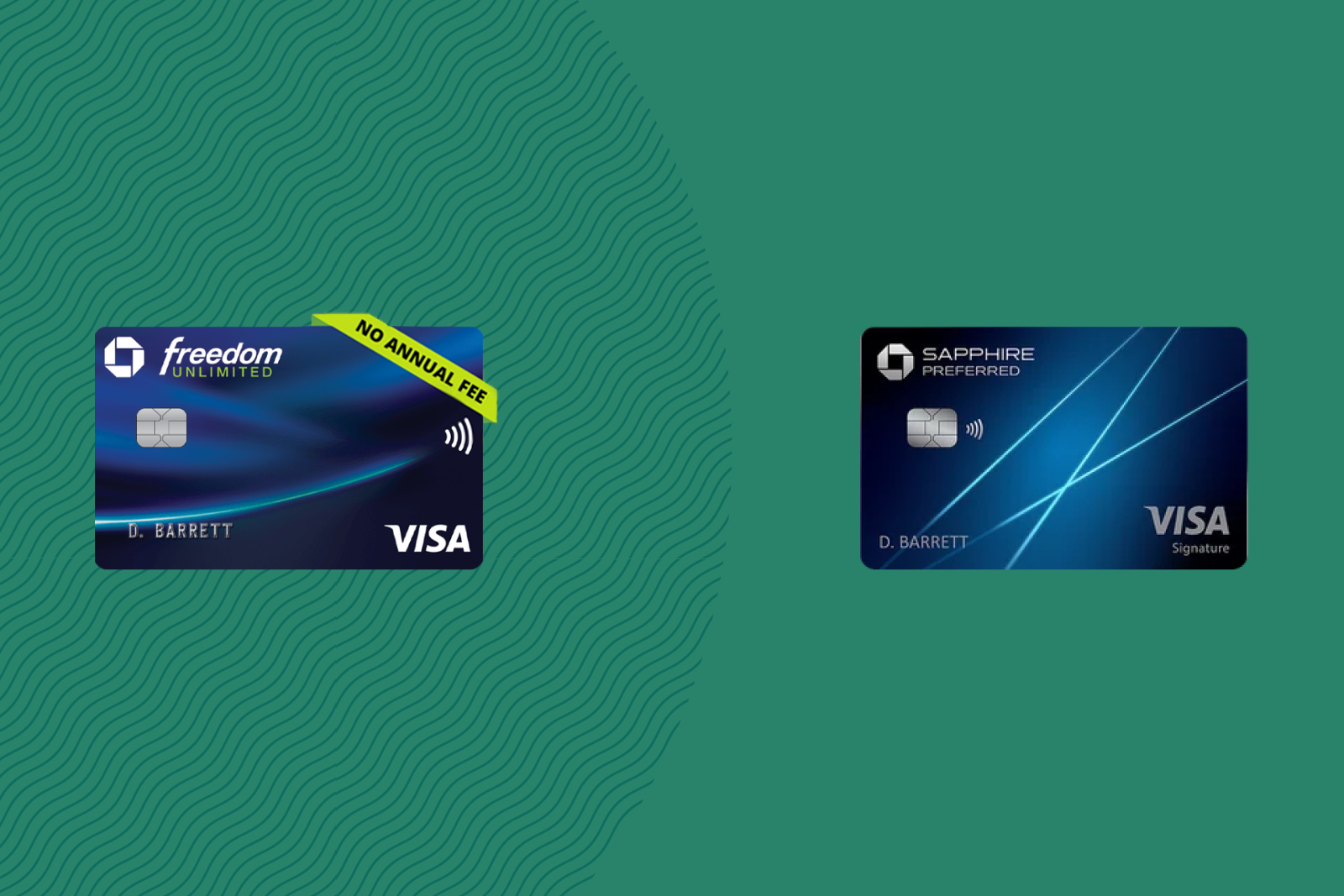
The Chase Freedom Unlimited® (see rates and fees) is a great everyday card. It has no annual fee and earns 5% on travel booked through Chase Travel, 3% cash back on dining (including eligible delivery and takeout) and drugstore purchases, as well as 1.5% back on all other purchases.
Why they’re a great combination: Both cards allow you to earn an strong return on dining purchases, but you’ll earn more on your travel spending outside the portal with the Sapphire Preferred versus the Freedom Unlimited. Where the Freedom Unlimited really shines is in its nonbonus spending.
By itself, the Freedom Unlimited earns cash-back rewards. However, if you also have the Sapphire Preferred, you can combine your rewards from the two cards and transfer them to any of Chase’s 14 travel partners for maximum value.
To learn more, check out our full reviews of the Chase Sapphire Preferred and the Chase Freedom Unlimited.
Apply here: Chase Sapphire Preferred Card
Apply here: Chase Freedom Unlimited
Ink Business Preferred and Chase Sapphire Reserve
The Ink Business Preferred® Credit Card (see rates and fees) is one of our favorite business cards. It earns 3 points per dollar spent on travel, shipping, internet, cable and phone services, and advertising purchases made with social media sites and search engines (on the first $150,000 in combined spending, then 1 point per dollar spent).
Cardholders will also earn 5 points per dollar spent on Lyft purchases (through Sept. 30, 2027) and 1 point per dollar spent on all other purchases.
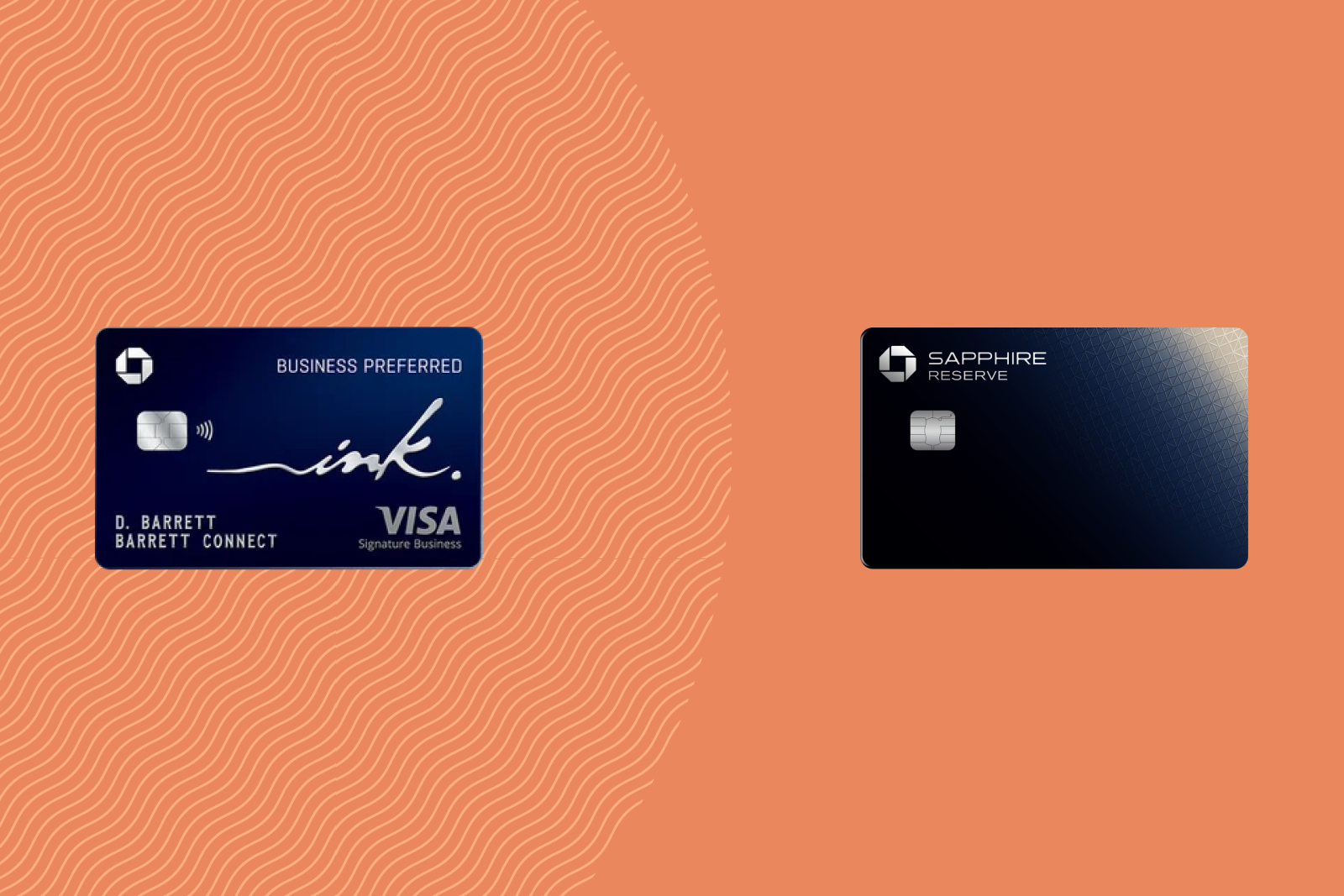
The Chase Sapphire Reserve® (see rates and fees) is the premium sibling of the Chase Sapphire Preferred. With it, you’ll get access to Chase Sapphire and Priority Pass lounges, a flexible $300 annual travel credit and other useful statement credits.
Its bonus categories include earning 8 points per dollar spent on bookings made through Chase Travel; 4 points per dollar spent on flights and hotels booked directly; and 3 points per dollar spent on dining purchases (including takeout and eligible delivery).
Why they’re a great combination: If you have a lot of business expenses, pairing a business card with a personal card can work in your favor. With this combination, use your Ink Business Preferred for the first $150,000 in business purchases each year and your Sapphire Reserve for travel and dining purchases to maximize your points per dollar earning opportunities across the board.
Plus, since both cards earn Chase Ultimate Rewards points, you can pool rewards into one account and redeem them through the Sapphire Reserve’s redemption options or transfer them to Chase’s travel partners.
To learn more, check out our full reviews of the Ink Business Preferred and the Chase Sapphire Reserve.
Apply here: Ink Business Preferred Credit Card
Apply here: Chase Sapphire Reserve
Chase Sapphire Preferred and Sapphire Reserve
Holding both the Chase Sapphire Reserve and the Chase Sapphire Preferred allows you to maximize points on travel spending.
You’ll earn 8 points per dollar spent on all Chase Travel purchases and 4 points per dollar spent on hotels and flights booked directly with the Sapphire Reserve. Plus, with the Sapphire Preferred, you’ll earn 3 points per dollar spent on vacation homes (at top brands*) and 2 points per dollar spent on all other travel purchases.
*Includes Airbnb, Vrbo, Plum Guide, HomeAway, Homestay.com and Vacasa

With this combo, you’ll also receive valuable travel perks, such as lounge access, primary rental car insurance and travel protections.
Why they’re a great combination: Holding both cards will allow you to maximize points on travel spending, ensuring you earn at least 2 points per dollar spent on your travel purchases.
Plus, by holding both cards, your points can be used to book travel directly through Chase Travel at a value of up to 2.5 cents per point with the Points Boost feature (depending on the specific redemption; see your rewards program agreement for full details).
And if you really want to maximize your earnings, you could create a trifecta by adding the Chase Freedom Unlimited, ensuring you earn at least 1.5 points per dollar spent on all purchases.
Apply here: Chase Sapphire Preferred Card
Apply here: Chase Sapphire Reserve
Capital One Savor Cash Rewards and Venture Rewards
The Capital One Savor Cash Rewards Credit Card has no annual fee and is a great option for everyday spending categories. The card earns 5% cash back on hotels, vacation rentals and rental cars booked through Capital One Travel; 3% cash back on dining, entertainment, grocery store purchases (excluding superstores like Walmart® and Target®) and popular streaming services; and 1% cash back on all other purchases.
The Capital One Venture Rewards Credit Card has a $95 annual fee. It earns 5 miles per dollar spent on hotels, vacation rentals and rental cars booked through Capital One Travel and 2 miles per dollar spent on all other purchases, making it a good card for spending that doesn’t fall in other cards’ bonus categories.
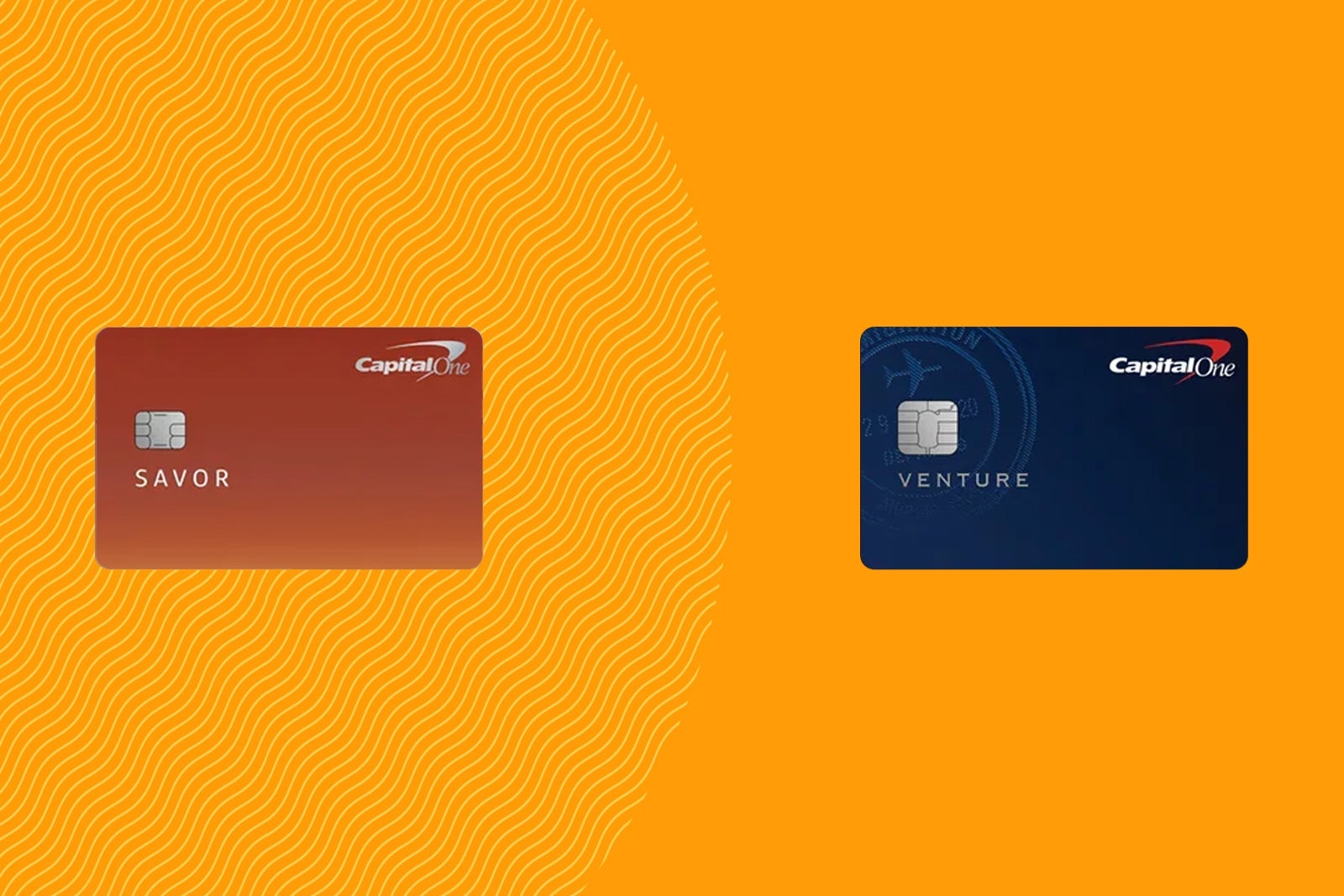
Why they’re a great combination: Use your Savor for purchases in the 3% cash-back bonus categories and your Venture Rewards for all other purchases to earn 2 miles per dollar spent on them. With this duo, you can convert your cash back to Capital One miles and transfer them to any of Capital One’s 15-plus airline and hotel partners.
To learn more, check out our full reviews of the Capital One Savor Cash and the Capital One Venture Rewards.
Learn more: Capital One Savor Cash Rewards Credit Card
Learn more: Capital One Venture Rewards Credit Card
Other ways to pair cards
Add a cobranded card for one of your card’s travel partners
If you already have a card that earns transferable rewards, pairing it with a card that earns rewards for one of its travel partners is a great option.
For instance, if you earn Chase Ultimate Rewards points with your Chase Sapphire Preferred Card, you might want to get the World of Hyatt Credit Card (see rates and fees) to access Hyatt-specific benefits like elite status and a free night each year.
Related: Best hotel credit cards
Diversify your rewards
While most combinations center around earning similar rewards, it’s also a good idea to earn different types of rewards. You could, for example, pair the Amex Gold with the Capital One Venture X Rewards Credit Card.

In this scenario, you would want to use your Amex Gold to earn bonus points on flights (3 points per dollar spent on flights booked directly with airlines, amextravel.com or the Amex Travel App), dining at restaurants worldwide and groceries at U.S. supermarkets (4 points per dollar on up to $50,000 per calendar year and up to $25,000 per calendar year, respectively, then 1 point per dollar spent thereafter) and your Venture X for your other purchases to earn 2 miles per dollar spent.
With this option, you can take advantage of both American Express and Capital One‘s transfer partners, giving you even more flexibility in your reward redemptions.
Related: Credit card transfer partners: Guide to transferring points and miles to airlines and hotels
Consider an affordable duo
If you want to earn transferable rewards without paying an annual fee, pair the Capital One Savor Cash with the Capital One VentureOne Rewards Credit Card.
The VentureOne earns 1.25 miles per dollar spent on all purchases and allows you to turn Savor’s cash back into transferable Capital One miles.
Related: Capital One miles: How to get maximum value when redeeming miles
Maximize bonus categories
If you’re OK with earning different types of rewards and want to make sure you’re maximizing all your purchases, you can set up your card portfolio with cards that earn bonus points or miles in the categories you spend the most in.

For example, you might opt for the Chase Sapphire Reserve to earn 3 points per dollar spent on your dining purchases; the Citi Strata Premier® Card (see rates and fees) to earn 3 points per dollar spent on your gas, EV charging and supermarket purchases; and the Capital One Venture Rewards Credit Card to earn 2 miles per dollar spent on all other purchases.
According to TPG’s June 2026 valuations, this combination would mean you’re getting a 3.7% to 6.2% return on all your spending.
Related: Best rewards credit cards
Set up your ideal structure
Of course, different card combinations work well for different goals. Identifying your credit card goals will help you decide which qualities to focus on when you choose your next card.
For instance, if you want to minimize your annual fees while earning travel rewards, your best card pairs may differ from those listed above.
TPG lead writer Katie Genter pairs her Ink Business Preferred with her Chase Freedom Unlimited, as it allows her to maximize her Chase Ultimate Rewards points while only paying one $95 annual fee.
Related: Chase’s 5/24 rule: Everything you need to know
Bottom line
The smartest credit card strategy often involves pairing cards that complement each other. Start by taking stock of what’s already in your wallet, then align your next card with your spending patterns and reward goals.
With the right combination, you’ll unlock even more value — and be well on your way to maximizing rewards for travel, everyday purchases and beyond.
Related: The best business and personal credit card combinations
For rates and fees of the Amex Platinum, click here.
For rates and fees of the Amex Gold, click here.

Stacie Harris is a local resident and reporter of the Maple Grove area. Stacie reports on medicine and science for the Maple Grove Report.