These items are not allowed in your carry-on luggage when you fly


We’ve likely all grumbled about waiting in a long Transportation Security Administration line at the airport or when the person in front of us didn’t know they had to remove their belt and laptop before walking through the scanner.

However, the TSA’s mission is to “protect the nation’s transportation systems to ensure freedom of movement for people and commerce,” according to the TSA website.

These inconveniences may be frustrating in the moment, but the TSA was put in place to protect travelers. While you are standing in line, officers at the security checkpoint often find items that are prohibited in carry-on luggage.

Related: 5 things you should never pack in a checked bag — even though the airlines allow them

The list of items you are not allowed to bring in your carry-on is long, but it is designed to keep travelers and airline personnel safe. By planning and packing properly, you can help expedite the TSA screening process (and keep those long lines moving).

Here are the items you cannot pack in your carry-on.

Flammables

Flammable liquids and other combustible items are not allowed in carry-on baggage for the obvious reason that they could start a fire. This includes items like:

  • Aerosol sprays
  • Bleach
  • Cooking spray
  • Lighter fluid
  • Pepper spray
  • Butane
  • Spray paint
  • Chlorine
  • Alcoholic beverages over 140 proof

Hand grenades, torch lighters, strike-anywhere matches, fireworks, sparklers and pretty much anything else you could purchase from a fireworks stand also fall into this category. Most of these can’t be packed in your checked luggage, either.

Reward your inbox with the TPG Daily newsletter

Join over 700,000 readers for breaking news, in-depth guides and exclusive deals from TPG’s experts

The TSA does allow passengers to bring a standard lighter or safety matches (the kind that you can only strike on a certain surface) on board an aircraft.

Liquids over 3.4 ounces
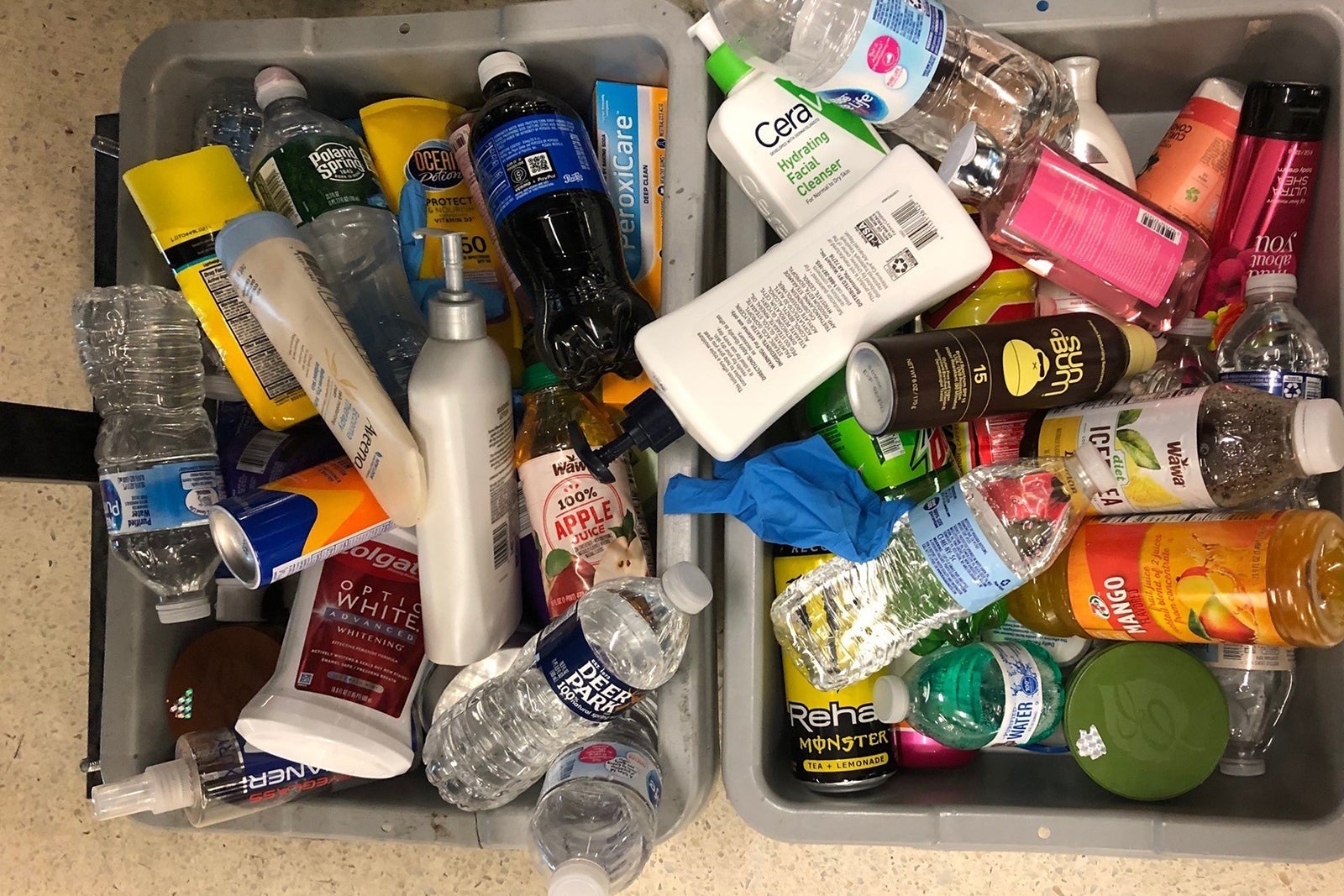
Liquids discarded by TSA at Philadelphia International Airport
CAROLINE TANNER/THE POINTS GUY

With a few exceptions (which we will get to in a moment), liquids that exceed 3.4 ounces are not allowed in carry-on luggage.

Related: TSA liquids rule: Is it next to go after the shoes policy ended?

In most instances, the TSA uses the 3-1-1 rule regarding liquids in carry-on luggage. Liquids must be stored in a 3.4-ounce or smaller container; those liquids must be placed inside one clear quart-size plastic bag; and each passenger is only allowed one plastic bag.

This rule can be tricky because some items you may not immediately consider liquids are treated as liquids by the TSA. These include things like hair products, gel-type candles or heating pads, creams and foods like peanut butter.

The TSA does make exceptions to the 3.4-ounce liquid rule for medically necessary liquids, including baby food, breast milk, baby formula and liquid medications. These items are allowed in your carry-on bag in “reasonable quantities” based on the length of your trip. You will need to declare them to the TSA officer at the checkpoint and remove them for inspection.

Household items and tools

JEAN LUC DE ZORZI/GETTY IMAGES

While you may not use them as weapons at home, there are many household items and tools that could be used as weapons and are, therefore, not allowed in your carry-on bag. These include:

  • Cast-iron cookware
  • Cooking spray (flammable)
  • Screwdrivers longer than 7 inches.
  • Hammers
  • Nail guns
  • Drills and drill bits
  • Mallets

Sporting equipment

PEATHEGEE INC/GETTY IMAGES

Like seemingly innocent household items, certain pieces of sporting equipment have been deemed potentially dangerous to bring into the airplane cabin by the TSA. These include:

  • Baseball bats
  • Cricket bats
  • Canoe paddles
  • Hiking poles
  • Lacrosse sticks
  • Hockey sticks
  • Bowling pins
  • Animal traps or animal repellent spray
  • Tent poles and tent stakes

Weapons

With the exception of tweezers, disposable razors, electric razors, scissors and knitting needles, items that could be used as weapons are not allowed in your carry-on bag. These include:

  • Knives
  • Swords
  • Saws
  • Brass knuckles
  • Nunchucks
  • Axes
  • Cattle prods
  • Self-defense sprays
  • Stun guns and tasers

Firearms

TSA

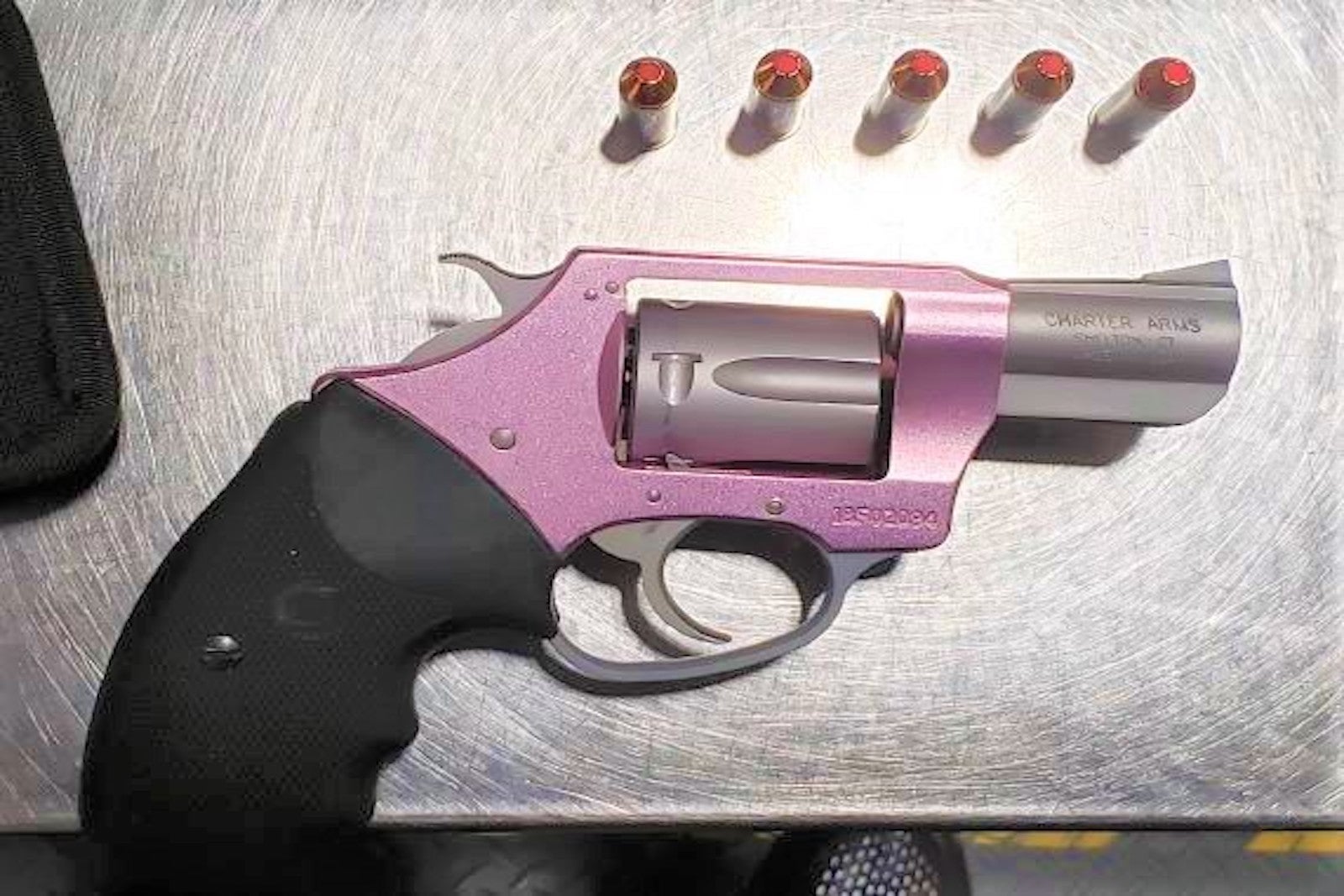
Whether they are loaded or unloaded, firearms — including BB guns and cap guns — are not allowed in carry-on luggage. Ammunition is also banned from carry-on bags.

If you do travel with firearms or ammunition, they must be packed in your checked baggage in compliance with TSA specifications, your airline’s rules and the firearm possession laws in your destination.

Unexpected items

JENENE CHESBROUGH/GETTY IMAGES

It should be pretty clear at this point that if an item could be used as a weapon or considered a hazardous material, you should not bring it in your carry-on bag. However, there are a few items that don’t exactly fall into either of these categories that are still not allowed in your carry-on.
TSA

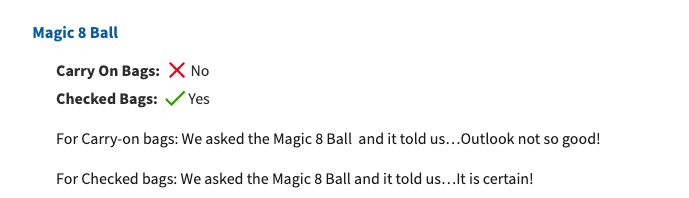
Most snow globes and Magic 8 Ball toys, for example, are not allowed in carry-on luggage because they contain more than 3.4 ounces of liquid. The TSA website clearly states that Magic 8 Ball toys must be stored in checked luggage, but snow globes are allowed if they contain less than 3.4 ounces of liquid and the entire snow globe can fit in your one-quart plastic bag.

Toy guns, swords and knives are also not allowed in carry-on bags. Some toy guns and weapons may be allowed. However, it’s up to the TSA officer’s discretion whether to allow these items in your carry-on luggage, so it’s best to pack them in your checked bag. Realistic replicas of hand grenades or other explosives are not allowed in carry-on or checked baggage.

Bottom line

While most travelers have good intentions, these items are banned from carry-on luggage as a precautionary measure. Some could be used to do harm to others, and some, like flammable liquids or combustible items, could accidentally ignite during a flight, causing a serious danger to those on board.

Bringing prohibited items on board not only causes delays for you and those around you, but it can also constitute a criminal offense, punishable by a hefty fine or jail time.

Related: 4 things the TSA really doesn’t want you to bring on an airplane

If you ever have a question about a specific item, the TSA keeps a nearly exhaustive database of prohibited items on its website and the MyTSA app, or you can text “Travel” to AskTSA (275-872).


Source link

Leave a Reply

Subscribe to Our Newsletter

Get our latest articles delivered straight to your inbox. No spam, we promise.

Recent Reviews


Medically reviewed by Kierra Brown, RD

Canned sardines and anchovies are high in protein and healthy fats, plus they have a long shelf life.Credit: Design by Health; Getty Images
Canned sardines and anchovies are high in protein and healthy fats, plus they have a long shelf life.
Credit: Design by Health; Getty Images
  • The nutritional profiles of anchovies and sardines are very similar.
  • Compared to sardines, anchovies contain slightly more protein and omega-3 healthy fats.
  • However, sardines have higher concentrations of many vitamins and minerals, and usually have less added sodium.

Anchovies and sardines are both small, oily fish that are usually canned or jarred. Despite their similarities, anchovies and sardines do have some nutritional differences when it comes to protein, healthy fats, and micronutrient content.

Which Small Fish Has More Protein?

 While both fish are excellent sources of lean protein, anchovies have a slight edge:

  • Sardines, canned in oil: 6.97 grams in a 1-ounce serving
  • Anchovies, canned in oil: 8.19 grams in a 1-ounce serving

The amount of protein your body needs depends on a number of factors, including age, health status, and physical activity levels.

Healthy adults should consume 1.2-1.6 grams of protein per kilogram of body weight, according to updated federal dietary guidelines.

For example, if someone weighs 70 kilograms (or 155 pounds), they may want to consume at least 84 grams of protein every day. A 1-ounce serving of anchovies canned in oil would get them about 10% of the way toward that daily protein goal.

Protein is critical for cell development and repair, contributing to physical growth and development.

Is One a Better Source of Healthy Fats Like Omega-3s?

When it comes to healthy fats in general, sardines come out on top:

  • Sardines, canned in oil: 2.56 grams of unsaturated fat in a 1-ounce serving
  • Anchovies, canned in oil: 1.8 grams of unsaturated fat in a 1-ounce serving

But if you're looking to boost your levels of omega-3 fatty acids—a specific type of healthy unsaturated fat—anchovies are the better choice. A 1-ounce serving contains 594 milligrams of omega-3s, while the same amount of sardines has 278 milligrams.

Consuming more omega-3s and healthy fats in general may benefit multiple different aspects of your health:

  • Heart health: Omega-3s help reduce levels of triglycerides, or fats in the blood; high triglyceride levels are a risk factor for heart disease and stroke. In general, research has shown that eating unsaturated fats in place of saturated fats—the kind found in full-fat dairy, red meat, and tropical oils—reduces your risk of heart disease.
  • Brain health and cognitive function: Some research suggests that insufficient levels of omega-3s may increase the risk of brain health concerns, including Parkinson's disease, schizophrenia, attention deficit hyperactivity disorder (ADHD), and depression. Another study found that omega-3 supplements could improve mild cognitive impairment, a condition that causes memory and thinking issues that can develop into dementia.
  • Eye health: In some studies, people who ate fatty fish (and more omega-3s) had a lower risk of age-related macular degeneration, a condition that can blur vision. Similarly, there's evidence that diets higher in omega-3s could reduce the risk of dry eye disease. However, more research is needed.

How Do They Compare for Vitamin and Mineral Content?

Along with protein and healthy fats, sardines and anchovies are packed with essential micronutrients. However, they contain different amounts of these key vitamins and minerals:

  • Vitamin B12: Sardines have about 10 times more vitamin B12 than anchovies. This B vitamin supports nerve cell function, red blood cell formation, metabolism, and the creation of DNA.
  • Vitamin D: One sardine has the vitamin D content of about eight anchovies. Vitamin D helps the body absorb calcium and supports bone maintenance and growth.
  • Iron: As compared to sardines, anchovies contain about 60% more iron. This mineral helps form red blood cells, supports muscle and tissue function, and more.
  • Phosphorus: Sardines are nearly twice as rich in phosphorous than anchovies are. In fact, a 1-ounce serving of sardines contains about 20% of the daily recommended intake for adults. Phosphorus is key in creating structures in the body, including teeth, DNA, and cell membranes.
  • Calcium: As compared to anchovies, sardines are a better source of calcium, a mineral which helps support and maintain bone health.

Comparing Sardines and Anchovies

Nutritional content always varies based on packaging and other factors, but here's how a typical 1-ounce serving of anchovies compares to a 1-ounce serving of sardines:

Sardines, canned in oil Anchovies, canned in oil
Calories 59 60
Protein 6.97 grams (g) 8.10 g
Total fat 3.23 g 2.75 g
Carbohydrates 0 g 0 g
Calcium 108 milligrams (mg) 65.8 mg
Iron 0.828 mg 1.31 mg
Magnesium 11.1 mg 19.6 mg
Phosphorus 139 mg 71.4 mg
Potassium 113 mg 154 mg
Selenium 14.9 micrograms (mcg) 19.3 mcg
Sodium 87 mg 1,040 mg
Zinc 0.371 mg 0.692 mg
Vitamin B12 2.53 mcg 0.249 mcg
Vitamin D 1.36 mcg 0.482 mcg

In addition to their relatively similar nutritional profiles, sardines and anchovies share many other commonalities.

Both are considered forage fish, and they're often eaten by larger fish or marine mammals. Sardines are a bit bigger—they're 4-12 inches while anchovies are usually 7-8 inches—but both species' relative small size and low position on the food chain ensures they have low mercury levels.

Once they're harvested, anchovies and sardines are usually jarred or canned in water or oil to make them shelf stable. One difference is that canned anchovies are often salt-cured—this gives them a pink color and a salty flavor (as well as high amounts of sodium).

What To Know Before Adding These Small Fish to Your Diet

Anchovies and sardines aren't naturally high in sodium (or salt), but jarred or canned versions often have a lot of salt added.

For instance, a 1-ounce serving of anchovies canned in oil contains 1,040 milligrams of sodium, which is 45% of the recommended daily limit for adults.

Diets high in sodium raise your risk of developing high blood pressure, heart diseases, artery diseases, heart attack, and stroke.

When purchasing canned fish, check the nutrition label and try to find a product that has lower amounts of sodium.

Sardines and anchovies also usually contain bones. The canning process makes these bones safe to eat, though young children and people with swallowing concerns may want to avoid them.


Source link