Toilet Maker Toto Is Here To Help With The RAM Crisis


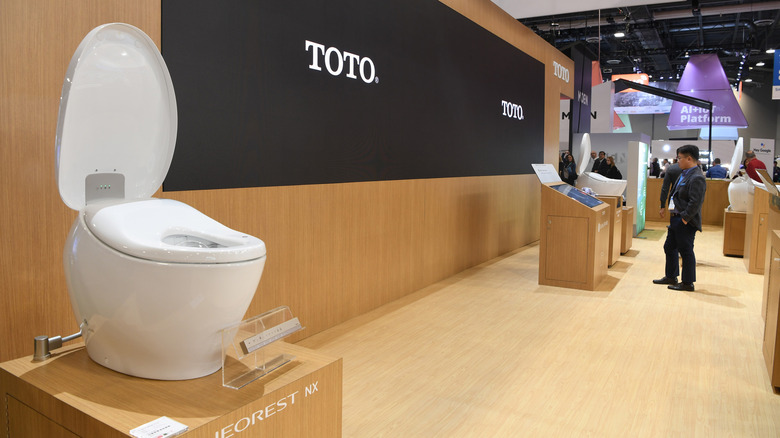
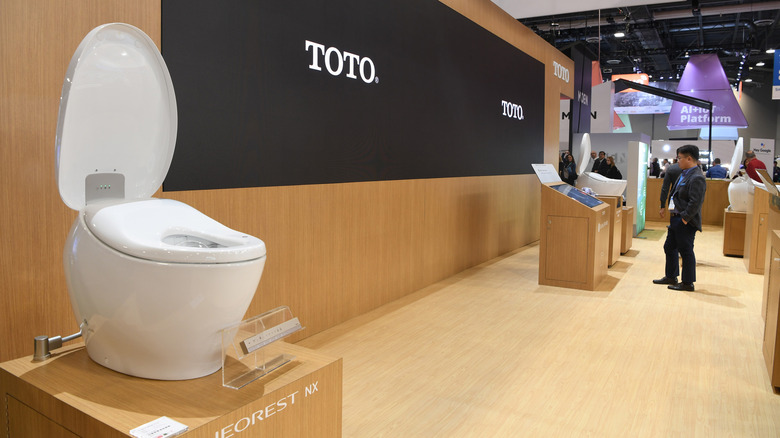
If you think that companies should stick to their core expertise, Toto is here to flush away that notion. The Japanese company is best known for its bidet-style “Washlet” toilets, but it also has an advanced ceramics division that produces components used in NAND memory chips. That business gained 34 percent over last year thanks to AI chip demand, accounting for 55 percent of Toto’s 53.8 billion yen ($343.5 million) operating profit so far this year. Toto expects that division to continue to grow rapidly, around 27 percent next year. To that end, the company plans to invest another 30 billion yen (around $192 million) over the next fiscal year to boost mass production and R&D.

As it turns out, Toto is the world’s second-largest producer of electrostatic chucks (E-chucks) used to manufacture NAND memory. Those are designed to securely hold silicon wafers into place during fabrication via electrostatic force. The ceramic division (established in 1984) also makes aerosol deposition components and structural parts used to manufacture large LCD panels, according to Nikkei

Toto isn’t the only unlikely Japanese company benefiting from AI. Cosmetics manufacturer Kao has a business making cleaning agents for semiconductors, while monosodium glutamate (MSG) inventor Ajinomoto is investing 25 billion yen ($159.5 million) in the production of insulating film used for motherboards. 

Toto’s results show how the AI boom, which has powered a sustained stock market rise via companies like NVIDIA, has lifted other, more unexpected industries as well. The concern, of course, is about an AI bubble that could eventually pop and tank the entire economy. 


Source link

Leave a Reply

Subscribe to Our Newsletter

Get our latest articles delivered straight to your inbox. No spam, we promise.

Recent Reviews


Meta has agreed to “substantially reduce” its use of the PG-13 ratings system in relation to its Teen Accounts on Instagram starting April 15.

Last year, the Motion Picture Association objected to Meta directly referencing its movie content rating, which cautions parents against letting their pre-teens engage with certain media. In a cease-and-desist letter seen by  at the time, the MPA said that Meta claiming its were comparable to PG-13 ratings was “literally false and highly misleading.”

The MPA argued that its guidelines for the established movie-ratings system and Meta’s own explanation of the revamped accounts for minors did not align, and that drawing a link could have a detrimental effect on the MPA’s public image by association. It also said that Meta’s system seemingly relies heavily on AI to determine what younger users see on the social media platform.

When introducing the changes in 2025, Meta said that the risk of seeing “suggestive content” or hearing certain language in a movie rated 13+ was a good way of framing something similar happening on an Instagram teen account. It added that it was doing all it could to keep such instances to a minimum.

Meta has now updated that initial blog about the changes after coming to an agreement with the MPA, adding a lengthy disclaimer that reads, in part, “there are lots of differences between social media and movies. We didn’t work with the MPA when updating our content settings, they’re not rating any content on Instagram, and they’re not endorsing or approving our content settings in any way.”

Meta goes on to explain that it drew “inspiration” from the MPA guidance given its familiarity with parents, as well as feedback it had received from parents, and will continue to do so. The difference is that it won’t make the connection so explicitly in its communications going forward.

“Today’s agreement clearly distinguishes the MPA’s film ratings from Instagram’s Teen Account content moderation tools,” said Charles Rivkin, Chairman and CEO of the MPA. “While we welcome efforts to protect kids from content that may not be appropriate for them, this agreement helps ensure that parents do not conflate the two systems – which operate in very different contexts. The MPA is proud of the trust we have built with parents for nearly sixty years with our film rating system, and we will continue to do everything we can to protect that trust.”


Source link