United debuts swanky new Boeing 787-9 Dreamliner, Polaris Studios


United Airlines’ most premium plane ever is here and ready for takeoff — and it’s fully equipped with the next era of its Polaris business-class cabin.

Inside a hangar in Los Angeles on Tuesday, the Chicago-based carrier took the proverbial wrapper off its brand-new Boeing 787-9 Dreamliner in one of the more anticipated new-aircraft reveals in the airline’s history.

This plane sports what United is calling its “Elevated” interior — an all-new flagship international cabin with new seating products in every section of the plane.

Headlining this upscale Dreamliner is a massive business-class cabin that sports a whopping 64 lie-flat suites — each with a sliding privacy door.

SEAN CUDAHY/THE POINTS GUY

Eight of the 64 Polaris suites on board are the carrier’s extra-spacious “Polaris Studios,” which will serve as the most high-end seats United will offer going forward.

All told, it’s the biggest bet — among many — that United has made in doubling down on travelers’ willingness to pay for high-end seats (or book them with their miles).

Will it work? Passengers will get their first glimpse at the aircraft in the coming days on some domestic flights — before this plane sets its sights on Singapore next month.

SEAN CUDAHY/THE POINTS GUY

Before then, TPG got a sneak peek at this spiffy jet.

Here’s a look!

Reward your inbox with the TPG Daily newsletter

Join over 700,000 readers for breaking news, in-depth guides and exclusive deals from TPG’s experts

United’s new Polaris business-class cabin

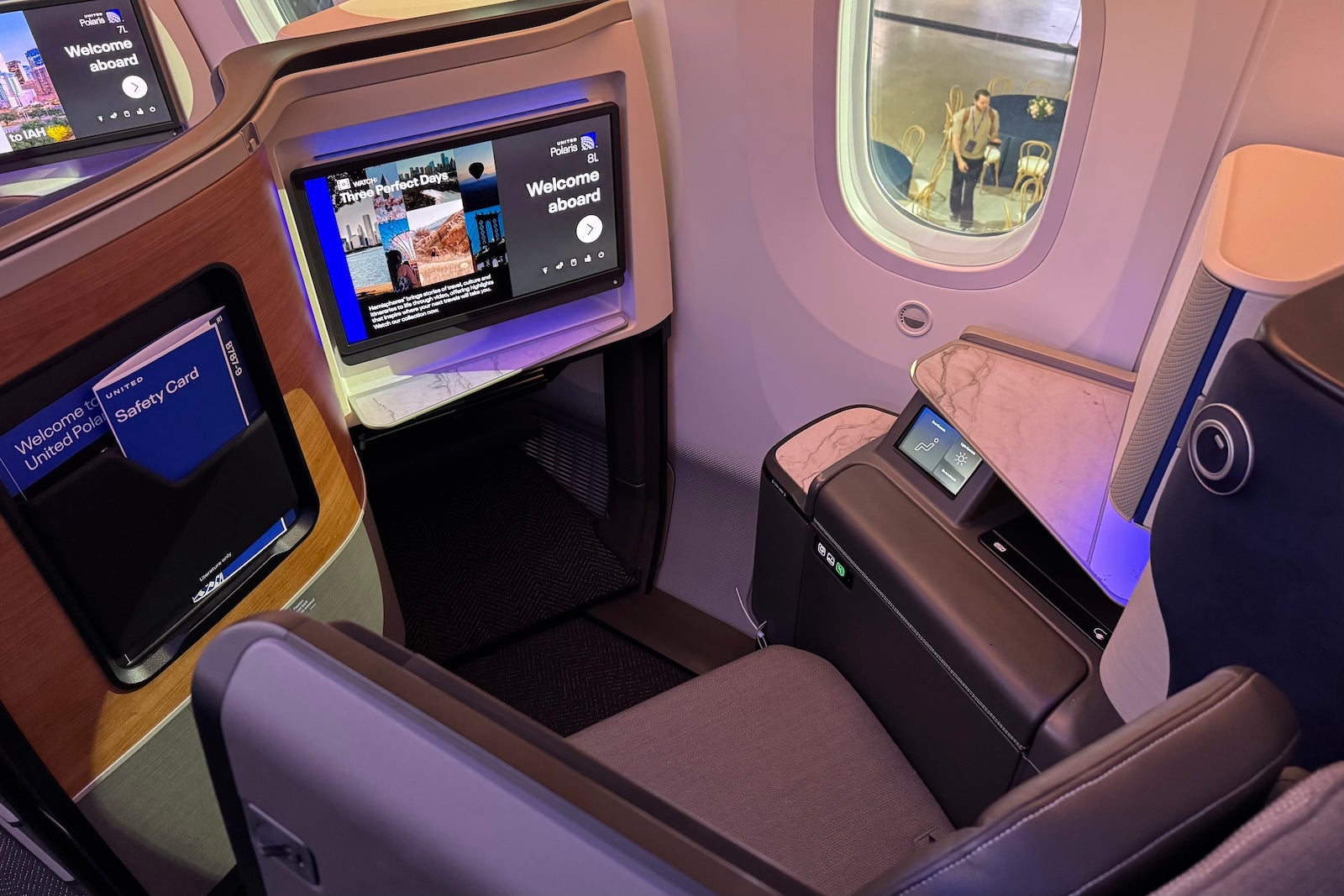
United’s new Elevated 787-9 actually features two Polaris business-class cabins; when you climb on board, you’ll see lie-flat seats to both your left and right.
SEAN CUDAHY/THE POINTS GUY

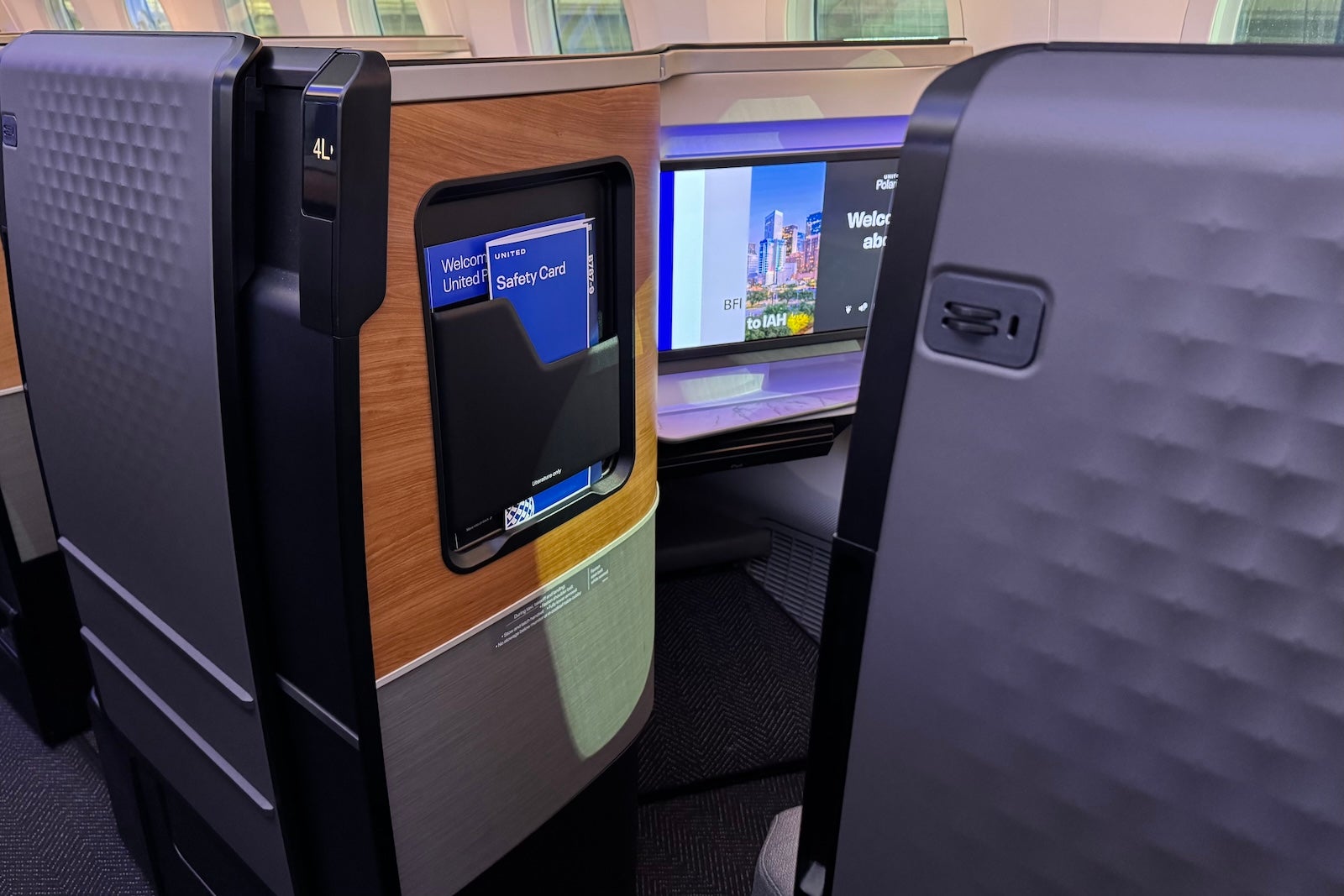
This aircraft boasts United’s next-generation Polaris suites and marks the airline’s first foray into offering enclosed privacy suites — something Delta Air Lines currently offers in its Delta One business-class product and American Airlines began to debut last year on some planes.
SEAN CUDAHY/THE POINTS GUY

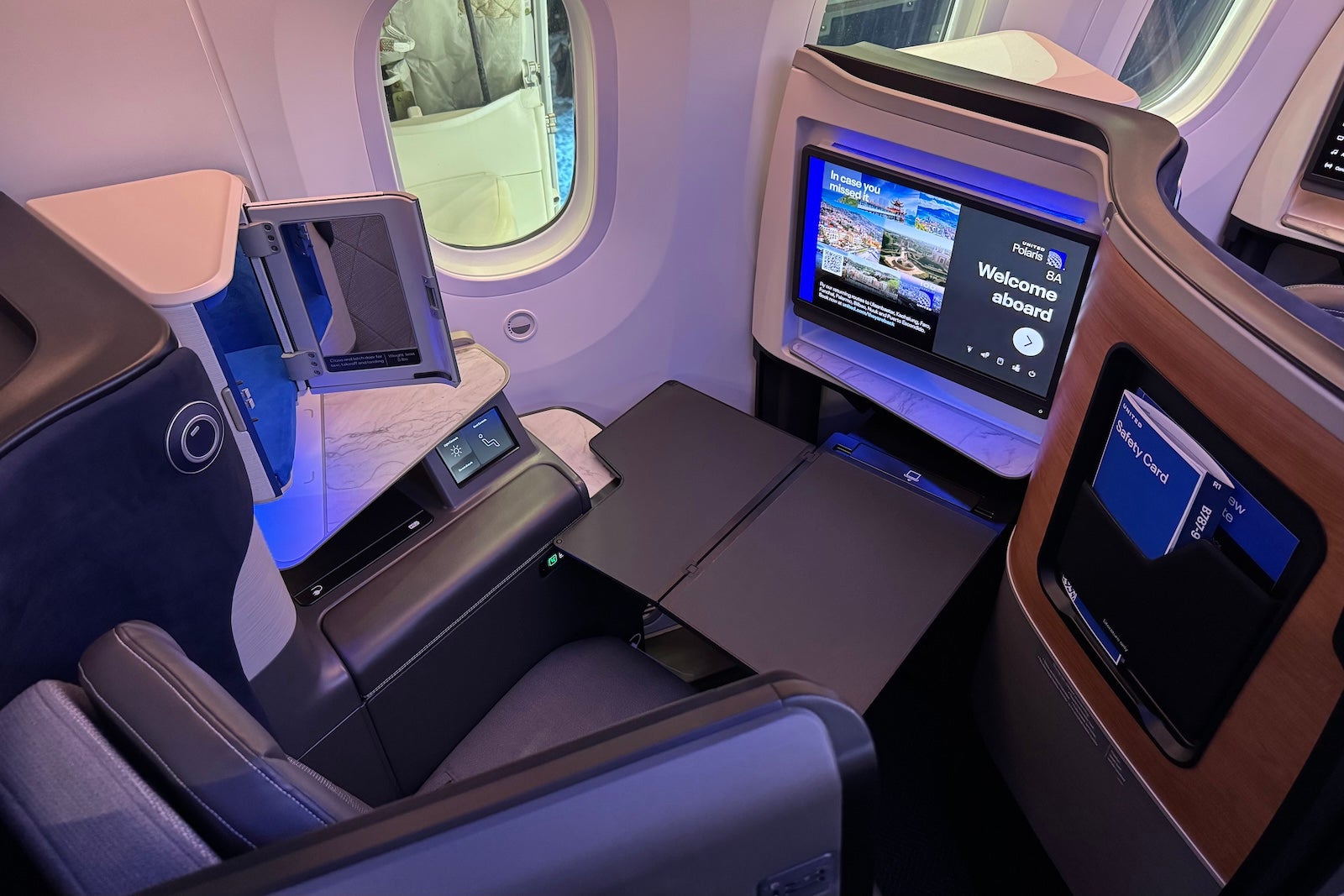
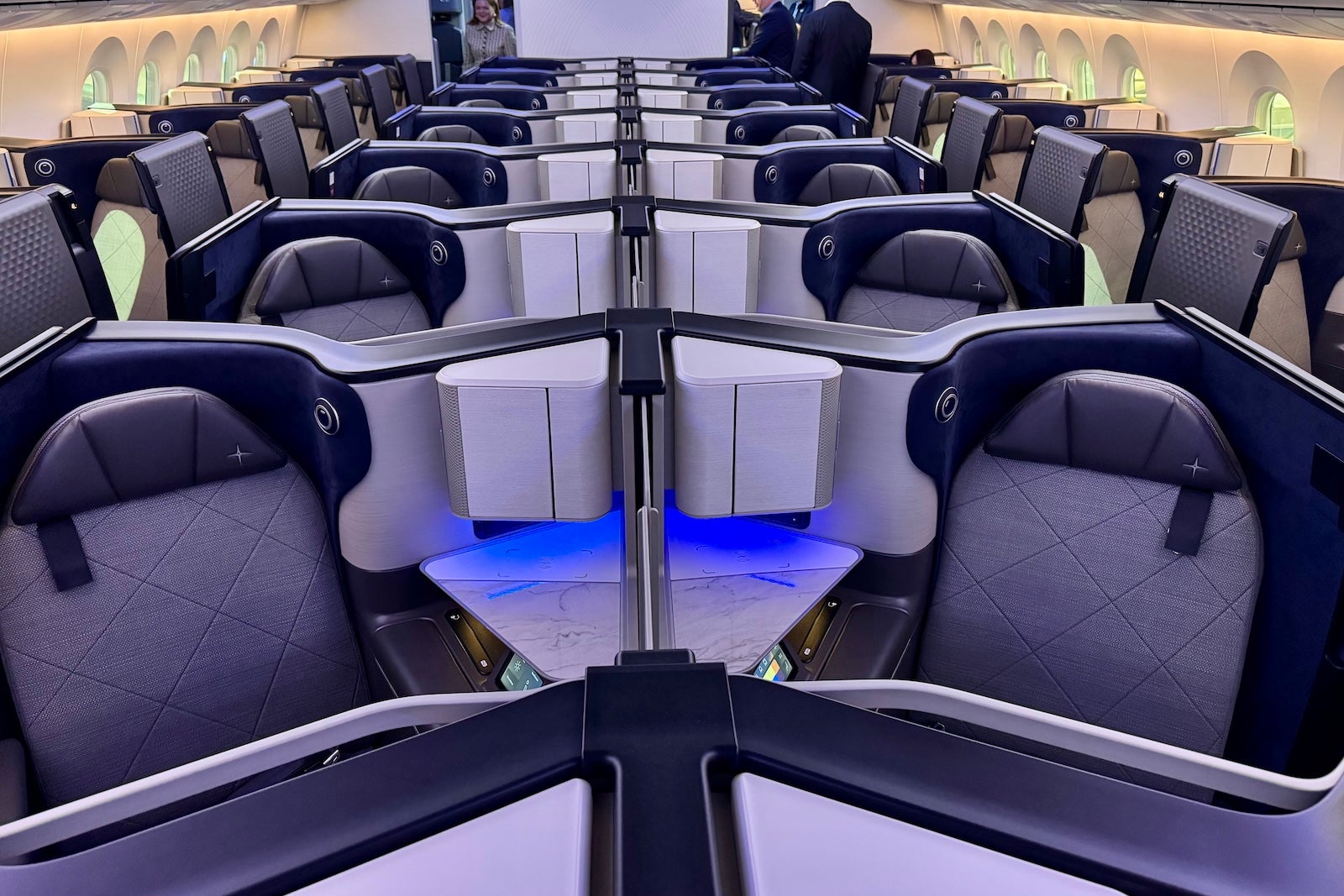
The 56 standard Polaris suites are equipped with 19-inch 4K screens and a variety of high-tech bells and whistles (like four different ways to power electronic devices).
SEAN CUDAHY/THE POINTS GUY

Note that the suites are arranged so that you can select either aisle- or window-facing pods, which might be ideal (or not) depending on whether you’re traveling with a companion or flying solo.
SEAN CUDAHY/THE POINTS GUY

Polaris Studios

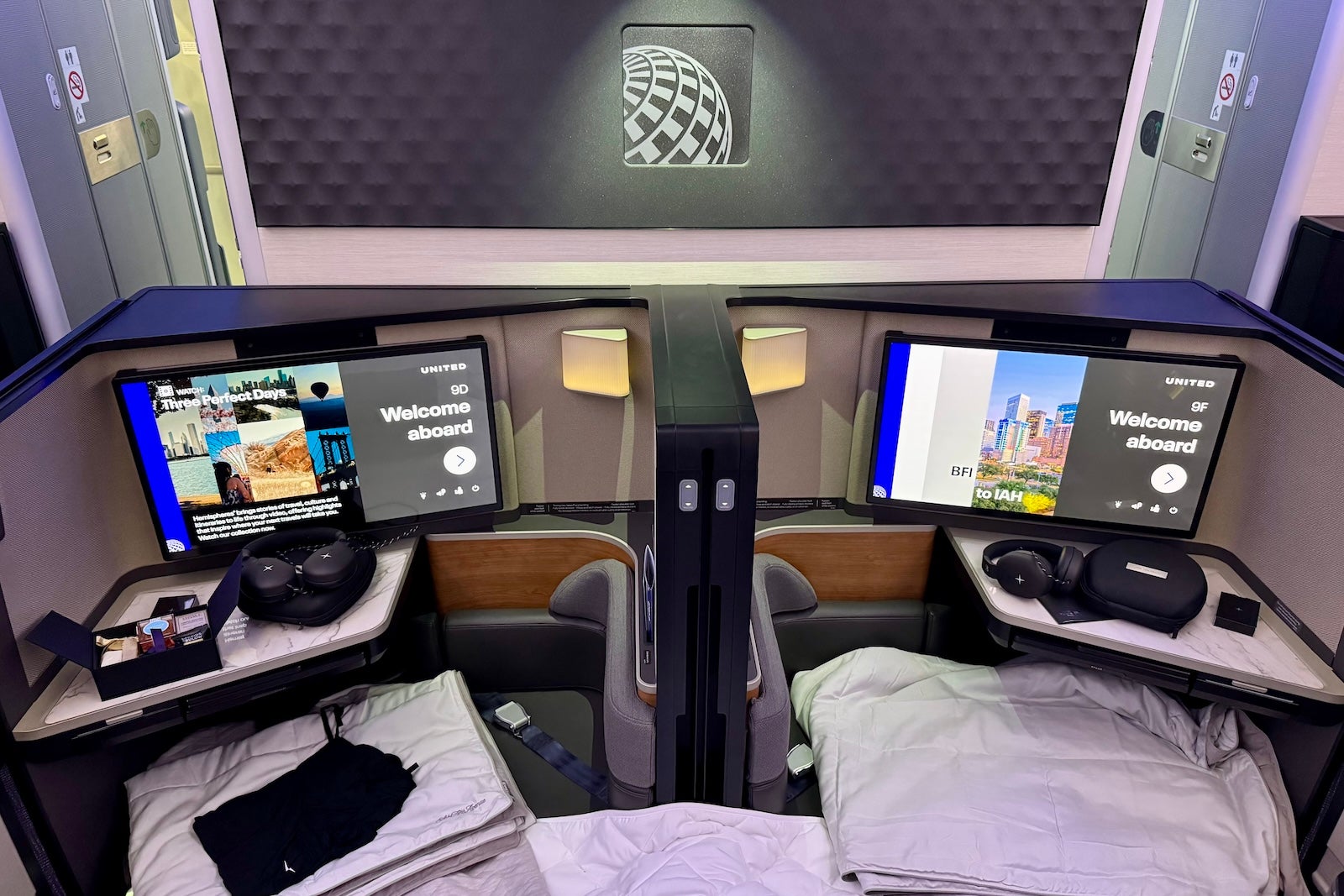
The most memorable product on these aircraft, though, is the enhanced Polaris Studios, which are arranged in a 1-2-1 configuration in the first row of the plane — and the first row of the second business-class cabin.

Likely a popular feature for couples traveling together: If you book the center two Polaris Studios, you can transform the lie-flat seats into a de facto double bed.
SEAN CUDAHY/THE POINTS GUY

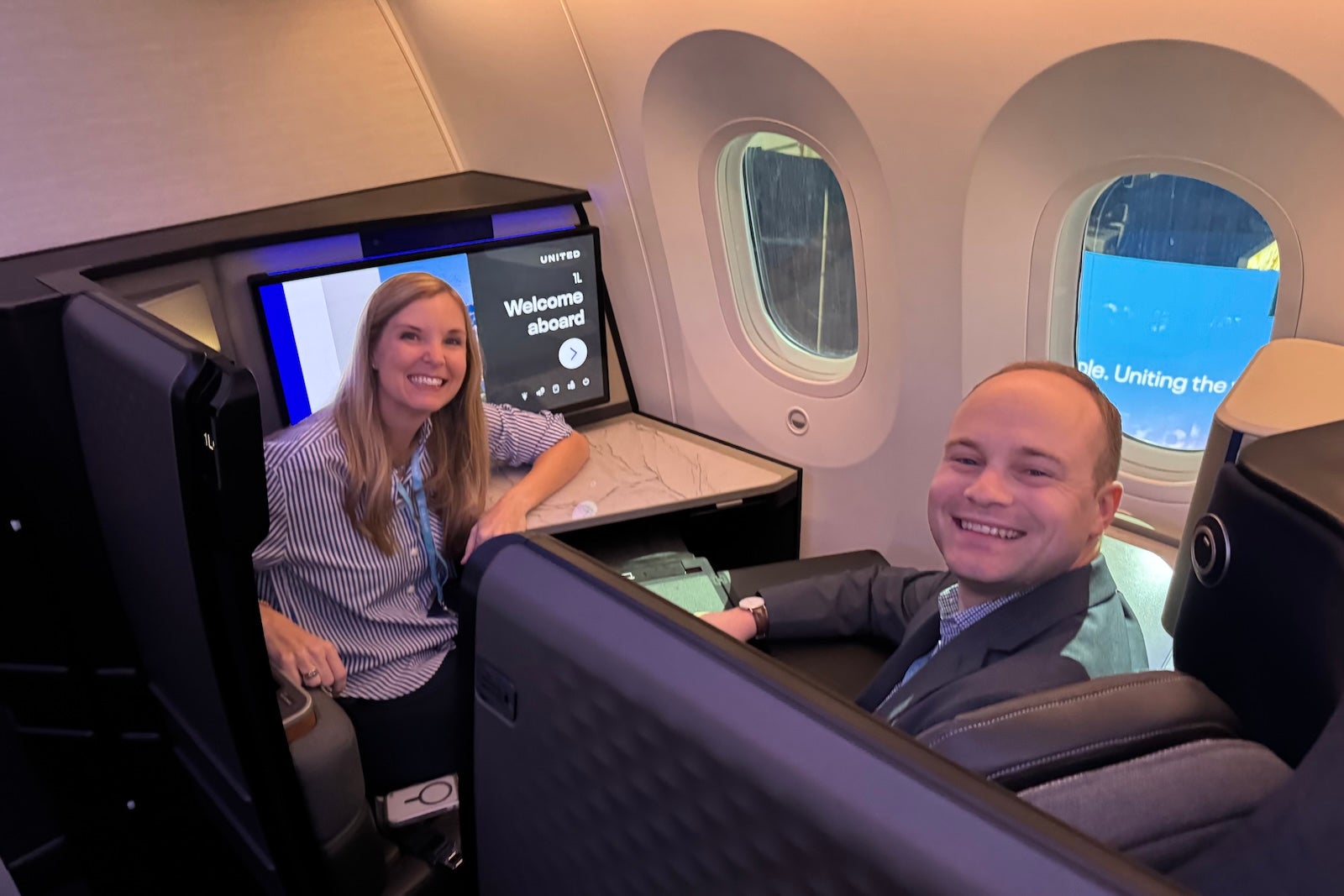
That’s on top of a buddy seat to allow traveling companions to dine together, which TPG’s Summer Hull and I tried out on board.
SEAN CUDAHY/THE POINTS GUY

These studio suites have an enormous 27-inch entertainment screen. And landing one of these seats (here’s how much extra it costs) will get you some luxe upgrades like exclusive pajamas, a caviar amuse-bouche course and — oh yeah — a tarmac transfer to the aircraft.

TPG’s coverage of United Airlines’ recent announcements:

Refreshed Premium Plus cabin

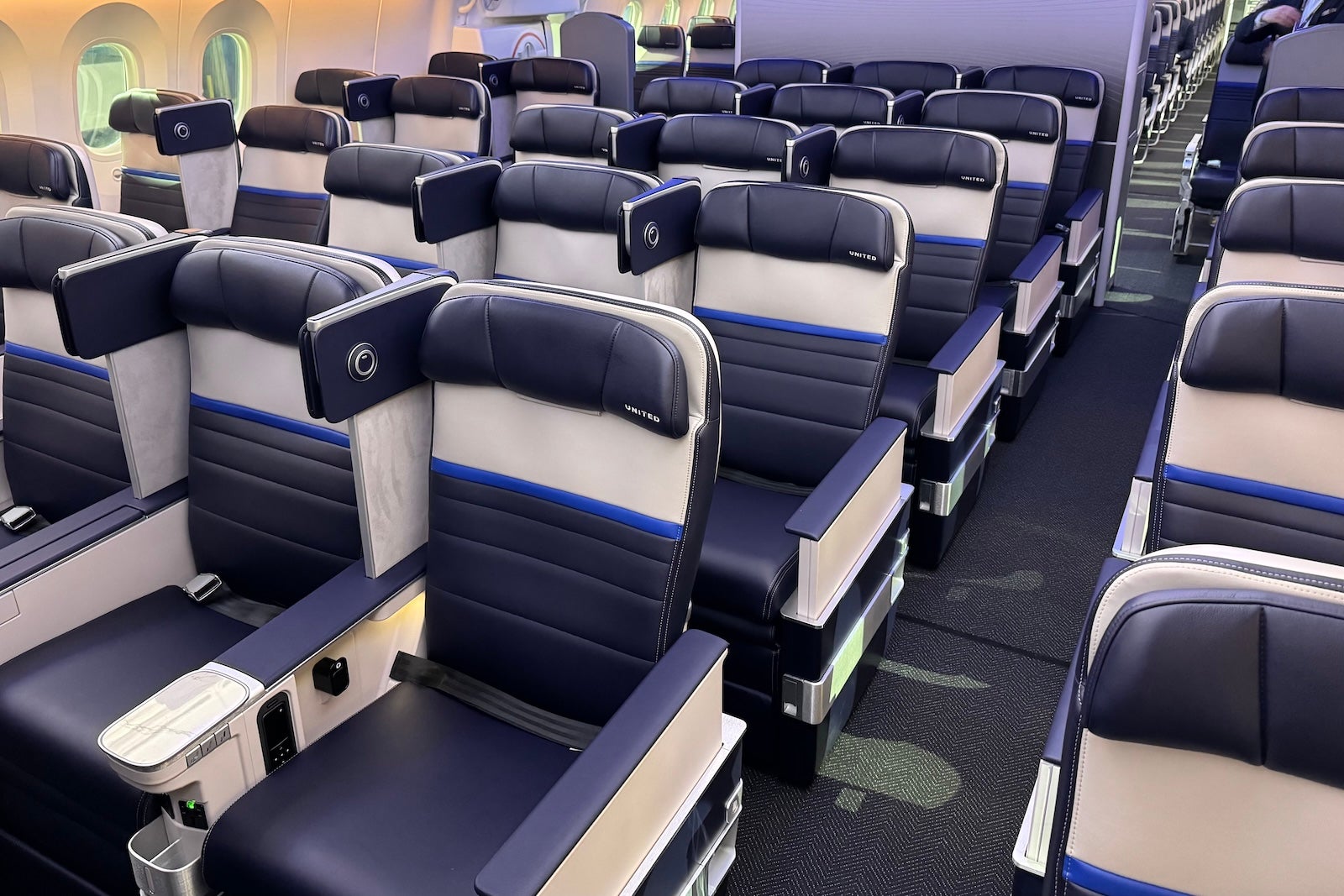
In the middle of the plane, United’s new Elevated 787-9 includes a revamped Premium Plus (premium economy) cabin.
SEAN CUDAHY/THE POINTS GUY

There are 35 of these recliners arranged in a 2-3-2 configuration across five rows. These seats have privacy dividers, reading lights, and legrests and footrests.
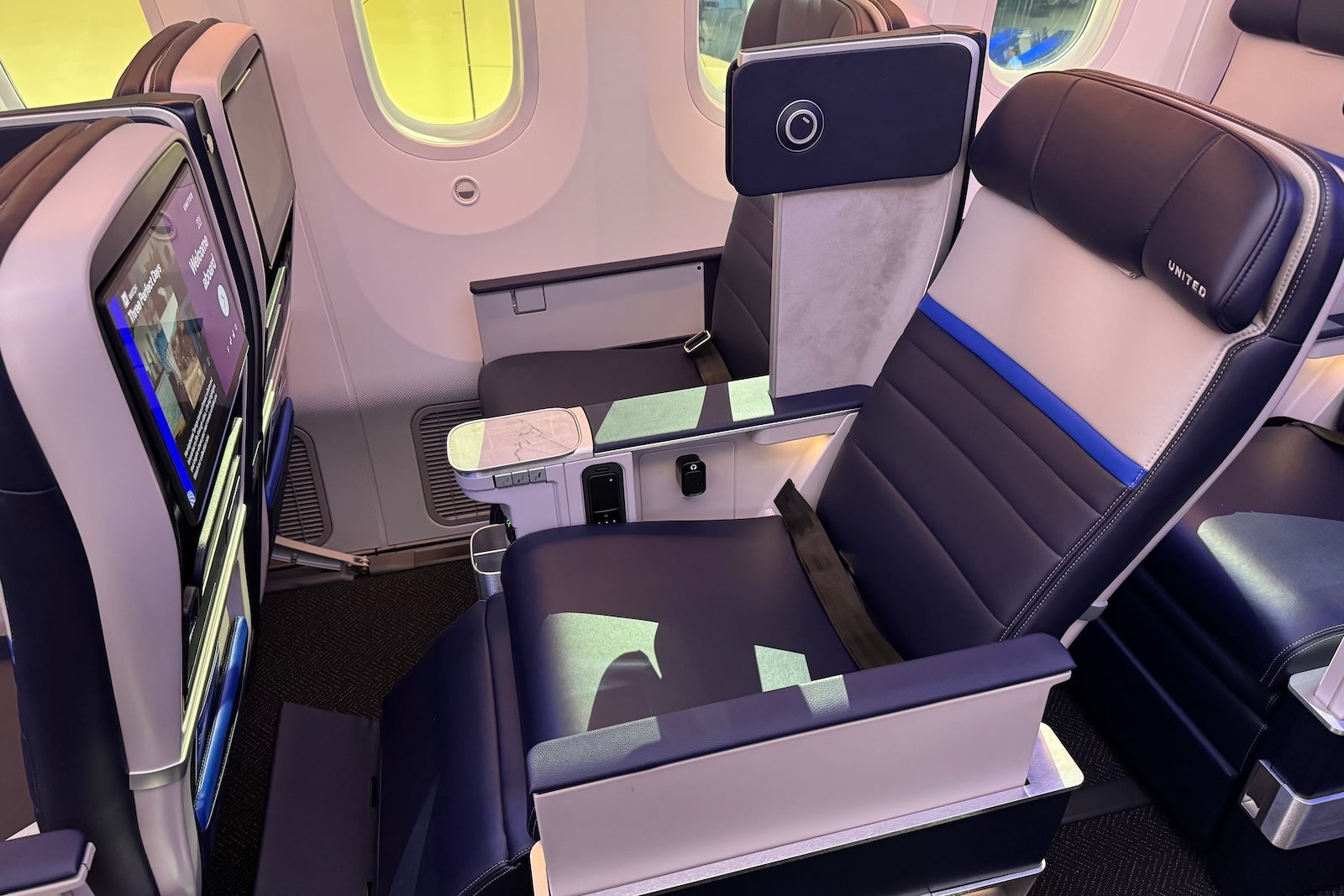
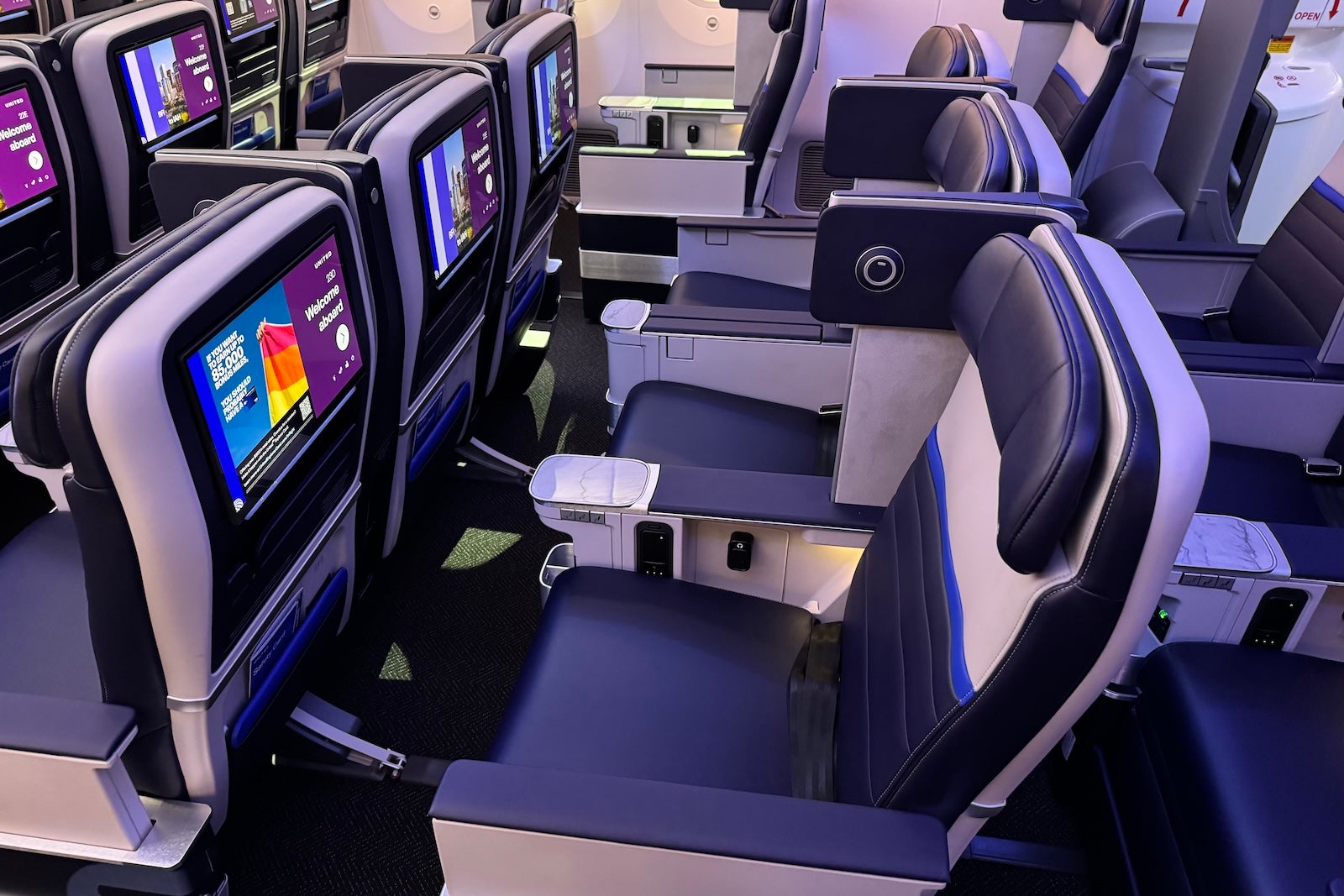
There are 99 total premium seats between the Polaris and Premium Plus cabins. That’s a 43% jump from other jets of the same size that United flies today.

Main cabin with big seatback screens

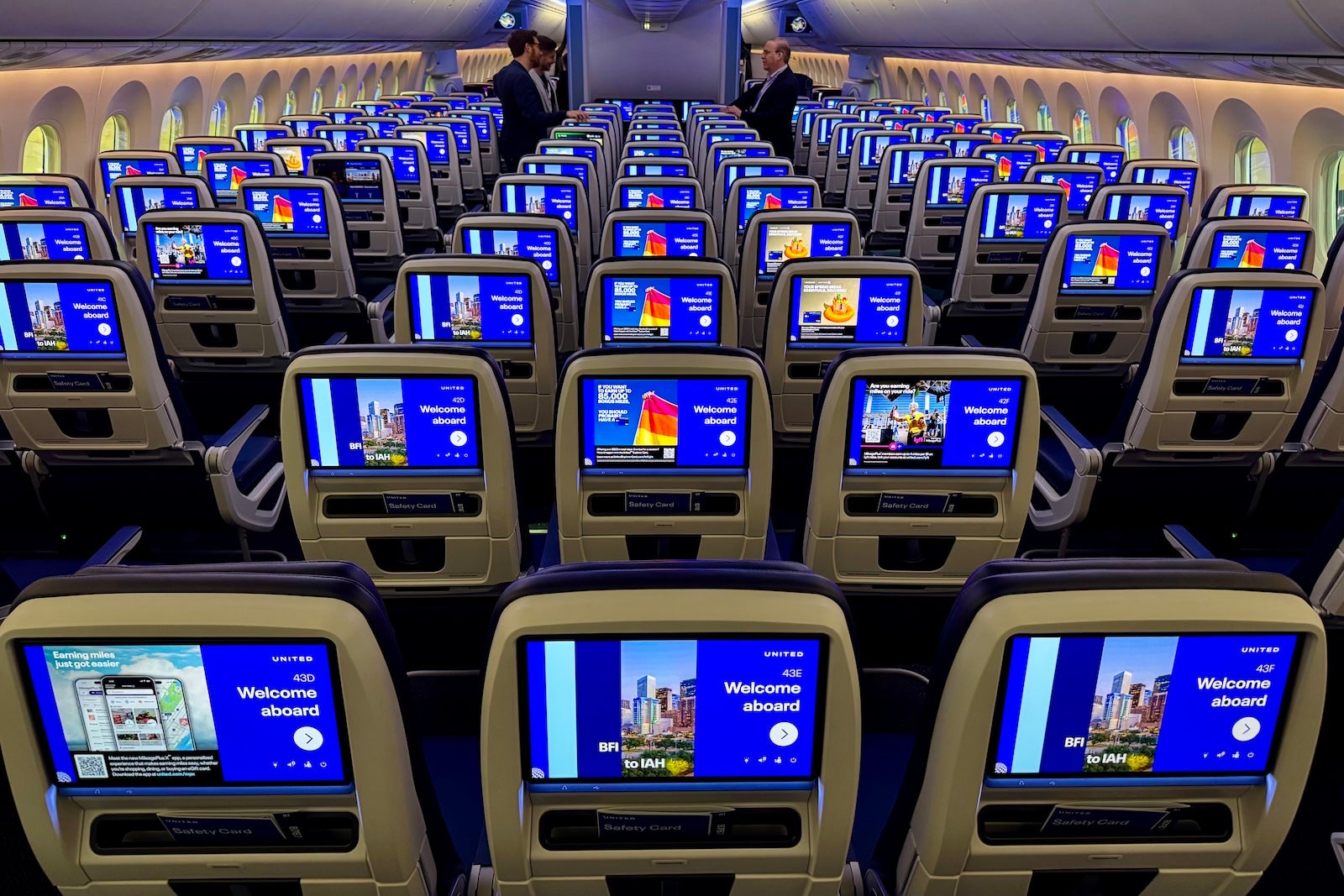
Finally, the main cabin got an upgrade on this new plane, too — including 13-inch 4K seatback screens that United claims are the biggest in economy in the world.

Speaking of tech, as you might expect, each seat (and seatback screen) on this aircraft will be capable of connecting to Bluetooth headphones like AirPods.
SEAN CUDAHY/THE POINTS GUY

Thirty-three of the 123 seats in coach are United’s extra-legroom Economy Plus seats. That means a mere 40% of the seats on this plane, which seats 222 passengers, are standard coach seats — a sign of just how posh the aircraft skews.

SEAN CUDAHY/THE POINTS GUY

Where will United’s Elevated 787 fly?

After some initial domestic flights over the next few weeks, United is launching its 787-9 Elevated aircraft on service from its San Francisco International Airport (SFO) hub to Singapore on April 22.

Right after that, on April 29, the plane will jet off from SFO to London’s Heathrow Airport (LHR).

Expect the aircraft on a lot more routes in the coming months: United said it expects to take delivery of 20 of these planes in 2026.

SEAN CUDAHY/THE POINTS GUY

Tuesday’s unveiling of this plane came on the same day the carrier announced a host of other fleet upgrades, including an upscale new Polaris-equipped Airbus A321 “Coastliner” that will fly some of its top transcontinental routes beginning later this year.

And the carrier will debut a new, first-class-heavy regional jet configuration this fall that might soon be the fanciest regional jet in America.

Related reading:


Source link

Leave a Reply

Subscribe to Our Newsletter

Get our latest articles delivered straight to your inbox. No spam, we promise.

Recent Reviews


The internet is changing and so is the way we search and find information. The trick behind all the search queries is nothing but a web crawler.

Yes, the machine that searches the web, retrieves data, and assists search engines such as Google in sorting the information into searchable indexes. Search engines would be nothing without crawlers. But do you know there are different types of crawlers lately?

Well, traditional crawlers like Googlebot have been using rule-based systems over the years to retrieve information and sift through links and draw results to user queries. This method is still effective, although there are a few limitations it comes with.

Let’s now introduce the new age of AI-powered crawlers, a next-generation genus of bots, based on artificial intelligence and machine learning. These crawlers do not just search the sites; they comprehend the sites. Through semantics, tone and context, they are going above and beyond in the web searching landscape.

Here in this blog, we are going to discuss the differences between traditional and AI crawlers, alongside how they will transform search in the future and share practical tips to make your content the best to thrive in today’s digital world.

So, let’s get started!

What are Traditional Crawlers? Traditional Crawlers

The old-fashioned crawlers, namely Googlebot and Bingbot are based on the following principles, scan, copy and index. They operate similar to librarians and index the information by use of HTML structures, metadata, and keywords.

    • Process: They search links, analyze code, and store page information in huge search databases.
    • Reliability: Suits well with static web sites and organized content.
    • Weakness: Problems with changing websites, with dynamic components, such as JavaScript-bulky applications, and subtle context.

As an example, a traditional crawler might not pick up the product information in a product page when it rewrites the class names or changes the structure of the product page, causing indexing errors. This has led the industry to smarter and AI-assisted means.

What Are AI Crawlers?

AI Crawlers

Intelligent crawlers go beyond bot to be more of an interpreter. Through the use of natural language processing (NLP), computer vision, and machine learning, they are able to comprehend content in a manner that can replicate human understanding.

    • Context Awareness: AI crawlers do not only read the text; however, they define meaning, tone, and purpose.
    • Flexibility: AI crawlers will be able to identify and retrieve suitable information even when a site alters the structure of the site.
    • Multimedia Intelligence: They are capable of processing video, audio and picture, and are therefore much more intelligent than bots that are rule-based.

Just think of a crawler that does not just read a blog post but knows whether it is a product review, a thought-leadership article or a how-to guide. This is the hope of AI-support crawling.

The Rising Dominance of Googlebot.

According to recent stats from Cloudflare, Googlebot is still dominating although AI crawlers are on the rise. Googlebot grew by 96 percent in May 2024-May 2025, with highs in April 2025 of 145 percent of the traffic of May 2024.

This spike was accompanying the introduction of AI Overviews by Google, which added generative answers to search results. The combination of old-style crawling with the use of AI improvements is the future of Google as the hybrid is establishing preconditions of the coexistence of the two systems.

How Does Traditional Search Work?

To value the changes, one should go back to the way the search engines used to operate:

Crawling/ Indexing– Robots search through internet sites and archive copies of pages on servers.

Ranking Algorithms– The ranking of pages depends on the relevance of the key words, back links and the freshness of the content.

Displayed Results– The Results display ads, organic links, snippets, and panels.

AI-Driven Search: A New Era

AI based search engines extend past keywords. They can:

    • Know natural language – responding to complex conversational questions.
    • Provide direct responses – eliminating the necessity to browse through several results.
    • Individualize findings – customize suggestions according to the behavior of the user.
    • Manipulate multimedia – The analysis of videos and podcasts, as well as voice recognition.

ChatGPT, Google Gemini, and Microsoft Copilot are the members of Large Language Models that can transform the search into a conversation instead of a list of search results.

AI Crawlers vs Traditional Crawlers: Key Differences

1. Understanding User Intent

Traditional Crawlers: Search query by a key word and scratch the surface without necessarily realizing what the query entails.

AI Crawlers: This is the next level, whereby the search engine goes beyond the keyword and interprets user intent, semantics and context to deliver even more useful information.

2. Scalability and Efficiency

Traditional Crawlers: Are able to construct a mass of data, but they can create duplicates or irrelevant records as they are not very aware of the context.

AI Crawlers: Smart filtering and prioritization of content, which creates a leaner and more efficient indexing which is more relevant.

3. Real-Time Adaptation

Traditional Crawlers are not good at keeping up with new structure of websites or newer technologies being introduced and thus require manual updating.

AI Crawlers): Learn and adapt in real time and recognize patterns and evolve without human interaction.

4. Content Depth and Quality

Traditional Crawlers– These are typically employed to access visible text and links, and they might not be concerned with multimedia, user-created and interactive content.

The AI crawlers use multimedia, dynamic content and even sentiment to produce a more refined view of the entire quality of pages.

Sharing Quick Wins for Crawlability

Technical SEO is essential even with the further development of AI. The following are fast fixes to increase crawlability:

Important pages should be served with server-side rendering (SSR).

    • Keep HTML lean, semantic and clean.
    • Enhance page speed- sluggish sites are conquered.
    • Provide clear, descriptive headings and titles (H1 -H3).
    • Blocking AI crawlers in robots.txt or llms.txt is not advisable.
    • Publicize verifiable factual, well formatted and prompt information.

Conclusion: Preparing for the Future of Indexing

The future of search lies at the intersection of traditional and AI crawling. While rule-based crawlers remain essential, AI-powered crawlers bring a new level of intelligence, adaptability, and context awareness.

For brands, this means rethinking SEO strategies and embracing AI Optimization (AIO) alongside Generative Engine Optimization (GEO). By preparing content for AI-driven indexing today, businesses can ensure long-term visibility, authority, and discoverability in tomorrow’s search ecosystem.

Stay updated with all the latest blog topics, here with us!

Recommended For You:

What are your Alternatives if your website has been hit by Google penalty?


Source link