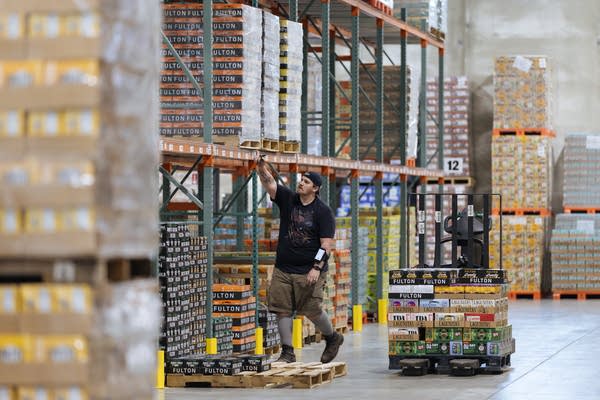
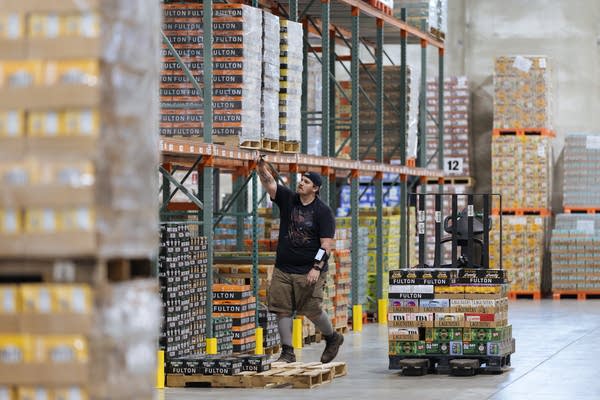
Omar Ansari watches thousands of THC beverages roll through Surly Brewing’s production facility each hour, wondering if he’ll have to shut down operations in a matter of months.
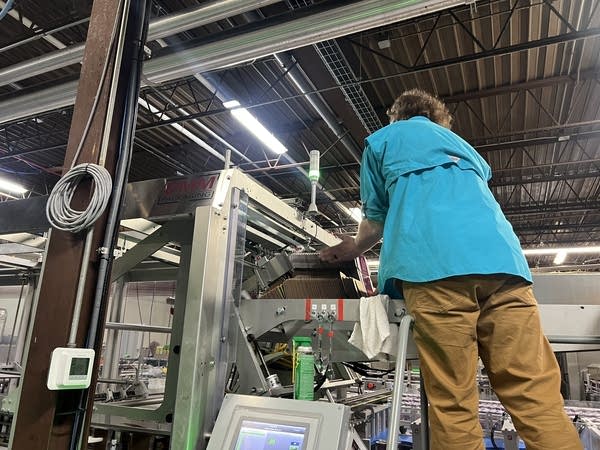
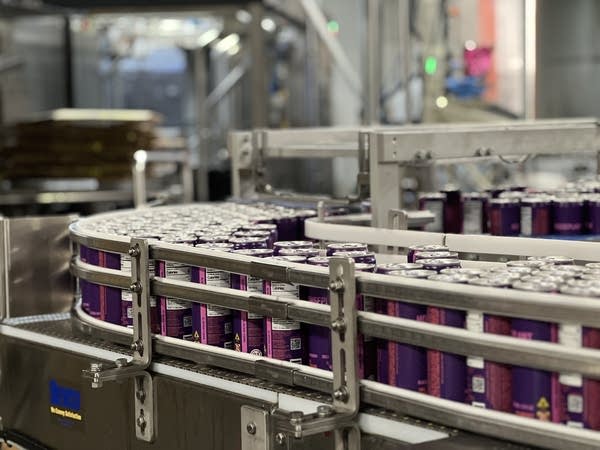
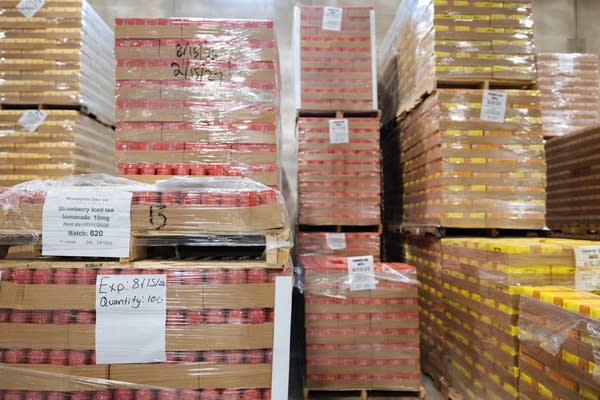
Around him, machines fill, label and package cans while conveyor belts carry finished products into a warehouse stacked with beverages waiting to be delivered to liquor stores in Minnesota and beyond. Up to 134,000 drinks are made at the Brooklyn Center brewery each day.
But a federal ban on hemp-derived THC products scheduled to take effect Nov. 12 could jeopardize Ansari’s operation and the brewery's future.
“We have to be full throttle,” said Ansari, owner of Surly Brewing. “The plan has been, like most people in the industry, is fight like hell to either have a delay or to have this product regulated.”
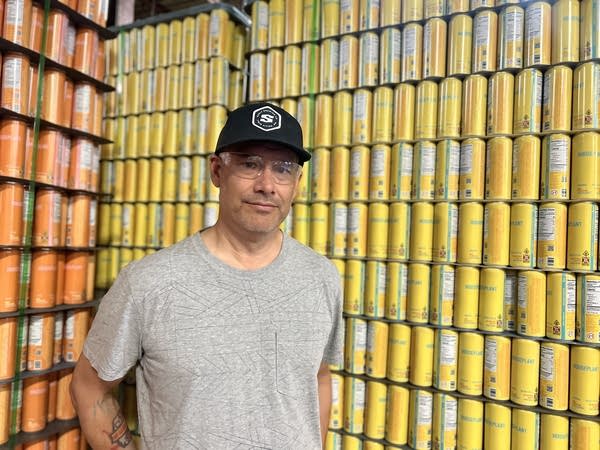
Surly is one of several Minnesota breweries that have come to rely on THC beverage sales to bolster business since legalization in 2022 as alcohol consumption declines nationwide. Ansari says the company has grown into one of the state's largest hemp beverage manufacturers, even expanding distribution into more than a dozen states including Wisconsin, Texas and New York.
He’s hopeful lawmakers in Washington will intervene before the ban hits. But if they don't, the consequences for Surly could be severe.
“We make more THC beverages than beer,” Ansari said. “Without the THC space, it’s not enough to keep going anymore. And I think a lot of breweries are in that same spot — beer has just dried up so much.”
Ban uncertainty triggers layoffs, order slowdown
Last fall, President Donald Trump signed a law that will limit hemp-derived products to 0.4 milligrams of THC per container — a level industry leaders say is so low that it would wipe out most beverages and edibles currently sold in Minnesota. Low-dose hemp products are restricted at 5 milligrams THC per serving and 10 milligrams per container under state law.
The ban was tucked into a deal to reopen the government after a 43-day shutdown.
“As soon as the ban got announced, our orders stopped — and we had some huge volumes lined up,” Ansari said.
Four months ago, he laid off half of Surly’s leadership team over uncertainty about the future of the hemp beverage market.
“It’s already affected jobs, and those are people that have worked here for 17 years, friends of mine, and people with kids in school, and mortgages,” he said.
Orders have rebounded as summer — the beer industry's busiest season — gets underway. But with the federal ban looming, Ansari says he's balancing meeting demand against the risk of excess inventory.
Some brands that contract with Surly to manufacture their THC beverages are betting the ban will be delayed or overturned.
“We’ve had some folks that say we’re going up to the deadline,” Ansari said. “There are brands that we make stuff for and they’re like, ‘We think it’s going to pass,' or 'We think it’s worth the money to have product come November.’”
Others are already scaling back orders, creating uncertainty throughout the supply chain. Bob Galligan, industry and government relations director at Minnesota Brewers Guild, says July is the deadline many retailers and wholesalers are looking at for last orders.
“July is kind of that cliff. After July, we’re kind of in free fall, and each operator is going to have to operate however they deem best for their business,” he said.
Some local distributors have an internal deadline of August. Hohenstein’s is a Cottage Grove-based company that supplies beer and THC drinks to roughly 700 liquor stores and 300 bars and restaurants across the Twin Cities, Rochester and Mankato regions.
Chris Fream, director of brands, says the company is already adjusting its strategy. A few suppliers have even stopped making hemp beverages.
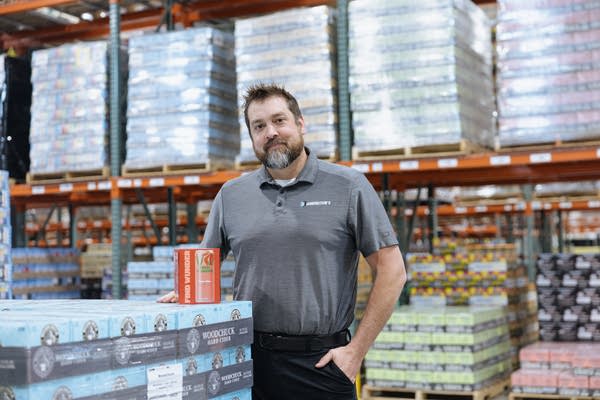
“We have enough product to get us through August and hopefully we hear more news before then,” Fream said. “We’re kind of planning on going right up to Nov. 12 and waiting to see what happens. It’s business as usual, just with a little extra care around inventory.”
Fream says Hohenstein’s doesn’t plan to place additional orders after August unless there’s more clarity from Washington. The company wants to avoid a scenario where distributors, retailers and manufacturers are left holding products they can’t sell.
But Fream says inventory planning is difficult because most people don't realize hemp-derived THC drinks could disappear from store shelves starting Nov. 12. He predicts there will be a last-minute rush for drinks right before the ban hits.
“If on November 12 you can’t carry it, how much do you bring in to satisfy the mad dash at the end of people loading up?,” Fream said. “And then afterwards, what’s the recovery, what are the plans beyond that? What happens to all that inventory? Is this just going to cost everybody a lot of money?”
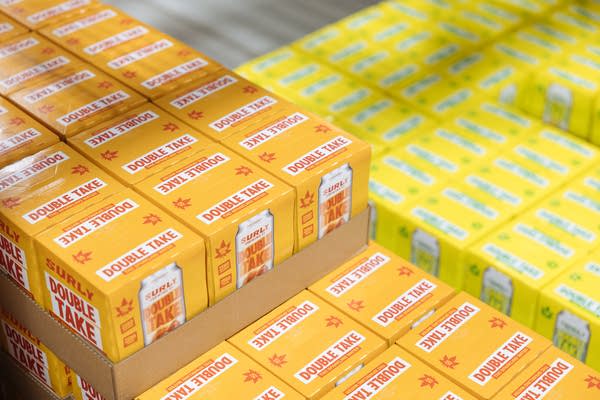
A ban on hemp-derived THC beverages would be a major blow to business. In the past year, Hohenstein’s brought in $10 million from low-dose THC drink sales.
“We will feel a lot of pain if it goes away,” Fream said.
Industry expert says up to 30 percent of breweries could close
New changes in Minnesota’s cannabis laws this year streamline cannabis supply chains and open the door for hemp producers to enter the recreational cannabis market.
While some hemp operators are pivoting to recreational cannabis ahead of the ban, many in the beverage industry say that’s not a realistic option for them. Brewers have to hold a permit from the federal Alcohol And Tobacco Tax And Trade Bureau and most won’t risk losing that license over going into recreational cannabis, which is still illegal at the federal level.
The bureau did not respond to an MPR News request for comment.
The Minnesota Craft Brewers Guild represents 150 breweries in the state, roughly half of which operate in hemp. Galligan says it would be costly for brewers to go into cannabis.
“You could feasibly just start a second business that is a different financial entity, but at the same time now you're running two businesses, which I don't think many of my members are having much interest in,” he said.
That means breweries selling THC drinks only have a few options: scale back hemp beverages and return to beer, continue operating until the deadline, shut down, or explore making drinks with adaptogens (i.e. ashwagandha, non-hallucinogenic mushrooms) instead of THC.
Adaptogens are found in plants and mushrooms and are often used in beverages and supplements marketed for stress relief.
That’s something Nathan Schneider is working to adapt into a new drink at Trove Brewing Company in Burnsville. He is a part owner at the brewery, which makes beer and recently started producing low-dose hemp derived “Voltage THC” drinks.
Schneider says Trove will continue producing Voltage THC until Nov. 12 and is also developing a new line of mushroom-based drinks.
“Adaptogens are now trendy and rightfully so,” Schneider said. “People are trying to find either a healthier, more sustainable energy source that are just better for your body. So we've been making some small batch stuff here, just to kind of play around with some flavors.”
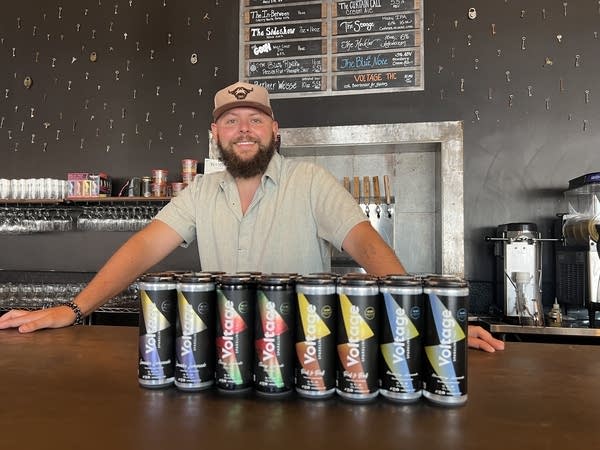
Fortunately, the hemp drinks are an added stream of revenue and it going away won’t make or break the small brewery. Schneider says it’s not the best contingency plan to bet on mushroom drinks filling the gap for THC, but it is another potential stream of revenue.
As for Surly, the cans will continue to roll off the production line as long as there is demand.
“There’s nothing to pivot to for us,” Ansari said.
But shutting down business is also a real possibility. Galligan estimates about 75 breweries in the Minnesota Craft Brewers Guild would immediately start to struggle if hemp goes away.
“Their workforce is going to be hit and they're going to be thinned out real bad. So, whether or not that actually puts them under, how many are going to be able to just kind of scoot by and try to rebuild something else?,” he said.
Coupled with the financial hits from Operation Metro Surge and rising ingredient costs, Galligan says he would not be surprised if 20 to 30 percent of Minnesota’s breweries close after the ban goes into effect.
Hemp beverage makers put hopes into DC
Despite the looming ban, Galligan remains optimistic. It's unclear what lawmakers will ultimately do, but discussions are underway in Washington about preserving the hemp edible industry or delaying implementation of the ban.
“Right now I think the most realistic would probably be just delaying the language, whether that is outright delaying or putting a timeline on it,” he said. “DC needs something that’s right in front of them, and as the deadline gets closer, it starts getting more in front of them, and I think they realize that they need more time to begin having this policy conversation.”
Ansari and Schneider are also hopeful, pointing to continued investment in hemp-derived THC beverages by major retailers like Target. The company recently expanded sales into Illinois, Florida and Texas, a move they say suggests confidence in the industry’s future.
Minnesota lawmakers are also pushing for federal action. U.S. Sen. Amy Klobuchar, D-Minn., is proposing a bill that would protect existing regulated hemp markets, while U.S. Rep. Angie Craig, a 2nd Congressional District Democrat, is backing legislation that would delay the ban.
“Republicans in DC pulled the rug out from under Minnesota’s hemp farmers and brewers with this ban,” wrote Craig in a statement to MPR News. “I am continuing to work with stakeholders and my colleagues to explore short-term solutions that prevent a cliff this fall, while also creating a durable long-term framework that puts safety standards in place and allows small businesses to thrive. I’m not going to give up on trying to clean up the Republicans’ mess.”
The hemp crackdown was led by U.S. Sen. Mitch McConnell, a Kentucky Republican.
The state’s Office of Cannabis Management says it’s keeping a pulse on the hemp market and preparing for potential federal policy changes.
For now, it’s business as usual. But every order placed, every pallet shipped and every can produced carries the same question: What happens on Nov. 12?