Fact checked by Nick Blackmer
:max_bytes(150000):strip_icc():format(jpeg)/Health-GettyImages-1393044372-9b971c1b5f4641d6b7fdbbc34dc72be9.jpg "Married elderly senior adult man's hands working to put together pieces in a jigsaw puzzle. NOTE: These are random pieces thrown together for the photo from several generic jigsaw puzzles.")
Credit: Willowpix / Getty Images
- Plenty of games can help keep your brain engaged, but it can be difficult to know which ones to prioritize.
- Brain health experts say they regularly play games like Sudoku, crossword puzzles, and card games.
- The best brain games are challenging enough to keep you engaged without becoming too frustrating.
Playing games can be a fun, easy way to keep your brain stimulated as you age. But with so many options, it can be hard to know which ones to prioritize for cognitive health. That’s why we asked three experts which games they play to help keep their minds sharp. Here’s what they said.
1. Sudoku
For a game that challenges several cognitive skills at once, David Perlmutter, MD, FACN, a neurologist and author of Brain Defenders, recommended Sudoku—a puzzle he plays himself. The number-based game exercises logic, attention, working memory, and problem-solving, he said.
Sheryl Martin-Schild, MD, PhD, the medical director for stroke at New Orleans East Hospital and CEO of Dr. Brain Inc., also plays Sudoku regularly because it provides just the right amount of challenge: “I enjoy the medium level, since I can feasibly work through them,” she said.
One study found that playing Sudoku activates regions of the prefrontal cortex involved in attention and working memory, and that the game could benefit people with neuropsychiatric disorders affecting these cognitive functions.
2. Crossword Puzzles and Other Word Games
Martin-Schild also enjoys word-based games like crossword puzzles, which she tries to make “fun by recruiting my husband to assist," she said.
Angela Hsu, MD, a geriatrician and consultant in the Memory Care Program at Kaiser Permanente in McLean, Virginia, is a fan of the New York Times games Wordle and Connections. Not only do they "challenge you to think in different ways, but doing it with family or friends fosters social connection,” Hsu said.
Word games require you to retrieve words and make associations. Research also suggests they may have longer-term cognitive benefits. For example, preliminary studies have found that completing crossword puzzles regularly could be a low-cost way to support cognitive function for people at risk for Alzheimer’s disease.
3. Card Games
Perlmutter likes to play strategy-based card games like Hearts and Shanghai Rummy. They challenge memory and attention while also encouraging social interaction—all of which can support brain health, he said.
Hsu recommended playing with physical cards instead of on a computer or phone. Handling the cards helps engage the fine motor and visuospatial skills, which allow us to perceive and navigate the space around us.
4. Certain Board Games
Perlmutter enjoys strategy games like backgammon and his favorite childhood board game, Stratego, because they require players to think several moves ahead—a mental workout for the brain.
Chess is another game that may benefit the brain. Although more research is needed, one study found that older adults living in healthcare facilities who played chess twice a week for an hour saw improvements related to cognition and quality of life compared to those who didn’t.
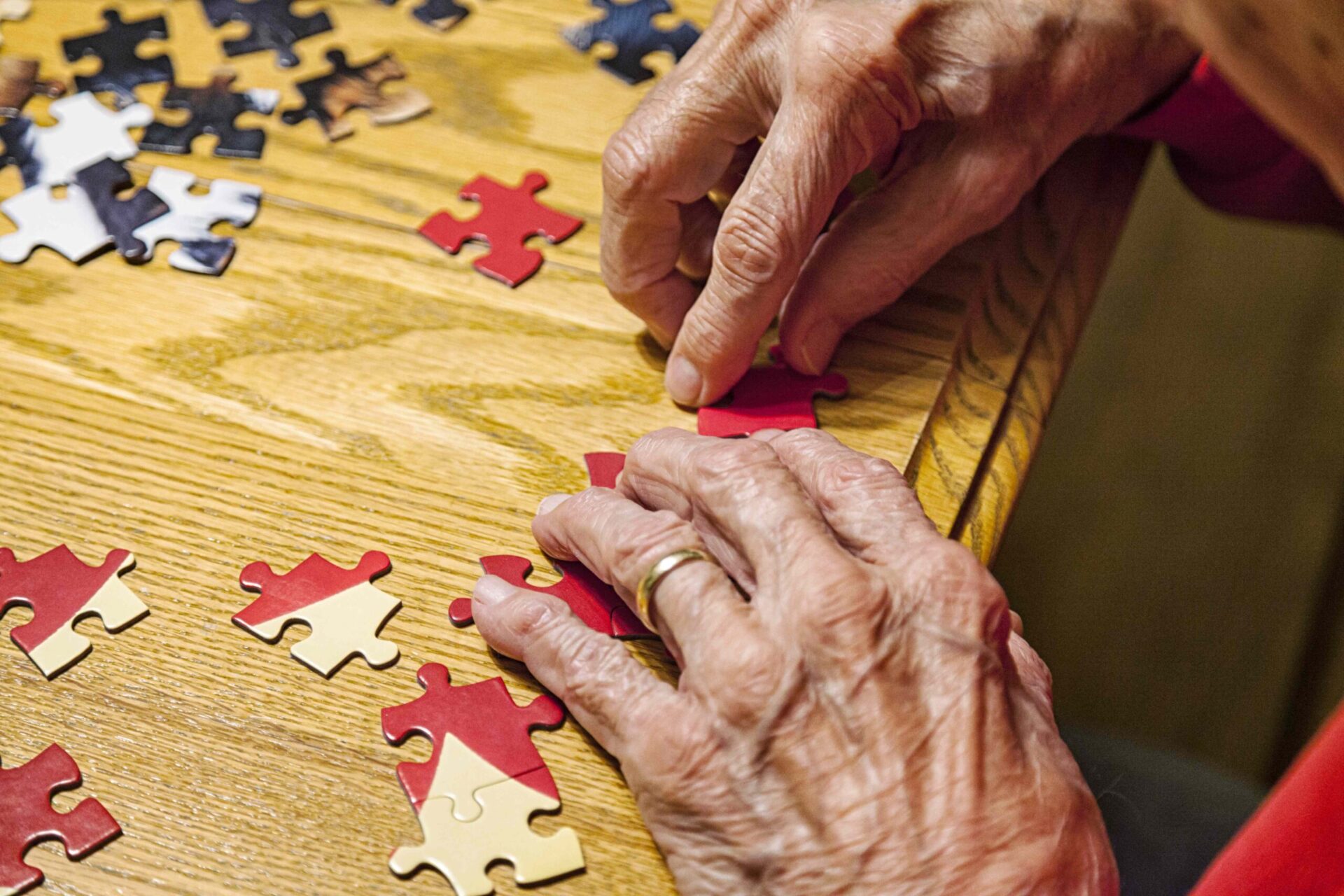
5. Jigsaw Puzzles
Perlmutter and his family love putting together jigsaw puzzles. "We just finished one that was a collection of family photos," he said.
Jigsaw puzzles engage spatial awareness, sustained attention, and patience—all cognitive skills that can decline with age. Research also suggests that regularly doing jigsaw puzzles is associated with better performance across multiple cognitive domains.
What Makes For an Effective Brain Game?
While playing games can sharpen the specific skills they require, there isn’t strong evidence that getting better at games translates into better cognitive function in everyday life, according to Janina Kamm, PsyD, a clinical neuropsychologist and assistant professor at The Chicago School.
However, Hsu said some games are more likely than others to produce this kind of transfer. Research suggests the greatest benefits come from games that are challenging, played consistently, and adaptive, meaning they become more difficult as your skills improve.
“Your brain is moldable, like plastic,” Kamm said. “Anytime you learn something new, your brain forms new connections, which can alter the function and even, in very small ways, the physical structure of your brain.”
When it comes to choosing a game, Hsu recommended finding one that’s challenging without becoming frustrating. It's also important to opt for games you genuinely enjoy, which will make them easier to stick with, Perlmutter suggested.
Variety matters, too. Different games challenge different cognitive skills, so mixing them up may offer a range of benefits. “A solid brain game plan should be multifactorial, not just doing a puzzle every day,” said Luis Cruz-Saavedra, MD, a neurologist at Memorial Hermann Mischer Neuroscience Associates.