Fact checked by Nick Blackmer
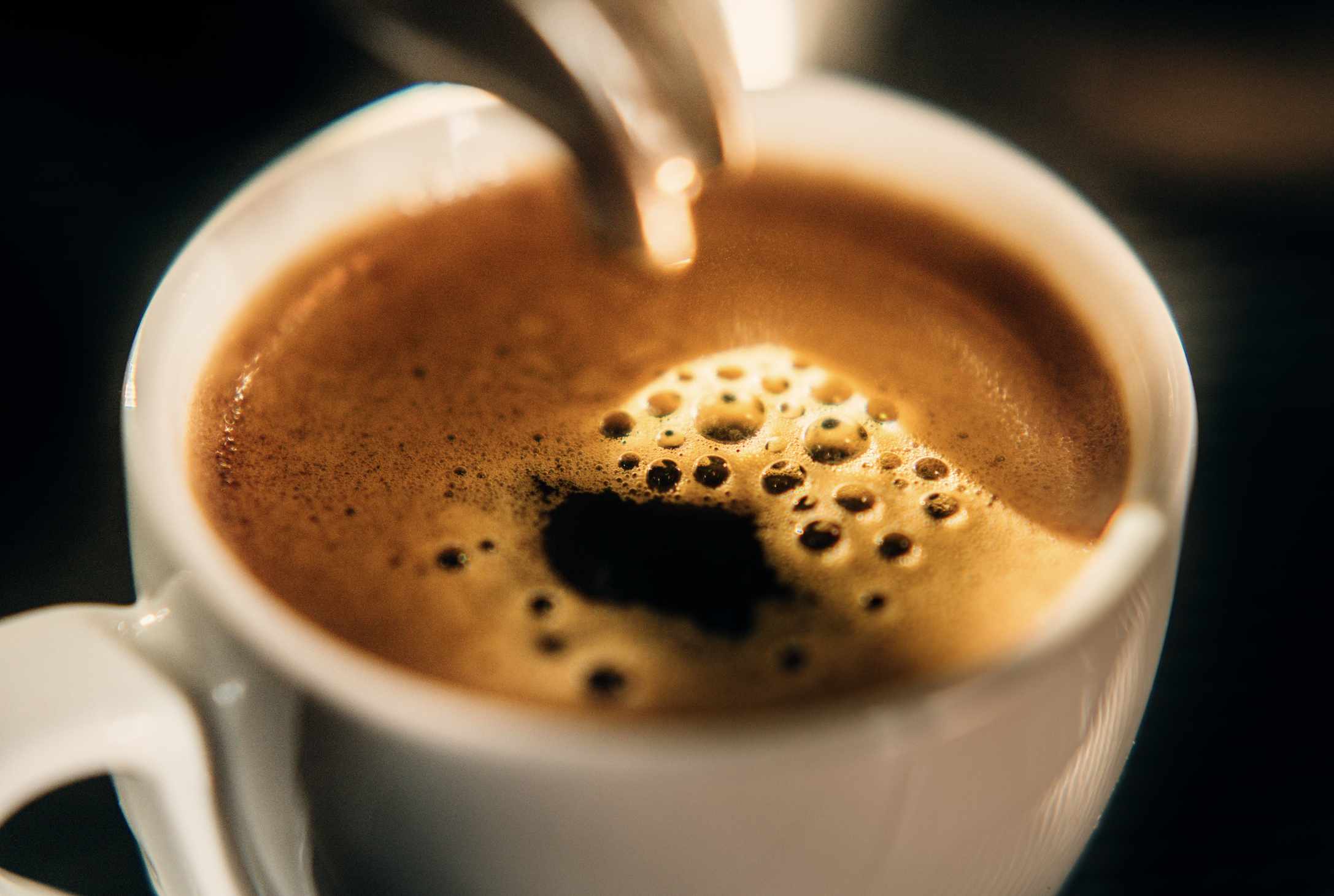
:max_bytes(150000):strip_icc():format(jpeg)/Health-GettyImages-2159345844-b60dca50a4dc43a18c0ff2d70756a255.png "A cup of coffee with visible foam and crema a spoon approaching the cup")
Credit: Guido Mieth / Getty Images
- Coffee can boost energy, support heart health, lower diabetes risk, and may even help you live longer.
- But too much coffee can trigger digestive issues, anxiety and jitters, or poor sleep.
- Experts say most adults can safely enjoy up to four cups of coffee daily, ideally before noon.
Whether enjoyed for the taste, the energy boost, or a bit of both, drinking coffee is a popular morning ritual—66% of American adults drink about three cups every day. But how does drinking coffee daily affect your health? Here are some of the benefits and side effects of your daily dose of java.
1. You'll Get a Morning Wake-Up
One standard 12-ounce cup of black coffee contains between 113 and 247 milligrams (mg) of caffeine, a substance also found in tea and chocolate that has a stimulating effect on the brain and nervous system. Caffeine can increase wakefulness, reduce fatigue, and improve concentration, which is why many people rely on it to start their day.
“Up to 400 mg of caffeine per day is the sweet spot for obtaining the health benefits of coffee,” said Anthea Levi, MS, RD, CDN, a registered dietitian and founder of ALIVE+WELL Nutrition. That’s roughly the amount found in about four cups of coffee. Depending on your tolerance, this could be too much—or just the right amount—to help increase alertness.
2. You Could Get a Workout Boost
Thanks to its stimulant properties, coffee can give your body the jolt of energy it needs to power through a workout. One 2021 study found that drinking coffee or another caffeine-containing beverage pre-workout may improve aerobic and anaerobic exercise by increasing muscle endurance.
Another study, from 2023, which included 100 healthy adults, found that those who drank coffee had a higher daily step count compared to non-coffee drinkers—about 10,646 steps versus 9,665. Other factors may have contributed to this slight increase, but the energy provided by coffee could help motivate you to keep moving.
3. You'll Support Your Heart Health
Numerous studies over the years have found that mild-to-moderate coffee consumption is associated with reduced heart disease risk, including heart failure, coronary artery disease, stroke, and arrhythmias (irregular heartbeats). Daily coffee drinking has also been linked to a reduced risk of hypertension (high blood pressure) and heart attack.
This is likely due to the antioxidants in coffee beans, which can help fight inflammation, said Levi. Because “inflammation is a key feature of heart disease, coffee (if consumed healthily) could theoretically help lower heart disease risk,” she added.
Many factors can contribute to heart disease, including genetics and a poor diet. “We can’t conclude that coffee and coffee alone are responsible for preventing cardiovascular disease and early mortality in java drinkers,” Levi noted. But “antioxidants like those found in coffee can help prevent the wear and tear on our cells that ultimately contribute to inflammation.”
4. You Could Boost Your Longevity and Metabolism
Your morning cup of joe may help you live longer. One 2025 study found that drinking coffee in the morning was more strongly associated with a lower risk of all-cause mortality than drinking it later in the day, even when compared to non-coffee drinkers. This could be in part because caffeine can throw off your circadian rhythm and sleep, potentially leading to poorer health and a shorter lifespan.
Coffee may also modestly increase your metabolic rate, or the amount of energy your body uses to carry out basic functions. But this is only a short-term effect and likely won’t lead to weight loss, said Levi. “Caffeine also tends to suppress appetite,” she added, but she wouldn’t recommend relying on it to lose weight.
5. You'll Reduce Your Diabetes Risk
Drinking multiple coffees per day—one to four cups, to be exact—is associated with a decreased risk of diabetes, one 2024 review found. There are a few potential reasons for this.
For one, coffee beans contain phytochemicals, plant compounds that help prevent oxidative stress, which can lead to the development of type 2 diabetes-related conditions like obesity and metabolic syndrome.
“Coffee is also a good source of antioxidants like chlorogenic acid—a polyphenol (plant-based compound) that may improve insulin sensitivity and glucose metabolism in the body,” said Levi. Both are important for regulating blood sugar and preventing diabetes.
But how you take your coffee makes a difference. “Popular coffee beverages sweetened with flavored syrups and sweet cream can supply more than two days’ worth of added sugars per serving, a sure way to spike blood glucose levels, heighten diabetes risk, and promote weight gain if consumed regularly over time,” said Levi.
6. You May Relieve Your Constipation
If you’re feeling backed up, your morning brew might help. The acids in coffee boost your gut’s production of gastrin, a hormone that prompts the muscles in your colon to contract and kickstart bowel movements. Caffeine and chlorogenic acid in coffee also work together to stimulate gut contractions, according to Levi. So next time you need to “go,” consider drinking that espresso—and some water—to get things moving.
7. You Could Disrupt Your Sleep
Drinking coffee too close to bedtime can ruin your sleep schedule. Why? “Caffeine blocks adenosine, the chemical in your brain that builds up during the day to make you feel tired,” said Angela Holliday-Bell, MD, a sleep medicine specialist and founder of The Solution Is Sleep. This can make it harder to fall asleep, reduce total sleep time, and decrease time spent in deep sleep.
Research has found that people who avoid caffeine sleep an average of 36 minutes longer each night compared to caffeine drinkers. Half an hour might not seem like much, but it can “show up as brain fog, irritability, or lower productivity” the next day, said Holliday-Bell. Over time, chronic sleep loss can increase your risk of heart disease, obesity, or diabetes.
So, if you’re a slow caffeine metabolizer (i.e., it takes longer to leave your system), you might do best cutting off caffeine by around 12 p.m., Holliday-Bell said. “If you’re sensitive or struggle with sleep, stopping even earlier can help," she added.
8. You May Feel More Anxious
Coffee can cause anxiety, jitters, or a racing heart, said Holliday-Bell. Research even suggests a possible link between drinking more than one cup of coffee per day and premature ventricular contractions (quicker beats of your heart’s lower chambers) in some people. However, this effect is subtle and not likely to cause harm.
Pay attention to how your body responds to coffee. You may need to adjust the amount you drink, or avoid it altogether, if you’re caffeine-sensitive or prone to physical symptoms of anxiety, like shaking and rapid heartbeat.
9. You Could Feel Some Extra Digestive Upset
Coffee can move your bowels a little too well, causing diarrhea, gas, and stomach pain. This is especially true if you have a digestive condition like irritable bowel syndrome (IBS). Caffeine’s stimulating effect can cause waste to move through your digestive tract too quickly—a phenomenon called gastrocolic reflex—resulting in loose, watery stools.
The acidity can also flare symptoms of acid reflux—burning, pain, and soreness in your upper stomach and throat. But “pairing coffee with a well-balanced breakfast will help dull its stimulant properties” and reduce reflux, said Levi.
10. You May Erode Your Tooth Enamel
Daily coffee drinking can stain your teeth (and cause bad breath), but it can also wear away at enamel, the hard outer layer of your teeth. This can cause tooth sensitivity and pain when consuming hot or cold food and drinks. But this effect can often be avoided if you brush your teeth or rinse with water right after drinking the beverage.