Medically reviewed by Aviv Joshua, MS, RDN
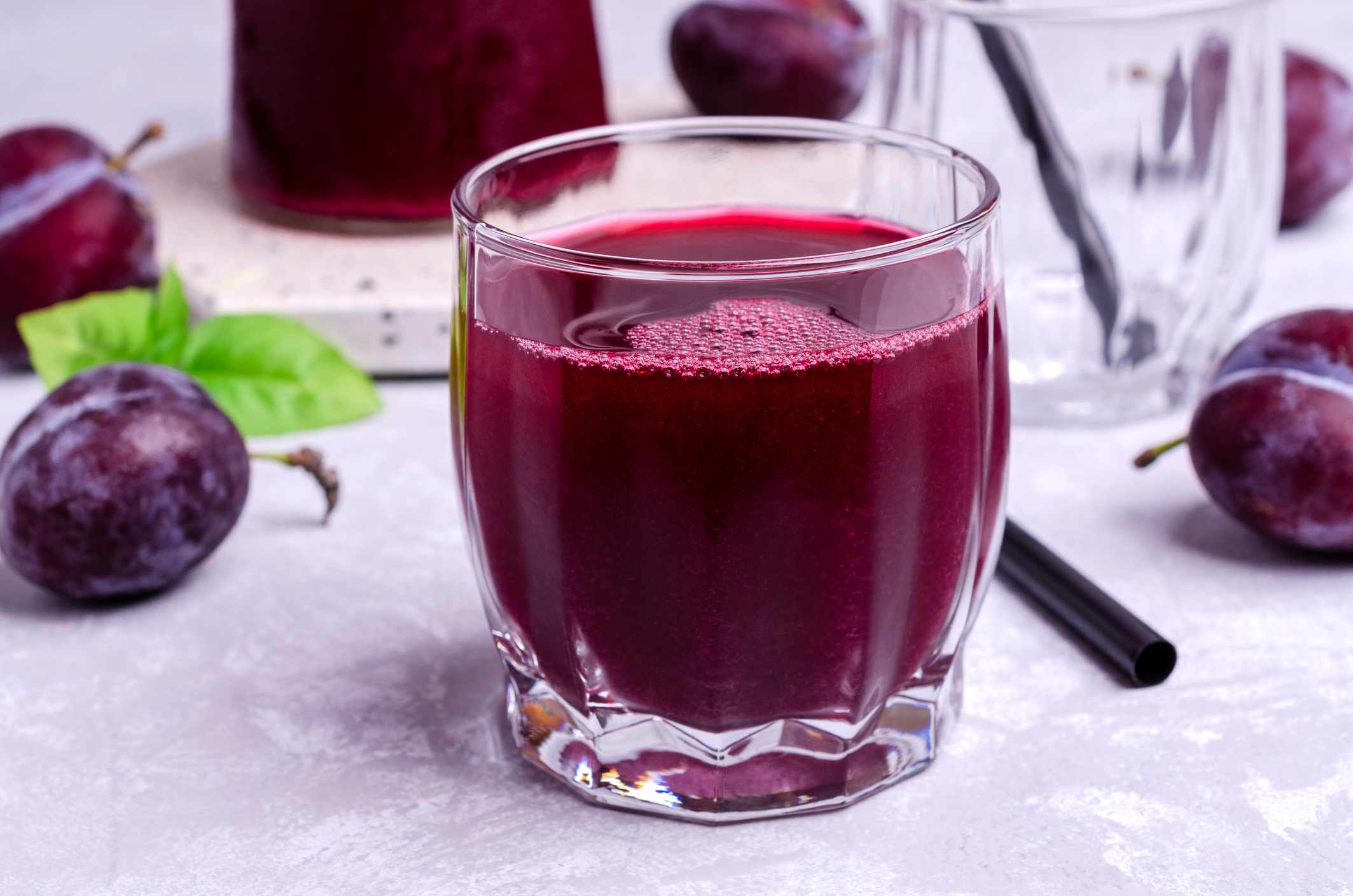
:max_bytes(150000):strip_icc():format(jpeg)/Health-GettyImages-1264249095-69c44c358f1e49c5bda52877c7624557.jpg "Merlot-colored prune juice in a glass on a light gray surface, surrounded by red plums")
Credit: zia_shusha / Getty Images
- Drinking prune juice may help relieve constipation and control blood pressure.
- Prune juice is a source of iron, potassium, and vitamins C and K.
- You can blend prune juice into smoothies or use it to make a mocktail.
Prune juice, which is made from prunes, or dried plums (Prunus domestica L), may relieve constipation with its natural laxative properties. It may help with blood pressure control.
1. Prevents and Treats Constipation
Research often focuses on prune juice's laxative effect, making it a common home remedy for constipation.
These nutrients may make prune juice effective for constipation relief:
- Fiber: Adds bulk to your stool and helps move it through the digestive tract
- Polyphenols: May support gut bacteria and digestive health
- Sorbitol: Increases water in your digestive tract
In a 2022 study, adults with chronic constipation drank 2 ounces of prune juice or a placebo daily for eight weeks. Those who drank prune juice saw a significant decrease in hard stools and reported no negative side effects.
2. Helps Regulate Your Blood Pressure
Hypertension (high blood pressure) is a significant risk factor for heart disease and stroke. Drinking prune juice might lower blood pressure as part of a balanced diet, but the data is mixed.
Fruits high in potassium, such as prunes, have been shown to lower blood pressure. Potassium helps offset some of the harmful effects of sodium on blood pressure.
More studies are needed to confirm prune juice's effects on blood pressure. A 2025 review of 14 clinical trials found that prunes did not significantly impact blood pressure.
3. May Lower Your Cholesterol
Prunes, or dried plums, may lower cholesterol levels. A 2023 review of nine clinical trials found that plum supplements decreased total and low-density lipoprotein (LDL) cholesterol.
Plums are a source of flavonoids and phenolic acid antioxidants, which can lower cholesterol levels. More research is needed to determine if prune juice has the same effect on cholesterol.
4. Increases Your Antioxidant Levels
Drinking prune juice may offer some of the benefits associated with eating whole prunes. The fruit is a diverse source of phenolic compounds that have antioxidant properties.
Antioxidants counter the harmful effects of unstable atoms called free radicals. Free radicals can cause a type of cell damage called oxidative stress, which increases the risk of disease.
5. Supplies You With Vitamins and Minerals
Prune juice is a good source of several vitamins and minerals, such as:
- Iron: This essential mineral is part of many enzymes and proteins in your body, including hemoglobin. This protein carries oxygen from your lungs to your cells.
- Potassium: This electrolyte helps support heart, nerve, and muscle function. It can offset some of the harmful effects sodium can have on blood pressure.
- Vitamin C: This antioxidant promotes healing and immune function. It also helps support your skin, bones, and connective tissue.
- Vitamin K: Prune juice contains a smaller amount of vitamin K, which supports bone health.
What Nutrients Does Prune Juice Offer?
One cup of 100% prune juice provides nutrients, such as:
- Calories: 176
- Fat: 0 grams
- Sodium: 10 milligrams (mg), or 0.43% of the Daily Value (DV)
- Carbohydrates: 43 g, or 15.64% of the DV
- Fiber: 2.5 g, or 8.93% of the DV
- Added sugar: 0 g
- Protein: 1.5 g, or 3% of the DV
Are There Risks To Watch Out For?
Prune juice is considered generally safe. It is possible to be allergic to prunes and prune juice, which are made from plums.
Since it can have a laxative effect, you may develop gas or diarrhea if you drink it in large quantities. Add prune juice to your diet in small amounts and gradually increase your intake to lower your risk of digestive discomfort.
Prune juice also contains acrylamide, a chemical formed when you heat carbohydrates. Acrylamide is a possible carcinogen (cancer-causing compound) in humans.
Tips for Adding Prune Juice to Your Diet
One cup of 100% prune juice counts as one serving of fruit. How many servings of fruit you need to eat per day depends on your age, sex, height, weight, physical activity, and health status. Most healthy adults need two servings of fruit a day.
You can consume prune juice in many ways, such as:
- Blend it into smoothies, or mix it into brewed tea.
- Incorporate it into sweet or savory cooking sauces.
- Use it to make a mocktail with sparkling water and add-ins like ginger and fresh herbs.