Why Congress is fighting over a central tool of American surveillance


A monitor at a computer workstation bears the National Security Agency logo inside the Threat Operations Center.
A computer workstation bears the National Security Agency logo inside the Threat Operations Center in the Washington suburb of Fort Meade, Md.
Paul J. Richards/AFP via Getty Images

A key tool of the U.S. spy community will expire this month without action from Congress. The government says the intel gathered through the provision — Section 702 of the Foreign Intelligence Surveillance Act, or FISA 702 — underpins a majority of the articles in the president's daily intelligence briefing and is a key asset in the fight against international counterterrorism and trafficking.

But a number of lawmakers, both Republicans and Democrats, are concerned that FISA 702 allows for the federal government to spy on the communications of American citizens without a warrant, violating their constitutional right to privacy.

The looming fight to bolster the law's civil liberties protections is likely to be bruising — and the provision's advocates claim it could jeopardize national security.

What is Section 702 of the Foreign Intelligence Surveillance Act?

Section 702 of FISA empowers U.S. intelligence agencies to collect and review the electronic communications of foreign nationals located outside the United States without obtaining individual court orders.

Sometimes, foreign nationals communicate with people in the United States, leading to incidental collection of Americans' communications.

The Office of the Director of National Intelligence says the government uses the information collected through the program to protect the U.S. and its allies from foreign adversaries — including terrorists and spies — as well as to inform cybersecurity efforts.

"No one denies the immense intelligence value of Section 702," Stewart Baker, former National Security Agency general counsel, told Congress in January.

"The U.S. government recently credited the program with helping to disrupt several terrorist attacks here and abroad, identify the Chinese origins of imported fentanyl precursors, respond to ransomware attacks on U.S. companies, identify Chinese hackers' intrusions into a network used by a key U.S. transportation hub, and disrupt foreign government efforts to carry out kidnappings, assassinations, and espionage on U.S. soil. Those examples just scratch the surface," Baker said.

Why is Congress debating this now?

The program's 2024 authorization is set to expire on April 20 — unless Congress votes to renew it. Congress has always attached an expiration date to Section 702, which makes its renewal a recurring fight on Capitol Hill.

Civil liberties-minded legislators of both parties have long been concerned that Section 702 enables illegal, warrantless surveillance of American citizens by the federal government. And unlike most issues in contemporary politics, the issue doesn't break cleanly along party lines.

Prominent critics include Sen. Mike Lee, R-Utah, Sen. Ron Wyden, D-Ore., and Rep. Warren Davidson, R-Ohio.

But, with a change in administration since the last renewal battle, some lawmakers have switched sides.

Rep. Darrell Issa, R-Calif., who previously voted against the renewal because of its lack of a warrant requirement to query information about Americans, told The Hill he thought reforms to the program were working.

Rep. Jamie Raskin, D-Md., is working to rally his colleagues against a renewal — after voting for it in 2024.

President Trump supports an extension with no changes to the program.

"When used properly, FISA is an effective tool to keep Americans safe. For these reasons, I have called for a clean 18-month extension," Trump wrote in a March post on Truth Social. "With the ongoing successful Military activities against the Terrorist Iranian Regime, it is more important than ever that we remain vigilant, PROTECT our Homeland, Troops, and Diplomats stationed abroad, and maintain our ability to quickly stop bad actors seeking to cause harm to our People and our Country."

That position is a major shift for Trump, who railed against the program in the past. Ahead of the last renewal vote in April 2024, during the Biden administration, Trump posted "KILL FISA, IT WAS ILLEGALLY USED AGAINST ME, AND MANY OTHERS."

How is the information actually collected?

A special court, the Foreign Intelligence Surveillance Court (FISC), issues a blanket authorization each year that allows the government to collect information about any targets who fall within certain categories proposed by the attorney general and director of national intelligence.

The National Security Agency, National Counterterrorism Center, Central Intelligence Agency and FBI obtain that information directly from the U.S. companies that facilitate electronic communication such as email, social media or cellphone service.

The National Security Agency also collects communications "as they cross the backbone of the internet with the compelled assistance of companies that maintain those networks."

What role does Section 702 play in the landscape of American intelligence gathering?

A massive amount of information is collected under Section 702 authority: There were 349,823 surveillance targets in 2025, up from about 246,000 in 2022. Targets could each have many records collected — think about the number of emails that hit your inbox each day — leading to a giant database of information.

In 2023, 60% of the president's daily brief items — a daily summary of pressing national security issues prepared for the most senior administration officials — contained Section 702 information, according to a government release.

It is also used extensively to combat weapons and drug trafficking — 70% of the CIA's illicit synthetic drug disruptions in 2023 stemmed from FISA 702 data, the document said.

Can the government search for Americans' information inside the trove of information it has collected under Section 702?

Yes, under certain parameters that have been gradually narrowed over the nearly two-decade lifespan of the legislation.

Here are some of the reasons the government says it might search for Americans, as included in a public report from the Office of the Director of National Intelligence (ODNI):

  • "Using the name of a U.S. person hostage to cull through communications of the terrorist network that kidnapped her to pinpoint her location and condition;

  • Using the email address of a U.S. victim of a cyber-attack to quickly identify the scope of malicious cyber activities and to warn the U.S. person of the actual or pending intrusion;

  • Using the name of a government employee that has been approached by foreign spies to detect foreign espionage networks and identify other potential victims; and

  • Using the name of a government official who will be traveling to identify any threats to the official by terrorists or other foreign adversaries."

Does the government need specific permission from a court to search for an American's information?

No, the government does not need — and has resisted reforms that would require — a targeted court order to search for an American's information in corpus of material gathered under Section 702 authority.

Intelligence community and FBI advocates argue that a requirement to obtain a court order to query an American's information would be overly burdensome.

"I am especially concerned about one frequently discussed proposal, which would require the government to obtain a warrant or court order from a judge before personnel could conduct a 'U.S. person query' of information previously obtained through use of Section 702," then-FBI Director Christopher Wray told Congress in 2023, amid the last reauthorization fight.

"A warrant requirement would amount to a de facto ban, because query applications either would not meet the legal standard to win court approval; or because, when the standard could be met, it would be so only after the expenditure of scarce resources, the submission and review of a lengthy legal filing, and the passage of significant time — which, in the world of rapidly evolving threats, the government often does not have. That would be a significant blow to the FBI," Wray said.

What do civil liberties and privacy advocates say about the legislation?

Privacy advocates say that, as written, the FISA statute allows the government to spy on the communications of Americans and others in the U.S. without the permission of a court, in contravention of the privacy guarantees in the Fourth Amendment.

"The FBI — and every other agency that receives Section 702 data — routinely goes searching through that data for the express purpose of finding and using Americans' communications," according to Elizabeth Goitein, senior director of the Brennan Center's Liberty and National Security Program. "The government conducts literally thousands of these backdoor searches every year."

Lawmakers in support of reforming Section 702 share her concern.

"The Foreign Intelligence Surveillance Act is supposed to be about surveilling foreigners overseas. That way the government doesn't need a warrant," Sen. Wyden told The Lever. "But because so many of these targets are going to be talking to Americans, Americans get swept up in these searches, and that's what I want to have some checks and balances on."

Rep. Tim Burchett, a Tennessee Republican, said in a video that his concerns stem from past privacy violations from the government: "The system was abused and they spied on thousands of Americans, violated the Fourth Amendment of the Constitution — and, well, it was a horrible situation."

Has Section 702 information been improperly used to surveil American citizens?

Yes, the Foreign Intelligence Surveillance Court characterized the FBI's violations as "persistent and widespread" in a 2022 court document that recertified the 702 program.

Documented abuses, detailed in congressionally mandated transparency reports from the Office of the Director of National Intelligence, include warrantless searches for a U.S. senator, journalists and political commentators, 6,800 Social Security numbers, 19,000 donors to a congressional campaign and an FBI employee's family member, who the employee's mother suspected of having an extramarital affair. Anti-surveillance advocacy group Demand Progress put together a detailed timeline of major violations by the FBI and intelligence agencies, as identified by the FISC.

What are the current restrictions on queries for Americans' information by federal law enforcement?

FBI agents must receive annual training on FISA and are generally prohibited from searching for information about people in the U.S. if the sole goal of the search is to investigate general criminal activity, rather than find foreign intelligence information, and those searches need approval from a supervisor or an attorney.

More senior approval is required when searching for information connected to U.S. political or media figures. Moreover, information from queries cannot be used without court authorization to conduct criminal investigations of people in the U.S., unless the charges pertain to national security, death, kidnapping, serious bodily injury, or a handful of other serious crimes.

According to disclosures from the bureau, the number of searches for Americans has declined dramatically in recent years — from 119,383 queries from December 2021 to November 2022 to 7,413 queries in the same 2024-2025 window.

Copyright 2026, NPR


Source link

Leave a Reply

Subscribe to Our Newsletter

Get our latest articles delivered straight to your inbox. No spam, we promise.

Recent Reviews


What is Big Data Modeling?

Data modeling is the method of constructing a specification for the storage of data in a database. It is a theoretical representation of data objects and relationships between them. The process of formulating data in a structured format in an information system is known as data modeling. It facilitates data analysis, which will aid in meeting business requirements.

Data modeling necessitates data modelers who will work closely with stakeholders and potential users of an information system. The data modeling method ends in developing a data model that supports the business information system’s infrastructure. This method also entails comprehending an organization’s structure and suggesting a solution that allows the organization to achieve its goals. It connects the technological and functional aspects of a project.

Why is Data Modeling necessary?

To ensure that we can easily access all books in a library, we must classify them and place them on racks. Likewise, if we have a lot of info, we’ll need a system or a process to keep it all organized. “Data modeling” refers to the method of sorting and storing data.”

A data model is a system for organizing and storing data. A data model helps us organise data according to service, access, and usage, just like the Dewey Decimal System helps us organise books in a library. Big data can benefit from appropriate models and storage environments in the following ways:

Performance: Good data models will help us quickly query the data we need and lower I/O throughput.

Cost: Good data models can help big data systems save money by reducing unnecessary data redundancy, reusing computing results, and lowering storage and computing costs.

Efficiency: Good data models can significantly enhance user experience and data utilization performance.

Quality: Good data models ensure that data statistics are accurate and that computing errors are minimized.

As a result, a big data system unquestionably necessitates high-quality data modeling methods for organizing and storing data, enabling us to achieve the best possible balance of performance, cost, reliability, and quality.

Why use a Data Model?

Data Model

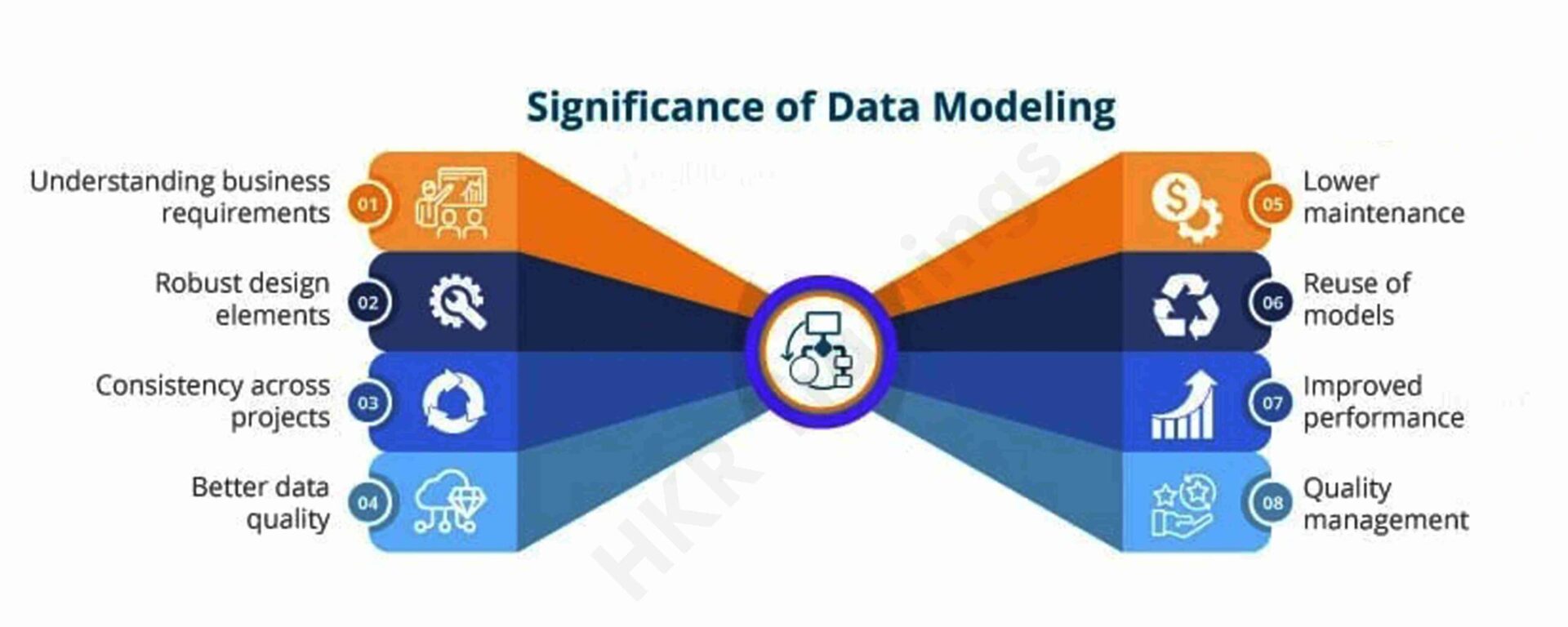
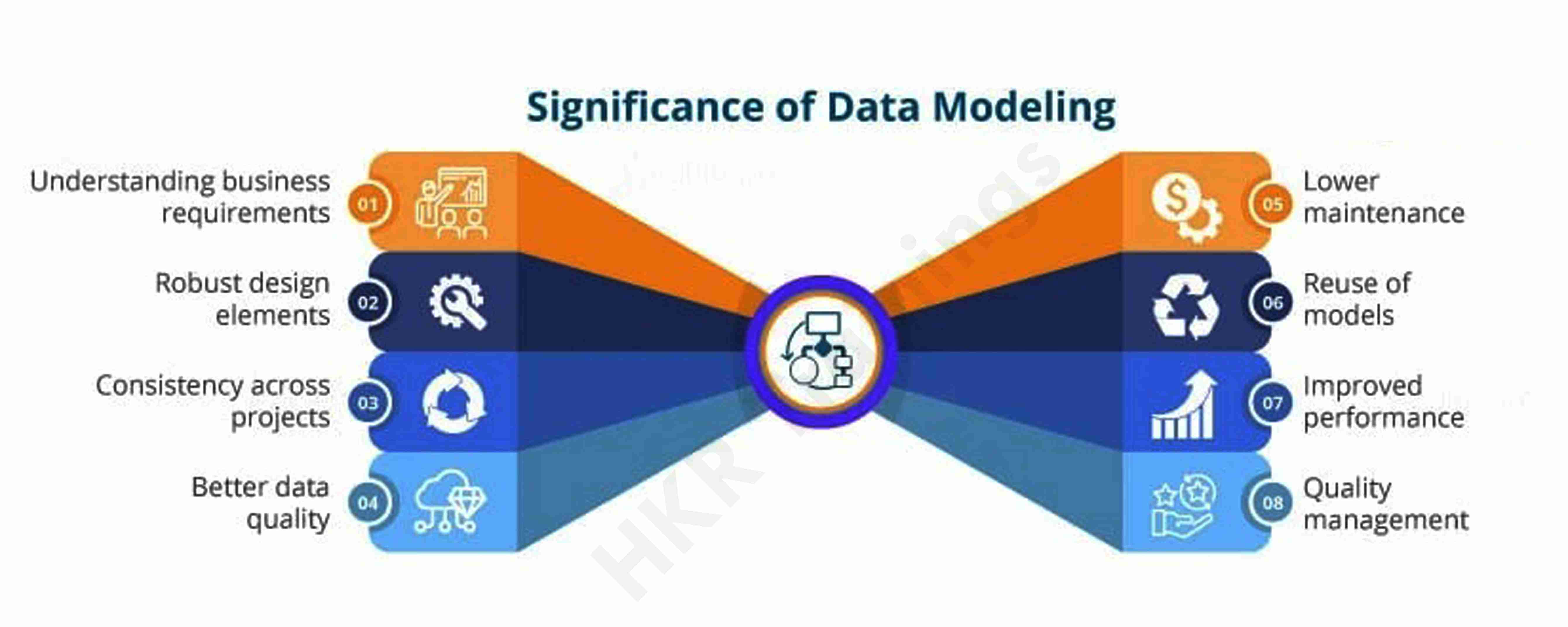
  • Data interpretation can be improved by using a visual representation of the data. It gives developers a complete image of the data, which they can use to build a physical database.
  • The model correctly depicts all of an organization’s essential data. Data omission is less likely thanks to the data model. Data omission can result in inaccurate results and reports.
  • The data model depicts a clearer picture of market requirements.
  • It aids in developing a tangible interface that unifies an organization’s data on a single platform. It also aids in the detection of redundant, duplicate, and incomplete data.
  • A competent data model aids in ensuring continuity across all of an organization’s projects.
    It enhances the data’s quality.
  • It aids Project Managers in achieving greater reach and quality control. It also boosts overall performance.
  • Relational tables, stored procedures, and primary and foreign keys are all described in it.

Data Model Perspectives

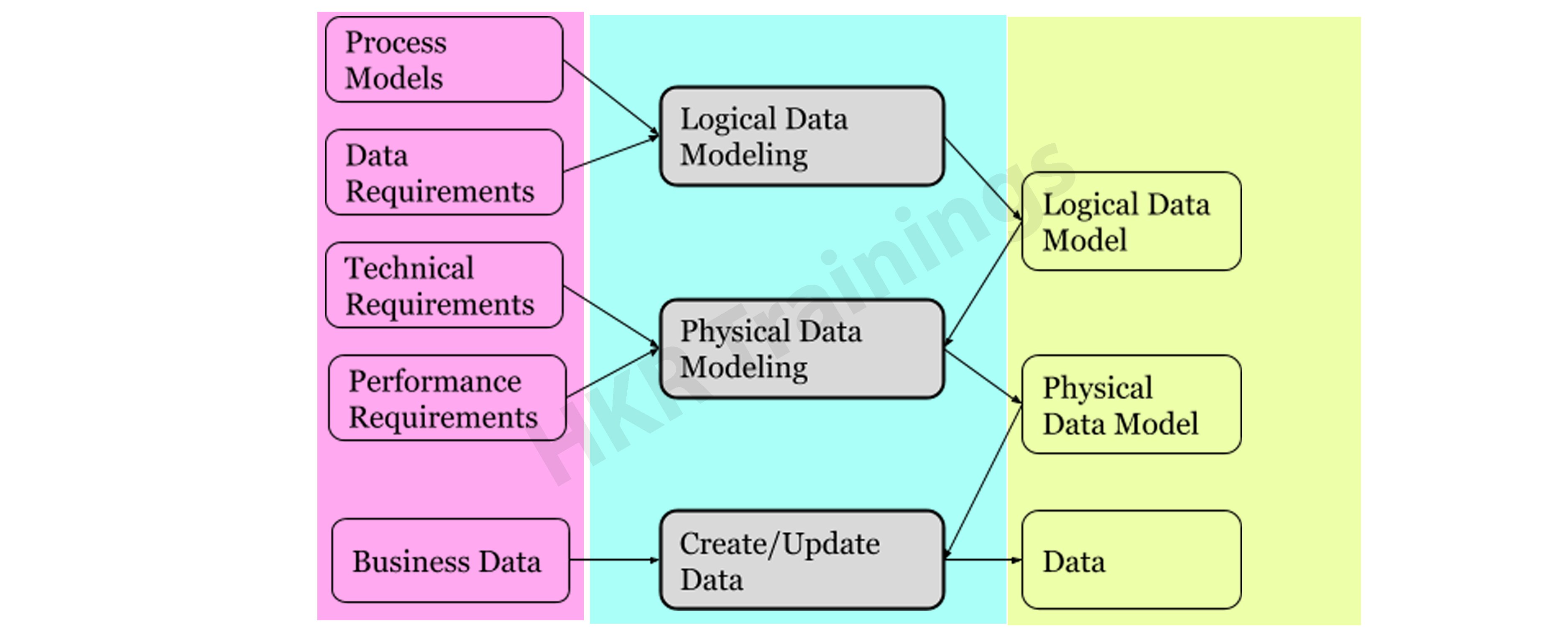
Conceptual, logical, and physical data models are the three types of data models. Data models are used to describe data, how it is organized in a database, and how data components are related to one another.

Data Model Perspective

Conceptual Model

This stage specifies what must be included in the model’s configuration to describe and coordinate market principles. It focuses primarily on business-related entries, characteristics, and relationships. Data Architects and Business Stakeholders are mainly responsible for its development.

The Conceptual Data Model is used to specify the scope of the method. It’s a tool for organizing, scoping, and visualizing company ideas. The aim of developing a computational data model is to develop new entities, relationships, and attributes. Data architects and stakeholders typically create a computational data model.

The Conceptual Data Model is held by three key holders.

  • Entity: A real-life thing
  • Attribute: Properties of an entity
  • Relationship: Association between two entities

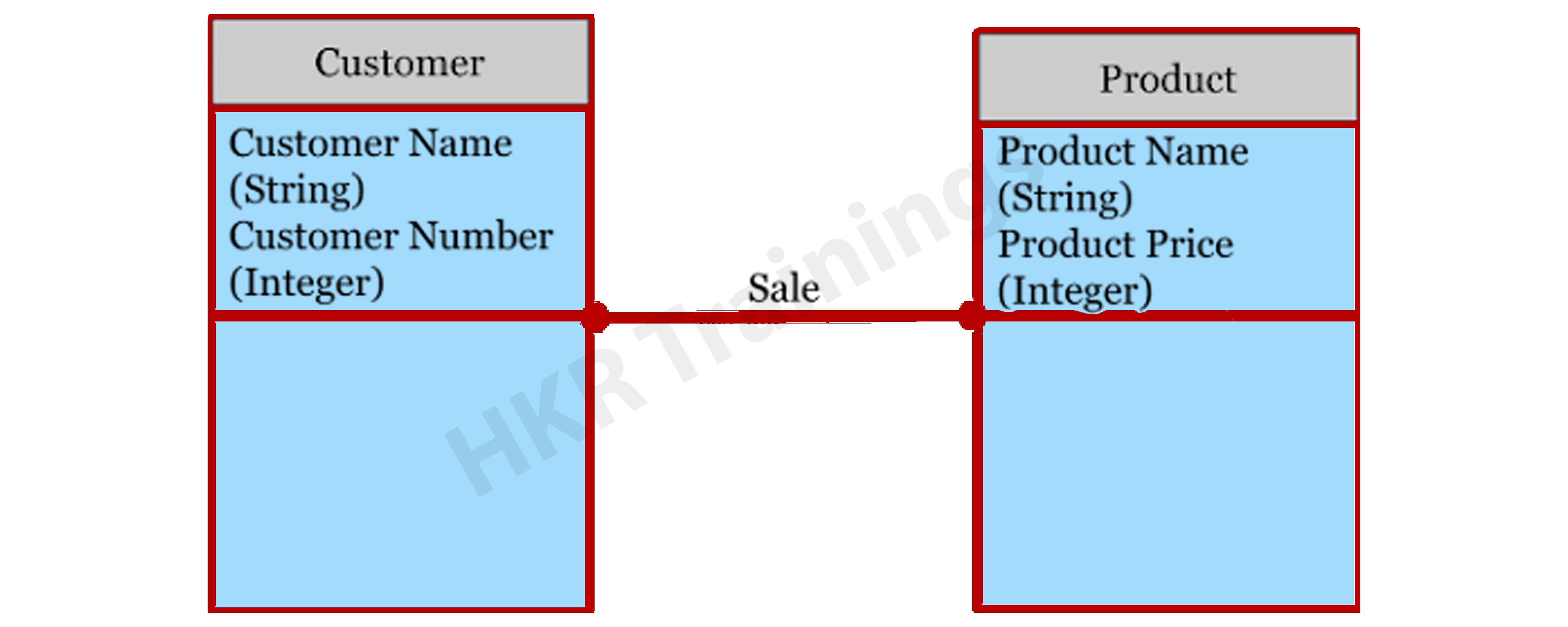
Let’s take a look at an illustration of this data model.

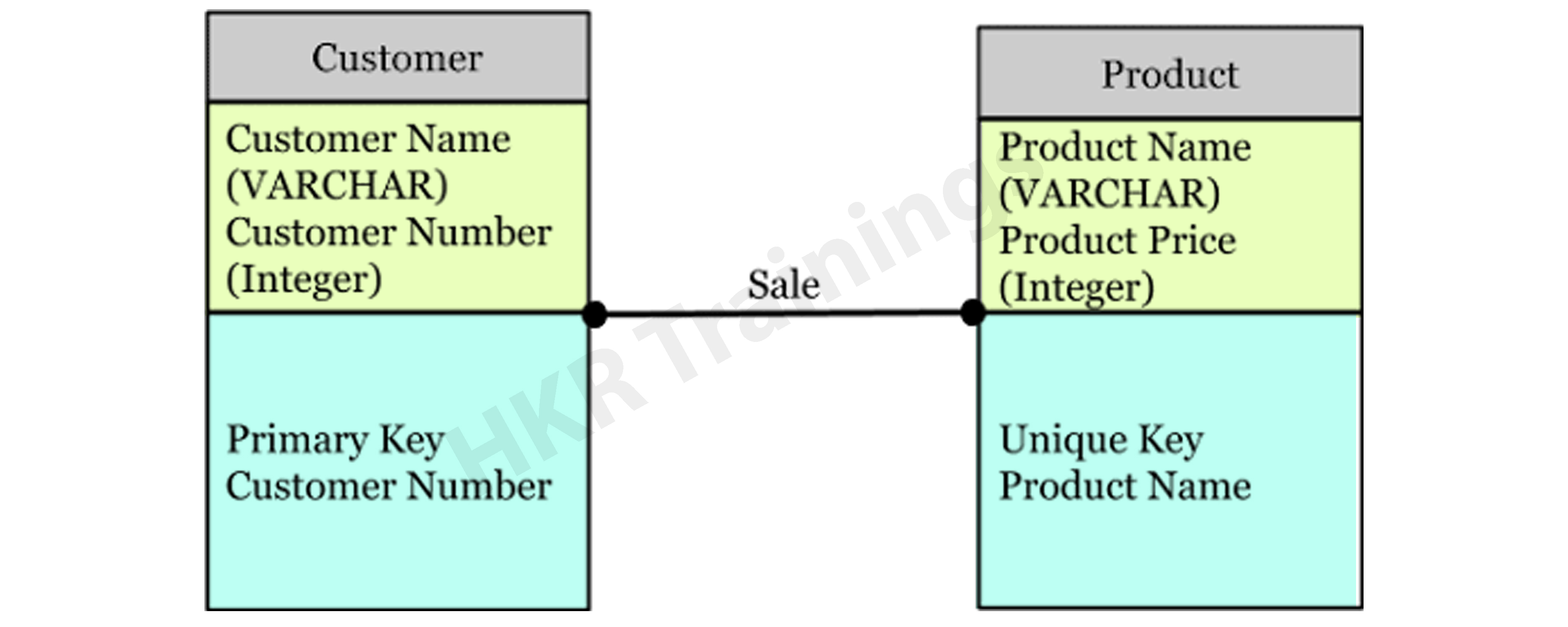
Consider the following two entities: product and customer. The Product entity’s attributes are the name and price of the product, while the Customer entity’s attributes are the name and number of customers. Sales is the connection between these two entities.

  • The Conceptual Data Model was created with a corporate audience in mind.
  • It offers an overview of corporate principles for the whole organization.
  • It is created separately, with hardware requirements such as location and data storage space and software requirements such as technology and DBMS vendor.

Conceptual Models

Logical Model

The conceptual model lays out how the model can be put into use. It encompasses all types of data that must be captured, such as tables, columns, and so on. Business Analysts and Data Architects are the most prominent designers of this model.

The Logical Data Model is used to describe the arrangement of data structures as well as their relationships. It lays the groundwork for constructing a physical model. This model aids in the inclusion of extra data to the conceptual data model components. There is no primary or secondary key specified in this model. This model helps users to update and check the connector information for relationships that have been set previously.

The logical data model describes the data requirements for a single project, but it may be combined with other logical data models depending on the project’s scope. Data attributes come with a variety of data types, many of which have exact lengths and precisions.

  • The logical data model is created and configured separately from the database management system.
  • Data Types with accurate dimensions and precisions exist for data attributes.
  • It specifies the data needed for a project but, depending on the project’s complexity, interacts with other logical data models.

Logical Model

Top 80+ frequently asked Data Modeling Interview questions!

Big Data Hadoop Training

  • Master Your Craft
  • Lifetime LMS & Faculty Access
  • 24/7 online expert support
  • Real-world & Project Based Learning

Physical Model

The physical model explains how to use a database management system to execute a data model. It lays out the process in terms of tables, CRUD operations, indexes, partitioning, etc. Database Administrators and Developers build it. 

The Physical Data Model specifies how a data model is implemented in a database. It attracts databases and aids in developing schemas by duplicating database constraints, triggers, column keys, other RDBMS functions, and indexes. This data model aids in visualizing the database layout. Views, access

profiles, authorizations, primary and foreign keys, and so on are all specified in this model.

The majority and minority relationships are defined in the Data Model by the relationship between tables. It is created for a specific version of a database management system, data storage, and project site.

  • The Physical Data Model was created for a database management system (DBMS), data storage, and a project site.
  • It contains table relationships that address the nullability and cardinality of the relationships.
  • Views, access profiles, authorizations, primary and foreign keys, and so on are all specified here.

Physical Model

Realted Article: CAP Theorem in Big Data!

Types of Data Models

While there are several different data modeling approaches, the basic principle remains the same with all models. Let’s take a look at some of the most commonly used data models:

Hierarchical Model

This is a database modeling technique that uses a tree-like structure to organise data. Each record in this table has a single root or parent. When it comes to sibling documents, they’re organized in a specific way. This is the physical order in which the information is stored. This method of modeling can be applied to a wide range of real-world model relationships. This database model was popular in the 1960s and 1970s. However, owing to inefficiencies, they are still used infrequently.

The hierarchical model is used to assemble data into a tree-like structure with a single root that connects all of the data. A single root like this evolves like a branch, connecting nodes to the parent nodes, with each child node having just one parent node. The data is structured in a relational system with a one-to-many relationship between two different data types in this model. For example, in a college, a department consists of a set of courses, professors, and students.

Hierarchical Models

Relational Model

In 1970, an IBM researcher suggested this as a possible solution to the hierarchical paradigm. The data path does not need to be defined by developers. Tables are used to merge data segments in this case directly. The program’s complexity has been minimized due to this model. It necessitates a thorough understanding of the organization’s physical data management strategy. This model was quickly merged with Structured Query Language after its introduction (SQL).

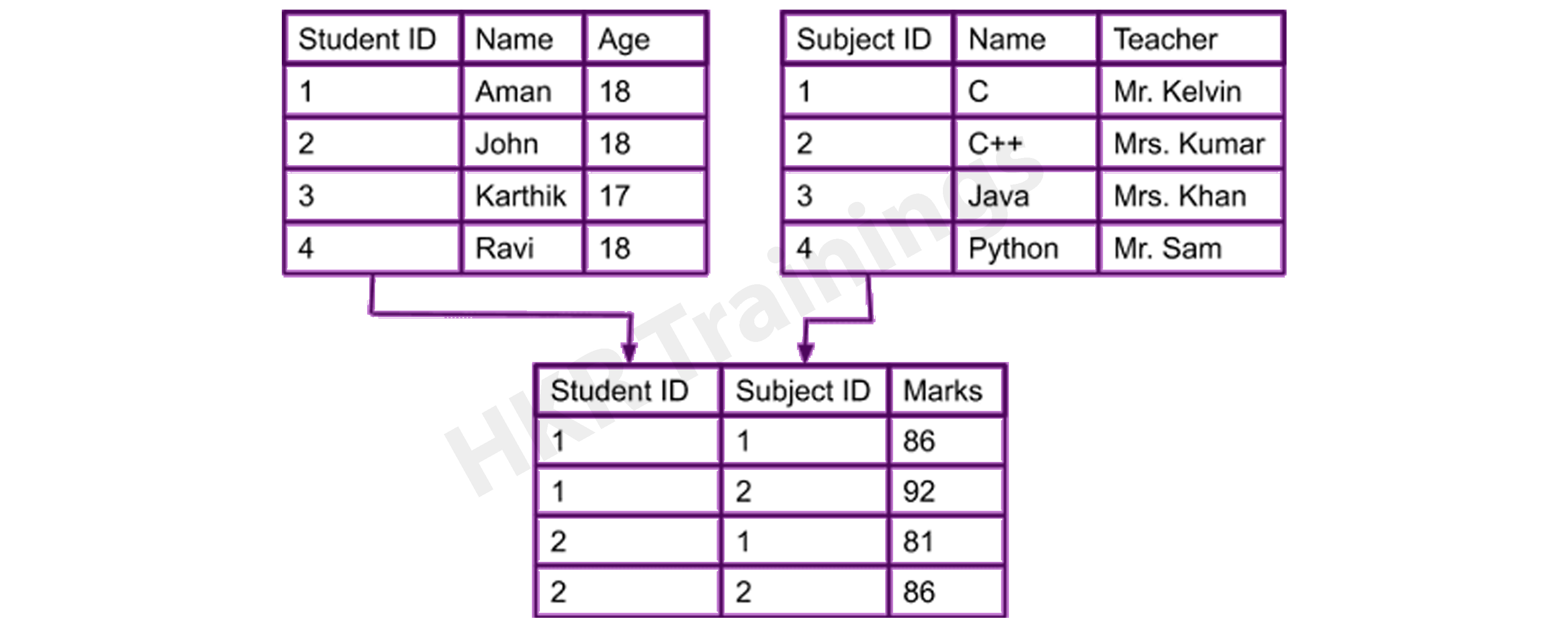
A typical field maintains the Relational Model aids in the organization of two-dimensional tables and the interaction. Tables are the data structure of a relational data model. The table’s rows contain all of the information for a given category. In the Relational Model, these tables are referred to as relations.

Relational Models

Network Model

The Network Model is an enhancement of the Hierarchical Model, allowing for various relationships with related records, implying multiple parent records. It will enable users to build models using sets of similar documents following mathematical set theory. A parent record and the number of child records are included in this set. Each record is a member of several sets, allowing the model to define complex relationships. The model can express complex relationships since each record can belong to several sets.

Network Models

Object-oriented Database Model

A set of objects are aligned with methods and functions in the Object-oriented Database. There are characteristics and methods associated with these objects. Multimedia databases, hypertext databases, and other types of object-oriented databases are available. Even if it incorporates tables, this type of database model is known as a post-relational database model since it is not limited to tables. These database models are referred to as hybrid models.

Wish to make a career in the world of Datastage? Start with Datastage Online Training!

Cloud Computings, big-data-modeling-description-4, Cloud Computings, big-data-modeling-description-9

Subscribe to our YouTube channel to get new updates..!

Entity–Relationship Model

The Entity-Relationship Model (ERM) is a diagram that depicts entities and their relationships. The E-R model generates an entity set, attributes, relationship set, and constraints when constructing a real-world scenario database model. The E-R diagram is a graphical representation of this kind.

An entity may be an object, a concept, or a piece of data stored in relation to the data. It has properties called attributes, and a set of values called domain defines each attribute. A relationship is a logical connection between two or more entities. These connections are mapped to entities in several ways.

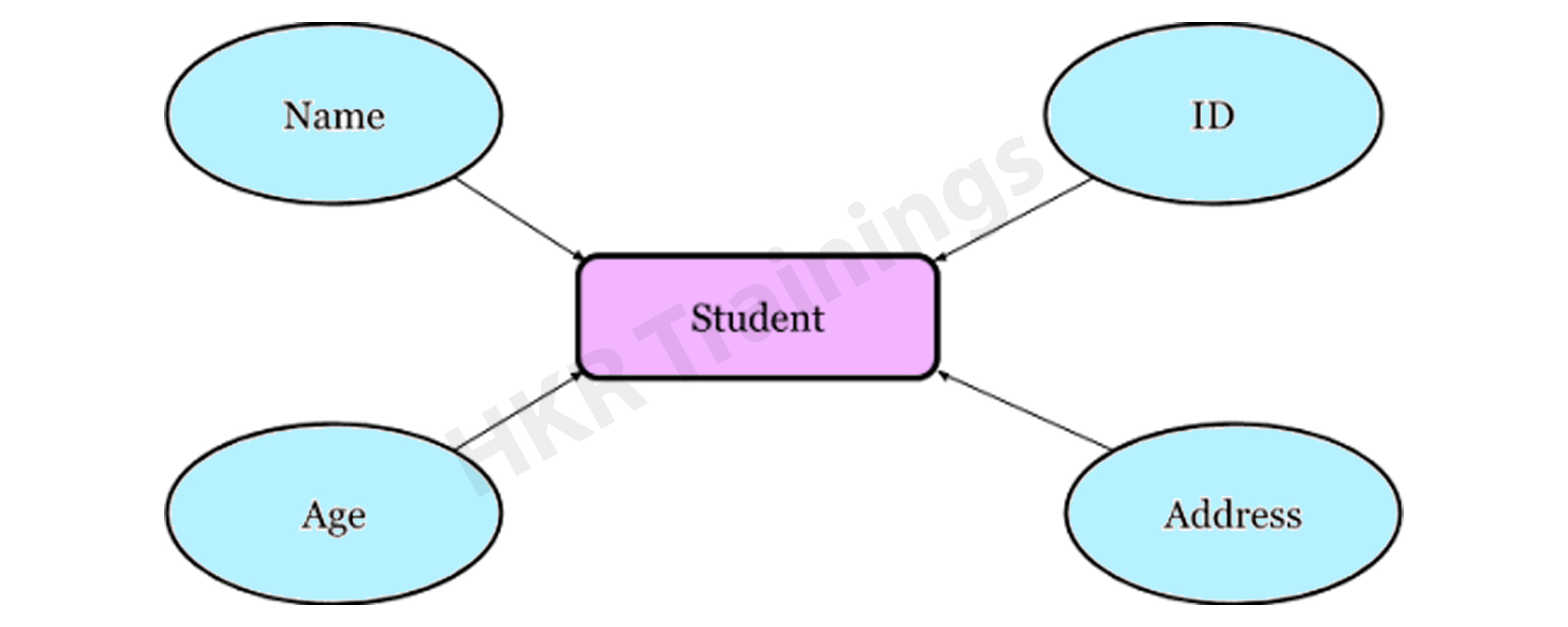
Consider a College Database, where a Student is an entity, and the Attributes are Student details such as Name, ID, Age, Address, and so on. As a result, there will be a relation between them.

Entity–Relationship Model

Object-relational Model

The object-relational model can be thought of as a relational model with enhanced object-oriented database model features. This kind of database model enables programmers to integrate functions into a familiar table structure.

An Object-relational Data Model combines the advantages of both an Object-oriented and a Relational database model. It supports classes, objects, inheritance, and other features similar to the Object-oriented paradigm and data types, tabular structures, and other features similar to the Relational database model. Designers may use this model to integrate functions into table structures.

Facts and Dimensions

To understand data modelling, one must first grasp its facts and dimensions.

Fact Table: It’s a table that lists all of the measurements and their granularity. Sales, for example, maybe additive or semi-additive.

Dimension Table: It’s a table containing fields with definitions of market elements and is referenced by several fact tables.

Dimensional Modeling: Dimensional modeling is a data warehouse design methodology. It makes use of validated measurements and facts and aids in navigation. The use of dimensional modeling in performance queries speeds up the process. Star schemas are a colloquial term for dimensional models.

Dimensional Modeling-Related Keys

While learning data modeling, it’s critical to understand the keys. There are five different types of dimensional modelling keys.

  • Business or Natural Keys: It is a field that uniquely defines an individual. Customer ID, employee number, and so on.
  • Primary and Alternate Keys: A primary key is an area that contains a single unique record. The consumer must choose one of the available primary keys, with the others being alternative keys.
  • Composite or Compound Keys: A composite key is one in which more than one field is used to represent a key.
  • Surrogate Keys: It is usually an auto-generated field with no business meaning.
  • Foreign Keys: It is a key that refers to another key in some other table.

The process of data modeling entails the development and design of various data models. A data definition language is then used to convert these data models. A database is created using a data definition language. This database will be referred to as a wholly attributed data model at that stage.

Benefits and Drawbacks of Data Models

Benefits:

  • With data modeling, the functional team’s data objects are appropriately presented.
  • Data modeling enables you to query data from a database and generate various reports from it. With the aid of reports, it indirectly contributes to data analysis. These reports can be used to improve the project’s quality and efficiency.
  • Businesses have a large amount of data in various formats. For such unstructured data, data modeling offers a structured framework.
  • Data modeling enhances business intelligence by requiring data modelers to work closely with the project’s realities, such as data collection from various unstructured sources, reporting specifications, spending patterns, and so on.
  • It improves coordination within the business.
  • The documentation of data mapping is aided during the ETL method.

Drawbacks:

  • The development of a data model is a time-consuming process. Should understand the physical characteristics of data storage.
  • This method necessitates complex application creation as well as biographical truth information.
  • The model isn’t particularly user-friendly. Small improvements in the method require a significant rewrite of the entire application.

Big Data Hadoop Training

Weekday / Weekend Batches

Conclusion

Data models are created to store data in a database. The primary goal of these data models is to ensure that the data objects generated by the functional team are correctly denoted. As previously stated, even the little improvement in the system necessitates improvements to the entire model. Despite the problems, the data modelling concept is the first and most important step of database design since it describes data entities, relationships between data objects, and so on. A data model discusses the data’s market rules, government regulations, and regulatory enforcement in a holistic manner.

Related Article:


Source link